

That $800 quote sitting in your inbox might actually be the most expensive mistake you make this year. It’s understandable that you’re searching for the absolute cheapest way to ship a car cross country, especially when household budgets are under pressure. You’ve likely encountered price fluctuations that feel confusing or quotes that seem too good to be true. The fear of hidden fees or choosing a service trade-off that compromises your vehicle’s safety is a common concern for many of our clients.
We’re here to provide the clarity you need to make an informed decision. This guide will show you how to secure the most cost-effective methods for nationwide transport while ensuring your car remains protected throughout the journey. We’ll examine why open carrier transport remains the most affordable option; how the 2026 broker financial responsibility standards protect you from fraud; and which months offer the best opportunities for significant savings. By the end of this article, you’ll know how to identify a binding, transparent quote that fits your budget and provides total peace of mind.
Key Takeaways
- Learn why open carrier transportation remains the gold standard for affordability by leveraging multi-car trailers to distribute logistical costs among several vehicles.
- Understand how 2026 factors, such as the increased weight of electric vehicles and specific route density, directly influence the accuracy of your shipping quote.
- Discover the cheapest way to ship a car cross country by strategically timing your booking during off-peak seasons like late autumn or early spring.
- Identify which vehicle types truly require the premium of enclosed transport and why traditional terminal-to-terminal services often lead to hidden expenses.
- Protect your investment by learning to spot deceptive “low-ball” quotes and verifying carrier legitimacy through updated FMCSA and DOT registration requirements.
Identifying the Most Affordable Methods for Cross-Country Auto Transport
Finding the cheapest way to ship a car cross country begins with understanding the fundamental mechanics of the logistics industry. While there are several ways to move a vehicle, the vast majority of consumers choose a method that balances speed, safety, and price. In the broader world of freight transport, efficiency is usually achieved through volume, and auto relocation is no exception. By choosing the right equipment and route, you can significantly reduce your total expenditure without risking the safety of your asset.
Why Open Carrier Shipping Wins on Price
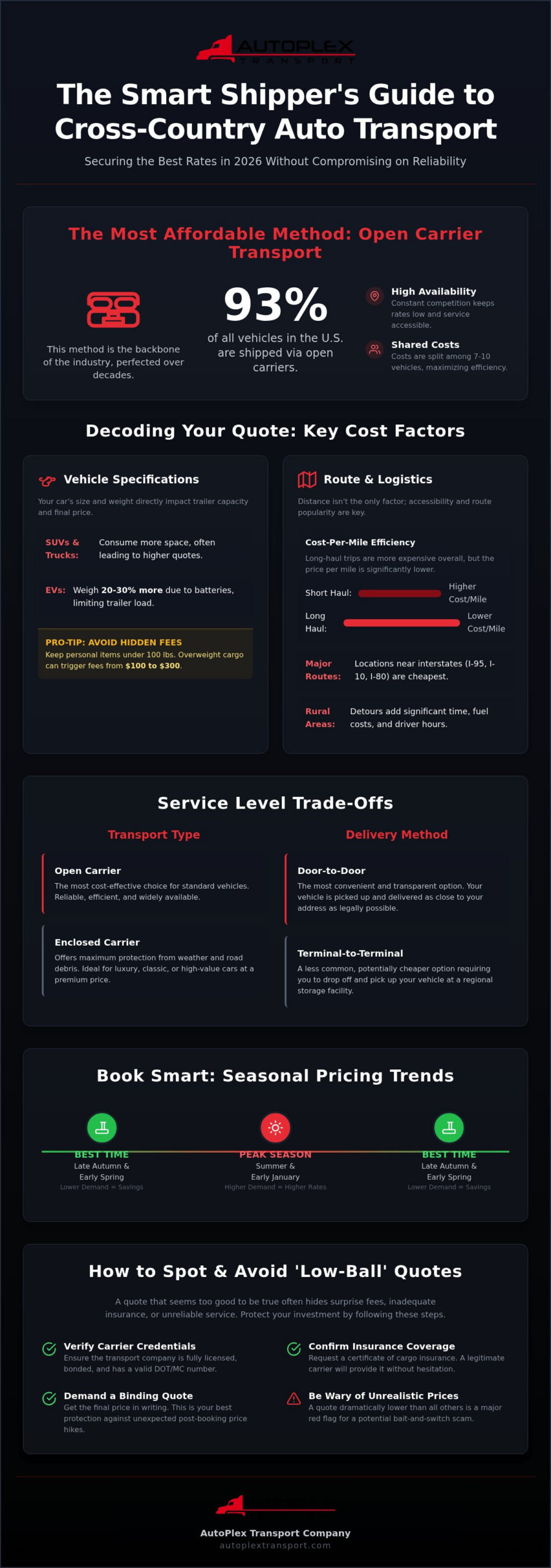
Open carrier car transportation is the industry standard for affordability because it offers the highest level of equipment availability. Since these trailers are the most common rigs on American interstates, the market remains highly competitive, which keeps costs lower for you. These carriers also benefit from lower fuel consumption per vehicle compared to specialized enclosed trailers that carry fewer units. Open transport is the most accessible and cost-efficient method for daily drivers. Approximately 90% of all vehicle shipments use this method, which ensures you’ll have more options and more flexible scheduling when booking your move.
The Role of Multi-Car Logistics
The secret to low-cost shipping lies in the logistics of the multi-car trailer. Most cross-country carriers utilize large rigs capable of hauling 7 to 10 vehicles at once. This setup allows the carrier to distribute operational costs, such as driver wages and fuel, across multiple customers. When a trailer is fully loaded, the individual cost for each vehicle drops significantly. Carriers prioritize high-volume routes along major interstate corridors because they can fill their trailers more quickly and maintain a steady rhythm of deliveries. Understanding these logistical factors is the first step in discovering the cheapest way to ship a car cross country while maintaining high safety standards.
When you’re shipping a vehicle 2,000 miles or more, the per-mile rate is often much lower than it is for a short, regional trip under 500 miles. However, defining the “cheapest” option requires a look beyond just the bottom-line number. A truly cost-effective service must include comprehensive insurance and a reliable carrier with a verified USDOT number. Choosing a quote that is suspiciously low often indicates a lack of proper coverage or a carrier that may struggle with the 2026 ELD enforcement standards. Real value comes from finding a rate that combines the efficiency of multi-car transport with the security of a professional service provider.
Understanding the variables that determine your rate is essential for anyone seeking the cheapest way to ship a car cross country. It’s not just a matter of total miles; it’s about the specific logistics and equipment requirements of your move. To protect yourself from common industry pitfalls, reviewing the consumer advisory from the FMCSA is a great starting point for understanding how professional quotes are structured.
Vehicle Specifications and Trailer Capacity
The physical dimensions of your car directly impact the price because they dictate how many “slots” a vehicle occupies on a trailer. Height and length are critical; a large SUV might prevent a carrier from loading a vehicle directly above it, which reduces the trailer’s total revenue potential. In 2026, the increasing weight of electric vehicles has become a significant factor for logistics providers. Since the federal maximum gross vehicle weight for auto transporters remains 80,000 pounds, a trailer carrying several heavy EVs reaches its legal limit much faster than one carrying standard sedans. This often results in a weight-based surcharge to compensate for the reduced capacity. You can help manage these costs by ensuring your car is free of heavy personal items before the carrier arrives.
Route Logistics and Accessibility
Where you are located is just as important as where you’re going. Major interstate corridors like I-10, I-95, and I-80 are the lifeblood of the industry, and proximity to these routes usually results in lower quotes. Carriers prefer metro-to-metro shipments because they can find replacement loads quickly, minimizing “deadhead” miles where they drive without a full trailer. Route density determines the carrier’s ability to offer lower rates. If you live in a rural area, you might find that meeting a driver at a nearby city or a large shopping center parking lot can save you a substantial amount on your pickup fee.
Fuel price volatility remains a constant challenge in 2026, making it advantageous to book your transport as early as possible. Carriers monitor diesel prices closely and apply surcharges that fluctuate with the market. Additionally, the condition of your vehicle plays a role in the final price. If your car is a “non-runner” and cannot be driven onto the trailer, the carrier must use specialized winching equipment. This extra labor and equipment usage will increase your quote. While finding the cheapest way to ship a car cross country is a priority, it’s vital to account for these technical variables to ensure your quote is accurate and binding. When you’re ready to see how these factors apply to your specific move, you can request a quote for interstate vehicle transportation to get a transparent and detailed breakdown.
Comparing Service Levels: Open vs. Enclosed and Door-to-Door vs. Terminal
Selecting the right service level is perhaps the most critical decision in your logistics planning. While it’s tempting to look only at the base quote, the cheapest way to ship a car cross country involves evaluating the total “landed cost” of the service. This means calculating the price of the transport itself along with any secondary expenses like storage fees or ground transportation to a pickup location. By choosing the right service tier, you can avoid paying for protection you don’t need while ensuring your vehicle arrives in the same condition it left.
Is Enclosed Transport Ever Worth the Extra Cost?
For the vast majority of travelers, open transport car shipping provides the ideal balance of safety and economy. It’s the standard for daily drivers precisely because it’s reliable, widely available, and cost-efficient. However, owners of high-value luxury or classic models often choose enclosed car transport to provide a shield against road debris and weather. While this premium service offers enhanced protection, the risk-to-reward ratio for a standard sedan or SUV usually favors open transport. Unless your vehicle has a sensitive custom paint job or is an investment-grade asset, the added expense of a hard-sided trailer is rarely necessary for a safe arrival.
The Reality of Terminal-to-Terminal Shipping
There’s a common belief in online forums that dropping your car off at a terminal is the cheapest way to ship a car cross country. In the 2026 market, this is largely a myth. Most modern carriers have shifted to Door 2 Door Transportation because it’s more logistically efficient for their schedules. Terminal-to-terminal service has become increasingly rare, and where it does exist, it often carries hidden burdens that inflate the final price. You should consider the following potential expenses when evaluating a terminal quote:
- Daily Storage Fees: Terminals often charge by the day if you can’t pick up the vehicle immediately upon its arrival.
- Ground Transport Costs: You’ll need to pay for a taxi or rideshare to reach the terminal, which can be located far from residential areas.
- Increased Handling: Vehicles at terminals are moved more frequently by different staff members, which can increase the risk of minor cosmetic damage.
Carriers prioritize door-to-door logistics because it allows them to maintain a tighter schedule without waiting for terminal processing. For you, this eliminates third-party storage fees that can accumulate quickly if there are any delays in your travel. When you account for these extra steps and the logistical hurdles, door-to-door service emerges as the more reliable and transparent “cheap” option in 2026. It simplifies the process by ensuring the same driver who picks up your car is the one who delivers it, providing a consistent point of contact throughout the journey. If you need reliable ground transportation to get to your destination while your vehicle is in transit, WazUp offers chauffeur services and airport transfers in over 170 countries.
Strategic Timing: When to Book for the Lowest Rates
Securing the cheapest way to ship a car cross country often depends as much on the calendar as it does on the carrier type. While most people plan their moves around their own personal schedules, understanding the seasonal pulse of the logistics industry can lead to significant savings. Pricing is not static; it responds to supply and demand shifts that occur throughout the year. For instance, industry data indicates that shipping prices during the peak season from June to September can be 15% to 30% higher than in the off-season. By aligning your move with these market cycles, you can reduce your quote without changing your service level.
Navigating the Seasonal Fluctuations
Summer is typically the most expensive time to move a vehicle because demand peaks while families relocate during school breaks. June and July see the highest volume, which allows carriers to be more selective and raise their rates. Conversely, late autumn and early spring are often considered the “sweet spot” for budget-conscious shippers. Winter can also offer lower rates, but you must be careful to avoid the holiday peaks around late December and early January. Directional pricing is another critical factor to consider. During the winter “Snowbird” migration, shipping from the North to the South costs significantly more because demand is high. If you’re moving in the opposite direction during that same period, you’ll likely find much lower quotes as carriers look to fill empty slots on their return trips.
The Power of Flexibility
When you’re looking for the cheapest way to ship a car cross country, flexibility is your most valuable asset. Requesting “expedited” or “guaranteed” pickup dates often inflates prices by 20% to 50% because it forces a carrier to deviate from their optimized route. Instead, providing a 3-5 day pickup window allows brokers and dispatchers to find a carrier who already has a vacancy on your specific route. This approach lets the carrier “slot” your car into an existing load, which lowers their operational overhead and results in a more competitive rate for you.
The ideal lead time for booking is generally 2 to 4 weeks before your desired move date. This window provides enough time to gather multiple bids and secure a spot with a reliable carrier without the pressure of a last-minute surcharge. A flexible window allows brokers to find the most cost-efficient carrier currently on your route. If you’re ready to see how timing can lower your costs, you can request a quote for nationwide transportation services to start your planning process with a reliable partner.
Navigating the Market: How to Avoid ‘Low-Ball’ Quotes and Ensure Value
Focusing solely on the bottom line can be a risky strategy when you’re planning a long-distance move. While your primary goal is to find the cheapest way to ship a car cross country, the lowest initial bid often serves as a “low-ball” tactic used by unreliable brokers to capture your interest. Once you’ve committed, these companies may struggle to find a professional carrier willing to accept such a low rate, leading to significant delays or sudden price increases at the last minute. At AutoPlex Transport, we prioritize a “Value-First” approach for our nationwide routes. This means providing a binding, transparent quote that reflects real-world market conditions while ensuring your vehicle is handled by a professional carrier that meets all 2026 safety standards.
Red Flags in Cheap Car Shipping Quotes
Identifying a quote that’s too good to be true is essential for a stress-free experience. If a bid comes in 25% or more below the industry average, it’s a major red flag. These prices often don’t account for current fuel surcharges or the increased weight of modern vehicles, which can lead to carriers rejecting the load later. You should also be wary of companies demanding large, non-refundable deposits before a carrier is even assigned to your route. A transparent vehicle shipping quote should provide a clear breakdown of all costs, including insurance and door-to-door service fees, leaving no room for hidden surprises at the time of delivery.
Ensuring a Safe and Affordable Delivery
Your financial interests are protected by the Bill of Lading (BOL), which serves as both a receipt and a formal contract between you and the carrier. This document records the vehicle’s condition at both pickup and delivery; it’s your primary defense in the event of a damage claim. To ensure the process remains affordable and efficient, you should properly prepare a car for transport by removing all personal items and keeping the fuel tank at about a quarter full. This reduces the total weight of the shipment and helps you avoid unexpected fees or weight-related surcharges at the time of pickup.
Before you sign any agreement, it’s vital to verify the carrier’s credentials. As of 2026, the USDOT number is the sole primary identifier for carriers, making it easier for you to check their safety record and insurance status through the FMCSA’s public database. Stricter financial responsibility standards for brokers, which became effective in January 2026, provide you with an additional layer of protection against non-payment and fraud. Knowing how to properly vet a car transportation company using these updated standards is one of the most important steps you can take to protect your vehicle and your budget. Choosing from the best auto transport companies means looking for transparency and a proven history of reliability. By combining strategic timing with a verified carrier, you can achieve the cheapest way to ship a car cross country without sacrificing the safety of your valuable asset.
Secure Your Vehicle’s Journey with Confidence
Finding the cheapest way to ship a car cross country doesn’t have to mean sacrificing the safety of your vehicle. By prioritizing open carrier transport and maintaining a flexible schedule, you can significantly reduce your logistical costs while staying within a manageable budget. It’s about understanding that real value comes from a combination of strategic timing and choosing a carrier that operates with full transparency and accountability. You now have the tools to identify deceptive quotes and leverage seasonal trends to your advantage.
AutoPlex Transport is here to be your reliable partner in this complex process. As a company that is A+ Rated by the BBB, we work exclusively with fully insured nationwide carriers to ensure your peace of mind. We believe in building trust through honest communication, which is why we require no upfront deposits to get your shipment started. When you are ready to experience a stress-free relocation, you can Get a Transparent Cross-Country Shipping Quote from AutoPlex Transport. We look forward to helping you manage your next move with the care and expertise your vehicle deserves.
Frequently Asked Questions
Is it cheaper to drive my car cross country or ship it?
Shipping is often more cost-effective than driving when you calculate the total “landed cost” of a road trip. While driving seems cheaper initially, you must account for fuel, hotel stays, meals, and the significant depreciation caused by adding 2,500 miles to your odometer. Professional transport eliminates these hidden expenses and saves you several days of travel time while reducing the risk of mechanical breakdowns or accidents on the road.
What is the absolute cheapest month to ship a car?
Late autumn and early spring, specifically November and February, are typically the most affordable months for vehicle relocation. During these “off-season” periods, demand for carriers drops, which leads to more competitive pricing and better availability. You should avoid the peak summer months of June and July, as well as the January “Snowbird” migration, as high demand during these times can inflate quotes by 15% to 30%.
Does the size of my car affect the shipping price?
Yes, your vehicle’s dimensions and weight are primary factors that determine your final quote. Larger SUVs and trucks occupy more physical space on a trailer, which limits the number of other vehicles a carrier can haul. In 2026, the weight of electric vehicles is a specific concern; since trailers must stay under the 80,000-pound federal limit, hauling heavy EVs often requires a weight surcharge to compensate for the reduced trailer capacity.
Can I save money by shipping my car to a terminal instead of my house?
It’s rarely cheaper to use terminal-to-terminal shipping because of hidden third-party storage fees and ground transportation costs. Most modern carriers prefer door-to-door logistics because it’s more efficient for their schedules. If you use a terminal, you’ll likely pay daily storage rates and the cost of a rideshare to reach the facility, which often makes it more expensive and less convenient than a standard residential delivery.
How can I avoid hidden fees in my car shipping quote?
The best way to avoid hidden fees is to request a binding, transparent quote that includes all insurance and fuel surcharges upfront. You should be wary of “low-ball” quotes that are significantly lower than the industry average, as these often lead to price hikes later. Always verify a carrier’s legitimacy using their USDOT number and ensure that your quote clearly outlines any potential extra charges for “non-running” vehicles or oversized modifications.
Does the color or age of my car change the shipping cost?
No, the color or age of your vehicle does not impact the shipping price, but its operability certainly does. Carriers don’t charge based on aesthetics; however, if a car is a “non-runner” and cannot be driven onto the trailer, it requires specialized winching equipment and extra labor. While the age of the car doesn’t matter for the quote, you should ensure any classic or vintage vehicle is properly prepared for the journey.
Is open transport safe for a long-distance move?
Open transport is the industry standard and remains a very safe option for the vast majority of daily drivers. It is the cheapest way to ship a car cross country and is the primary method used by manufacturers to deliver new cars to dealerships. While your vehicle is exposed to the elements, licensed interstate carriers provide cargo insurance to protect your asset, ensuring you receive a secure and professional service.
What is the best way to get an accurate car shipping quote?
To get an accurate quote, you need to provide precise details about your vehicle’s make, model, and current condition. Being honest about modifications like lift kits or roof racks is essential for a binding price. Providing a 3-5 day pickup window is the cheapest way to ship a car cross country because it allows brokers to find the most efficient carrier currently on your specific route, resulting in a more competitive rate.