

Hauling a car requires careful planning, proper equipment, and knowledge of safety regulations to protect both the vehicle and everyone on the road. Whether you're moving a classic car across the country, transporting a recently purchased vehicle, or relocating for work, understanding the various methods and best practices for hauling a car ensures a smooth, damage-free experience. From selecting the right trailer to choosing professional transport services, each decision impacts the safety and condition of your vehicle during transit.
Understanding Different Methods for Hauling a Car
The method you choose for hauling a car depends on distance, vehicle condition, budget, and your own towing experience. Each approach offers distinct advantages and limitations that suit different scenarios.
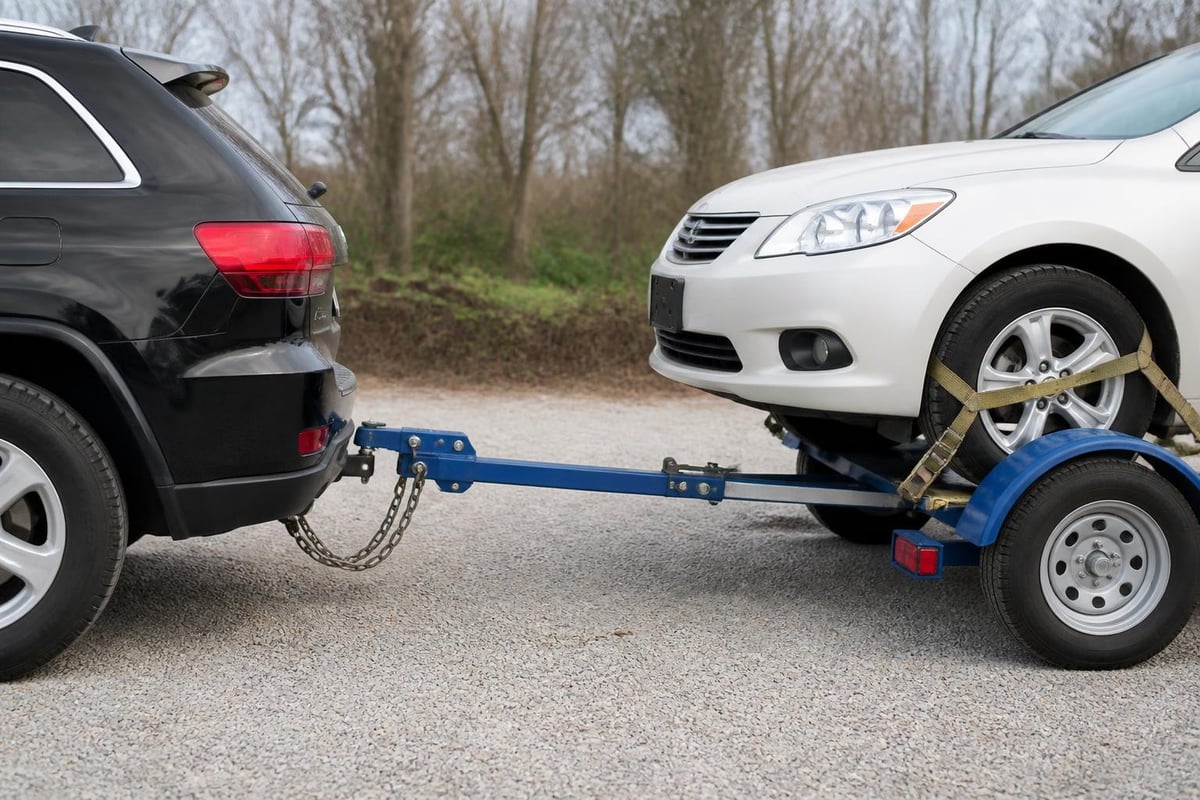
Tow Dolly Systems
A tow dolly lifts the front wheels of a vehicle off the ground while the rear wheels roll freely on the pavement. This method works well for front-wheel-drive vehicles over short to medium distances.
Key considerations for tow dollies:
- Maximum towing weight typically ranges from 3,500 to 5,000 pounds
- Requires proper vehicle alignment and steering wheel securing
- Less expensive than full trailers but offers limited protection
- Not suitable for all-wheel-drive or four-wheel-drive vehicles without modifications
The vehicle being towed must have its steering wheel locked in position and transmission in neutral. Rental companies provide tow dollies, but users must verify their tow vehicle's capacity matches the combined weight of the dolly and car.
Flatbed and Enclosed Trailers
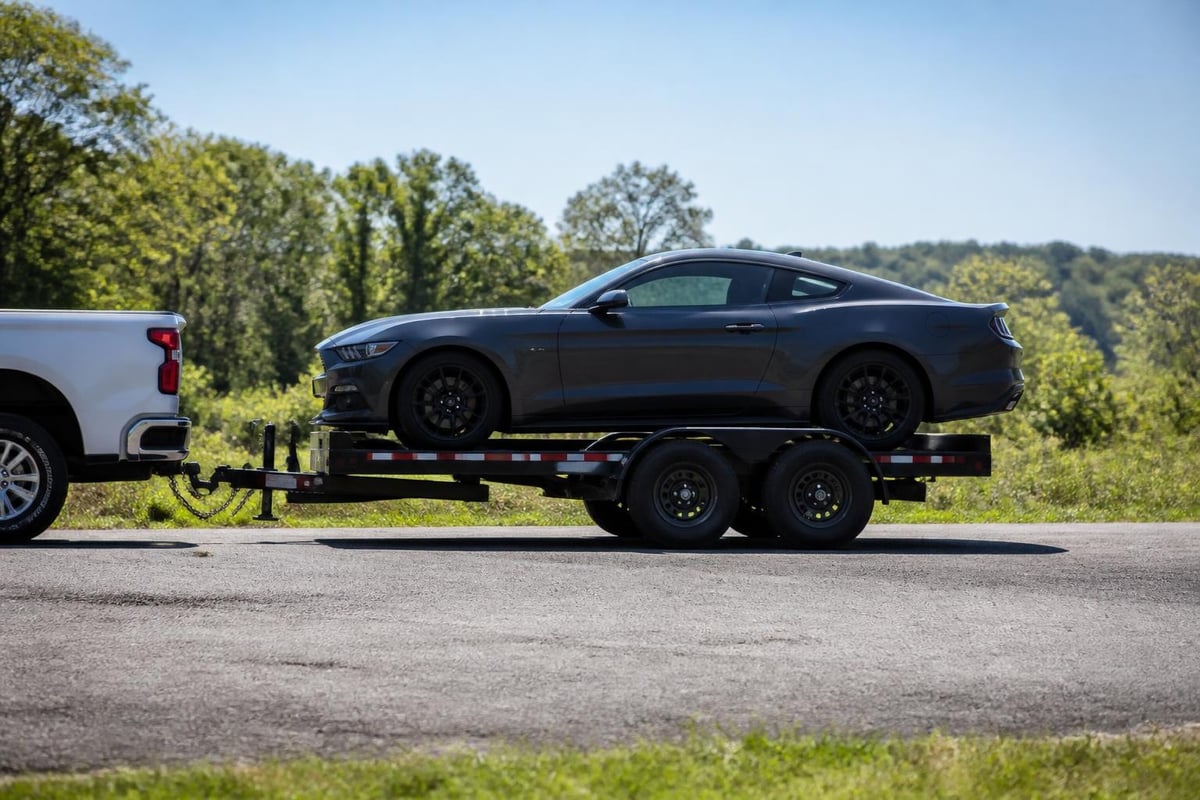
Full trailers provide the safest option for hauling a car, keeping all four wheels off the ground and protecting the vehicle from road debris and weather conditions. Consumer Reports highlights the importance of choosing the right transport method based on vehicle value and condition.
| Trailer Type | Protection Level | Cost Range | Best For |
|---|---|---|---|
| Open Flatbed | Moderate | $150-400/day | Standard vehicles, short distances |
| Enclosed Trailer | Maximum | $300-800/day | Classic cars, luxury vehicles, long distances |
| Multi-Car Carrier | Basic to Moderate | Professional service | Multiple vehicles, cross-country moves |
Enclosed trailers shield vehicles from weather, road salt, and flying debris. These trailers cost more but provide essential protection for high-value, classic, or restored vehicles that cannot tolerate any exposure to elements.
Professional Auto Transport Services
Professional car haulers use specialized equipment and trained drivers to transport vehicles safely across any distance. Companies like AutoPlex Transport operate both open and enclosed carriers designed specifically for vehicle transportation.
Professional services eliminate personal liability and save time. Drivers hold commercial licenses and insurance policies that protect your vehicle throughout transit. The convenience factor becomes particularly important for cross-country moves or when hauling a car to a location where you cannot personally drive.
Equipment Requirements and Safety Standards
Proper equipment ensures safe hauling and prevents damage to both the transported vehicle and the tow vehicle. Industry standards govern the specifications for all towing and hauling equipment.
Essential Towing Equipment
Every hauling setup requires specific components that meet industry safety standards:
- Hitch receiver: Must match the weight class of the trailer and vehicle
- Safety chains: Rated for the total weight being towed
- Brake controller: Required for trailers over 1,000 pounds in most states
- Lighting connections: Seven-pin connectors for full trailer systems
- Wheel chocks and tie-downs: Minimum of four rated straps or chains
The SAE J684 standard establishes technical requirements for trailer couplings and safety equipment used when hauling vehicles. Compliance with these standards prevents equipment failure during transport.
Weight Distribution and Capacity
Understanding weight limits prevents dangerous situations on the road. The tow vehicle's capacity must exceed the combined weight of the trailer and car being hauled.
Critical weight calculations:
- Gross Vehicle Weight Rating (GVWR) of the tow vehicle
- Gross Combined Weight Rating (GCWR) for vehicle and trailer
- Tongue weight (10-15% of total trailer weight)
- Payload capacity remaining in tow vehicle
Never exceed manufacturer specifications. Overloading causes brake failure, loss of control, and accelerated wear on the tow vehicle's transmission and suspension components.
Legal Requirements and Regulations
State and federal regulations govern hauling a car on public roads. Compliance prevents fines and ensures safety for all road users.
Licensing and Permits
Most states allow private individuals to haul their own vehicles with a standard driver's license if the combined weight stays below 26,001 pounds. Commercial hauling requires a Commercial Driver's License (CDL) in many jurisdictions.
State-specific requirements may include:
- Special endorsements for trailers over certain lengths
- Wide-load permits for vehicles exceeding width restrictions
- Trip permits for hauling vehicles across state lines
- Temporary registration for the hauled vehicle
Check regulations in every state along your route. Requirements vary significantly, and violations result in substantial fines or impoundment of both vehicles.
Insurance Considerations
Standard auto insurance policies typically do not cover vehicles being towed or hauled. Verify coverage with your insurance provider before beginning any transport.
Professional transport services carry cargo insurance that protects vehicles during transit. When using services such as those offered through AutoPlex Transport’s car transport options, verify the insurance limits and coverage types included in the service agreement.
Preparing Your Vehicle for Transport
Proper preparation prevents damage during hauling and ensures smooth loading and unloading processes.
Pre-Transport Inspection
Document your vehicle's condition thoroughly before hauling. Take dated photographs from multiple angles, noting existing damage, mileage, and fuel level.
- Clean the vehicle inside and out
- Remove all personal belongings and loose items
- Document existing scratches, dents, or cosmetic issues
- Check tire pressure and inflate to recommended levels
- Verify battery charge and fluid levels
AAA’s car guide provides comprehensive checklists for preparing vehicles for towing and transport situations.
Mechanical Preparation
Ensure the vehicle can be safely loaded, secured, and unloaded without mechanical issues.
| Component | Action Required | Reason |
|---|---|---|
| Brakes | Test and verify function | Safe loading/unloading |
| Transmission | Set to neutral (manual) or verify tow mode (automatic) | Prevents drivetrain damage |
| Parking brake | Release before loading | Allows free rolling |
| Steering | Lock or secure straight | Prevents wheel turning |
| Fuel tank | Keep at 1/4 tank or less | Reduces weight, limits spill risk |
Disable alarm systems that might activate during transport. The constant movement and vibration can trigger sensitive alarms, draining the battery or causing confusion during transit.
Best Practices for Safe Hauling
Following established safety procedures protects your vehicle and ensures legal compliance throughout the hauling process.
Loading and Securing Techniques
Proper loading creates a stable, balanced load that tows safely at highway speeds. Position the vehicle's center of gravity slightly forward of the trailer's axle.
Securing procedures:
- Drive the vehicle onto the trailer slowly and center it precisely
- Apply wheel chocks at all four wheels before securing
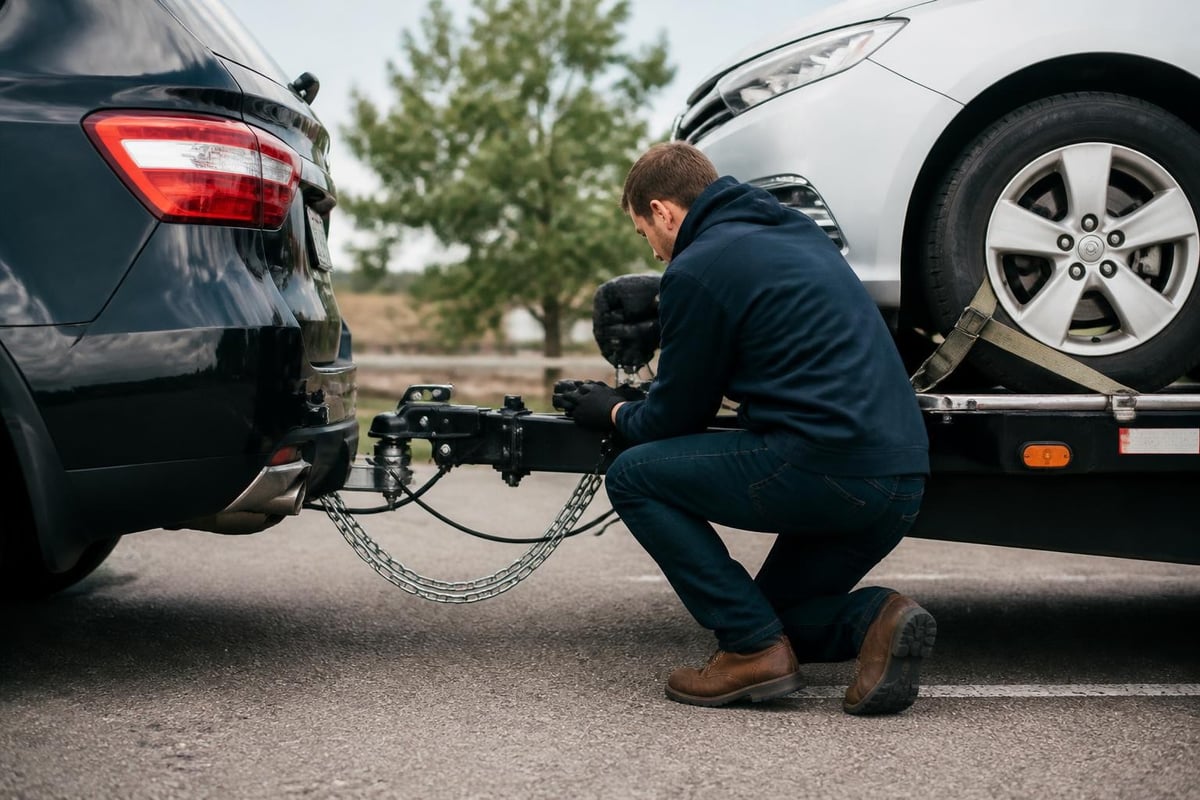
- Attach ratchet straps or chains to designated tie-down points
- Cross straps in an X-pattern when possible for maximum stability
- Test all connections by pulling firmly on each strap
- Recheck tension after the first 50 miles of travel
Never secure straps to suspension components, bumpers, or body panels. Use only frame-mounted tie-down points designed for securing during transport.
Highway Hauling Safety
Hauling a car changes your vehicle's handling characteristics significantly. Adjust your driving behavior accordingly.
- Increase following distance to at least six seconds
- Reduce speed by 10-15 mph below normal highway speeds
- Anticipate lane changes and turns well in advance
- Avoid sudden braking or acceleration
- Check trailer connections and straps every two hours
- Monitor tire pressure on both tow vehicle and trailer
Wind resistance increases dramatically when hauling a car. Crosswinds, passing trucks, and weather conditions all affect stability more than normal driving.
Professional Transport vs. DIY Hauling
Deciding between professional services and self-hauling depends on several practical and financial factors.
Cost Analysis
DIY hauling appears less expensive initially, but total costs add up quickly when you factor in all expenses.
DIY hauling costs:
- Trailer rental: $150-800 depending on type and duration
- Tow vehicle fuel (reduced MPG by 30-50%)
- Wear on tow vehicle (transmission, brakes, tires)
- Insurance gaps or additional coverage
- Hotels and meals for multi-day trips
- Time away from work or other obligations
Professional transport services charge based on distance, vehicle type, and service level. Cross-country transport typically ranges from $800 to $2,000 for standard vehicles on open carriers. Regional services covering areas like car transport in Bronx County or vehicle shipping to Cayuga County may offer more competitive rates for shorter distances.
Risk and Liability Considerations
Hauling a car yourself places full responsibility for any damage on you. Professional transporters carry comprehensive insurance that covers vehicle damage during transit.
Risk factors in DIY hauling:
- Inexperience with trailer maneuvering
- Equipment failure or improper setup
- Accidents involving the towed vehicle
- Damage from improper securing
- Mechanical issues with tow vehicle under stress
Professional drivers complete specialized training and haul vehicles daily. Their experience significantly reduces the risk of damage compared to occasional DIY haulers.
Specialized Hauling Scenarios
Certain vehicles and situations require modified approaches to standard hauling procedures.
Non-Running Vehicles
Hauling a car that doesn't run requires a flatbed trailer or professional service with winch capability. Tow dollies cannot accommodate vehicles that cannot roll freely.
Loading non-running vehicles demands:
- Winch systems rated for the vehicle's weight
- Proper angle and approach to prevent undercarriage damage
- Additional securing methods since the vehicle cannot be positioned precisely
- Verification that brakes can be manually released
Many professional services specialize in hauling non-operational vehicles and have equipment designed specifically for this purpose.
Classic and Luxury Vehicles
High-value vehicles justify the premium cost of enclosed transport. Hauling a classic car requires additional protection from weather, road debris, and prying eyes.
Enclosed transport benefits:
- Complete weather protection
- Security from theft or vandalism
- Climate-controlled options for temperature-sensitive vehicles
- Lower insurance premiums due to reduced risk
- White-glove service with careful handling
Collectors and enthusiasts consistently choose enclosed transport when hauling valuable automobiles to shows, auctions, or new locations.
Long-Distance Hauling
Cross-country vehicle hauling presents unique challenges that often make professional services the practical choice. NHTSA technical resources provide guidance on towing capacity and safety considerations for extended transport scenarios.
Multi-day hauling trips require:
- Route planning with appropriate rest stops
- Accommodation arrangements for overnight stays
- Multiple vehicle inspections throughout the journey
- Contingency plans for breakdowns or equipment failure
- Weather monitoring and route adjustments
Professional transporters handle these logistics daily and can complete long-distance hauling more efficiently than most private individuals.
Selecting a Professional Transport Company
When professional hauling makes sense for your situation, choosing the right company protects your investment and ensures reliable service.
Verification and Credentials
Legitimate transport companies hold proper licensing and insurance. Verify credentials before booking any service.
Essential verifications:
- USDOT number registration and active status
- Motor carrier (MC) number verification
- Cargo insurance coverage amounts
- Customer reviews on independent platforms
- Better Business Bureau rating and complaint history
- Years in business and service area coverage
Request proof of insurance and verify the policy covers your vehicle's full value during transit. Reputable companies provide this documentation without hesitation.
Service Options and Flexibility
Quality transport companies offer multiple service levels to match different needs and budgets. Compare options to find the best fit for your specific hauling requirements.
| Service Feature | Standard Open Transport | Premium Enclosed Transport |
|---|---|---|
| Vehicle exposure | Open to weather | Fully protected |
| Typical delivery window | 7-14 days | 5-10 days |
| Vehicles per carrier | 8-10 cars | 2-6 cars |
| Door-to-door service | Usually available | Standard inclusion |
| Insurance coverage | Basic liability | Enhanced coverage |
Services operating in regions such as Genesee County car transport or Kings County vehicle shipping understand local requirements and efficient routing for those specific areas.
Contract Terms and Guarantees
Read transport agreements carefully before signing. Understand cancellation policies, delivery windows, and payment terms.
Reputable companies provide clear contracts specifying pickup and delivery locations, estimated timeframes, total cost including all fees, insurance coverage details, and procedures for reporting damage. Avoid companies requiring large deposits or full payment before pickup. Standard industry practice involves a deposit at booking with the balance due upon delivery.
Maintenance After Hauling
Once you've completed hauling a car or received it from a transport service, perform a thorough post-transport inspection and any necessary maintenance.
Post-Transport Inspection
Compare the vehicle's condition to your pre-transport documentation. Note any new damage immediately and photograph it thoroughly.
- Walk around the vehicle examining all panels and glass
- Check for fluid leaks underneath
- Verify all tie-down points for damage or stress marks
- Test all lights, signals, and electronic systems
- Drive the vehicle briefly to check for handling issues
Report any damage to the transport company within the timeframe specified in your contract, typically 24-48 hours. Delaying damage reports complicates insurance claims and may void coverage.
Vehicle Servicing
Long-distance hauling, even on a trailer, can affect certain vehicle systems. Schedule a service appointment if you notice any issues during your initial inspection and test drive.
Check these components:
- Alignment (especially if the vehicle was driven onto the trailer)
- Tire pressure and condition
- Brake function and feel
- Fluid levels and conditions
- Battery charge and electrical systems
Vehicles that sat stationary during transport may develop flat spots on tires or experience minor battery drain. These issues typically resolve with normal driving but warrant monitoring.
Hauling a car safely requires understanding multiple methods, proper equipment, and compliance with regulations that protect both your vehicle and other road users. Whether you choose DIY hauling with appropriate trailers and safety equipment or prefer the expertise of professional services, proper preparation and attention to detail ensure your vehicle arrives in excellent condition. AutoPlex Transport offers comprehensive auto shipping solutions with door-to-door service, experienced drivers, and full insurance coverage to make vehicle transport stress-free across the USA. Contact their team today to receive a quote and experience reliable, professional car hauling services tailored to your specific needs.
