
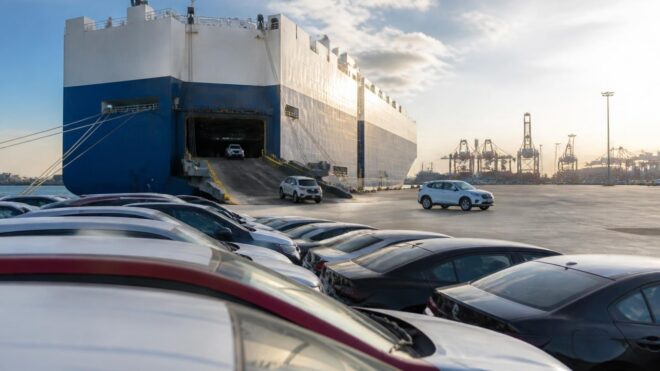
The global automotive industry depends on sophisticated maritime logistics to move millions of vehicles annually across oceans. At the heart of this operation stands the car freighter, a specialized vessel engineered specifically for transporting automobiles, trucks, and other rolling stock across international waters. These purpose-built ships represent the backbone of automotive distribution, connecting manufacturing centers in Asia, Europe, and North America to markets worldwide. Understanding how car freighter operations work provides valuable insight into the complex journey vehicles take before reaching dealerships or customers' homes.
Understanding Car Freighter Vessel Design and Capabilities
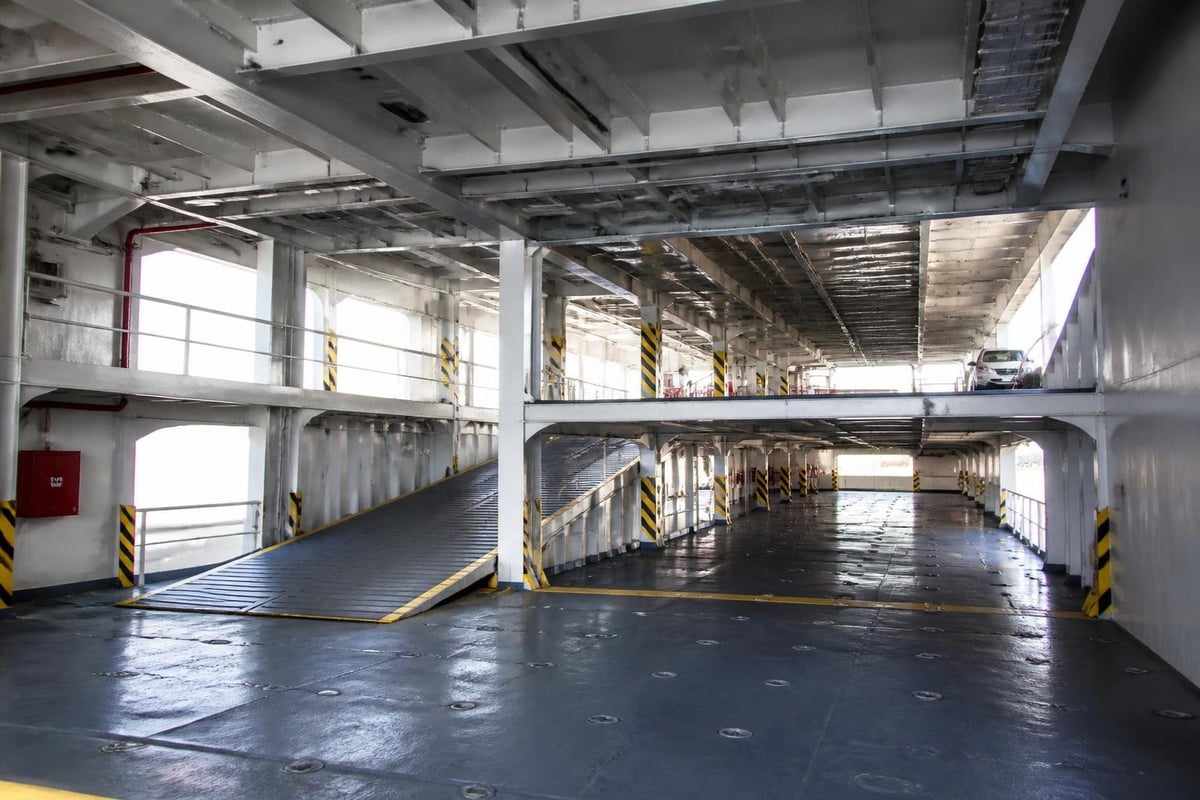
A car freighter, technically classified as a Roll-on/Roll-off (Ro-Ro) vessel, features a distinctive design optimized for vehicular cargo. Unlike container ships that require cranes for loading, these specialized vessels incorporate internal ramps and multiple decks that allow vehicles to be driven directly aboard.
Modern car freighter vessels typically range from 500 to 8,000 vehicle capacity, with the largest pure car and truck carriers (PCTCs) reaching lengths exceeding 200 meters. The internal architecture consists of 10 to 14 adjustable decks connected by internal ramps, creating a continuous pathway throughout the vessel. This innovative design maximizes space utilization while protecting cargo from weather exposure.
Key Technical Features
The engineering behind car freighter construction addresses specific challenges inherent in maritime vehicle transport:
- Adjustable deck heights: Hydraulic systems modify clearance to accommodate different vehicle types, from compact sedans to tall SUVs
- Ventilation systems: Powerful air circulation prevents fuel vapor accumulation and moisture buildup
- Lashing points: Thousands of secure tie-down locations distributed across decks
- Stern and side ramps: Multiple access points expedite loading and unloading operations
- Fire suppression: Advanced CO2 and water-mist systems protect high-value cargo
The International Maritime Organization provides comprehensive cargo securing standards that govern how vehicles must be safely stowed aboard these vessels. Proper securing prevents shifting during transit, which could compromise vessel stability in rough seas.
Loading Operations and Port Infrastructure
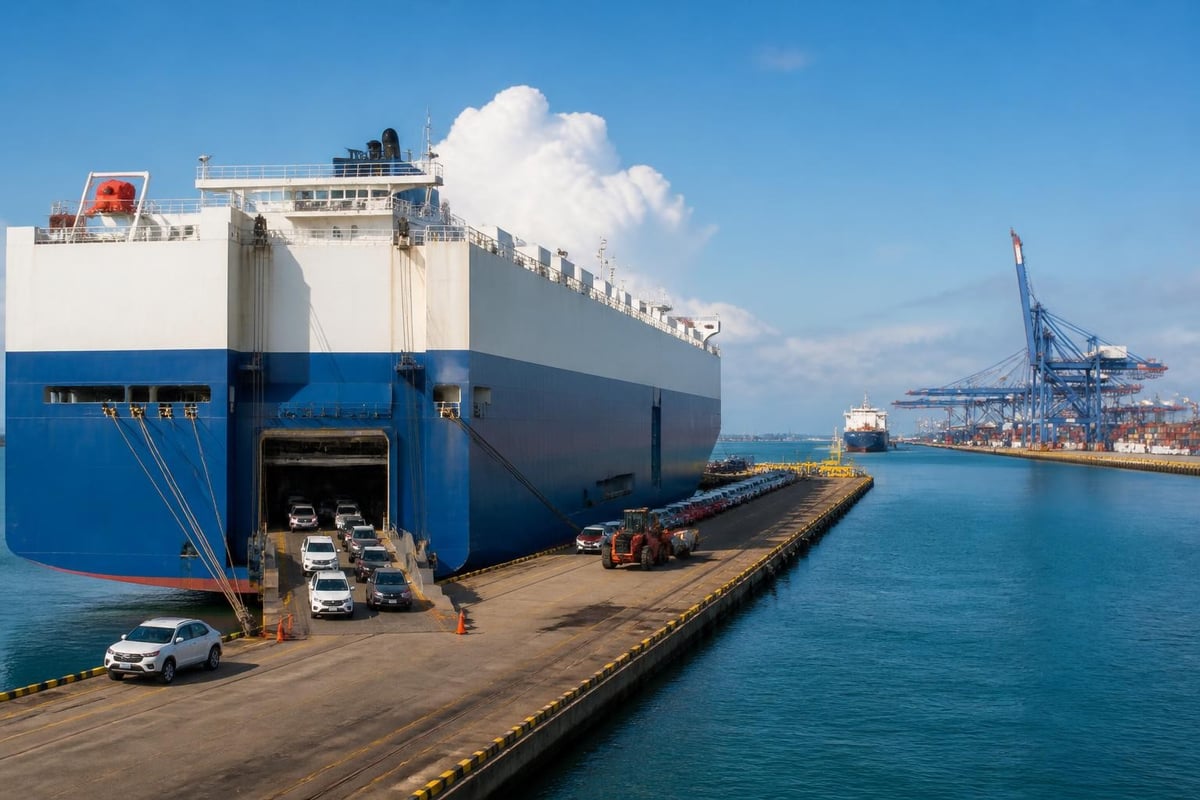
Car freighter operations demand specialized port facilities designed to handle high-volume vehicle throughput. Major automotive ports feature dedicated Ro-Ro terminals equipped with shore ramps that align precisely with vessel stern doors.
The Loading Process
Professional stevedores execute a carefully choreographed loading sequence. Vehicle placement follows detailed stowage plans created by specialized software that accounts for destination ports, vehicle dimensions, weight distribution, and center of gravity calculations. Drivers maneuver each vehicle to its assigned position where dock workers secure it using wheel chocks and lashing straps.
Terminal efficiency directly impacts vessel turnaround time. High-performance facilities can load or discharge 1,000 vehicles in a single shift. The Port of Antwerp-Bruges, one of Europe's busiest automotive hubs, handles millions of vehicles annually through dedicated Ro-Ro infrastructure.
| Loading Stage | Duration | Key Activities |
|---|---|---|
| Pre-arrival planning | 24-48 hours | Stowage plan creation, berth allocation |
| Vessel berthing | 1-2 hours | Pilot guidance, mooring, ramp connection |
| Vehicle loading | 8-16 hours | Driving aboard, securing, inspection |
| Documentation | 2-4 hours | Customs clearance, cargo manifest finalization |
The design of terminals for Ro-Ro vessels requires careful consideration of tidal ranges, vessel traffic patterns, and shore-side vehicle storage capacity. Terminal planners must balance efficiency with safety requirements and environmental regulations.
Global Trade Routes and Market Dynamics
Car freighter routes form an intricate network connecting automotive manufacturing regions to consumer markets. Major trade lanes include Asia to North America, Europe to North America, and intra-Asian routes serving rapidly growing markets.
Japanese and Korean manufacturers rely heavily on car freighter services to export vehicles to the United States, with typical Pacific crossings taking 10 to 14 days. European luxury brands utilize transatlantic routes to serve North American dealerships, while return voyages often carry American-made SUVs and trucks to European markets.
Fleet Composition and Capacity Trends
The global car freighter fleet has evolved significantly over recent decades. According to Clarksons Research, the worldwide PCTC fleet comprises approximately 750 vessels with combined capacity exceeding 4 million CEU (Car Equivalent Units). The orderbook reflects industry trends toward larger, more fuel-efficient vessels incorporating LNG propulsion and other green technologies.
Market conditions heavily influence car freighter utilization rates. During economic expansion periods, these vessels operate near full capacity with favorable freight rates. Conversely, automotive production slowdowns or trade disruptions can leave significant capacity underutilized. The detailed Ro-Ro shipping analysis from Dynamar provides comprehensive market intelligence on capacity trends, trade flows, and industry consolidation.
Safety Protocols and Risk Management
Operating a car freighter involves managing multiple safety considerations unique to vehicular cargo. Fire remains the most significant risk, as modern vehicles contain flammable fluids, batteries, and combustible interior materials. Several high-profile car freighter fires in recent years have prompted industry-wide safety improvements.
Battery disconnection procedures, fuel tank level restrictions, and enhanced fire detection systems now represent standard practice. Crew members receive specialized training in automotive cargo handling and emergency response. The UK's Marine Accident Investigation Branch maintains detailed investigation reports documenting lessons learned from maritime casualties involving vehicle carriers.
Securing and Cargo Care
Proper vehicle securing prevents damage during transit and maintains vessel stability. Each vehicle requires multiple lashing points, typically four to six depending on size and sea conditions expected on the route. Workers use specialized webbing straps rated for marine applications, avoiding chains that could damage vehicle finishes.
Environmental protection extends beyond emissions control. Modern car freighter operations include bilge water management, ballast water treatment, and procedures to prevent fuel or fluid spills from cargo. California's stringent terminal emissions requirements influence vessel operations at West Coast ports, driving adoption of shore power connections and cleaner auxiliary engines.
Connection to Domestic Auto Transport
While car freighter vessels handle international ocean transport, domestic distribution relies on different transportation methods. Once vehicles arrive at port and clear customs, they enter the inland transportation network for final delivery to dealerships or customers.
Most vehicles complete their journey via truck transport on specialized multi-car haulers. Companies like AutoPlex Transport provide the critical last-mile delivery that connects port facilities to destinations throughout the United States. This intermodal approach combines the efficiency of maritime shipping with the flexibility of ground transportation.
Regional Distribution Networks
Major port cities serve as distribution hubs where imported vehicles enter regional transport networks. For example, vehicles arriving at Houston, Los Angeles, or Jacksonville transfer to carriers serving surrounding states. The logistics coordination required to synchronize ocean arrival with ground transportation demonstrates the complexity of automotive supply chains.
Customers purchasing imported vehicles in locations like Erie County or Bronx County rarely consider the extensive journey their vehicle completed. From factory to dealership, the process typically involves factory transport to port, car freighter ocean crossing, customs clearance, and final delivery by professional auto transport services.
Economic Impact and Industry Statistics
The car freighter industry represents a multi-billion dollar sector within maritime shipping. Seaborne automobile trade exceeds 25 million units annually, with values reaching hundreds of billions of dollars. This volume reflects the automotive industry's global manufacturing footprint and consumer demand across diverse markets.
Freight rates for car freighter voyages fluctuate based on fuel costs, vessel availability, and trade volumes. Typical rates range from $100 to $300 per vehicle for major trade lanes, though specialized cargo or less common routes command premium pricing. Long-term contracts between automakers and shipping lines provide rate stability and guaranteed capacity.
The Institute of Shipping Economics and Logistics tracks comprehensive statistics on car carrier fleet composition, trade volumes, and market trends. These authoritative data sources inform industry planning and investment decisions.
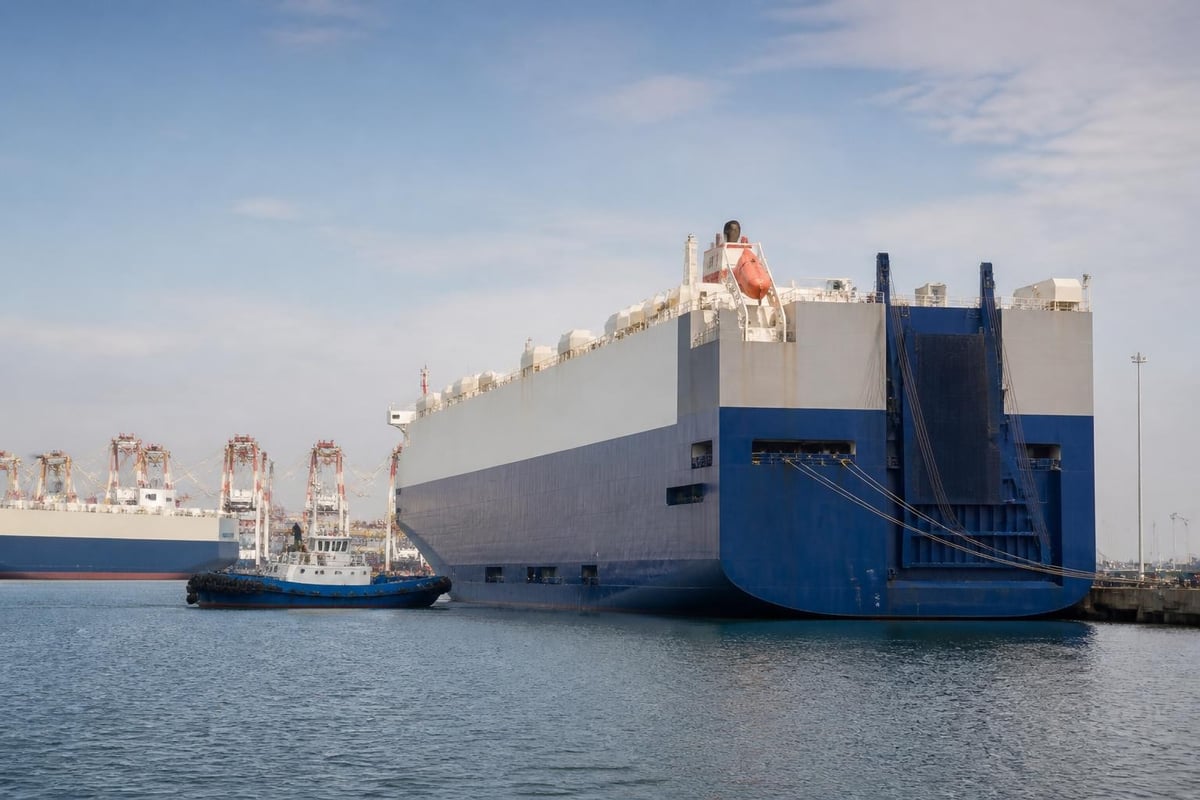
Environmental Considerations and Future Developments
Car freighter operators face mounting pressure to reduce environmental impact. The shipping industry's commitment to halving greenhouse gas emissions by 2050 drives significant technological innovation in this sector.
Emissions Reduction Strategies
Leading operators are implementing multiple approaches to improve environmental performance:
- Alternative fuels: LNG-powered car freighters reduce sulfur and particulate emissions compared to traditional marine diesel
- Hull optimization: Advanced hull designs and air lubrication systems decrease hydrodynamic resistance
- Slow steaming: Reduced operational speeds cut fuel consumption and emissions
- Shore power: Cold ironing at port eliminates auxiliary engine emissions during cargo operations
- Route optimization: Weather routing software identifies fuel-efficient courses
Several shipbuilders now offer ammonia-ready and methanol-capable designs, positioning the car freighter fleet for future zero-carbon fuel adoption. Battery-electric propulsion remains impractical for ocean-going vessels due to energy density limitations, though hybrid systems may supplement conventional power plants.
Operational Challenges and Industry Adaptation
Car freighter operators navigate complex operational challenges beyond basic transportation. Trade policy changes, tariff implementations, and shifting manufacturing locations constantly reshape optimal routes and deployment strategies.
The rise of electric vehicle production introduces new considerations for car freighter operations. EVs present different fire suppression challenges due to lithium-ion battery characteristics. Industry groups are developing specialized protocols for EV maritime transport, including battery state-of-charge requirements and enhanced monitoring systems.
Fleet Modernization and Capacity Management
Shipping lines must balance fleet renewal against market demand uncertainty. Ordering new car freighter tonnage requires multi-year lead times and represents massive capital investments. Overcapacity depresses freight rates and profitability, while insufficient capacity forces shippers to seek alternative, potentially less efficient transportation modes.
The industry consolidation trend sees major operators acquiring competitors or forming vessel-sharing agreements to optimize capacity utilization. This coordination allows better matching of vessel size to route requirements while maintaining service frequency.
Regional auto transport providers work within this global context, understanding that international vehicle movements ultimately connect to domestic delivery networks. Whether serving Chautauqua County or Essex County, professional transporters represent the final link in an intricate supply chain that often begins with a car freighter crossing the Pacific or Atlantic.
Technology Integration and Digital Transformation
Modern car freighter operations increasingly leverage digital technologies to enhance efficiency, safety, and customer service. Real-time cargo tracking systems provide shippers with vessel position updates and estimated arrival times, enabling better coordination of downstream logistics.
Advanced analytics help optimize stowage planning, considering not just physical dimensions but also discharge port sequence, vehicle value protection, and weight distribution for optimal vessel trim. Machine learning algorithms identify patterns in damage claims, helping operators refine handling procedures and reduce cargo loss.
Blockchain technology shows promise for streamlining the complex documentation surrounding international vehicle shipments. Digital bills of lading, customs declarations, and insurance certificates could reduce processing time and minimize errors inherent in paper-based systems.
| Technology Application | Benefit | Implementation Status |
|---|---|---|
| IoT sensors | Real-time cargo monitoring | Widespread adoption |
| Automated stowage planning | Optimized space utilization | Standard practice |
| Predictive maintenance | Reduced downtime | Growing adoption |
| Digital documentation | Faster processing | Early adoption phase |
| Alternative fuels | Emissions reduction | Accelerating deployment |
The digital transformation extends throughout the automotive supply chain, connecting manufacturers, shipping lines, port operators, customs authorities, and final-mile carriers in integrated information systems. This connectivity enables the just-in-time delivery precision that modern automotive retail demands.
Understanding car freighter operations reveals the remarkable complexity behind global vehicle distribution and the specialized maritime infrastructure supporting international automotive trade. From purpose-built vessels capable of carrying thousands of vehicles to the sophisticated port facilities and digital systems coordinating their movements, this industry exemplifies modern logistics efficiency. When your imported vehicle needs reliable ground transportation after clearing customs, or you're relocating and require professional auto shipping services, AutoPlex Transport provides the expertise and care to safely deliver your vehicle anywhere across the United States. Contact our Houston-based team today to discuss your vehicle transport needs and experience the difference that professional, dedicated service makes.
