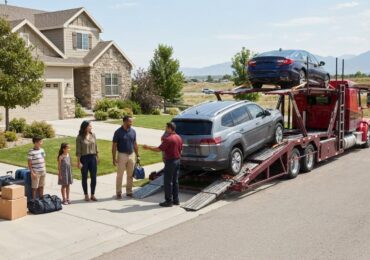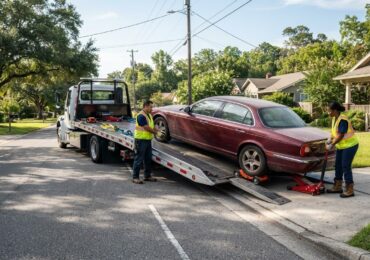
Can a car that won’t start still be transported safely, or will its condition prevent pickup? It depends on more than whether the engine turns over. If you’re figuring out how to ship a car that doesn’t run, start by describing exactly what the vehicle can and can’t do. That helps a transporter assess loading needs and identify questions to resolve before pickup.
A car may also be unable to roll, steer, or brake, or the pickup location may be difficult to access. These details can affect whether a carrier can load it, so share them upfront rather than waiting until pickup day.
This guide explains how to assess and document the car’s condition, compare transport options, prepare for pickup, and request a quote. It also covers what to confirm with a transport provider, including AutoPlex Transport Company, before scheduling.
Key Takeaways
- For how to ship a car that doesn’t run, identify whether it starts, rolls, steers, and brakes so a transporter can assess its loading needs.
- Compare open-carrier and enclosed transport based on your vehicle and preferences, then confirm the carrier can accommodate the car’s condition.
- For a useful quote, share the vehicle’s condition and dimensions, route, transport type, and pickup and delivery access details.
- Follow the transporter’s instructions about keys, access, and vehicle contents. Don’t assume a mechanical repair is required without confirming the loading plan.
- Before scheduling, review the vehicle condition, loading plan, access, service type, and handoff details with the provider.
How to Ship a Car That Doesn’t Run: Start by Assessing Its Condition
A car that can’t be driven may still be transportable, depending on its condition and whether a carrier can meet its loading needs. Before arranging transport, describe what the vehicle can and can’t do. “Non-running” might mean the engine won’t start, or it might mean the car starts but can’t roll, steer, or brake safely. Those are different loading situations.
An inoperable vehicle is one that cannot be driven onto a carrier under its own power, but acceptance depends on the vehicle’s condition and the carrier’s capabilities. Treat this as a starting point, not a guarantee that the vehicle can be transported. A provider or auto transport broker can help coordinate arrangements, but the shipment needs to be assessed using accurate details.
Can the car start, roll, steer, and brake?
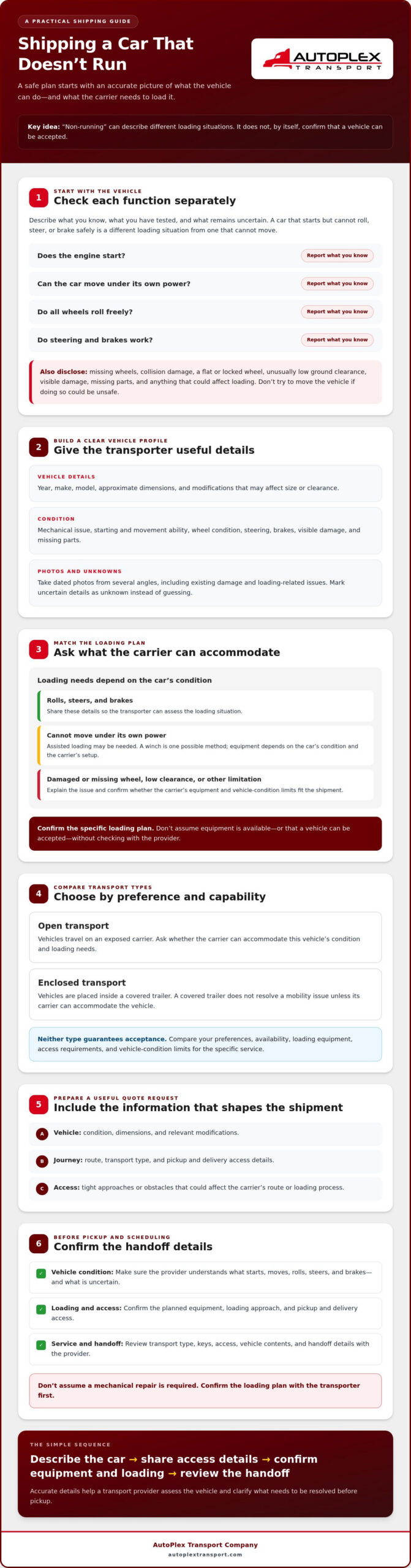
Check each function separately. Does the engine start? Can the car move under its own power? Do all wheels roll freely, and do the steering and brakes work? If you’re unsure, say so rather than guessing. Don’t try to move the vehicle if doing so could be unsafe.
Report missing wheels, collision damage, a flat or locked wheel, unusually low ground clearance, or other issues that could affect loading. Distinguish what you know from what hasn’t been tested. A car that rolls and steers presents a different loading situation from one that cannot move or has a damaged wheel, so “non-running” alone isn’t enough information.
What details should you record before requesting transport?
Prepare a short vehicle profile before contacting a transporter. It will help you describe the situation and ask whether the vehicle can be accommodated.
- Vehicle details: Note the year, make, model, approximate dimensions, and modifications that could affect the vehicle’s size or clearance.
- Condition: Describe the mechanical issue and whether the car starts, moves, rolls, steers, and brakes. Mention visible damage or missing parts.
- Photos: Take dated photos from several angles, including existing damage and any loading-related issues you’ve noticed.
Keep your notes and photos handy when requesting a quote. They can help the provider understand the vehicle’s condition and clarify what arrangements need to be confirmed. If a detail is uncertain, identify it as unknown rather than presenting an assumption as fact.
Choose a Transport Arrangement That Fits the Car’s Loading Needs
The right transport arrangement depends partly on how the vehicle can be loaded, not just on whether it starts. A car that rolls, steers, and brakes has different loading needs from one that cannot move or has a damaged or missing wheel. Explain these limitations when asking about options. Neither open nor enclosed transport guarantees that a particular disabled vehicle can be accepted.
When might a winch or other loading equipment be needed?
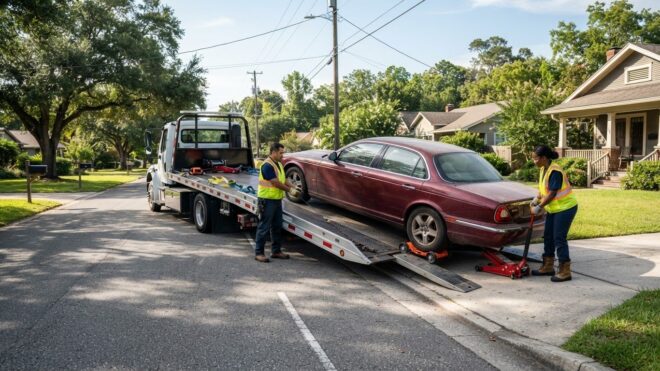
If the car can’t move under its own power, it may need assisted loading. A winch is one possible method, but the right equipment depends on the car’s condition and the carrier’s setup. Tell the transporter whether the wheels roll, whether the steering and brakes work, and whether low clearance or damage could affect loading.
Before scheduling, ask whether the carrier has suitable equipment and confirm any vehicle-condition limits. Describe the pickup location too, including tight access or obstacles that could affect the carrier’s route to the vehicle or the loading process. Don’t assume equipment is available simply because a provider transports vehicles. Confirm the loading plan and requirements for your shipment.
Should you compare open and enclosed transport?
Open transport carries vehicles on an exposed carrier, while enclosed transport places them inside a covered trailer. Your choice may depend on your preferences, the vehicle, and which arrangement is available for the shipment. Learn more about open transport car shipping and review this enclosed car transport buying guide to compare the options.
Carrier type alone doesn’t determine whether a non-running car can be loaded. A covered trailer won’t solve a mobility issue unless its carrier can accommodate the vehicle’s condition. An open carrier isn’t automatically suitable either. Ask about loading equipment, access requirements, and vehicle-condition limits for the specific service.
The Federal Motor Carrier Safety Administration’s consumer advisory on shipping your car offers guidance on selecting an automobile transporter and understanding broker and carrier roles. If you’re comparing arrangements, you can also contact AutoPlex Transport Company about your vehicle’s condition and ask what options may be available for your shipment.
How to Request a Quote for Shipping a Non-Running Car
A useful quote request describes the shipment, not just the vehicle’s make and model. The car’s condition and size, route, transport type, and access at pickup and delivery can all affect the arrangements a provider considers. For how to ship a car that doesn’t run, use the quote process to find out whether your specific vehicle can be accommodated before scheduling pickup.
- Gather the vehicle and route details. Provide the year, make, model, approximate dimensions, and any modifications that could affect loading. Share the pickup and delivery locations and the timing you’re considering. If the dimensions are estimates, label them as approximate.
- Describe the condition clearly. State whether the car starts and moves under its own power, whether its wheels roll freely, and whether it steers and brakes. Include known mechanical problems, damage, missing wheels, or other issues that could affect loading. “Inoperable” by itself doesn’t explain what the carrier needs to know.
- Explain access at both ends. Mention narrow or obstructed approaches, restricted parking, limited turning space, or other loading-area constraints at pickup and delivery. Explain where the vehicle will be positioned and whether a carrier can safely reach it. These details help identify issues to resolve before scheduling.
- Ask what transport arrangements may work. Ask whether open or enclosed transport is available for the car’s condition, and what loading equipment and vehicle requirements apply. Confirm that the provider can accommodate both the vehicle and the access conditions. Don’t assume an option is suitable until the details have been reviewed.
- Review the arrangements before confirming. Clarify pickup expectations, delivery arrangements, required documentation, and preparation instructions. Ask how carrier liability and applicable insurance terms are described in the transport agreement, and review the written terms before committing to pickup.
Quote checklist: Share the car’s year, make, model, dimensions, route, whether it starts, rolls, steers, and brakes, any known damage, pickup and delivery access limits, and preferred transport type. Ask about equipment, documentation, and coverage terms.
After sharing these details, ask the provider to confirm acceptance and equipment requirements for your specific vehicle before scheduling. AutoPlex Transport Company accepts quote requests for individual shipping needs. Confirm directly whether a non-running vehicle and its loading situation can be accommodated.
Prepare the Car and Pickup Location Before the Carrier Arrives
Preparation doesn’t necessarily mean repairing the vehicle. When considering how to ship a car that doesn’t run, first find out what the transporter requires for your car and the agreed loading arrangement. Follow confirmed instructions rather than assuming the vehicle must be repaired, moved, or prepared in a particular way. If its condition changes before pickup, contact the transporter to review the loading plan.
For a broader overview of preparing for a vehicle shipment, use this car transport preparation checklist. Follow the guidance that applies to your situation and confirm instructions specific to the non-running vehicle or carrier.
How should you get the vehicle ready for loading?
Ask the transporter what preparation is needed for your vehicle and loading arrangement. Confirm how the carrier will access the car, whether keys need to be available, and what instructions to provide if the vehicle can’t be started or moved. Follow the transporter’s directions about personal items and anything else that must be addressed before loading.
Make agreed keys and access details available to the person handling the handoff. Keep the pickup area as accessible as possible, and tell the transporter about any new obstruction or access change. Don’t attempt to drive, roll, or repair an unsafe vehicle to meet a requirement you haven’t confirmed. If you’re unsure whether a step is safe or necessary, ask first.
What should you check at pickup and delivery?
Before the carrier takes possession, photograph the vehicle from several angles, including existing damage and areas that may be difficult to see. Keep the images with your notes. If the carrier provides a condition report or bill of lading, review it carefully and ask for visible damage or other discrepancies to be recorded before signing.
At delivery, compare the car’s visible condition with your pickup photos and the handoff record. If you notice a discrepancy, raise it promptly with the carrier and follow the documentation steps in your transport agreement. Clear records help both sides understand the vehicle’s condition at each handoff.
Before pickup, confirm that the carrier has the correct vehicle and access details, and communicate any changes. To discuss your vehicle’s condition and possible arrangements, request a quote from AutoPlex Transport Company.
Arrange Non-Running Car Shipping with a Transporter
Before committing to a shipment, make sure the transporter has enough information to assess the car and confirm a workable plan. A quote or initial discussion doesn’t guarantee that every non-running vehicle can be accepted. The vehicle’s condition, available loading equipment, and access at both ends all need to be reviewed for your shipment.
What should be confirmed before you schedule?
Use this checklist to catch details that could cause confusion at pickup:
- Vehicle condition: Confirm the transporter understands whether the car starts, moves under its own power, rolls freely, steers, and brakes. Include known damage or missing parts.
- Equipment and acceptance: Ask whether the specific vehicle can be accommodated and confirm which loading equipment is available and appropriate. Don’t assume a particular setup is provided.
- Access: Review pickup and delivery locations for restrictions, obstacles, limited space, or other conditions that could affect carrier access and loading.
- Service and timing: Confirm whether open or enclosed transport is available for the vehicle’s condition, along with pickup expectations and delivery arrangements.
- Handoff and terms: Clarify required documentation, preparation instructions, and how the vehicle’s condition will be recorded. Review the written quote and applicable transport terms before agreeing to the shipment.
If any detail changes after confirmation, tell the transporter before pickup. A newly discovered wheel issue or a change in access could affect the loading plan, so ask whether the arrangement still works.
How can AutoPlex Transport Company help with your shipping request?
AutoPlex Transport Company arranges vehicle transportation across the United States, with open-carrier, enclosed, door-to-door, and interstate options. Customers can request quotes based on their shipping needs. Since acceptance and equipment availability aren’t confirmed for every non-running car or loading situation, share the vehicle’s condition and access details and ask which arrangements may be available.
A clear conversation is the practical final step in learning how to ship a car that doesn’t run: confirm the details before scheduling, then follow the agreed handoff instructions. To discuss your shipment, request a vehicle transport quote. Explain what the car can and can’t do, describe access at pickup and delivery, and ask whether the vehicle and loading arrangement can be accommodated.
Take the Next Step Toward a Confirmed Transport Plan
Learning how to ship a car that doesn’t run starts with an honest assessment of what the vehicle can do. Whether it starts, rolls, steers, and brakes helps a transporter evaluate loading options. Share those details alongside the vehicle’s dimensions, route, and pickup and delivery access when requesting a quote.
Before scheduling, confirm that the specific vehicle can be accommodated, what equipment is available, which service type may fit, and what to expect at handoff. Open-carrier and enclosed transport are options to discuss, but neither guarantees acceptance of a particular non-running car. Review the written quote and applicable transport terms before agreeing to the shipment.
AutoPlex Transport Company arranges nationwide vehicle transportation, including open-carrier, enclosed, door-to-door, and interstate options. Share your shipment details and ask what arrangements may be available for your car. Request a vehicle transport quote, and confirm acceptance and loading requirements for your specific vehicle.
Frequently Asked Questions
Can you ship a car that does not start?
Yes, a car that won’t start may be transportable if a provider confirms it can accommodate the vehicle and its loading needs. Share whether the wheels roll freely and whether the car steers and brakes, along with any damage or missing parts. “Doesn’t start” doesn’t describe every loading concern. Acceptance depends on the vehicle, available equipment, and pickup and delivery access.
How do you transport a car that will not roll or steer?
A car that won’t roll or steer may need specialized loading arrangements, and not every carrier can accommodate those limitations. Describe which wheels are affected, whether steering works, and whether the brakes function. Ask the provider what loading method and equipment may be suitable, then confirm they’re available for your shipment before scheduling. Don’t attempt to move an unsafe vehicle just to make loading easier.
What equipment is used to load a non-running car onto a carrier?
A carrier may use a winch to load a vehicle that cannot move under its own power, but the right equipment depends on whether the car can roll, steer, and brake. A vehicle that cannot roll may need a different arrangement. Equipment varies by carrier, so describe the car’s condition and ask the provider to confirm suitable equipment and any limitations before pickup.
Can a non-running car be shipped on an open carrier?
Possibly. Open-carrier transport may work if the carrier can accommodate the vehicle’s condition and loading requirements. The car’s ability to roll, steer, and brake, along with available equipment and pickup access, may affect whether the arrangement is feasible. Explain exactly what the car can and can’t do, then confirm acceptance for that shipment rather than assuming open transport guarantees it can be loaded.
Is enclosed transport necessary for a car that does not run?
No, enclosed transport isn’t automatically necessary just because a car doesn’t run. Open and enclosed transport describe carrier types, not whether a vehicle can be loaded. Choose based on your preferences and the options available, then separately confirm whether the carrier can accommodate the car’s condition. Ask about loading equipment, vehicle requirements, and access at pickup and delivery.
What information should I give a car shipping company about an inoperable vehicle?
Share the year, make, model, approximate dimensions, route, and any significant modifications. Explain whether the car starts, moves under its own power, rolls freely, steers, and brakes. Include known damage, missing parts, and pickup or delivery access limits, such as restricted parking or a narrow loading area. These details help the provider assess whether the specific vehicle and loading arrangement can be accommodated.
Does car shipping insurance cover damage to a non-running vehicle?
Coverage depends on the applicable policy and transport agreement, so don’t assume a non-running vehicle or every type of damage is covered. Before scheduling, ask how carrier liability and insurance terms apply to your vehicle’s condition, including any limitations or exclusions. Photograph existing damage and review the condition report at handoff. If anything in the agreement is unclear, request an explanation of the coverage in writing.