
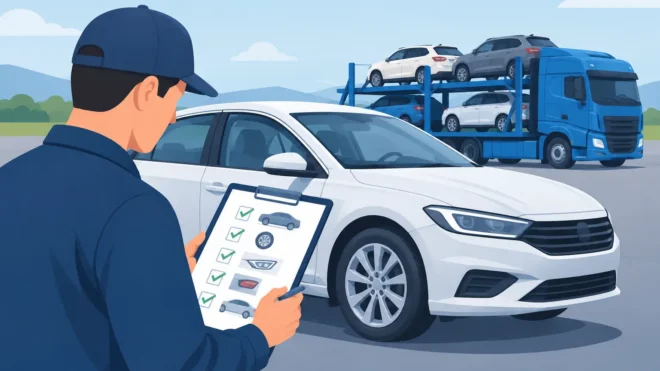
A vehicle can arrive right on schedule and still leave an owner uneasy if the pickup and delivery paperwork feels rushed. This vehicle condition report guide explains what to look for, what to document, and how to handle the inspection process with confidence when shipping a car across the country.
For most customers, the condition report is not complicated. It is simply the written record of your vehicle’s visible condition before it is loaded and after it is delivered. Taking a few focused minutes at both appointments helps protect you, gives the driver an accurate reference, and keeps the shipping process clear from start to finish.
What Is a Vehicle Condition Report?
A vehicle condition report records visible exterior damage and the vehicle’s general state at a specific point in time. In auto transport, it is commonly included on the bill of lading, the document used to acknowledge pickup and delivery.
The report may note scratches, dents, paint chips, cracked glass, loose trim, wheel damage, and other visible items. It may also include the vehicle identification number, mileage, fuel level, keys provided, and basic operating information. The driver typically marks damage locations on a vehicle diagram and may use written notes for added detail.
This document is not meant to be intimidating or overly technical. Its purpose is to establish a shared baseline. If a question comes up at delivery, the pickup report and delivery report make it easier to compare the vehicle’s condition fairly.
Why the Report Matters Before and After Transit
Long-distance auto shipping removes the wear, mileage, lodging costs, and fatigue of a cross-country drive. But handing over a vehicle still requires a careful exchange. The condition report gives that exchange structure.
At pickup, it documents what was already present. At delivery, it gives you a clear reference point for checking the vehicle before you sign the final paperwork. This is particularly valuable for online car buyers who have not spent much time with the vehicle, families relocating on a tight schedule, and owners shipping classic, luxury, or recently restored cars.
A thorough report also prevents small existing issues from becoming a source of confusion. A tiny paint chip on a bumper may not affect how the car drives, but recording it accurately means everyone is working from the same information.
Vehicle Condition Report Guide: What to Do Before Pickup
Your own inspection should happen before the carrier arrives, ideally in daylight and when the vehicle is clean enough to see the paint and trim clearly. You do not need professional equipment. A phone, a little time, and an organized approach are enough.
Walk slowly around the vehicle and take wide photos of all four sides. Then take closer photos of anything that stands out, including dents, scratches, cracked lights, curb rash, windshield chips, or missing pieces. Photograph the roof, hood, trunk, bumpers, mirrors, wheels, and lower rocker panels. If your vehicle has aftermarket accessories, document those as well.
A short video can be useful, especially for showing an overall walk-around. Photos are usually better for close details because they are easier to review later. Make sure your files save with a date and keep them until the vehicle has been delivered and inspected.
Before the driver arrives, remove personal belongings and loose items from the vehicle. Auto carriers are designed to transport vehicles, not household goods. Loose items can shift, create damage concerns, or complicate loading. Remove toll tags, parking passes, detachable electronics, and personal documents. Leave only the keys and any items specifically arranged with your transport coordinator.
It is also smart to check your battery, tire pressure, and fuel level. Most carriers need a vehicle that can be safely loaded and unloaded. Keep the fuel level low, generally around one-quarter tank, unless your carrier gives different instructions. A lower fuel level reduces weight while leaving enough fuel for handling at pickup and delivery.
How to Review the Pickup Inspection
When the carrier arrives, the driver will inspect the vehicle with you when possible. Be present for this walk-around or have a trusted adult available who understands the vehicle’s current condition. If pickup occurs at dusk, in rain, or in a poorly lit area, use your phone flashlight and take extra photos.
Read the markings on the report before you sign. Do not assume the driver has seen every detail, especially on a dark-colored vehicle or one that is dusty from recent weather. Point out existing damage politely and ask that it be included if it is visible and relevant.
You should receive or retain a copy of the pickup documentation. Take a photo of the completed report if a printed or digital copy is not immediately provided. Confirm the vehicle’s mileage, note the fuel level, and make sure the description matches your car, truck, or SUV.
The goal is accuracy, not perfection. Normal road wear may be noted generally, while larger dents, long scratches, or cracked components should be described more specifically. If you disagree with a mark or note, raise the question before signing instead of hoping it can be sorted out later.
What to Check When Your Vehicle Is Delivered
Delivery is the second half of the process, and it deserves the same attention as pickup. Before signing the delivery paperwork, walk around the vehicle with the driver and compare it against the pickup condition report and your photos.
Start with the same areas you documented before shipping. Check the front and rear bumpers, hood, doors, trunk, roof, mirrors, glass, wheels, tires, and lower panels. Look at the vehicle from a few angles because shallow dents and paint scuffs can be easier to see in reflected light.
Then check for four practical details:
- New scratches, dents, chipped paint, or broken exterior parts
- Glass damage, including windshield cracks or damaged lights
- Wheel, tire, or underbody issues that were not noted at pickup
- Signs that the vehicle does not start, move, or operate as expected
Most deliveries go smoothly, and a clean inspection allows you to sign with peace of mind. Still, do not let a busy schedule pressure you into skipping the walk-around. If you cannot be there, designate a trusted recipient and provide them with the pickup photos and report in advance.
If You Find New Damage
If you notice something that was not documented at pickup, remain calm and address it before signing the final delivery paperwork. Show the driver the issue, compare it to the pickup report, and photograph it from multiple angles. Include a wider photo that shows where the damage is located on the vehicle, then take close-ups that show the detail.
Ask the driver to note the issue on the delivery bill of lading. Be specific. “Scratch on driver-side rear door” is more useful than “damage on side.” Do not sign a clean delivery report if you have identified a concern that has not been recorded.
From there, contact your transport company promptly and provide copies of the pickup and delivery reports along with your photos. Clear records allow the company to review the situation efficiently and explain the next steps. Keep all paperwork, messages, and images together until the matter is resolved.
There are situations where the answer is less obvious. For example, a small mark may have been hidden by dirt at pickup, or poor lighting may make a photo hard to interpret. That is why detailed notes and respectful communication matter. The documentation should support a fair review, not turn a straightforward delivery into an argument.
Special Considerations for High-Value and Inoperable Vehicles
For classic cars, luxury vehicles, and collector vehicles, condition documentation should be even more detailed. Photograph trim pieces, custom wheels, low ground clearance areas, and any pre-existing paint imperfections. Enclosed transport can provide added protection from weather and road exposure, but the inspection process remains just as important.
Inoperable vehicles need special attention because loading equipment may be required. Tell your shipping coordinator in advance if the car does not start, steer, brake, or roll normally. Document its condition and clearly describe its limitations so the proper equipment can be arranged. Accurate information helps the carrier plan a safe pickup and avoids unnecessary delays.
For a worry-free shipping experience, choose a transport partner that encourages questions and gives you time to review the paperwork. AutoPlex Transport helps customers coordinate pickup, delivery, and the right service level so the process feels clear from the first call onward.
Before you hand over the keys, save your photos, review the report, and keep a copy of every document. Those few minutes of preparation let you focus less on what could go wrong and more on arriving at your destination with your vehicle ready for the road.
