

What if the lowest car shipping quote isn’t the lowest final cost? Hidden fees in car shipping can be hard to spot when an estimate doesn’t explain what’s included or which assumptions it relies on. Depending on the provider and shipment, possible adjustments may relate to fuel, pickup or delivery access, expedited service, or a vehicle that doesn’t run. Changes to the shipment plan may also affect the amount due.
Before you commit, get a clear explanation of the service and terms. This guide shows you how to identify possible additional charges, compare estimates using the same vehicle, route, transport type, and timing, and confirm payment terms and responsibilities in writing. You’ll also find questions to ask about price adjustments and what to do if shipment details change. A quote based on your specific shipping needs can clarify its assumptions, whether you’re comparing open carrier or enclosed transport, and help you make a more informed decision.
Key Takeaways
- Check whether possible charges are disclosed, and ask which shipment changes could affect the quoted terms.
- Compare estimates using the same vehicle details, pickup and delivery locations, access conditions, schedule, and transport type.
- Distinguish a clearly explained adjustment tied to a changed shipment detail from a charge that wasn’t disclosed before you committed.
- Provide accurate vehicle information and review payment terms, responsibilities, and adjustment conditions in writing before booking.
- Choose a provider whose service fits your needs and whose quote terms are clear and documented.
Hidden Fees in Car Shipping: What a Quote May Leave Unclear
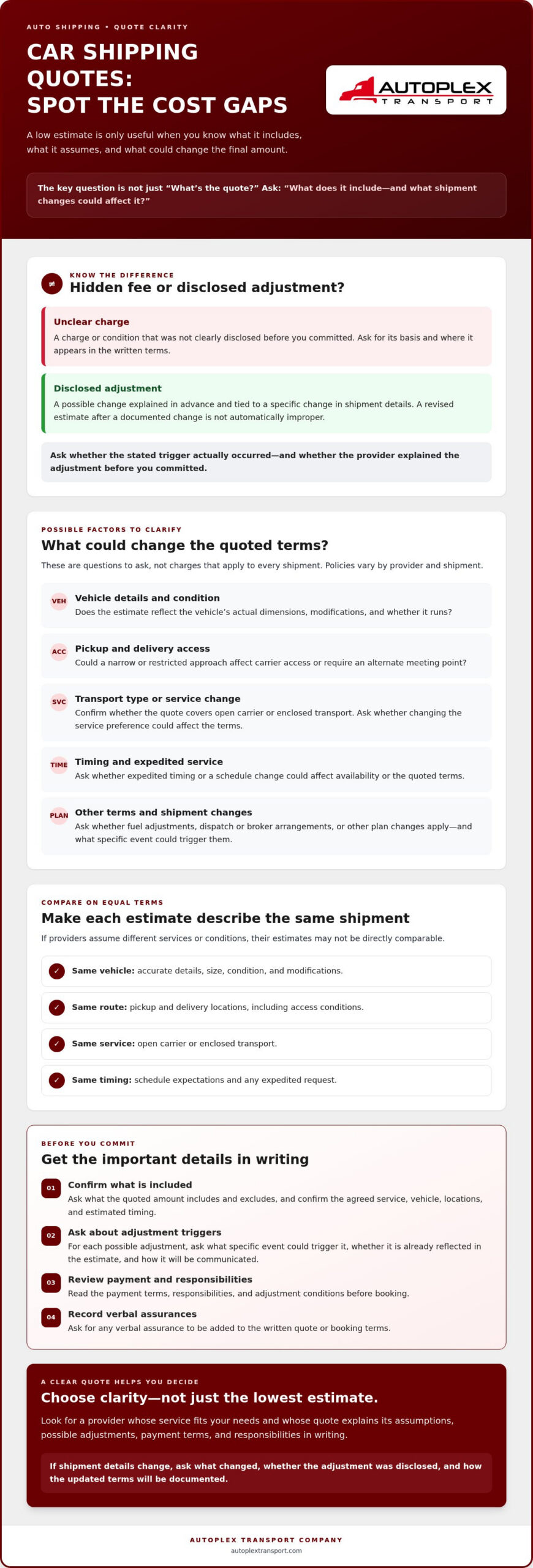
A car shipping quote is useful only when you understand which service and shipment details it assumes. A hidden fee is a charge or condition that wasn’t clearly disclosed before you committed. A disclosed adjustment is a possible change explained in advance and tied to a specific change in shipment details. That distinction matters: a revised estimate after a documented change isn’t automatically improper, but a new charge with no clear basis deserves an explanation.
Quotes may rely on assumptions about the route, vehicle, transport method, pickup and delivery access, and timing. If two providers assume different services or conditions, their estimates may not be directly comparable. Ask each provider to put the assumptions and any conditions that could affect the final amount in writing.
What should a car shipping quote make clear?
Check that the quote identifies the agreed service, your vehicle, pickup and delivery locations, and estimated timing. The transport method matters too: open carrier and enclosed transport use different equipment, as outlined in this overview of types of car carriers. Confirm which method the quote covers instead of relying on a general description of “car shipping.”
Ask, “What does this quoted amount include, and what does it exclude?” If a representative gives you a verbal assurance, request that it be added to the written quote or booking terms. A written record gives you something to refer to if questions arise and makes it easier to compare providers on the same basis.
Why can the final amount differ from an initial estimate?
Shipment details can change between requesting an estimate and arranging transportation. You might correct the vehicle information, change a pickup or delivery location, discover that access is more limited than described, adjust your schedule, or switch from open to enclosed transport. Depending on the provider’s terms, any of these changes may affect the service plan or estimate.
Ask whether a possible adjustment was explained before you committed and whether its stated trigger actually occurred. A quote that identifies a condition and explains how it may affect the arrangement is different from an unexplained charge introduced later. Policies vary, so ask each provider to explain its own quote, adjustment, payment, and booking terms. This is a practical way to assess potential hidden fees in car shipping without treating every estimate change as improper.
Possible Car Shipping Charges to Ask About Before Booking
Not every shipment has the same requirements, and a charge that applies in one situation may not apply in another. Use these questions to clarify your quote rather than assuming any fee is standard. Before booking, confirm each possible adjustment, what specific event could trigger it, and how the provider will communicate it.
Can vehicle condition or size change a quote?
A carrier’s arrangements may depend on a vehicle’s dimensions and whether it can be driven. Share accurate details when requesting an estimate, including modifications, unusual dimensions, and whether the vehicle runs. Then ask:
- Does the quote reflect my vehicle’s actual size and condition?
- If the vehicle doesn’t run or has modifications, could that affect the service plan or quoted terms?
- Would any resulting adjustment be included in the quote, tied to a stated condition, or discussed with me before it’s applied?
Provider policies can differ. Get the answer in writing rather than relying on a general assumption about how inoperable or oversized vehicles are handled.
Can service changes or access issues affect the quoted terms?
Ask whether your quote is for open or enclosed transport, and whether changing your preference could affect the terms. These are different service options, not automatically hidden fees. For more context, review this open transport car shipping guide and enclosed car transport buying guide.
Be specific about pickup and delivery access. Mention constraints such as a narrow or restricted approach, and ask whether the carrier can reach the agreed locations or whether you may need an alternate meeting point. If you want expedited timing or later change your schedule, ask whether that could affect availability or the quoted terms, and how any adjustment would be confirmed.
Which other potential adjustments should I ask about?
Some providers may have terms related to fuel adjustments, dispatch or broker arrangements, or changes to a shipment plan. Don’t assume these apply to every quote. Ask the provider to identify each relevant item, explain what triggers it, and say whether it is already reflected in the estimate. This helps you evaluate potential hidden fees in car shipping without treating every change as an undisclosed charge.
To clarify the assumptions behind your shipment, you can request a shipment-specific quote from AutoPlex Transport Company. Share your vehicle, service, access, and timing details, and ask what the estimate assumes.
Hidden Fee or Legitimate Adjustment? Compare Quotes Fairly
A changed estimate isn’t automatically a hidden fee. If a quote clearly explains a condition that could change the terms, and that condition occurs, an adjustment may be consistent with what you were told. A new, unexplained charge after you commit is different. Ask what it covers and where it was disclosed before deciding whether the explanation resolves your concern.
The lowest estimate may not describe the same service or shipment assumptions as a higher one. Compare the details side by side, not just the final figures.
Which quote details should match before you compare providers?
Give each provider the same origin and destination, vehicle details and condition, requested timing, and transport type. Check whether pickup and delivery are described as door-to-door or use another arrangement. Ask every provider what the quote excludes and which circumstances could change it. Without consistent details, a price difference may reflect a different service rather than a better deal.
| Quote item | Disclosed assumption | Possible change trigger | Written confirmation |
|---|---|---|---|
| Transport type | Open or enclosed service | You request a different carrier type | Which type is included and how a change affects the terms |
| Vehicle details | Specified size and operable condition | Details are corrected or the vehicle condition differs | How the change is assessed and confirmed |
| Pickup and delivery | Listed locations and access conditions | A location is inaccessible or an alternate meeting point is needed | What arrangement applies and whether terms change |
| Timing and payment | Requested schedule and stated payment terms | Timing or booking details change | Any adjustment, payment timing, and applicable conditions |
What warning signs deserve a follow-up question?
Vague phrases such as “all included” without an explanation, unclear payment timing, or pressure to commit before receiving written terms are reasons to pause and ask for clarification. They don’t prove that a provider is charging hidden fees in car shipping, but you should understand the terms before agreeing.
Request an itemized explanation of what the estimate covers, what it excludes, and what could change it. Keep the quote, messages, and booking confirmation together so you can refer to the original terms if questions arise. If the response doesn’t explain a charge or its trigger, ask for clarification in writing before deciding whether to proceed.
How to Prevent Surprise Charges Before Your Car Is Picked Up
A careful quote request and a written record of later changes can help prevent misunderstandings about the final terms. Use this checklist from your first estimate through your booking documents.
- Provide complete vehicle details. Share the year, make, model, whether the vehicle runs, and any modifications or unusual dimensions. If a detail is uncertain, say so and ask how to confirm it. Accurate information gives the provider a clearer basis for the quote.
- Describe both locations and access. Give the pickup and delivery locations, note restrictions that could affect carrier access, and ask whether the proposed arrangement works for each. If an alternate meeting point might be needed, clarify how you would agree on it and whether it could change the terms.
- State your service and schedule preferences. Specify whether you’re requesting open carrier or enclosed transport, along with your preferred timing. Ask what the quote assumes about the service and schedule, and what could happen if either changes.
- Request written terms before booking. Ask the provider to confirm the quoted service and scope, what’s included and excluded, any adjustment triggers, and when payment is due. Clarify whom to contact if pickup logistics or shipment details change. If an answer is verbal, request written confirmation.
- Update the quote when details change. If the vehicle, route, access, or schedule changes, notify the provider and request a revised written quote before proceeding with the changed plan. Keep the original estimate and the updated version so you can see what changed and why.
- Review and retain booking documents. Before pickup, compare the booking documents with the latest written terms. Keep copies of quotes, messages, confirmations, and shipment paperwork together for reference. For practical vehicle-readiness steps, see this car transport preparation checklist; it covers preparation, not provider-specific fee policies.
Clear records can help you distinguish an agreed adjustment from an unexpected charge and address questions before pickup rather than during handoff. You can also ask AutoPlex to clarify the assumptions behind your shipment and provide the terms in writing.
Choose a Car Shipping Provider With Clear, Written Terms
A sound choice isn’t necessarily the provider with the lowest estimate. Compare providers offering the same service and shipment assumptions, then look for terms you can understand and review in writing. Consider how clearly each company explains its quote, whether the service fits your needs, how well it answers reasonable questions, and whether it can explain what might change the estimate.
What questions help assess a provider’s transparency?
Before deciding, ask each provider the same questions:
- Which services and shipment details are included in this quote?
- What exclusions or specific circumstances could change the estimate?
- How will a change be explained and documented before it affects the shipment?
- Whom should I contact if the vehicle, schedule, or pickup arrangements change?
A clear response should help you understand the terms rather than leave you guessing. If an answer is unclear, request a written explanation and review it before committing. For licensing or regulatory questions, check current information from the Federal Motor Carrier Safety Administration (FMCSA) rather than relying on outdated or unverified statements.
How can AutoPlex help clarify your shipment requirements?
AutoPlex Transport Company offers open carrier, enclosed, door-to-door, and interstate vehicle transportation. A shipment-specific quote request gives you an opportunity to share the details that shape the estimate and ask about any term you don’t understand. Provide accurate vehicle, location, access, service, and timing information, then review the response carefully. Don’t assume a particular fee does or doesn’t apply unless the provider confirms its terms for your shipment.
Use the same details to compare providers, and choose an option with a service that fits and written conditions you can follow. Clear communication won’t prevent every change to a plan, but it can help you understand what was agreed and what steps to take if circumstances shift. That’s a more reliable basis for evaluating potential hidden fees in car shipping than choosing based on the initial estimate alone.
To discuss your shipment details, request a car shipping quote from AutoPlex. Review the quote terms and ask for clarification on any condition before booking.
Book With Clearer Expectations
Before choosing a car shipping provider, look beyond the initial estimate. Compare quotes based on the same vehicle details, route, transport type, and timing. Then ask what’s included, what’s excluded, and what could trigger an adjustment. A changed estimate isn’t automatically a hidden fee, but you should understand the reason and have updated terms in writing before proceeding.
Confirming these details can make it easier to compare providers and prepare for pickup with confidence. AutoPlex offers open carrier and enclosed transport options, and its quote process lets you share your specific shipping needs. Provide accurate shipment information and ask for clarification on any term you don’t understand.
Request a shipment-specific car shipping quote and review the written terms before booking. Clear questions and careful comparison can help you move forward with a better understanding of your shipment.
Frequently Asked Questions
What are hidden fees in car shipping?
Hidden fees in car shipping are charges or conditions that weren’t clearly disclosed before you agreed to the service. They differ from adjustments explained upfront that apply only if a stated shipment detail changes. For example, a quote might assume a particular vehicle condition, transport type, or pickup arrangement. Ask what the quote includes and excludes, and request written clarification of any condition that could affect the amount due.
Can a car shipping company change the quoted price after booking?
A quote may change if shipment details or circumstances differ from the assumptions it was based on, but the provider’s written terms matter. Ask whether the estimate is conditional, what could trigger an adjustment, and how you’ll be informed before it affects the shipment. If a new charge appears after booking, request an itemized explanation and compare it with your quote and booking confirmation before deciding how to proceed.
How much can extra car shipping charges add to a quote?
There isn’t one amount that applies to every shipment. Any adjustment depends on the provider’s terms and the reason for it, such as a change to vehicle details, access arrangements, schedule, or transport preference. Rather than rely on a general estimate, ask the provider to identify possible adjustments, explain what triggers each one, and provide applicable terms in writing. This lets you evaluate the quote without assuming a charge is universal.
What happens if my vehicle details or pickup location change?
Contact the provider promptly and explain exactly what changed, such as the vehicle’s operability or the accessibility of the pickup location. The change may affect the shipment arrangement or estimate, depending on the provider’s terms. Ask whether a revised quote is needed and get the updated terms in writing before proceeding. Keep the original quote and messages too, so you can see which assumptions changed and what was confirmed.
Are enclosed car shipping charges always included in the original quote?
No. Don’t assume an estimate includes enclosed transport unless it says so. A quote may be based on open carrier service, and changing the requested transport type could affect the terms. Confirm which carrier type the estimate covers, whether enclosed transport is available for your shipment, and how a change would be handled. Compare providers using the same transport method so you’re evaluating equivalent services.
How can I compare car shipping quotes to avoid unexpected charges?
Give each provider the same origin and destination, vehicle details and condition, transport type, pickup arrangement, and timing preferences. Then compare what each estimate includes, excludes, and identifies as a possible adjustment. Ask how changes are communicated and documented, and check payment timing. A lower estimate may rely on different assumptions, so compare the service and written terms, not just the quoted amount.
Should I get all car shipping fees in writing before booking?
Yes. Request written details of the quoted service, what’s included or excluded, any possible adjustments and their triggers, and payment timing. If a representative explains a condition verbally, ask for it to be added to the quote or booking documents. Save the estimate, messages, confirmation, and any revised terms. Written records make it easier to understand what you agreed to and ask focused questions if details change.