
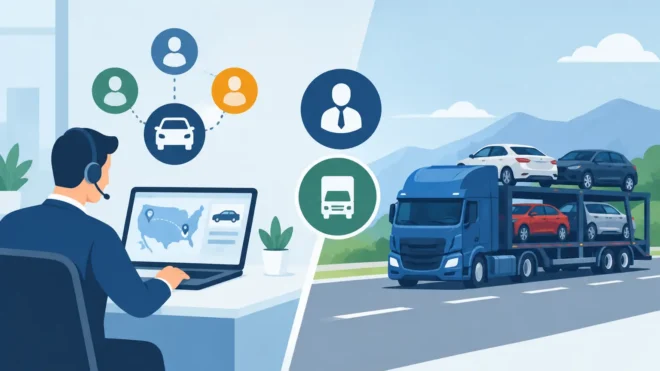
A cross-country move, an online vehicle purchase, or a seasonal relocation can put one question front and center: broker vs carrier auto transport – which should you choose? The answer affects how your shipment is arranged, who communicates with you, and how quickly a truck can be assigned. Neither option is automatically better in every situation. The right fit comes down to your route, timing, vehicle, and preference for direct access or broader shipping options.
Broker vs Carrier Auto Transport: The Basic Difference
An auto transport carrier is the company that owns or operates the truck moving your vehicle. The carrier provides the driver, equipment, loading process, and physical transportation from pickup to delivery. A carrier may run an open multi-car hauler, an enclosed trailer, or specialized equipment for certain vehicle types.
An auto transport broker arranges the shipment. Rather than relying on one truck or one set of routes, a broker works with a network of licensed carriers and posts available shipments for carriers operating in the right area. The broker helps collect your shipping details, coordinate timing, match the job to a qualified transporter, and remain a point of contact throughout the process.
This distinction matters because a carrier’s capacity is tied to its own equipment and routes. A broker can search beyond a single fleet, which is often useful for long-distance moves, less common pickup locations, enclosed shipping, expedited needs, and flexible date windows.
What an Auto Transport Broker Does for You
A reputable broker simplifies the part of auto shipping that most customers never see: finding a carrier with space, planning a workable pickup window, and keeping the shipment moving when routes or schedules change. Instead of calling multiple trucking companies yourself, you work with one transport advisor who gathers the details and coordinates the assignment.
Brokers can be especially helpful when your route is not a frequent trucking lane. For example, a vehicle moving from a small town in Montana to a residential neighborhood in Florida may require a carrier that is already building a route through both regions. A broker has more opportunity to locate that fit than a single carrier that may not serve the lane that week.
A broker can also help you compare service levels. If you are shipping a daily driver, open carrier transport may be the practical choice. If you are moving a collector car, luxury vehicle, or restored classic, the broker can seek an enclosed carrier with the appropriate equipment and availability.
The key is accountability. Ask who will be your primary contact after booking, when you will receive carrier and driver details, and how updates will be handled. Clear communication turns a complicated logistics process into a far more manageable experience.
What You Get When You Book Directly With a Carrier
Booking directly with a carrier means you are dealing with the company that will physically transport your vehicle. Some customers prefer this arrangement because the communication path can be shorter once the truck is confirmed. You may speak directly with the dispatch team or driver regarding pickup access, arrival timing, and delivery plans.
A direct carrier relationship can work well when the carrier regularly serves your exact route and has an available truck. It may also appeal to dealerships or repeat shippers who have established relationships with a carrier they trust.
However, direct booking has limits. A carrier may have no current space on your route, may only travel a lane at certain times, or may operate only open trailers when you need enclosed service. If the schedule changes, you may need to start the search again. For customers with specific timing needs or uncommon routes, that can add time and uncertainty.
Direct does not always mean less expensive, and a broker does not always mean more expensive. Transport pricing depends largely on distance, route demand, vehicle size, trailer type, fuel costs, season, and how quickly you need pickup.
Pricing: Why Quotes Can Look Different
Auto transport pricing is not a fixed retail shelf price. It is influenced by the carrier market at the time your vehicle needs to move. A quote should account for the vehicle’s condition, whether it runs and drives, pickup and delivery locations, transport type, and requested timeframe.
With a broker, the quoted amount may include the cost required to attract a qualified carrier for the route plus the broker’s coordination fee. With a carrier, you may receive a rate based on that company’s own operating costs, route plan, and remaining trailer space. Either way, an unusually low quote deserves careful questions.
A low price that cannot realistically secure a carrier may lead to delayed assignment or pressure to increase the rate later. A reliable quote should be explained in plain language. Confirm the total expected cost, payment timing, what is included, and whether any circumstances could affect the final price.
If your dates are flexible, say so. A wider pickup window often gives the dispatcher more options and may help keep pricing reasonable. If you need expedited transport, expect the cost to reflect the added urgency and limited truck availability.
Safety and Insurance Are Not Broker-or-Carrier Questions Alone
Whether you choose a broker or a carrier, safety starts with asking the right questions. The carrier moving your vehicle should be properly licensed and insured for auto transport. Before pickup, you should receive the carrier’s information and have an opportunity to review the shipment details.
At pickup, inspect the vehicle with the driver and document its condition on the bill of lading. Take clear, time-stamped photos of all sides of the vehicle, including any existing scratches, dents, or windshield damage. Keep a copy of the inspection paperwork until delivery is complete.
At delivery, inspect the vehicle again before signing the final paperwork. If you notice new damage, note it clearly on the bill of lading while the driver is present. This basic process protects you and creates an accurate record for everyone involved.
For high-value, classic, or low-clearance vehicles, ask about enclosed transport, liftgate loading if needed, and the carrier’s experience with similar vehicles. Open transport is a safe and widely used option for most cars, trucks, and SUVs, but enclosed service provides additional protection from weather and road debris.
How to Choose Between a Broker and a Carrier
Choose a broker when you want broader carrier access, help with a difficult or long-distance route, flexible service options, or a single advisor to coordinate the details. A broker is often the practical choice for people relocating across states, buying a vehicle online, or shipping during a busy season when truck space changes quickly.
Choose a direct carrier when you have found a properly qualified company that regularly serves your route, has confirmed equipment available, and offers communication you are comfortable with. This can be a strong option for repeat shipments or common routes where the carrier has dependable coverage.
Your priorities should guide the decision. If your main concern is getting a truck quickly, a broker’s network can be valuable. If you want to know exactly which fleet will move your vehicle from the start, a direct carrier may feel more comfortable. If your vehicle requires enclosed transport or specialized handling, focus first on the actual carrier’s qualifications and equipment.
Make the Booking Process Easier
The more complete your information is, the more accurate your shipping plan will be. Have your pickup and delivery ZIP codes, vehicle year, make, model, running condition, desired pickup dates, and transport preference ready before requesting a quote. Mention modifications such as oversized tires, lowered suspension, roof racks, or inoperable status, as these can affect equipment needs and pricing.
Also consider truck access at both locations. Large auto haulers may not be able to safely enter narrow residential streets, apartment complexes, or areas with low-hanging trees. In those cases, the driver may arrange a nearby meeting point such as a wide shopping center lot or truck-friendly street. This is a normal part of door-to-door service and helps protect your vehicle, the truck, and the surrounding property.
AutoPlex Transport helps customers sort through these details before pickup, so the vehicle, route, and service level are aligned from the beginning. A quick conversation about timing and vehicle needs can prevent avoidable delays later.
A dependable shipment starts with realistic expectations, clear documentation, and a transport partner that answers questions directly. Choose the option that gives you confidence in the plan, then let experienced professionals handle the miles ahead.
