
Entrusting your vehicle to a stranger shouldn’t feel like a gamble, yet many owners realize too late that they’ve signed a contract with a broker who doesn’t even own a fleet. Finding a reliable car transportation company in 2026 requires more than just looking for the lowest quote. It demands a thorough understanding of modern safety protocols and carrier verification. With the industry now using the USDOT number as the sole primary identifier and implementing stricter medical standards for drivers, the vetting process has become more technical and transparent than ever before.
It’s natural to feel anxious when your car is traveling thousands of miles away from your driveway. You’re likely worried about potential transit damage, shifting delivery timelines, or those frustrating hidden costs that often surface after you’ve already committed. We understand that your vehicle is a significant asset that deserves methodical care and professional handling. This guide provides a professional 5-step framework to help you master the vetting process. You’ll learn how to verify insurance coverage, distinguish between brokers and carriers, and secure a damage-free, door-to-door delivery with total confidence.
Key Takeaways
- Learn how to verify a car transportation company using our 5-step vetting framework so you don’t sign with an unauthorized provider.
- Understand the critical differences between cargo and liability insurance limits. This ensures your vehicle stays protected against unforeseen transit risks.
- Compare the logistical benefits of open versus enclosed carriers. You’ll determine which method aligns with your vehicle’s value and your budget.
- Discover the essential timeline for booking national routes and how to prepare for door-to-door logistics in residential neighborhoods.
- Identify the updated 2026 industry standards for driver safety and tracking that distinguish professional partners from high-volume brokers.
What is a Car Transportation Company and Why Do You Need One?
A professional car transportation company is a specialized logistics entity licensed by the Federal Motor Carrier Safety Administration (FMCSA) to move vehicles across state lines. While it might seem like a simple towing service, it’s actually a sophisticated operation involving heavy duty equipment, precise scheduling, and strict insurance compliance. These companies operate within a regulated framework designed to protect your property and ensure road safety. They aren’t just moving cars; they’re managing high value assets through a complex supply chain.
The core value of hiring a professional lies in risk mitigation. Long distance driving introduces variables like road debris, mechanical failure, and unpredictable weather. By using a dedicated service, you preserve your vehicle’s longevity and avoid the significant wear and tear that comes with cross country travel. Driving a car yourself from coast to coast isn’t just exhausting; it’s often more expensive than you realize. When you factor in the cost of premium fuel, multiple hotel stays, meals, and the depreciation caused by adding thousands of miles to the odometer, the DIY route loses its appeal. Understanding auto shipping america requires viewing the industry as a complex logistics network where safety standards and fuel prices fluctuate daily.
The Difference Between Carriers and Brokers
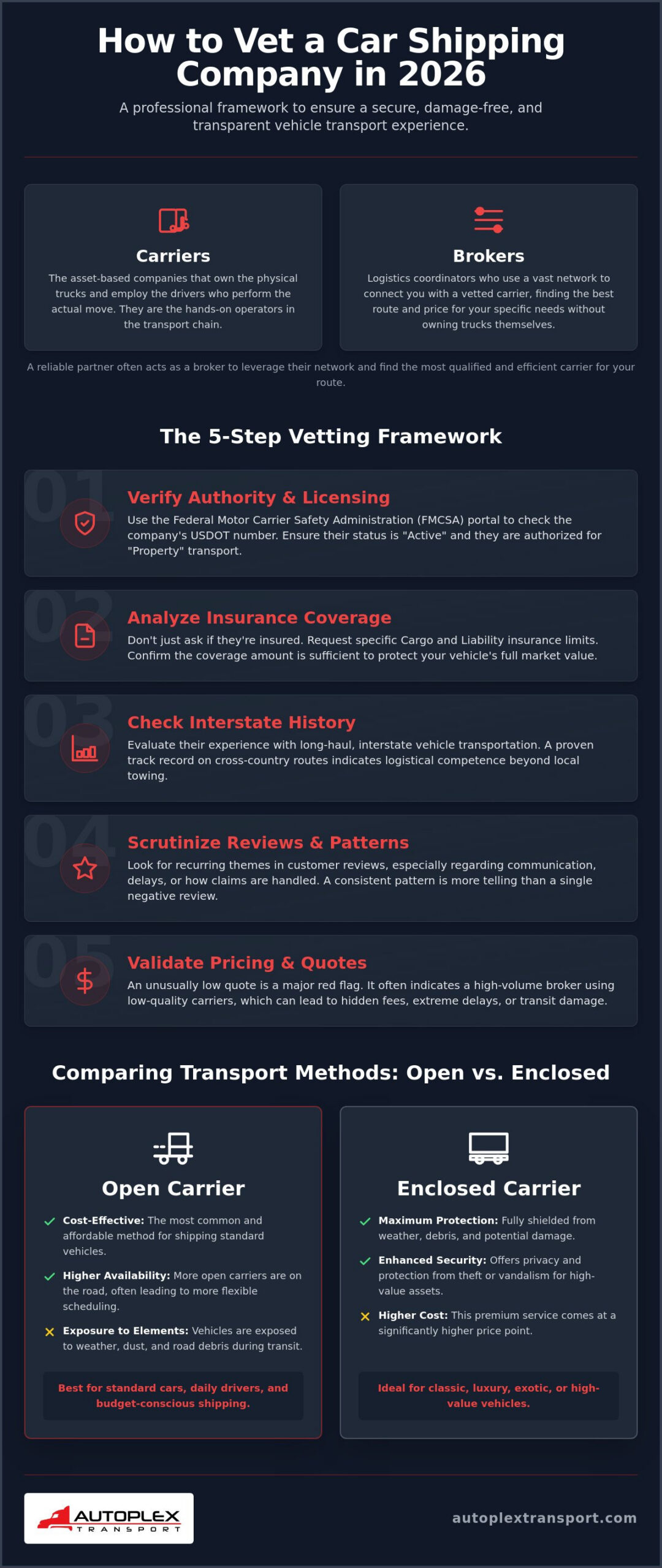
Understanding who actually handles your keys is vital for a stress free experience. A carrier is the company that owns the physical trucks and employs the drivers who perform the move. An auto transport broker acts as a logistics coordinator, using a vast network to find the best route and price for your specific needs. A reliable partner approach uses the broker’s reach to find the most qualified carrier, ensuring you get the best of both worlds without the stress of vetting individual drivers yourself. This collaborative effort ensures your vehicle stays on a truck that’s actually headed to your destination.
When to Hire a Professional Logistics Provider
There are several scenarios where professional help is the only logical choice. Corporate relocations often require strict timelines that only a professional car transportation company can meet. If you’ve just purchased a classic car from an out of state auction, you don’t want to risk driving an unproven engine hundreds of miles home. Similarly, seasonal residents moving between northern and southern states rely on these services to move their primary vehicles without the physical toll of a multi day drive. Professional logistics providers handle the heavy lifting so you can focus on the other details of your move. For those also managing the property side of a relocation, you can visit Carryall Transport for specialized residential and commercial removal services.
How to Vet a Vehicle Shipping Provider: A 5-Step Framework
Choosing a car transportation company requires a methodical approach that goes beyond comparing quotes. In 2026, the industry has moved toward higher transparency, but the responsibility of verification still rests with the vehicle owner. You need a reliable partner that prioritizes safety over high volume brokerage. This framework ensures you filter out unreliable operators before they ever touch your keys.
- Step 1: Verify Authority. Access the FMCSA portal to confirm the company’s official licensing and authority. Ensure their status is active and they’re authorized for property transport.
- Step 2: Analyze Insurance. Don’t just ask if they’re insured. Request the specific cargo and liability limits to ensure they cover your vehicle’s total market value.
- Step 3: Check Interstate History. Evaluate their experience with interstate vehicle transportation. Long haul routes across state lines require different logistics than local towing.
- Step 4: Scrutinize Reviews. Look for patterns in how the company handles claims or delays. A single bad review is less concerning than a recurring theme of poor communication.
- Step 5: Validate Pricing. Research the cheapest way to ship a car cross country to understand the market floor. If a quote is significantly lower than this baseline, it’s often a red flag for hidden fees or low quality carriers.
Verifying Legal Authority and Compliance
The FMCSA ‘Company Snapshot’ tool provides a transparent look at a carrier’s safety performance. When you search a company’s USDOT number, look for a ‘Satisfactory’ safety rating. This designation indicates the company has functional safety management controls in place and meets the federal standards for road operations. An active MC number serves as the non-negotiable foundation for any legitimate car transportation company operating across state lines. If you’re unsure about a provider’s credentials, it’s best to consult with a reliable partner who maintains an active and compliant status.
Evaluating Insurance and Liability Coverage
Insurance is often where the most confusion occurs. A carrier’s primary insurance covers the vehicle while it’s on the truck, while a broker may carry contingent insurance as an extra layer of protection. Always ask for a Certificate of Insurance (COI) before signing any contract. You should also clarify the deductible details. For instance, if a stray stone chips your paint during transit, you need to know if the carrier’s policy covers the full repair or if you’re responsible for an out of pocket deductible. Clear communication regarding these “what if” scenarios is the hallmark of a professional logistics provider.
Comparing Transport Methods: Open vs. Enclosed Carriers
Once you’ve narrowed down your choice of a car transportation company, the next critical decision involves selecting the specific method of transit. This choice is the primary factor influencing your total shipping investment and the level of physical protection your vehicle receives. It’s helpful to review FMCSA’s Protect Your Move guidance to understand the standard protections and carrier responsibilities associated with different service levels before you sign a contract.
Selecting the right trailer type isn’t just about price; it’s about matching the logistics to your vehicle’s specific needs. While most cars travel safely on open trailers, certain high value assets require the specialized environment of an enclosed unit. A professional car transportation company will typically offer both options and provide a clear explanation of the benefits for your specific route.
Open Carrier: Efficiency and Availability
Open carrier transport is the industry workhorse, moving the vast majority of vehicles across the United States. These trailers utilize a multi-car system, often hauling seven to ten vehicles at once, which keeps nationwide costs manageable for the consumer. This efficiency is exactly why open transport car shipping remains the standard choice for daily drivers, SUVs, and trucks.
There is a common myth that open transport is inherently risky due to weather and road debris. In reality, the statistical risk of transit damage is remarkably low. Because these trailers are so prevalent, this method is usually the fastest way to secure a pickup date on a national route. If you’re working within a standard timeline and moving a vehicle used for daily commuting, the open carrier offers the best balance of reliability and value.
Enclosed Transport: Protecting Your Investment
For classic, exotic, or high value vehicles, enclosed transport serves as the gold standard. These trailers are fully walled, shielding your car from road grime, dust, rain, and prying eyes. This method provides an extra layer of security and climate protection that’s essential for sensitive finishes or rare models. If you’re moving a luxury or vintage car, our enclosed car transport guide offers a deeper look at the specialized handling involved.
Beyond simple protection from the elements, enclosed trailers often feature specialized equipment. Hydraulic lift gates are a vital feature; they keep the vehicle perfectly level during the loading process. This is a significant advantage over traditional ramps, which can be problematic for cars with low ground clearance. While the cost is higher, the investment is often justified when you consider that the price of enclosed shipping is frequently less than the potential depreciation caused by minor road wear on a pristine vehicle.
How to Schedule and Prepare for Professional Transport
Proper planning is the foundation of a successful move. When you work with a professional car transportation company, timing becomes your greatest asset. For most national routes, we recommend booking your service two to four weeks in advance. This lead time allows for better route optimization and ensures your vehicle is placed on a carrier that aligns perfectly with your schedule. Waiting until the last minute often limits your options and can lead to unnecessary stress or higher premiums due to limited trailer capacity.
Understanding the logistics of door-to-door service is equally important. While the goal is to pick up and deliver as close to your home as possible, residential restrictions often dictate the final meeting point. Large transport trailers can reach lengths of 80 feet, making them difficult to maneuver through narrow streets or neighborhoods with low-hanging trees. If your street has weight limits or tight corners, be prepared to meet the driver at a nearby commercial parking lot. This ensures the safety of your vehicle and the equipment during the loading process.
Administrative preparation is your responsibility to ensure a smooth handoff. Start by removing all personal belongings from the interior, as these items aren’t covered by the carrier’s insurance and can add unexpected weight. It’s also vital to remove toll tags and parking stickers; electronic toll readers can still trigger as the truck passes under gantries, leading to frustrating fines. Before the truck arrives, wash your car and capture high-resolution photos of all panels and glass so that the exterior condition is clearly visible for the initial inspection.
The Loading Day Process
When the carrier arrives, you’ll meet the driver to finalize the paperwork. Look for a driver who is methodical and takes the time to inspect the vehicle thoroughly. The Bill of Lading (BOL) is the most important document in the process. The Bill of Lading is the official condition report of your vehicle. You must ensure every existing imperfection is documented on this form before the car is loaded onto the trailer. Once the inspection is complete, you’ll receive a signed copy for your records, which serves as your primary receipt for the transit.
Preparing Your Vehicle for Safe Transit
Your car must be mechanically ready for the journey. Ensure the battery is charged and the tires are at the correct pressure to facilitate easy loading. A key industry requirement is maintaining a fuel level of approximately 1/4 tank. This balance provides enough fuel for the driver to move the car on and off the trailer while keeping the overall weight of the load within legal limits. For a detailed guide on these steps, see our how to prepare a car for transport checklist. If you’re ready to schedule your move, you can book your nationwide transportation services with our expert team today.
Why AutoPlex Transport is the Reliable Partner for 2026
Choosing a car transportation company in 2026 means finding a provider that values your vehicle as much as you do. While many large scale brokers focus on moving as many units as possible, AutoPlex Transport prioritizes a methodical logistics approach. We believe that every vehicle, whether it’s a daily driver or a rare collectible, deserves a tailored transport plan that accounts for the latest safety standards and regulatory requirements. Our focus remains on building a partnership based on trust and transparent communication rather than high pressure sales tactics.
Our 2026 safety standards go beyond the bare minimum. We strictly verify our carrier partners through their Motor Vehicle Records to ensure medical compliance and monitor their USDOT status in real time. This ‘Reassuring Expert’ approach means you aren’t left wondering where your vehicle is or who is driving the truck. We provide transparent tracking and dedicated support throughout the journey, positioning ourselves as the logical choice for owners who prioritize asset protection. By managing every detail of the interstate vehicle transportation process, we offer peace of mind that your vehicle is in stable and experienced hands.
Nationwide Reach with Specialized Care
Our network provides comprehensive coverage across all 50 states, managing even the most complex logistics with precision. For instance, our car shipping from Texas to Florida guide illustrates how we handle high volume corridors with specific attention to regional transit times. We specialize in the ‘final mile’ of door-to-door delivery, ensuring that residential weight limits and narrow streets don’t compromise the safety of your vehicle. Every carrier in our network is licensed and carries a verified insurance policy that meets or exceeds 2026 FMCSA requirements, ensuring your investment is fully protected from pickup to drop off.
Final Steps to Secure Your Vehicle’s Journey
Securing your vehicle’s journey starts with a detailed understanding of your specific needs. When you request a customized quote, we don’t just look at the mileage; we consider the vehicle type, the required trailer style, and the current regional demand. During your initial consultation, our logistics experts will walk you through the entire process, answering your questions about insurance limits and pickup windows without the pressure of a sales pitch. We’re here to be your guide in a complex industry, providing the education you need to make an informed decision.
Ready to move your vehicle with a partner who prioritizes safety and transparency? Request Your 2026 AutoPlex Transport Quote Today and experience the difference of working with a dedicated car transportation company that puts your needs first.
Taking the Next Step Toward a Stress Free Move
Selecting the right car transportation company is a decision that impacts the safety and value of your vehicle. By following a methodical vetting framework, you’ve learned how to verify official licensing through the FMCSA and distinguish between the various levels of insurance coverage. You now understand that choosing between open and enclosed carriers isn’t just a matter of price; it’s a strategic choice based on your vehicle’s specific needs and the protection it requires for long distance travel.
Success in vehicle logistics depends on preparation and clear communication. From capturing high resolution photos for your initial inspection to ensuring your fuel level is at the industry standard of one quarter tank, every detail contributes to a damage free delivery. We’re here to manage those details for you with specialized care and professional oversight. As a fully licensed and FMCSA-compliant provider, we offer nationwide door-to-door coverage and expertise in both open and enclosed carrier logistics. You don’t have to navigate the complexities of interstate transport alone. Secure your vehicle’s journey with a professional quote from AutoPlex Transport. We look forward to being your reliable partner on the road ahead.
Frequently Asked Questions
How do I verify if a car transportation company is legitimate?
You verify a car transportation company by checking their USDOT number through the FMCSA official portal. This number is the primary identifier for legal carriers in 2026. Ensure their status is “Active” and they have the authority to transport property. A legitimate provider will also have a “Satisfactory” safety rating on their company snapshot, which indicates compliance with federal safety regulations.
Is my car insured by the transport company during transit?
Your vehicle is covered by the carrier’s cargo insurance while it is on the trailer. Before you sign a contract, request a Certificate of Insurance to verify the specific coverage limits for your vehicle’s value. It’s also helpful to check if the broker provides contingent insurance, which acts as an additional layer of protection if the carrier’s primary policy fails to cover a claim.
What is the difference between door-to-door and terminal-to-terminal shipping?
Door-to-door shipping involves the carrier picking up and delivering your vehicle as close to your residence as safely possible. Terminal-to-terminal shipping requires you to drop off and pick up the car at a designated storage lot. While terminals can sometimes be cheaper, door-to-door service is the industry standard for convenience and minimizing the time your vehicle spends in a storage facility.
How long does it typically take to ship a car cross-country in 2026?
Cross-country shipments typically take between 7 and 10 days to complete. For distances over 2,000 miles, factors like driver rest requirements and weather conditions influence the final timeline. Shorter interstate routes, such as those under 1,000 miles, generally arrive within 3 to 5 days. Booking 2 to 4 weeks in advance helps ensure your preferred dates are met without delays.
Can I leave personal belongings inside my vehicle during transport?
Most carriers prohibit leaving personal items in the vehicle because they aren’t licensed to transport household goods. While some companies allow up to 100 pounds of items in the trunk, these are not covered by the carrier’s insurance policy. To avoid fines or weight-related delays, it’s best to remove all belongings, including toll tags and parking passes, before the pickup date.
What should I do if my vehicle is damaged during the shipping process?
If you notice damage, you must document it immediately on the Bill of Lading during the delivery inspection. Take high-resolution photos of the affected area and compare them to your pickup photos. Notify your car transportation company right away to initiate the claims process. Most professional providers have a methodical system for handling these rare occurrences and will guide you through the necessary paperwork.
Do I need to be present for the pickup and delivery of my car?
Yes, you or a designated representative over the age of 18 must be present for both pickup and delivery. This person is responsible for performing the joint inspection with the driver and signing the Bill of Lading. Being present ensures that the vehicle’s condition is accurately recorded at both ends of the journey, which is vital for maintaining your insurance protection.
How much does a car transportation company typically charge for interstate shipping?
Costs are determined by several factors including the total distance, vehicle weight, and your choice of an open or enclosed carrier. Seasonal demand and current fuel prices also influence the final quote. Because every route is unique, it’s best to request a customized quote that reflects the specific logistics of your interstate move rather than relying on general industry averages.