
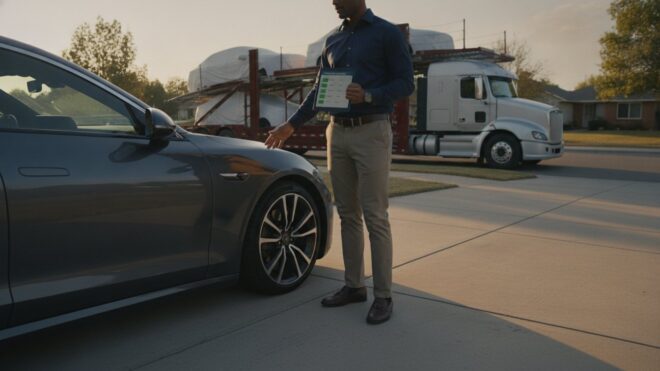
The safety of your vehicle during its cross-country journey is often determined long before the carrier ever pulls into your driveway. It’s natural to feel a sense of unease regarding potential hidden damage or the complexities of insurance liability during such a major move. You deserve the confidence that your car is protected by more than just a hope for the best. Learning how to prepare a car for transport is the most effective way to establish a documented physical and legal baseline that ensures your vehicle arrives in the exact same condition it left your possession.
We recognize that you’re looking for a smooth, stress-free experience that prioritizes the integrity of your asset. This guide will help you master every step of the vehicle preparation process, from mechanical checks and cleaning to understanding the crucial role of the Bill of Lading. We provide a methodical overview of the 2026 essential checklist, ensuring you’re equipped with the knowledge to handle the logistics, meet current federal safety requirements, and secure full insurance protection for a successful door-to-door delivery.
Key Takeaways
- Clean your vehicle thoroughly to reveal all existing cosmetic issues, establishing a transparent physical baseline before the shipping process begins.
- Maintain the vehicle’s mechanical condition and manage fuel levels to ensure safe loading while optimizing the carrier’s total weight limits.
- Learn how to prepare a car for transport by removing personal belongings and non-permanent exterior accessories to comply with DOT regulations and prevent transit damage.
- Master the Bill of Lading and the photo audit process to create a legally binding record that secures your insurance protection from pickup to delivery.
- Determine whether your specific vehicle requires the standard protection of open carrier transport or the enhanced security of enclosed transport services.
Essential Documentation and Cleaning for Transport Readiness
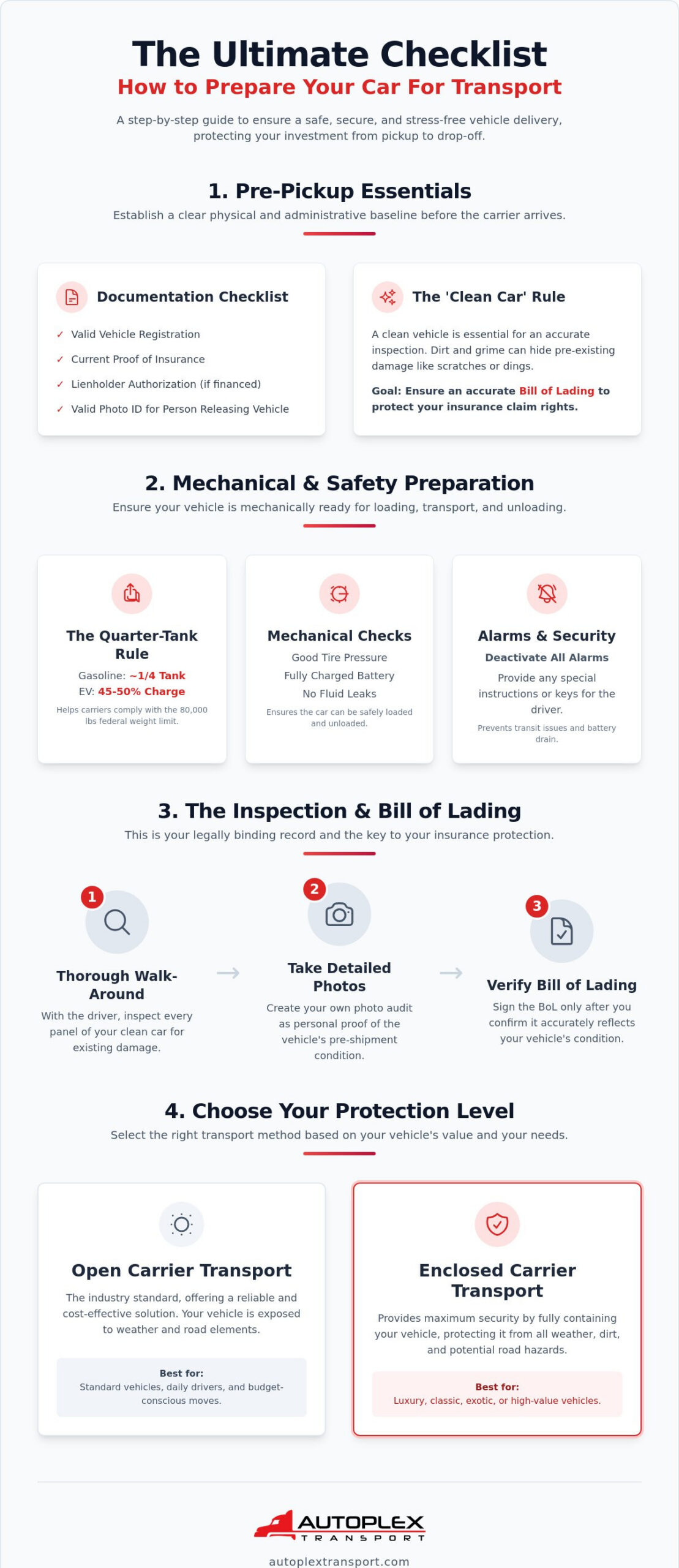
Preparing for a vehicle move involves more than just handing over the keys to a driver. When you’re researching how to prepare a car for transport, the first step is creating a clear, undeniable record of your vehicle’s current state. This process begins with a thorough cleaning and a well organized folder of documents. It’s about protecting your investment and ensuring that the hand-off to the carrier is as seamless as possible. By establishing a physical and administrative baseline, you eliminate the ambiguity that often leads to stress during interstate shipping.
The Paperwork Checklist
Before the driver arrives, you need to have your administrative house in order. While an auto transport broker might handle the initial logistics and carrier matching, you’re responsible for providing the necessary documentation at the point of pickup. Ensure you have a valid vehicle registration and current proof of insurance ready for inspection. If you’re moving a vehicle across state lines that’s still under finance, check if your lienholder requires specific authorization for interstate transport. Finally, the person releasing the vehicle must present a valid photo ID to the driver to verify they have the legal authority to hand over the asset.
The ‘Clean Car’ Inspection Rule
A clean car isn’t just about aesthetics; it’s a functional requirement for a proper inspection. Dirt, road salt, and grime can easily hide small chips, dings, or scratches that might be present before the journey. By washing the exterior, you expose the true condition of the paint, making it easier for both you and the driver to document every existing mark. Don’t forget the undercarriage. Cleaning this area allows you to check for any active fluid leaks. This is vital because carriers may refuse a vehicle that is actively dripping oil or transmission fluid onto other cars below it. Inside the cabin, a quick vacuum is necessary to ensure no small items or loose debris become projectiles during the natural vibrations of transit.
The ultimate goal of this preparation is the accuracy of the Bill of Lading. This document is the legally binding contract between you and the carrier. If your car is covered in mud, the driver will likely mark the condition as “soiled” on the report. This can make it incredibly difficult to prove that a new scratch occurred during transit. When you understand how to prepare a car for transport effectively, you’re essentially building your own insurance safety net. A clean vehicle allows for a detailed and honest inspection, ensuring that any discrepancies found at the destination are clearly documented and valid for a claim.
Mechanical Preparation: Maintenance, Fuel, and Alarms
Your vehicle is more than just cargo; it’s a piece of machinery that must function predictably within a complex logistics network. Learning how to prepare a car for transport involves verifying that the vehicle is mechanically sound enough to withstand the loading and unloading process. Even if you’ve opted for a service where the car is mostly stationary, it still needs to start, steer, and stop reliably. As highlighted in J.D. Power’s car shipping guide, ensuring your vehicle is in proper working order is a foundational step for any successful delivery. Start by checking your tire pressure. A car with low tires is more susceptible to rim damage when the carrier secures the straps during the tie-down process. Similarly, ensure the battery is fully charged and the terminals are secure, as the driver will need to start the engine at various transition points.
The Quarter-Tank Rule
A common mistake is presenting a vehicle with a full tank of gas. The industry standard is to keep your fuel level at approximately one-quarter tank. This isn’t an arbitrary request. Multi-car carriers are subject to a strict federal weight limit of 80,000 pounds. By reducing the fuel in every vehicle, the carrier can optimize the load and stay within legal safety margins. For those moving electric vehicles in 2026, the state-of-charge (SOC) requirements are slightly different. Aim for a battery level between 45% and 50%. This provides enough energy for the driver to move the car while maintaining the long-term health of the lithium-ion cells during the journey.
Battery and Alarm Protocols
Security systems are designed to protect your vehicle, but they can become a major liability during transit. You must deactivate all aftermarket alarms and anti-theft tracking systems before the truck arrives. The vibrations and movements of the carrier can easily trigger sensitive sensors, leading to a drained battery or a distracted driver. If your alarm cannot be fully disabled, you must provide the driver with clear, written instructions on how to silence it if it’s triggered. If you have any concerns about your car’s specific mechanical requirements, the experts at AutoPlex Transport can provide guidance tailored to your vehicle’s make and model.
Every car has its own personality. If your vehicle has a unique mechanical quirk, such as a trick to engaging the parking brake or a specific sequence to start the engine, write these details down. Tape a brief instruction card to the dashboard or steering wheel. This small step ensures the driver can handle your vehicle safely without causing unnecessary wear or confusion. When you understand how to prepare a car for transport mechanically, you’re protecting the battery, the tires, and the overall integrity of the drivetrain throughout the interstate move.
Securing the Exterior and Interior: Accessories and Personal Items
Once your vehicle is clean and mechanically sound, the next phase of how to prepare a car for transport focuses on the physical components that could be damaged by wind or vibration. High-speed travel on an open carrier creates significant wind resistance. Any non-permanent exterior feature acts like a sail, potentially loosening or breaking during the journey. You should retract or remove antennas and take down any aftermarket spoilers or roof racks that aren’t factory-bolted. Folding in your side mirrors and ensuring convertible tops are fully latched and secured are simple steps that prevent expensive repair bills at your destination.
Exterior Accessory Removal
Small details often cause the most frustration. Remove all toll tags and parking passes from your windshield. If left active, these devices can be triggered by sensors as the carrier passes through toll plazas, leading to a series of unexpected charges on your account. If you have specialized equipment like bike racks or custom grill guards, it’s best to remove them and ship them separately. This reduces the vehicle’s footprint and ensures nothing extends beyond the safety margins of the transport trailer.
Modern Tech and Smart Prep
As vehicle technology evolves, your preparation list must adapt. For 2026, privacy and tracking are top priorities for many owners. You should deactivate dashcams and any interior recording devices. While these are great for daily driving, they can raise privacy concerns for drivers and may drain your battery if they’re motion-activated. If you choose to use an AirTag or a similar GPS tracker to monitor your move, place it in a discreet location. Tracking provides peace of mind, but remember that carrier schedules can shift due to weather or DOT-mandated rest periods.
Specialized vehicles require even more attention. If you are arranging classic car transport, consider using protective films for delicate chrome or custom finishes. Regarding personal items, the industry standard allows for up to 100 lbs of belongings, provided they’re secured in the trunk below the window line. Exceeding this limit can lead to surcharges of $75 to $100 per extra 100 lbs because it affects the truck’s total weight capacity and the federal 80,000-pound limit. Most importantly, these items are not covered by the carrier’s cargo insurance. Clearing the cabin of all loose items is the only way to ensure your interior remains pristine. When you master how to prepare a car for transport by securing these accessories, you significantly reduce the risk of transit-related wear.
The Inspection Process: Mastering the Bill of Lading
The final step before your vehicle leaves your sight is the most critical for your financial protection. While previous steps focused on physical readiness, understanding how to prepare a car for transport culminates in the formal inspection and the creation of the Bill of Lading (BOL). This document isn’t just a receipt; it’s a legally binding contract and a detailed condition report required by federal law under 49 CFR § 373.101. It serves as your primary evidence if you ever need to file an insurance claim. You must participate in a joint walkthrough with the driver, ensuring that every existing chip, dent, or scratch you uncovered during your cleaning process is clearly marked on the report before you sign anything.
The Pre-Shipment Photo Audit
A verbal agreement or a few marks on a piece of paper aren’t enough in 2026. You need a comprehensive “Photo Audit” to back up the written Bill of Lading. Use your smartphone to capture high-resolution images of the vehicle from every angle, including the roof, bumpers, and wheels. Take specific, dated photos of the odometer and the dashboard while the engine is running to prove there are no active warning lights. Don’t just keep these on your phone. Upload them to a cloud-based folder immediately. This ensures you can access them at the delivery point even if your device is lost or damaged during your own travels.
Reading the Bill of Lading
Never let a driver rush you through the signing process. It’s your responsibility to verify that the driver’s notations match your own observations. Check that the pickup and delivery terms, including any specific instructions for door-to-door service, align perfectly with your initial car transport quote. If the driver marks your clean car as “soiled” or “pre-existing damage” in a general area, ask them to be specific. Your signature at the start of the journey confirms you agree with their assessment of the vehicle’s condition, which sets the baseline for the entire trip.
When the car arrives at its destination, you’ll perform this process in reverse. Use your “Photo Audit” to compare the vehicle’s current state against its condition at pickup. If you notice a discrepancy, such as a new scratch or mechanical issue, you must document it on the Bill of Lading before the driver leaves. This is the only way to ensure the carrier’s cargo insurance, which typically carries a minimum of $100,000 in coverage, remains valid for your claim. For a transparent and professional shipping experience where documentation is handled with precision, you can request a detailed service overview from AutoPlex Transport today. Mastering this paperwork ensures that you remain in control of the logistics from start to finish.
Evaluating the Best Auto Transport Companies for Your Vehicle
Completing your physical and mechanical checklist is a significant achievement, but the success of your move ultimately depends on the quality of the partner you select. When you’re learning how to prepare a car for transport, you must also learn how to vet the professionals who will handle your asset. Not all car shippers operate with the same standards of safety or transparency. In 2026, the best companies utilize advanced car shipping logistics, including real time GPS tracking and AI driven route optimization, to ensure a predictable delivery timeline. Choosing a company like AutoPlex Transport means partnering with an expert that provides comprehensive support throughout the entire preparation phase.
Carrier Types and Preparation Needs
Your specific preparation steps will shift depending on the type of carrier you choose. If you opt for open auto transport, your vehicle will be exposed to weather and road debris. This makes the exterior cleaning and protective measures discussed earlier even more vital. For high value assets, enclosed car transport offers a shielded environment. While this reduces the need for protective films, it often requires stricter adherence to fluid leak checks and battery health since the loading environment is more confined. Consider these factors when deciding which service fits your budget and your vehicle’s value.
- Open Carrier: Requires a focus on securing exterior accessories against high wind speeds.
- Enclosed Carrier: Demands peak mechanical reliability for precision loading in tight spaces.
- Door 2 Door: Necessitates a clear, accessible pickup location to ensure a safe hand-off.
What Separates the Best from the Rest
Transparency is the hallmark of a reliable transport provider. You should always verify that a carrier meets the federal minimum of $750,000 in liability insurance and at least $100,000 in cargo insurance. A reputable company won’t hesitate to provide their DOT number or proof of their $75,000 broker surety bond. Beyond the legal requirements, look for a provider with a vetted network of drivers. This ensures that the person physically loading your car understands the nuances of the Bill of Lading and the importance of your pre-shipment photo audit.
Customer support availability is the final differentiator. The logistics of an interstate move can change due to weather or traffic. You need a partner that offers direct communication channels during the transit phase. By understanding how to prepare a car for transport and selecting a carrier that values education and safety, you’ve done everything possible to ensure a damage free journey. AutoPlex Transport remains committed to this high standard, offering the nationwide reach and personalized care required for a truly stress free shipping experience.
Securing Your Vehicle’s Future on the Road
Mastering the details of vehicle readiness ensures that your cross-country move transitions from a logistical challenge into a managed success. By establishing a clear physical baseline through cleaning and a comprehensive photo audit, you create the legal protection necessary for a worry-free delivery. You’ve now learned the technical steps of how to prepare a car for transport, from managing fuel levels and battery health to securing exterior accessories against the elements. These deliberate actions don’t just protect your vehicle; they empower you during the inspection process and safeguard your investment from pickup to drop-off.
When you’re ready to move, choose a partner that values this level of detail as much as you do. AutoPlex Transport serves as an expert in national logistics, providing door-to-door convenience with full insurance coverage included in every shipment. We handle the complexities so you can focus on your journey ahead. Get a Professional Vehicle Transport Quote from AutoPlex Today and experience a shipping process grounded in transparency and reliability. Your car is ready for the road, and we’re here to ensure it arrives in the exact condition you expect.
Frequently Asked Questions
Can I leave personal items in the trunk during transport?
You can generally leave up to 100 lbs of personal items in the trunk, provided they are packed below the window line. It is important to remember that these items are not covered by the carrier’s cargo insurance. To ensure a smooth process, remove all valuables and electronics, as the carrier is only legally responsible for the vehicle itself during the journey.
How much gas should be in my car when it’s picked up?
Your vehicle should have approximately one-quarter tank of fuel at the time of pickup. This level is the industry safety standard because it provides enough gas for the driver to load and unload the vehicle while minimizing unnecessary weight. Keeping fuel levels low helps the carrier manage the total load to stay within the federal 80,000-pound gross vehicle weight limit.
Do I need to wash my car if it’s going on an open carrier?
Yes, you should thoroughly wash your car before the driver arrives, even if you’ve chosen an open carrier. While the car will likely collect some road dust during transit, a clean exterior is the only way to perform an accurate condition inspection. This allows you and the driver to identify and document every pre-existing chip or scratch on the Bill of Lading.
Will my car insurance cover damages during transport?
Carriers are federally required by the FMCSA to maintain Motor Truck Cargo Insurance, which typically offers a minimum of $100,000 in coverage for the vehicles they haul. While this covers most transit-related issues, you should contact your personal insurance provider to see if your policy offers supplemental protection. Understanding how to prepare a car for transport includes verifying these insurance limits before the move begins.
What happens if my car is inoperable and won’t start?
If your vehicle is inoperable, you must notify the transport company during the quoting process so they can provide a truck equipped with a winch or forklift. Shipping a non-running vehicle requires specialized equipment and additional labor, which typically results in an extra fee. If the car is too damaged to move, you might consider a provider like Windward Auto Removal Service, which offers cash for junk vehicles. Providing accurate information about the car’s mechanical state ensures the driver arrives with the correct tools for a safe pickup.
Can I track my car’s location during an interstate move?
Most professional transport companies now offer real-time GPS tracking or regular digital updates as a standard part of their service. This technology allows you to monitor your vehicle’s progress across the country and receive estimated arrival times for your delivery. When researching how to prepare a car for transport, ask your provider about their specific tracking platform to ensure you stay informed throughout the trip.
Should I disable my car’s GPS and alarm systems?
You must deactivate all aftermarket alarm systems to prevent them from being triggered by the natural vibrations of the transport trailer. An active alarm can drain your battery or distract the driver during the journey. While factory GPS tracking can usually remain active, any secondary anti-theft devices or interior recording cameras should be turned off or removed to ensure a distraction-free environment for the carrier.
How do I document pre-existing damage correctly?
Correct documentation requires a combination of a high-resolution photo audit and a detailed notation on the Bill of Lading. Take dated photos of every panel, the wheels, and the dashboard before the car is loaded. During the joint walkthrough with the driver, ensure that every mark you’ve photographed is also written on the condition report. This creates a dual-layered record that protects you in the event of a discrepancy.