Did you know that over 68% of all vehicles moved across the United States travel via open-air carriers? While many people assume this method is merely a budget-friendly compromise, open auto transport is actually a highly-regulated, engineering-focused logistical standard that offers an exceptional balance of safety and value. It remains the backbone of the industry for a reason, yet it’s common to feel a sense of hesitation when booking your first shipment. You might worry about rock chips, weather exposure, or the confusing distinction between brokers and carriers that often leads to unexpected fees.
We understand that your vehicle is a significant asset, and you need to know it’s in capable hands. This guide will help you master the logistics of open auto transport to secure the most reliable and cost-effective shipping for your vehicle without the usual stress. We’ll provide a clear look at modern safety protocols and the latest 2026 regulatory changes, such as the industry-wide shift toward USDOT numbers as primary identifiers for tracking compliance. By the end of this article, you’ll know exactly how to prepare your vehicle for transit and have the confidence to choose a nationwide provider that prioritizes transparency and care.
Key Takeaways
- Understand why open auto transport remains the national standard for vehicle logistics by balancing route efficiency with significant cost savings for consumers.
- Discover the advanced engineering behind modern carriers, including why specialized wheel straps provide superior vehicle security compared to traditional frame hooks.
- Learn how to evaluate the cost-to-protection ratio to decide when a standard open carrier is sufficient or if your vehicle requires the added investment of enclosed transport.
- Navigate the shipping process with confidence by mastering the legal importance of the Bill of Lading and other essential 2026 logistical documentation.
- Gain the criteria needed to select a reputable nationwide provider by prioritizing verified licensing and comprehensive insurance over the lowest available quote.
Understanding Open Auto Transport: The Backbone of National Shipping
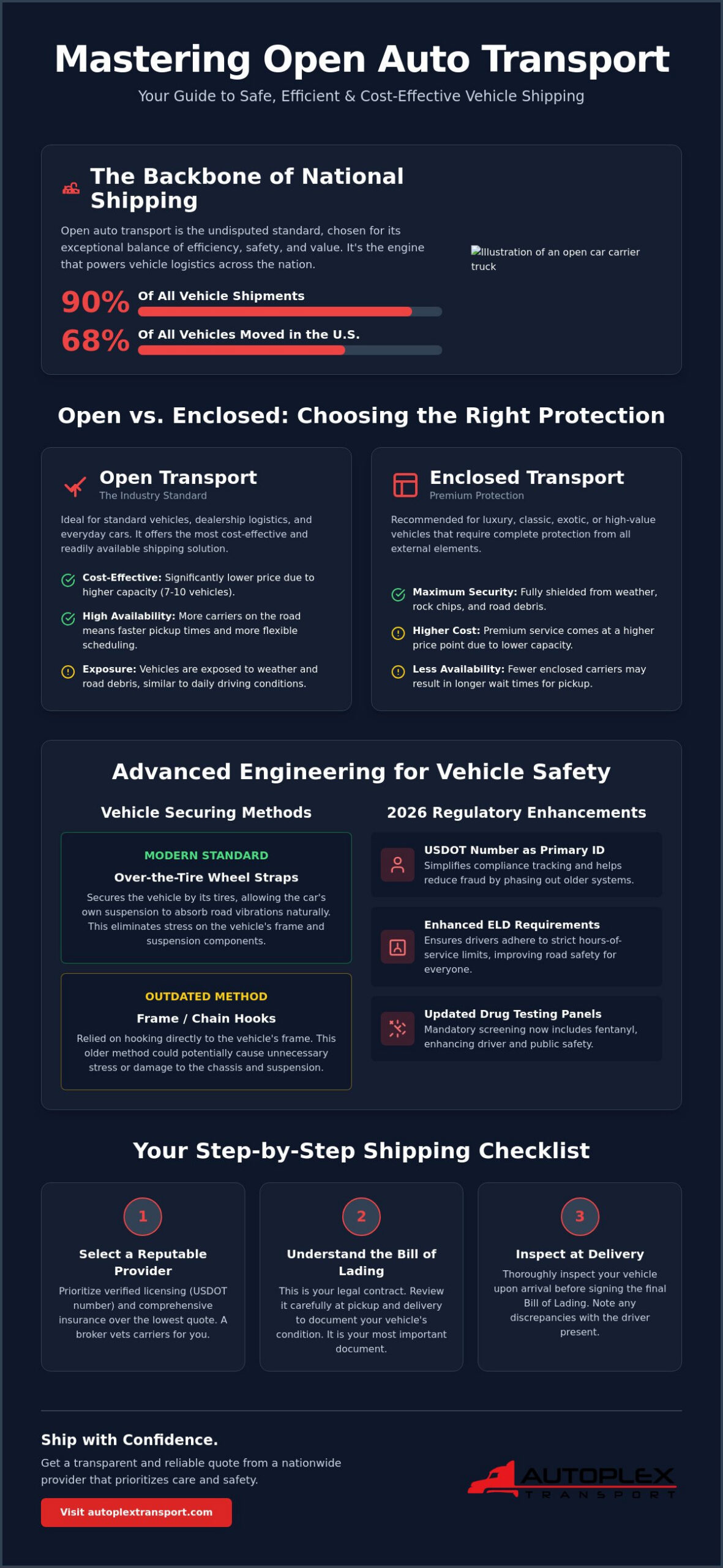
Open auto transport is the primary method for moving vehicles across the country. It involves transporting cars on a trailer that doesn’t have sides or a roof, allowing for maximum efficiency. This method is the undisputed industry standard, handling approximately 90% of all vehicle shipments in the United States. Its popularity stems from a combination of high availability and logistical practicality. By utilizing open carriers, logistics providers can move multiple vehicles simultaneously, which significantly lowers the price point for the individual consumer.
Safety in this sector isn’t left to chance. As of 2026, the Federal Motor Carrier Safety Administration (FMCSA) has implemented stricter oversight to ensure every shipment meets rigorous standards. These regulations now prioritize USDOT numbers as the primary identifier for carriers, phasing out older systems to reduce fraud and simplify compliance tracking. Additionally, enhanced Electronic Logging Device (ELD) requirements ensure that drivers adhere to strict hours-of-service limits, providing real-time data that keeps the national shipping lanes safer for everyone. Transitioning from our comprehensive guide to open transport car shipping in 2026, we’ll now examine how these trailers actually function on the road.
The Logistics of Multi-Car Haulers
The efficiency of open auto transport relies on specialized trailers designed to carry between seven and ten vehicles at once. These massive rigs utilize complex car carrier trailer designs that allow for double-decking and precise vehicle placement. By maximizing the capacity of every trailer, carriers can optimize their routes to provide reliable nationwide door-to-door service. This high-density shipping model also helps reduce the national carbon footprint per vehicle, as moving ten cars on one truck is far more environmentally friendly than driving them individually or using smaller, less efficient equipment.
Carrier Transport vs. Logistics Brokers
It’s vital to distinguish between the various entities involved in your shipment. A carrier is the company that actually owns the trucks and employs the drivers. A logistics broker, on the other hand, acts as a booking agent that connects you with a vetted carrier from their network. Working with an established provider ensures that every carrier undergoes a strict vetting process. In 2026, this includes verifying that a driver’s medical certification is updated on their Motor Vehicle Record (MVR) and ensuring they’ve passed the latest DOT drug testing panels, which now include fentanyl screening. You should always verify a carrier’s USDOT number through the FMCSA portal to ensure they’re legally authorized to operate. For a deeper understanding of how the industry has evolved, our guide on car shipping logistics and nationwide vehicle transport in 2026 provides valuable context on the regulatory and technical changes shaping modern shipments.
The Engineering of Open Carriers: Safety and Loading Physics
Modern open carriers are marvels of logistical engineering, designed to safely cradle up to ten vehicles across thousands of miles. The backbone of these rigs is a high-tensile structural steel frame equipped with sophisticated hydraulic ramps. These ramps allow drivers to adjust the height and angle of each deck to accommodate different vehicle profiles, from low-profile sedans to high-roof vans. This flexibility is what makes open auto transport the most versatile option for nationwide shipping, as it can handle a diverse mix of inventory on a single trip.
Security during transit has evolved significantly over the last decade. While older methods occasionally relied on frame hooks that could potentially damage a vehicle’s suspension or chassis, modern standards prioritize specialized over-the-tire wheel straps. This method secures the vehicle by its tires, allowing the car’s own suspension to absorb road vibrations and bumps naturally. It prevents unnecessary stress on the frame and ensures the vehicle remains stationary regardless of road conditions. By allowing the car to “ride” on its own tires, the risk of structural strain is virtually eliminated.
Many first-time shippers worry about fluid leaks from vehicles on the upper deck. However, modern maintenance standards and strict Federal Motor Carrier Safety Administration (FMCSA) protocols have made this a rare occurrence. Drivers perform thorough inspections during the loading process, and the industry has largely phased out older, leak-prone vehicles from standard commercial routes. Additionally, the strategic use of specialized ramp layouts helps mitigate these risks. If you’re planning a move, choosing professional nationwide transportation services ensures your vehicle is handled by experienced drivers who understand these technical nuances.
Top-Loading vs. Bottom-Loading
The placement of your vehicle on the trailer depends on its size, weight, and specific requirements. Top-loading is often preferred for smaller vehicles or those with sensitive paint, as it elevates the car away from potential road debris kicked up by other traffic. Conversely, bottom-loading is the standard for heavy SUVs and trucks. This placement keeps the carrier’s center of gravity low, which is essential for maintaining stability on interstate highways. While drivers prioritize weight distribution for safety, you can often request top-load placement for a small additional fee if it provides extra peace of mind.
Weather and Road Exposure Realities
It’s helpful to remember that shipping a car via open auto transport exposes it to the same elements it would face during a normal highway drive. Rain, wind, and sun are the primary factors, but the structural cage of the trailer actually provides a surprising amount of physical protection. The steel beams surrounding the vehicles act as a barrier against large debris. In 2026, carriers follow advanced safety protocols during extreme weather events, often pausing transit or rerouting to avoid severe storms. This proactive approach ensures that your vehicle arrives in the same condition it was in when it left your driveway.
Open vs. Enclosed Carriers: Deciding Based on Vehicle Value
Choosing between shipping methods often comes down to a logical assessment of your vehicle’s value and your specific timeline. While we’ve explored the structural integrity that makes open auto transport a reliable choice, it’s helpful to understand the practical differences in service levels. For most car owners, the decision isn’t just about price; it’s about finding the most efficient way to move an asset from point A to point B without unnecessary delays. Open carriers are the workhorses of the industry, offering a level of flexibility that premium services simply can’t match due to their sheer volume on the road.
Availability plays a significant role in the logistical planning of a move. Because open trailers represent the vast majority of the national fleet, they offer significantly faster pickup windows. If you need your vehicle moved within a specific week, an open carrier is your most dependable option. Enclosed trailers are specialized pieces of equipment that are much rarer, often leading to longer wait times and more rigid scheduling. For a standard commuter vehicle, the high frequency of open carrier routes ensures a smoother, more predictable experience.
Risk Assessment for Daily Drivers
For roughly 95% of standard vehicle moves, an open carrier is the preferred choice. These trailers move everything from dealership inventory to personal sedans and SUVs with a high success rate. While the vehicle is exposed to the elements, the statistical rarity of transport-related damage is remarkable. When you choose open auto transport, you’re opting for a method that maintains the resale value of your daily driver by avoiding the thousands of miles of mechanical wear and tear that driving it yourself would incur. The cost savings are also substantial, as the shared space on a multi-car hauler allows for a much more accessible price point than private or small-batch shipping.
When to Upgrade to Enclosed Shipping
There are specific scenarios where the higher price of enclosed car transport is a necessary and wise investment. High-value assets, such as exotic supercars or meticulously restored classic vehicles, benefit from the “white glove” environment provided by hard-sided trailers. These carriers offer total protection from road salt, hail, and dust, which is vital for vehicles with custom paint or delicate finishes. Additionally, if your vehicle has extremely low ground clearance, you should consider specialized enclosed car transport services. These trailers often feature hydraulic lift gates that allow a car to be loaded perfectly level, preventing any contact between the undercarriage and the loading ramps.
The Step-by-Step Logistics of Nationwide Open Transport
Shipping a vehicle across the country involves a series of coordinated steps designed to ensure safety and transparency. Mastering the logistics of open auto transport requires an understanding of the timeline and the documentation that protects your investment. The process begins with a detailed quote and scheduling, but the real work starts with vehicle preparation. You should ensure your car is clean enough for a thorough exterior inspection and that the fuel level is at approximately one-quarter tank. This fuel level provides enough power for the driver to load and unload the vehicle while minimizing unnecessary weight on the trailer. You must also remove all personal items and toll tags to prevent loss or damage during the vibrations of interstate travel.
One of the most critical elements in this journey is the Bill of Lading (BOL). In 2026, this document serves as both your receipt and a legal contract that outlines the condition of the vehicle at every stage of transit. It’s the primary record used for insurance purposes, so accuracy is paramount. Understanding how to interact with this document will give you peace of mind throughout the cross-country journey. If you’re ready to start the process, you can request a quote for nationwide transportation services to see how the timeline fits your needs.
Step 1: The Pre-Shipment Inspection
When the driver arrives, you’ll perform a joint inspection of the vehicle. It’s essential to document any existing scratches, chips, or dents on the BOL. We recommend taking high-resolution photos from all angles in good lighting before the driver arrives. These photos act as your best insurance, providing a clear “before” snapshot that complements the driver’s written report. This collaborative verification ensures that both parties agree on the vehicle’s starting condition before it’s secured to the trailer.
Step 2: Transit and Tracking
Once your vehicle is loaded, the transit phase begins. Modern car shippers utilize digital tracking systems to provide periodic updates on the trailer’s progress. While open auto transport routes are optimized for efficiency, transit times can vary based on distance, weather, and road conditions. For door-to-door service, maintain open communication with your logistics coordinator. They’ll help manage expectations for delivery, especially if your residential area has restrictions on large commercial trucks that might require a nearby meeting point.
Step 3: Delivery and Final Sign-off
Upon arrival, you’ll conduct a post-transit inspection. Compare the vehicle’s current state to the initial BOL and the photos you took at pickup. Once you’re satisfied, you’ll sign the final Bill of Lading to close the contract. In the rare event that you have concerns about the vehicle’s condition, you must note them clearly on the BOL before the driver leaves. This document is the foundation for any subsequent inquiries, making your signature the final word on the successful completion of the shipment.
Choosing the Best Carrier Transport for Your Vehicle
Selecting a provider for open auto transport requires looking beyond the initial price tag to evaluate the underlying infrastructure of the company. While it’s tempting to choose the lowest quote, professional vehicle shipping relies on a foundation of safety, licensing, and comprehensive insurance. High-quality car shippers prioritize these factors because they understand the value of the asset they’re moving. In 2026, the industry has shifted toward all-inclusive pricing models that eliminate the surprise of hidden fees for fuel surcharges or residential access. A transparent quote should cover the entire journey from pickup to delivery, providing you with a clear financial picture before you sign any contract.
Evaluating the experience of a provider in handling national routes is equally vital. You want a partner that understands the nuances of interstate transit, including varying state regulations and seasonal weather patterns. A seasoned provider doesn’t just book a truck; they manage a complex logistical chain to ensure your vehicle arrives on time and in its original condition. This methodical approach is what separates a standard booking agent from a dedicated logistics partner. Understanding the full scope of modern car shipping logistics and how nationwide vehicle transport has evolved can help you ask the right questions when evaluating potential providers.
Verifying Insurance and Credentials
Before committing to a shipment, you must verify the carrier’s credentials. While federal law requires a minimum liability coverage of $750,000, most reputable brokers and logistics providers require their carriers to maintain at least $1,000,000 in liability insurance. You should also check the carrier’s status using their USDOT number, which is now the primary identifier for tracking compliance and safety records. Reliable companies will have a proven history of success visible through the Federal Motor Carrier Safety Administration (FMCSA) portal and verified customer reviews. Don’t hesitate to ask about their vetting process, especially regarding driver medical certifications and recent drug testing compliance, as these are critical indicators of a carrier’s professionalism.
The AutoPlex Transport Company Advantage in National Logistics
AutoPlex Transport Company remains a leader in the industry by maintaining a “reliable partner” approach for every move. We specialize in a variety of services to meet your specific needs, including:
- Open Carrier Car Transportation for efficient, standard vehicle moves.
- Enclosed Transport Services for high-value or low-clearance assets.
- Door 2 Door Transportation to simplify the pickup and delivery process.
- Interstate Vehicle Transportation across all major national routes.
- Nationwide Transportation Services providing comprehensive coverage regardless of your destination.
Our commitment to detail-oriented management gives you peace of mind throughout the entire process. We maintain a strictly vetted network of professional carriers, ensuring that every driver meets our high standards for safety and reliability. By choosing AutoPlex Transport Company, you’re securing a seasoned industry veteran capable of handling any logistical scenario with care and expertise.
Secure Your Vehicle’s Journey with Confidence
Moving a vehicle across the country is a significant undertaking, but it doesn’t have to be overwhelming. You now understand that open auto transport is a sophisticated logistical standard backed by rigorous engineering and clear federal regulations. By prioritizing the Bill of Lading process and verifying a carrier’s safety credentials, you’ve taken the most important steps toward a successful shipment. Whether you’re moving a daily driver or a heavy SUV, the right preparation ensures your vehicle arrives safely at its destination.
AutoPlex Transport Company is here to serve as your reliable partner throughout this process. We’re proud to be FMCSA licensed and bonded, providing comprehensive insurance on every shipment to protect your assets. Our team offers nationwide door-to-door service to make your move as seamless as possible. Get Your Reliable Open Auto Transport Quote Today and take the first step toward a stress-free shipping experience. We look forward to helping you navigate your next move with the care and professionalism you deserve.
Frequently Asked Questions
Is open auto transport safe for my car?
Open auto transport is exceptionally safe and remains the primary choice for nearly 90% of all vehicle shipments in the United States. While the car is exposed to weather, the structural steel frame of the trailer provides a protective cage that shields your vehicle from large road debris. Professional drivers use specialized over-the-tire straps to secure the car, allowing its own suspension to absorb road vibrations naturally without putting stress on the frame.
What is the difference between an auto transport carrier and a broker?
A carrier is the company that physically owns the trucks and employs the drivers, while a broker acts as a logistics coordinator to connect you with a vetted carrier network. Working with an established logistics provider is often beneficial because they handle the rigorous vetting of carrier insurance and safety records. This partnership ensures that your vehicle is placed with a driver who meets modern 2026 compliance standards, such as updated USDOT tracking and medical certifications.
How much does open auto transport cost in 2026?
The cost of open auto transport in 2026 is determined by several factors, including the total distance, the size of your vehicle, and current seasonal demand. Larger vehicles like SUVs require more space on the trailer and may incur higher rates than compact sedans. Prices also fluctuate based on fuel costs and route efficiency, so it’s best to request a transparent, all-inclusive quote that covers all logistical fees upfront.
How long does it take for a carrier to move a car across the country?
A cross-country shipment typically takes between seven and ten days from the time of pickup to final delivery. Transit times are influenced by the total mileage and the driver’s adherence to federal Electronic Logging Device (ELD) regulations, which limit daily driving hours for safety. Shorter regional routes may only take two to four days, but your logistics coordinator will provide a more specific window based on your unique route.
Can I ship personal items inside my vehicle during open transport?
Carriers generally prohibit shipping personal items inside the vehicle because their insurance only covers the car itself, not its contents. Additionally, federal regulations prevent auto transporters from carrying household goods without specific licensing. Keeping your vehicle empty also ensures it stays within its weight class, which is vital for the carrier to remain compliant with interstate weight station requirements.
What is “top-loading” and should I pay extra for it?
Top-loading refers to placing your vehicle on the upper deck of a multi-car trailer, which keeps it further away from road debris and potential fluid leaks from other cars. While open auto transport is safe on either level, many owners of newer vehicles or those with sensitive paint choose to pay a small premium for this placement. It offers an extra layer of peace of mind during long-distance journeys.
What documents do I need for interstate carrier transport?
The most important document for interstate transport is the Bill of Lading (BOL), which acts as both your receipt and a condition report. You’ll also need to provide the driver with a set of keys and have your insurance information ready for the initial inspection. While you don’t usually need to provide the original title, having a copy of your registration is helpful for verifying ownership during the loading process.
What happens if my car is damaged during open carrier transport?
If you notice damage upon delivery, you must document it clearly on the Bill of Lading before the driver leaves the premises. Take high-resolution photos of the area and compare them to the inspection photos taken at the time of pickup. Once the damage is noted on the BOL, contact your logistics provider immediately to begin the insurance claim process using the carrier’s cargo coverage.