
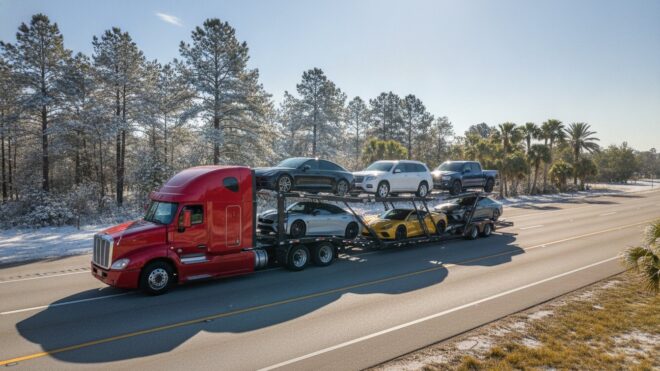
Would you really want to subject your vehicle to a 1,500-mile gauntlet of winter road salt and unpredictable highway debris just to save a few days of planning? Professional snowbird auto transport services offer more than just a convenience; they act as a preservation strategy for your second-largest investment. You’ve likely spent years maintaining your vehicle, and the thought of handing the keys to a carrier while coordinating a complex cross-country move is naturally stressful. We understand that anxiety about potential damage and confusion over seasonal price shifts can make the process feel overwhelming.
This complete 2026 seasonal guide provides the clarity you need to move your vehicle between residences with total confidence. We’ll show you how to secure a damage-free arrival and a transparent booking process that aligns perfectly with your travel dates. From understanding the new 2026 FMCSA electronic inspection mandates to choosing between open and enclosed carriers, this article breaks down the logistics into manageable steps. You’ll learn the best times to book for the southbound peak and how to ensure your car is waiting for you at your seasonal home, ready for the road the moment you arrive. Let’s explore how strategic planning turns a logistical hurdle into a seamless part of your annual transition.
Key Takeaways
- Identify the optimal 2026 shipping windows in late autumn and early spring to navigate seasonal demand and secure reliable carrier availability.
- Learn how specialized snowbird auto transport services preserve your vehicle’s value by eliminating the mechanical strain of long-distance interstate driving.
- Compare the benefits of open versus enclosed transport methods to protect your car from winter road salt and environmental debris.
- Follow a comprehensive preparation checklist, including the “quarter-tank” fuel rule, to ensure your vehicle meets safety standards for professional logistics.
- Discover the advantages of nationwide door-to-door service that aligns with your personal travel schedule for a seamless seasonal transition.
What Are Snowbird Auto Transport Services and Why Use Them?
At its core, snowbird auto transport services are specialized logistics solutions designed for individuals who migrate between primary and secondary residences to follow warmer climates. If you’ve ever asked, What is a snowbird?, the term typically refers to retirees or seasonal travelers who spend winter months in southern states like Florida, Arizona, or Texas. AutoPlex Transport Company provides these services to offer a reliable way to move a personal vehicle without the owner having to drive it thousands of miles across the country. It’s a logistical partnership that prioritizes your comfort and the vehicle’s longevity.
The physical toll on a vehicle during a 1,000-mile or 2,000-mile trek is significant. Driving such distances adds rapid depreciation through high mileage and exposes the engine, tires, and suspension to unnecessary strain. By utilizing professional shipping, you bypass the mechanical wear and tear that often leads to mid-trip breakdowns or expensive repairs later in the season. It’s a preservation strategy that keeps your car in peak condition for the months ahead.
Safety is a primary driver for choosing a carrier. Seasonal migration often coincides with peak travel times and volatile winter weather. Professional transport reduces the risk of highway accidents for the vehicle owner, especially during long stretches of monotonous driving. When you look at the economic reality, the cost of professional shipping often balances out against the hidden expenses of a solo drive. When you factor in fluctuating fuel prices, multiple hotel stays, meals, and the value of your time, the investment in a carrier becomes a practical financial choice.
For snowbirds who venture further abroad to tropical locales like Thailand, SPS Car Hire provides low-cost rentals and essential safety guidance for navigating the roads of Pattaya.
The Logistics of Seasonal Vehicle Relocation
National carriers coordinate complex routes to manage the massive North-to-South flow during peak seasons. They group multiple vehicles on a single trailer to maximize efficiency, which helps maintain steady service levels even when demand spikes. Door-to-door transportation is a key component of this seamless transition. It allows you to have your car picked up from your driveway in the North and delivered directly to your seasonal home in the South. This process operates within a strict legal framework for interstate vehicle transportation, ensuring that carriers comply with federal safety and weight regulations.
Insurance and Protection for Your Asset
One area where many travelers feel uncertain is the level of protection provided during transit. Standard carrier insurance typically covers the vehicle against damage caused by equipment failure or driver negligence during long-distance transit. However, your primary protection document is the Bill of Lading. This serves as both a receipt and a condition report. You’ll sign it at pickup and delivery to document the vehicle’s state. AutoPlex Transport Company and other professional logistics providers offer significantly more security than independent drivers because they maintain verifiable insurance bonds and adhere to rigorous safety protocols. This structured approach gives you the peace of mind that your asset is protected by industry veterans who understand the complexities of nationwide transport.
Timing Your Move: Navigating the 2026 Snowbird Shipping Window
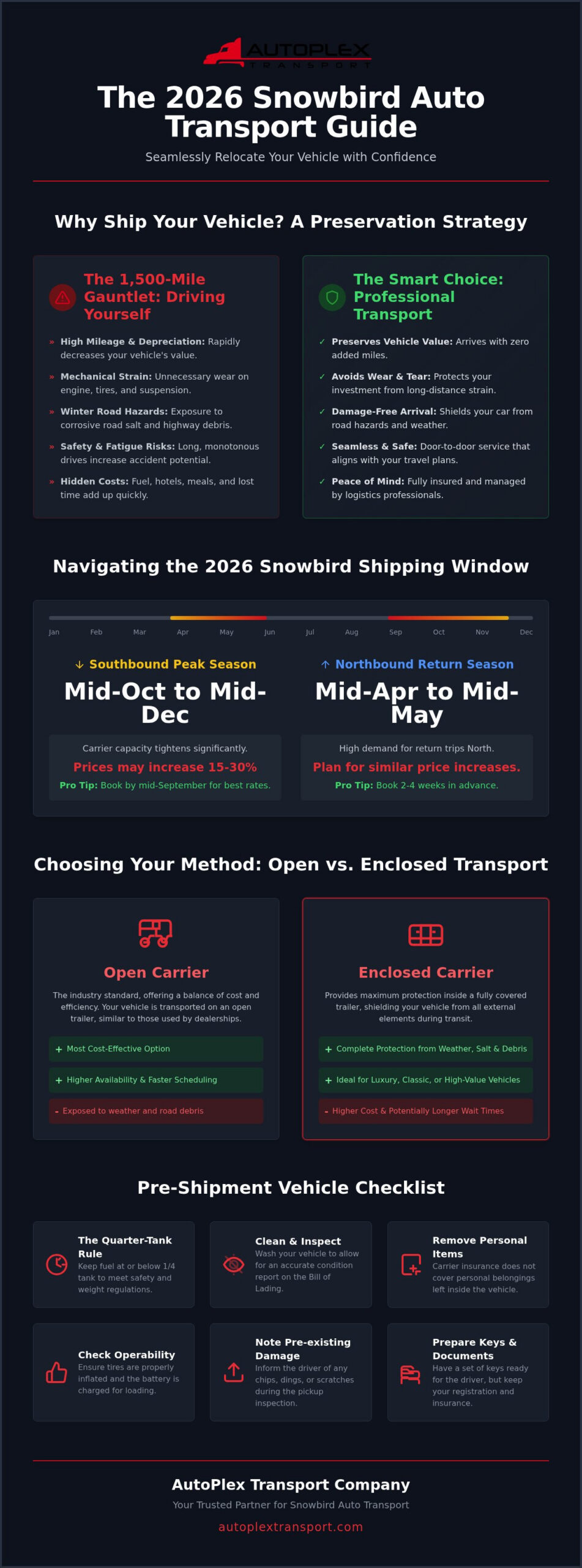
Timing is the most critical variable when arranging snowbird auto transport services. The industry experiences two massive surges known as the “Great Migration.” The southbound surge typically peaks between mid-October and mid-December, while the northbound return occurs from mid-April to mid-May. During these windows, carrier capacity tightens significantly, and prices can increase by 15% to 30% compared to off-peak months. To secure a reliable carrier at a fair rate, we recommend a lead time of two to four weeks. In fact, most veteran travelers aim to have their fall transport booked by mid-September to avoid the last-minute scramble for space on a trailer.
Understanding how to ship a car effectively involves aligning the vehicle’s arrival with your own travel plans. If you are flying to your destination, you don’t want your car arriving three days before you do. Conversely, landing without a vehicle can lead to expensive rental costs or reliance on ride-shares. For those heading to the Riviera Maya, a private transfer Tulum airport to hotel zone provides immediate mobility from the terminal to your seasonal home. We work to narrow the delivery window so your car is ready when you are, providing a seamless hand-off that respects your travel itinerary.
Beating the Seasonal Rush
If your schedule allows, consider shipping during the “shoulder seasons.” Moving your vehicle in early October or late December can often result in better rates and more carrier options. Providing a flexible pickup window of three to five days makes your shipment more attractive to drivers, which leads to faster assignments. You should also prepare for potential winter weather delays. Northern states often face snowstorms that can slow down transit times. We prioritize safety over speed, ensuring your vehicle isn’t rushed through dangerous conditions. This methodical approach reduces stress and ensures a more predictable experience.
Scheduling for Convenience and Reliability
Our scheduling follows a clear three-step process: Quote, Booking, and Dispatch. When you coordinate with a professional car transportation company, you gain access to real-time logistics data and precise timing. This level of coordination is essential if your travel dates are rigid. The dispatch phase is where the actual driver is assigned, and we keep you informed during this transition. If your vehicle happens to arrive before you reach your destination, we can often arrange for a local terminal drop-off or a trusted secondary contact to receive the car. This ensures your vehicle is safe and waiting for you the moment you arrive. If you are ready to see how these timelines fit your specific route, you can request a personalized schedule update from our team today.
Choosing the Right Method: Open vs. Enclosed for Snowbirds
Deciding between an open or enclosed trailer is a pivotal step in arranging snowbird auto transport services. This choice involves balancing your budget with the level of environmental protection your vehicle requires for a cross-country journey. While both methods are professionally managed and secure, the specific route you travel often dictates which option is most practical. For instance, a vehicle moving through the Midwest during a heavy snow cycle faces different risks than one traveling along a clear coastal corridor. Understanding the cost-to-benefit ratio helps you make an informed decision based on whether you’re shipping a sturdy daily driver or a delicate luxury asset.
When to Choose Open Transport
Open trailers are the most common sight on American highways and serve as the industry standard for value. This method is ideal for standard SUVs, trucks, and sedans where cost-efficiency is the primary goal. Because there are more open carriers on the road, open transport car shipping is typically the fastest way to secure a spot on a trailer. Many owners have concerns about safety, but modern trailers use sophisticated tie-down systems that keep vehicles completely immobile. While the car is exposed to the air, it’s no different than the exposure it would face if you were driving it yourself, making it a reliable choice for most seasonal moves.
The Case for Enclosed Shipping in Winter
Winter shipping introduces a specific threat: corrosive road salt. In northern states, road crews use heavy amounts of salt and liquid brine to manage ice. These chemicals can cling to a vehicle’s undercarriage and finish, potentially causing long-term damage. This is why enclosed car transport is the recommended premium choice for classic cars or high-value seasonal vehicles. An enclosed trailer provides a complete shield against road grime, salt, and unpredictable seasonal storms. It offers a level of peace of mind that ensures your vehicle arrives at your southern residence in the exact same condition it left your northern driveway, regardless of the weather conditions encountered during transit.
Preparing Your Vehicle for Long-Distance Seasonal Transit
Proper preparation is the bridge between a logistical headache and a seamless relocation. When you arrange snowbird auto transport services, your vehicle becomes part of a carefully balanced ecosystem on a multi-car trailer. Ensuring your car is mechanically sound and ready for the journey protects your asset and helps the driver maintain a strict schedule. A vehicle that won’t start or has a leaking fluid line can cause significant delays at both the pickup and delivery points. By following a methodical preparation routine, you ensure that your seasonal transition remains a relaxing experience rather than a source of anxiety.
Start with a basic mechanical overview. Check your fluid levels, ensure the battery is fully charged, and verify that tire pressures are at the manufacturer’s recommended levels. You should also adhere to the “Quarter-Tank Rule.” Carriers prefer your fuel level to be at approximately one-quarter of a tank. This provides enough fuel for the driver to load and unload the vehicle while significantly reducing the total weight of the trailer. Since carriers must comply with strict federal weight limits, keeping fuel levels low allows them to operate safely and legally across state lines.
Cleaning the exterior of your car is another essential step. A clean vehicle allows for a much more accurate pre-shipment inspection because dirt and road grime can easily hide small dents or paint chips. You should also remove all personal items and aftermarket accessories, such as bike racks or removable GPS units. These items are generally not covered by carrier insurance and can shift during transit, potentially causing interior damage or being lost during the move.
The Pre-Shipment Inspection Process
Documentation is your best friend during the shipping process. Take high-resolution photos of your vehicle from every angle, including the roof and lower bumpers, just before the carrier arrives. When the driver performs their initial walk-around, stay present and review the driver’s inspection report carefully. The Bill of Lading serves as the primary legal receipt documenting your vehicle’s physical condition at both the start and conclusion of the transit. In 2026, many carriers utilize electronic inspection reports that allow you to sign digitally and receive an immediate copy via email, providing a clear paper trail for your records.
Final Logistics Before Pickup
The final details often make the biggest difference in a successful delivery. Remember to disable your alarm system and remove or deactivate any toll tags, such as E-ZPass or SunPass, to prevent them from being triggered while the vehicle is on the trailer. You must also provide the driver with a complete set of keys, including the fob and any specialized keys for locking lug nuts or fuel caps. For a more detailed technical breakdown of these steps, you can refer to our how to prepare a car for transport guide. If you have specific questions about your vehicle’s unique requirements, you can contact our support team for personalized guidance before your pickup date.
Why AutoPlex Transport Company is the Trusted Partner for Snowbirds
Choosing a carrier for your seasonal relocation is about more than just finding a trailer; it’s about establishing a relationship with a provider that respects the value of your vehicle. AutoPlex Transport Company positions itself as a reliable partner by combining nationwide reach with a methodical approach to safety. We provide seamless shipping across all 50 states, ensuring that your transition between residences is handled with professional precision. Whether you’re moving from the Pacific Northwest to the California coast or from New England to the tip of Florida, our logistics network is designed to support the unique demands of snowbird auto transport services.
Transparency is the cornerstone of our communication strategy. We believe you should never be left wondering about the status of your vehicle or the specifics of your delivery window. Our team provides methodical updates throughout the process, moving from the initial quote to the final delivery with clear, jargon-free information. Because we maintain a versatile fleet, you have immediate access to both open and enclosed carriers. This flexibility ensures we can accommodate every budget and vehicle type, from the family SUV to the high-value classic car, without compromising on the quality of the transport experience.
Expertise in National Auto Logistics
Our deep experience in interstate vehicle transport allows us to navigate the complexities of state-to-state regulations and seasonal traffic patterns with ease. We don’t just assign any driver to your route; we utilize a network of vetted, professional carriers who specialize in seasonal moves. These drivers understand the specific needs of seasonal residents, such as the importance of punctuality and the careful handling of vehicles that have been prepared for long-term stays. This level of expertise ensures a stress-free experience, allowing you to focus on your travel plans while we manage the heavy lifting of the relocation.
Booking Your 2026 Seasonal Shipment
Securing your spot for the 2026 season is a straightforward process designed for your convenience. We offer accurate, no-obligation quotes that reflect the current market conditions for your specific route, helping you avoid the pricing surprises often found with less experienced brokers. Our door-to-door service model means we handle the logistics from your current driveway directly to your destination, removing the need for terminal drop-offs or third-party storage. To begin, simply provide your vehicle details and preferred dates. Once you’ve reviewed your options, our team will work with you to finalize the schedule and secure a spot on a carrier that fits your travel itinerary perfectly. We invite you to experience the peace of mind that comes from working with an industry veteran dedicated to your vehicle’s safety.
Securing Your Seasonal Transition for 2026
Preparing for your annual migration requires more than just packing a suitcase; it involves a strategic approach to vehicle logistics. By booking your shipment early to navigate the “Great Migration” surges and selecting the appropriate carrier to shield your car from winter road salt, you ensure a damage-free arrival at your seasonal residence. Remember that thorough mechanical preparation and proper documentation are the final steps in a successful relocation. Professional snowbird auto transport services eliminate the unnecessary stress of a cross-country drive, allowing you to focus on the relaxation you’ve earned.
AutoPlex Transport is here to serve as your reliable partner throughout this process. We offer professional door-to-door service and fully insured nationwide carriers, giving you access to specialized open and enclosed options that fit your specific needs. Don’t leave your vehicle’s safety to chance during the busy 2026 season. Get Your Instant Snowbird Auto Transport Quote from AutoPlex today and take the first step toward a seamless move. We look forward to helping you start your seasonal stay with total peace of mind.
Frequently Asked Questions
How much do snowbird auto transport services cost in 2026?
The total cost of shipping your vehicle depends on several factors, including the distance of the route, the size of your vehicle, and your choice between open or enclosed trailers. During peak seasonal windows, such as the late autumn migration, rates typically adjust based on high demand and limited carrier availability. We recommend requesting a personalized quote that reflects current fuel costs and your specific logistics to ensure you receive an accurate estimate for the 2026 season.
When is the best time to book my seasonal car shipment?
You should ideally secure your booking two to four weeks before your preferred pickup date to ensure the best rates and carrier availability. For those utilizing snowbird auto transport services during the busiest months of October and April, we suggest finalizing your arrangements by mid-September or mid-March. This lead time allows us to coordinate more effectively with your personal travel itinerary and helps you avoid the stress of last-minute scheduling surges.
Can I ship personal items inside my car during transport?
Most carriers prohibit the inclusion of personal items inside the vehicle because these belongings aren’t protected by the carrier’s cargo insurance. Items left in the cabin can shift during transit, which may cause damage to the interior or windows. Additionally, excessive weight from personal luggage can put the trailer over federal weight limits. It is best to remove all electronics, valuables, and heavy items to ensure a safe and compliant transport process for your car.
How long does it typically take to ship a car cross-country for the season?
Cross-country transit generally takes between seven and ten days, while shorter interstate moves, such as from the Northeast to Florida, often arrive within three to five days. These timelines are influenced by the total mileage and the driver’s adherence to federal safety regulations regarding daily driving hours. We provide a projected delivery window once your vehicle is dispatched so you can plan your arrival at your seasonal residence with confidence.
Is my vehicle insured while it is on the transport trailer?
Yes, your vehicle is fully protected by the carrier’s cargo insurance policy from the moment it is loaded until the final delivery. This coverage protects against damage caused by equipment failure or driver negligence during the journey. We verify that every carrier in our network maintains the required 2026 insurance standards for interstate transport. You will also receive a Bill of Lading, which serves as the legal record of your vehicle’s condition for your protection.
What happens if I am not at the destination when my car arrives?
If you cannot be present at the time of delivery, you may designate a trusted representative, such as a neighbor or family member, to receive the vehicle on your behalf. This individual will need to perform the final inspection and sign the Bill of Lading to complete the process. If no representative is available, we can often arrange for the vehicle to be held at a secure local terminal, though this may result in additional storage fees.
Do I need to be present for the pickup and delivery of my vehicle?
Either you or a designated adult must be present at both the pickup and delivery locations to complete the required inspections. This process involves a joint walk-around with the driver to document the vehicle’s current condition on the Bill of Lading. Being present ensures that any questions about the route are addressed immediately and that the legal transfer of the vehicle is handled correctly, providing you with essential peace of mind.
Is open or enclosed transport better for a seasonal move?
The ideal choice depends on your specific vehicle and the level of protection you want against winter road conditions. Open transport is the most common and cost-effective method for daily drivers and SUVs. However, enclosed transport is the premium recommendation for luxury or classic cars because it provides a complete shield against corrosive road salt and debris. Many seasonal residents choose enclosed trailers in the spring to avoid the grime of melting northern snow.