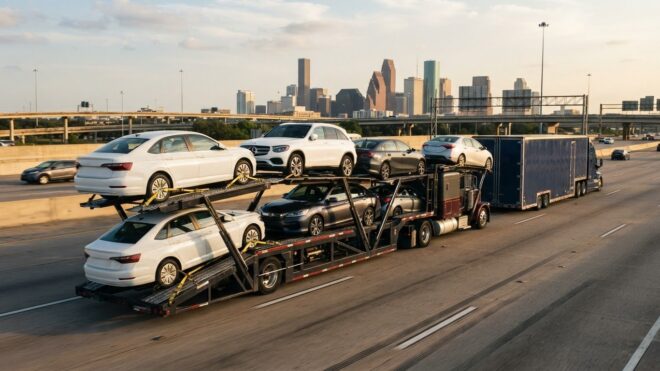
When comparing car transport options, the lowest quote isn’t automatically the best fit. Price matters, but so do the carrier type, what the estimate includes, and how pickup and delivery expectations are explained by AutoPlex Transport Company. It’s understandable to have questions about transit damage, costs, and communication while your car is on the road.
A reliable shipping plan makes those details easier to understand before your vehicle is loaded. This guide from AutoPlex Transport Company explains how to compare transport options and evaluate factors that may affect a quote and delivery schedule, so you can make an informed choice for an interstate shipment.
You’ll learn how open and enclosed transport differ, what door-to-door service involves, and which questions can clarify protection, communication, and scheduling. With a methodical approach, you can choose a service that fits your vehicle and priorities instead of treating transport as just a delivery price.
Key Takeaways
- Understand what professional car transport includes and when shipping may be more practical than driving the vehicle yourself.
- Compare open and enclosed carriers by weighing your vehicle’s protection needs against the transport method that fits your priorities.
- Learn how route planning, distance, and access can shape interstate delivery schedules, and what to clarify about pickup and arrival expectations.
- Use a checklist to assess quotes, compare what each estimate includes, and ask questions about unusually low offers.
- See how AutoPlex Transport’s nationwide, door-to-door, open, and enclosed services can support a considered vehicle-shipping plan.
Understanding Professional Car Transport Services
Professional auto transport moves a vehicle between locations on a carrier, rather than requiring its owner to drive the full route. For an interstate move, car transport Houston TX can be a practical way to avoid adding long-distance mileage and road time to your vehicle. A transport provider coordinates the shipment, including the carrier type, route, pickup details, and delivery arrangements.
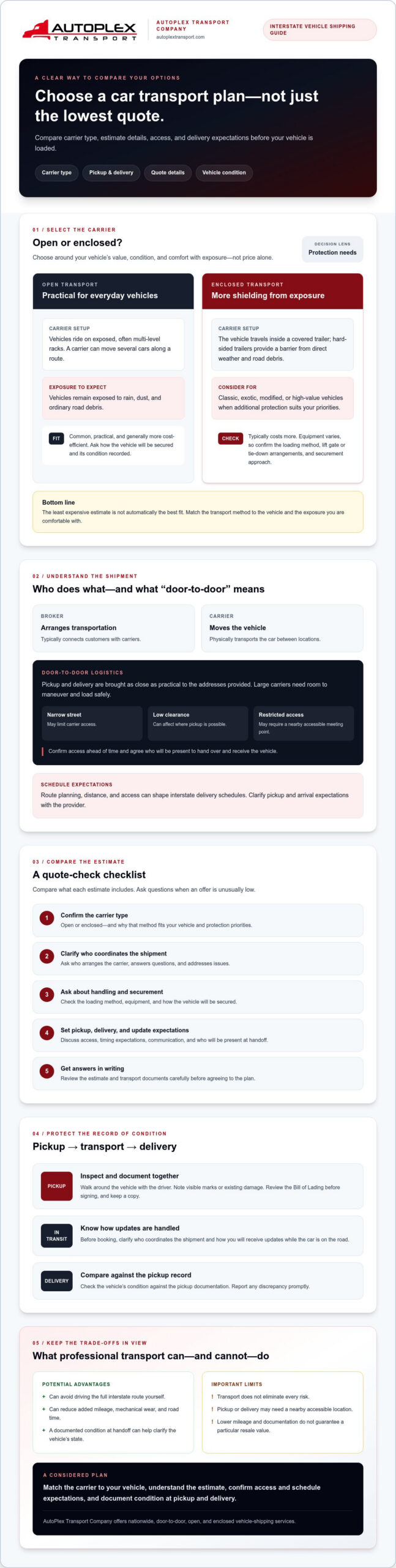
Before booking, clarify who will coordinate your shipment and how you’ll receive updates. A broker typically arranges transportation by connecting customers with carriers, while a carrier physically moves the vehicle. Ask who is responsible for arranging the carrier, answering questions, and addressing issues. Understanding those roles is more useful than judging an offer by price alone.
The Convenience of Door-to-Door Logistics
Door-to-door service is designed to bring pickup and delivery as close as practical to the addresses provided, so you generally don’t need to arrange terminal drop-offs. Large carriers need sufficient room to maneuver and load safely. A narrow street, low clearance, or restricted access may mean meeting the driver at a nearby accessible location. Confirm access in advance and agree on who will be present to hand over and receive the vehicle.
At pickup, the Bill of Lading documents the shipment and records the vehicle’s condition. Walk around the car with the driver, note visible marks or existing damage, and review the document before signing. Keep a copy. At delivery, compare the vehicle’s condition with the pickup record and report any discrepancy promptly.
Why Professional Handling Matters for Vehicle Longevity
Shipping can reduce the mileage and mechanical wear associated with driving a vehicle across state lines. It also avoids putting the owner through hours on the road and limits the car’s exposure to ordinary driving hazards along the route. Transport doesn’t eliminate every risk, so ask how the carrier’s process and documentation address the vehicle’s condition at handoff.
Lower mileage and a well-documented condition may be helpful when it’s time to sell, though transport alone can’t guarantee a particular resale value. The right carrier type depends on the vehicle and your protection priorities. For a basic overview of the equipment, see Open vs. Enclosed Carriers. Understanding the options helps you ask informed questions and choose a method that suits your car.
Open vs. Enclosed Carriers: Which Protects Your Vehicle Best?
The right carrier depends on the vehicle’s value, condition, and the level of exposure you’re comfortable with, not simply on choosing the least expensive option. Open trailers carry vehicles on exposed, often multi-level racks, while enclosed trailers place them inside a covered trailer. That physical difference affects protection from weather and road debris. For a closer look at one option, see open transport car shipping.
Open transport is a common, practical choice for everyday vehicles and is generally more cost-efficient because a carrier can move multiple cars on one route. Enclosed transport typically costs more, but the added barrier from outdoor exposure may suit a classic, exotic, modified, or high-value vehicle. Consider your car’s needs and your tolerance for exposure before comparing quotes. The lowest estimate may not be the best fit.
Open Carrier Transport: The Practical Choice
Multi-car open carriers let a transport provider coordinate several vehicles along a route. Drivers secure each vehicle to the carrier’s ramps or racks, using designated tie-down points and equipment suited to the vehicle. The cars remain exposed to rain, dust, and ordinary road debris. Ask how the vehicle will be secured and how its condition will be documented at pickup and delivery.
Enclosed Shipping: The Gold Standard for Protection
Hard-sided enclosed trailers shield vehicles from direct weather and road debris, making them a considered option for cars whose finish, rarity, or value warrants additional protection. Some enclosed setups may use hydraulic lift gates or soft-tie-downs, but equipment varies. Confirm the carrier’s specific arrangements before booking. Review enclosed car transport details to help assess whether this method suits your vehicle.
Before choosing, ask providers to explain the carrier type, loading method, securement approach, and how they record vehicle condition. Get the answers in writing and review the transport documents carefully. If a service concern arises, document the issue and contact the provider. USA.gov also offers information on filing a car shipping complaint. AutoPlex Transport offers both open and enclosed nationwide transportation, so you can compare methods based on your vehicle’s protection needs. Learn more about AutoPlex Transport services.
Navigating the Logistics of Interstate Vehicle Transportation
An interstate vehicle shipment involves more than plotting a line between two addresses. A transport provider considers route access, carrier capacity, pickup and delivery locations, and road conditions when coordinating the trip. The route may not follow the shortest driving path, and a delivery window is usually more realistic than an exact arrival time because the carrier may have other scheduled pickups and deliveries.
Distance is only one factor in scheduling. Weather, traffic, road closures, loading arrangements, and driver hours can all affect progress. Depending on the route plan, longer journeys may also involve regional transfer or coordination points. Ask how pickup and delivery windows are defined, when you’ll receive updates, and whom to contact if plans change.
Cross-Country Timelines and Planning
Before booking, share any location or access constraints that could affect loading, and confirm that someone can meet the carrier at both ends. Build flexibility into your plans instead of arranging travel or other commitments around a single precise arrival time. If weather or traffic causes a delay, ask for an update explaining what changed and the revised expectation. Keep your contact details current throughout the shipment.
Compliance and Safety Standards
Before selecting a provider, ask for the carrier’s legal business name and USDOT number. You can use the Federal Motor Carrier Safety Administration’s public resources to check the carrier’s record and any available safety information. A rating or record is one part of due diligence, not a promise that a shipment will be incident-free. Confirm that the carrier handling the vehicle matches the information you were given.
Insurance also deserves a direct conversation. Ask what coverage applies to your vehicle in transit, what limits and exclusions apply, and how a damage claim would be documented and submitted. Request the relevant details in writing. A general statement that a carrier is insured doesn’t explain the protection for your particular shipment.
Professional coordination includes communicating when a route, weather condition, access issue, or schedule change affects the plan. Before pickup, agree on the primary contact and how updates will be shared. At delivery, inspect the vehicle and compare its condition with the pickup record before completing the handoff. These steps help you track the shipment and keep expectations aligned from origin to destination.
How to Evaluate Car Shipping Quotes Without Sacrificing Safety
A useful quote should explain what service is being arranged, not just present a total. Compare the same shipment details across providers: vehicle dimensions and condition, origin and destination, open or enclosed carrier, pickup and delivery arrangements, and requested timing. Ask whether the quote includes all known charges and what circumstances could change it. Clear answers make it easier to compare value without overlooking how your vehicle will be handled.
Be cautious if an unusually low estimate comes with vague terms, pressure to book immediately, or no clear explanation of who will transport the vehicle. A low figure may be preliminary or based on incomplete shipment information. Before committing, get the carrier arrangement, included services, payment terms, and any conditions that could affect the final amount in writing.
What Influences Your Transport Rate?
Vehicle size and weight affect the space and capacity needed on a carrier. A vehicle that doesn’t run may require different loading arrangements, so disclose its condition accurately. Carrier type and route also matter. Demand can shift with season and market conditions, and an expedited schedule may differ from a standard pickup window. Ask providers to explain how each factor affects the quote and whether the stated timing is an estimate or a commitment.
A preliminary estimate can change as shipment details are confirmed or carrier availability is assessed. A binding quote generally indicates firmer terms, but the label alone isn’t enough. Read the written conditions to see what’s included, what could alter the amount, and how long the offer remains valid. Compare like with like, including transport method, timing, pickup and delivery arrangements, and potential additional charges.
The Delivery Inspection Checklist
Set aside time to inspect the vehicle before completing the delivery handoff. Use the pickup Bill of Lading as your reference and check the car in good light, if conditions allow.
- Walk around the vehicle and compare each panel, bumper, glass, wheels, and roof with the pickup condition record.
- Look for new scratches, dents, chips, or other visible changes. Take clear photos of any concerns.
- Record discrepancies on the delivery paperwork and ask the driver to acknowledge them before signing, where possible.
- Contact the transport provider promptly, share the relevant documents and photos, and ask about its process and deadlines for reporting concerns.
A careful comparison creates a clear record and helps you raise questions while the delivery details are at hand. For a quote that explains the transport method and shipment terms, request details about AutoPlex Transport’s vehicle shipping.
Choosing AutoPlex Transport for Secure Nationwide Delivery
Shipping a vehicle across state lines involves valuable property and details that need to be coordinated. AutoPlex Transport Company provides nationwide vehicle transportation, including door-to-door service and open and enclosed carrier options. Discussing the transport method and shipment logistics before pickup can help you understand how the service is arranged.
When arranging an interstate shipment, start with the specifics: your vehicle, both addresses, preferred carrier type, and scheduling needs. Sharing accurate information helps the provider discuss options that fit your shipment. Ask who will coordinate the transport, how updates will be shared, and what to do if pickup or delivery plans change.
The AutoPlex Advantage: Reliability and Expertise
AutoPlex Transport Company handles nationwide shipments using both open and enclosed carriers, giving vehicle owners options based on the level of exposure they’re comfortable with. Discuss the logistics and service details rather than treating a shipment as a simple handoff. Before booking, confirm the carrier type, pickup and delivery arrangements, and the process for recording vehicle condition. Clear answers can reduce uncertainty and help you make an informed decision.
Communication is also important to planning. Confirm your primary contact and ask what information you can expect during transit. A provider that explains the process and responds clearly gives you a better basis for planning than one that leaves important details uncertain.
Getting Started with Your Shipment
Preparation begins before the carrier arrives. Review how to prepare a car for transport, then confirm any vehicle-specific instructions with the provider. Share whether the car is operable and disclose relevant condition or access details that may affect loading and pickup.
After booking, check your confirmation for next steps, contact details, the agreed pickup window, and when to expect an update. If those points aren’t clear, ask before making travel or delivery plans around a particular time. Keep your phone and email available, and save the transport documents and messages in one place.
To discuss an upcoming shipment with AutoPlex Transport Company, provide your route, vehicle details, timing needs, and carrier preference. This gives both sides a practical starting point for coordinating nationwide delivery.
Plan Your Vehicle’s Next Move with Confidence
Choosing a car transport service starts with understanding what your vehicle needs and what each quote includes. Open carriers can suit everyday vehicles, while enclosed transport may be a better fit when added protection from weather and road debris matters. Clear pickup details, realistic delivery expectations, and a careful inspection at handoff help keep the process organized.
With nationwide logistics, open and enclosed carrier options, and door-to-door transportation, AutoPlex Transport can help you consider an approach for your interstate shipment. Share your vehicle details, route, and timing needs so you can clarify the service and arrangements before booking.
When you’re ready to take the next step, request a car transport quote from AutoPlex Transport. Share your shipment details to discuss the transport method and arrangements before booking.
Frequently Asked Questions
Is my car insured during the transport process?
Coverage depends on the carrier’s insurance policy and the terms of your shipment, so confirm the details before booking. Ask what coverage applies while the vehicle is in transit, what limits or exclusions may apply, and how to report a concern. Request the information in writing, and keep a copy of the Bill of Lading and vehicle condition record. Don’t assume every type of damage or personal item is covered.
What is the difference between an auto transport broker and a carrier?
A carrier physically transports vehicles, while a broker arranges transportation by connecting a customer with a carrier. Ask who you’re contracting with and who will coordinate your shipment and answer questions. Review the agreement to identify the parties involved, the assigned carrier, and the contact process. Understanding these roles helps you know whom to reach for an update or if you have a concern during transit.
How long does it typically take to ship a car across the country?
There isn’t one timeline that applies to every cross-country shipment. Distance, route planning, traffic, weather, loading schedules, and driver hours can all affect transit. Providers may give a pickup window and an estimated delivery window rather than an exact arrival time. Before booking, ask how those windows are defined, how delays are communicated, and when you should expect an update so you can plan around the shipment.
Can I leave personal belongings inside my vehicle during transport?
Check with the transport provider before placing anything in the vehicle. Policies can vary, and personal belongings may not be covered by the carrier’s cargo insurance. To avoid uncertainty, remove valuables, important documents, and loose items before pickup. If the provider permits any belongings to remain, ask what restrictions apply and get the instructions in writing. Prepare the vehicle according to the confirmed requirements rather than assuming personal items can travel with it.
Do I need to be present for the pickup and delivery of my car?
Coordinate with the provider about who must be available at pickup and delivery. If you can’t attend, ask whether an authorized representative can meet the driver, review the vehicle’s condition, and handle the required documents. Make sure that person has the shipment details and understands what to check. At both handoffs, the vehicle’s condition should be recorded, and you or your representative should keep copies of the completed paperwork.
What happens if my vehicle is delivered during inclement weather?
Weather may affect the delivery schedule or make a thorough inspection difficult. Ask the provider how it handles weather-related changes and keep communication open if conditions worsen. If the car arrives in poor light or unsafe conditions, discuss a safe way to inspect it with the driver before completing the handoff. Compare the vehicle with its pickup condition record, photograph any concerns, and contact the provider promptly to ask about next steps.
Can you transport a vehicle that does not currently run?
A non-running vehicle may require different loading arrangements, and transport capability depends on the carrier and equipment assigned. Tell the provider upfront that the car doesn’t run, and explain whether it can steer, roll, and brake if you know. Ask whether the shipment can be accommodated, what loading arrangements are needed, and whether the quote reflects its condition. Don’t assume every carrier can move an inoperable vehicle.
How far in advance should I schedule my car transport?
Start arranging transport as soon as your route and preferred dates are reasonably clear. Advance planning gives you time to compare carrier types, confirm shipment details, and discuss pickup and delivery windows. Availability can vary with route demand and scheduling, so avoid relying on a last-minute arrangement if your dates are fixed. Ask the provider what timing is realistic for your shipment and when the schedule will be confirmed.