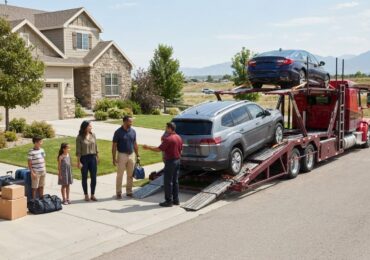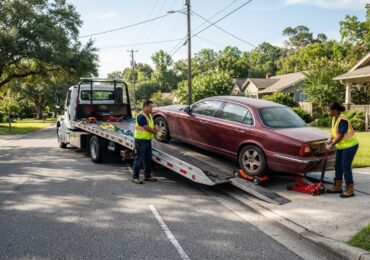
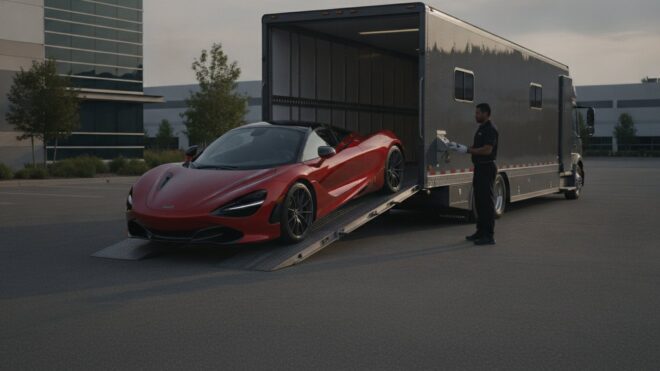
Why would you spend years maintaining a pristine finish only to leave your vehicle’s safety to chance on the open road? Many owners feel a deep sense of anxiety when considering the risks of road salt, loose gravel, or unpredictable storms hitting their investment while it sits exposed on a standard trailer. This concern is especially sharp for those with low-clearance vehicles where a single steep ramp can cause expensive damage. You deserve a transportation solution that treats your car as a valuable asset rather than just another piece of freight.
This guide explains how enclosed car transport provides the ultimate protection for your high-value vehicle and how to choose a professional service that prioritizes safety. We’ll explore the latest 2026 industry standards, such as the transition to a single USDOT identification system and stricter English proficiency enforcement for drivers. By the end of this article, you’ll understand how to verify insurance coverage and coordinate a seamless door-to-door experience that keeps your vehicle in showroom condition from start to finish.
Key Takeaways
- Understand how premium shipping methods provide total isolation from environmental hazards and road debris, ensuring your vehicle arrives in pristine condition.
- Learn why hydraulic liftgates are the superior choice over standard ramps for protecting low-clearance vehicles from scraping and structural damage during loading.
- Evaluate the return on investment for enclosed car transport by comparing the shipping premium against the potential loss in resale value caused by minor cosmetic damage.
- Discover the essential steps for preparing your vehicle, including the necessity of a thorough cleaning to ensure an accurate and protective Bill of Lading.
- Identify the criteria for selecting a reliable nationwide partner that utilizes a vetted network of professional carriers experienced in handling high-value cargo.
What is Enclosed Car Transport and Why Does it Matter?
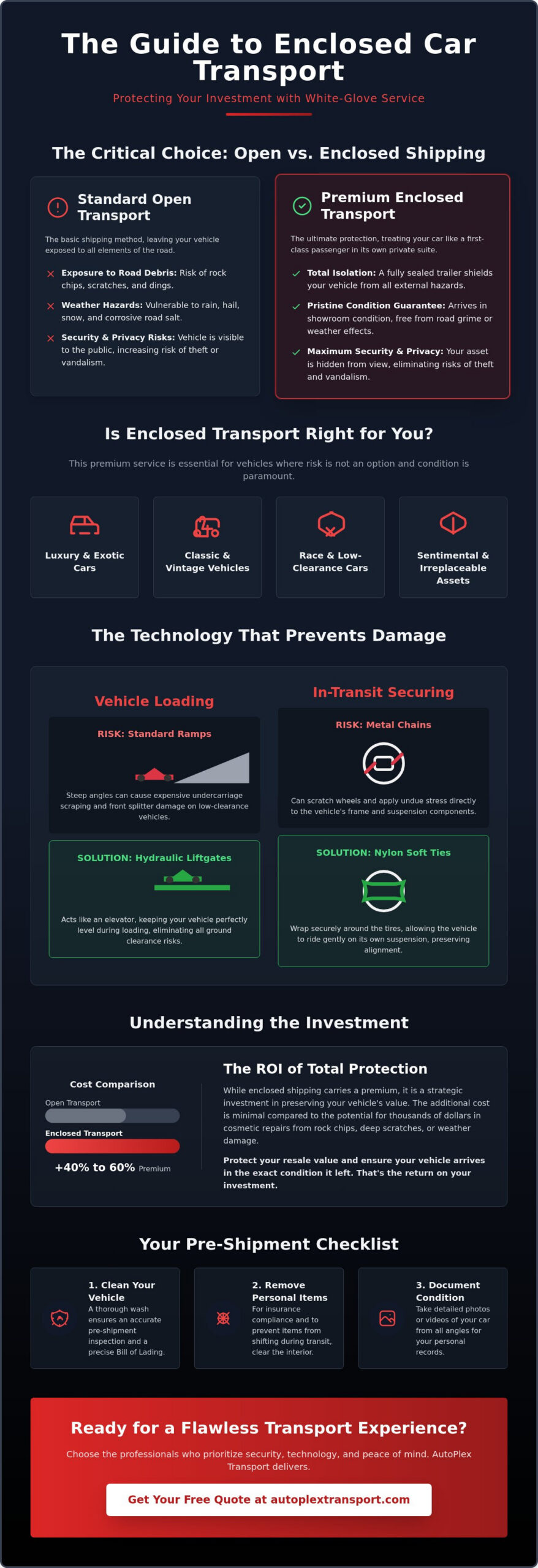
At its core, enclosed car transport is a premium logistics solution designed to provide the highest level of protection for vehicles during transit. Unlike standard open shipping, where cars sit exposed on a multi-level Car carrier trailer, enclosed transport utilizes a fully sealed trailer with four walls and a roof. This method ensures that the vehicle is completely isolated from external hazards. It’s the difference between walking through a storm and being inside a secure building while the storm passes by.
The primary benefit of this service is the total shielding from road debris, harsh weather conditions, and corrosive elements like road salt. For many owners, the appeal goes beyond physical protection. There’s a significant psychological benefit in knowing your asset is hidden from prying eyes and safe from the “transit anxiety” that often accompanies long-distance moves. Whether you’re moving a vintage heirloom or a modern supercar, this service treats your vehicle as a priority asset rather than just another unit of cargo, much like the high-end experience provided by Red Carpet Limousine LLC for luxury chauffeur services.
This specialized service is typically chosen for several types of vehicles:
- Luxury and Exotic Cars: High-value models that require pristine paint preservation.
- Classic and Vintage Vehicles: Older cars that may have sensitive seals or irreplaceable parts.
- Sentimental Assets: Any vehicle where the emotional value makes risk unacceptable.
- Race and Low-Clearance Cars: Vehicles that need specialized loading equipment to avoid damage.
Hard-Sided vs. Soft-Sided Enclosures
When you research enclosed car transport, you’ll find two main trailer types. Soft-sided trailers use heavy-duty canvas or vinyl curtains. While these protect against wind and light debris, they don’t offer the same structural integrity as hard-sided options. Hard-sided trailers feature rigid metal walls that provide maximum security and a more consistent climate within the trailer. AutoPlex Transport Company prioritizes hard-sided solutions because they offer superior protection against extreme weather and potential impacts, ensuring high-value assets remain untouched by the outside world.
The Security Factor: Beyond the Weather
Security is a major concern for high-profile owners or those transporting rare collectibles. Enclosed shipping effectively eliminates opportunistic theft and vandalism because the vehicle is never visible to the public during the journey. This “hidden” transport is essential for maintaining privacy. Additionally, choosing a more secure transport method often has positive insurance implications. Many specialty insurers prefer or even require enclosed shipping for vehicles valued over certain thresholds, as the risk of a claim for minor cosmetic damage, such as rock chips, is virtually eliminated.
Specialized Equipment: Liftgates vs. Ramps
Loading a vehicle is the moment of truth in logistics. It’s when the car transitions from the ground to the carrier. For owners of exotics or classic cars, this is often a source of high stress. Standard trailers use ramps that create a steep angle of approach, which can easily catch a front splitter or scrape a low-hanging oil pan. Utilizing enclosed car transport helps avoid these hazards by providing equipment specifically engineered for low-profile clearance.
While this specialized equipment ensures safety, it’s also a primary reason why this service costs 40% to 60% more per mile than open shipping. You aren’t just paying for the walls; you’re paying for the machinery that keeps your car level. Choosing the right enclosed car transport provider means looking beyond the trailer walls and focusing on the loading technology that prevents undercarriage damage before the journey even begins. For a deeper look at how this machinery works, our enclosed car carrier transport technical reference guide for 2026 covers the engineering behind hydraulic liftgates and soft-tie securement systems in detail.
Once inside, the method of securing the vehicle is just as vital. Metal chains, common in open transport, can scratch wheels or put undue stress on the suspension. Professional enclosed carriers utilize nylon strap technology, often called “soft ties.” These wrap around the tires rather than the frame, allowing the car to ride on its own suspension. This prevents the jarring vibrations of the road from being transferred directly into the vehicle’s chassis, which is essential for preserving the alignment of high-performance machines.
Hydraulic Liftgates: The Gold Standard
A hydraulic liftgate acts like an elevator for your car. The vehicle is driven onto a platform that remains perfectly horizontal as it rises to the level of the trailer deck. This is non-negotiable for cars with less than 4 inches of ground clearance. In 2026, hydraulic liftgates are recognized as the safest loading mechanism for exotic cars because they eliminate the risk of incline-related damage.
Advanced Ramp Systems
Not every enclosed trailer uses a liftgate. Some utilize extended racing ramps. These are much longer than standard ramps, which significantly reduces the angle of approach. Expert drivers use precise calculations to determine if a vehicle’s wheelbase and overhang will clear the transition point. Within the trailer, internal stacking systems allow for multiple vehicles to be housed safely. These upper decks are operated hydraulically to ensure they don’t leak fluids onto the cars below.
If you’re unsure which loading method your vehicle requires, the team at AutoPlex Transport Company can provide a detailed assessment based on your car’s specific dimensions and ground clearance.
Open vs. Enclosed: Calculating the ROI of Protection
Deciding between shipping methods often comes down to a simple question: is the extra cost worth it? While the initial quote for enclosed car transport reflects a premium service, viewing this strictly as an expense overlooks the long-term financial logic of asset preservation. For high-value vehicles, the return on investment isn’t found in the shipping rate itself, but in the thousands of dollars saved by avoiding depreciation and repair costs. Think of an enclosed trailer as a mobile garage that travels with your vehicle, maintaining a protective bubble against every external threat.
Consider the physical risks of a cross-country journey. On an open trailer, a vehicle is subjected to high-velocity road debris and varying weather patterns for days at a time. In the winter months, road salt and chemical de-icers can coat an exposed chassis, leading to immediate corrosion concerns. During the summer, intense UV exposure and acidic bird droppings can bake into the paintwork during transit layovers. By choosing enclosed car transport, you eliminate these variables entirely. One significant rock chip on a rare paint color can cost more to repair than the entire price gap between open and enclosed shipping.
The intangible value of peace of mind is equally important. There is a distinct psychological relief in knowing your vehicle isn’t being touched by rain, wind, or prying eyes at every truck stop along the interstate. This security ensures that the car you handed over at the point of origin is exactly the same car that arrives at your doorstep, free from the “transit wear” that often plagues vehicles moved on open carriers.
When is Enclosed Shipping Mandatory?
For certain vehicles, open transport isn’t just a risk; it’s a mistake. If your car features a custom matte wrap or a delicate “frozen” paint finish, any contact with road grit can be catastrophic, as these surfaces cannot be easily buffed or spot-repaired. Convertibles with soft tops are also highly vulnerable. At highway speeds, wind buffeting can force fine dust into the fabric pores or even strain the stitching over long distances. Additionally, classic cars with hard-to-source original trim pieces require the structural protection of a hard-sided trailer to ensure that nothing is lost or damaged by the elements.
The “Resale Value” Logic
Maintaining a vehicle in showroom condition is a core component of professional maintenance. When it comes time for an appraisal or a private sale, the presence of original, untouched factory paint is a major selling point that directly impacts the final price. Enclosed transport preserves the original factory finish of luxury vehicles by creating a physical barrier against the abrasive nature of long-distance road travel. By integrating secure shipping into your ownership strategy, you ensure that the vehicle’s “as-delivered” quality remains intact, protecting your equity for years to come.
Preparing Your Vehicle for White-Glove Shipping
Preparing your vehicle for enclosed car transport is a collaborative process between you and your carrier. It’s a critical step that ensures the white-glove service you’ve invested in translates into a flawless delivery. A professional carrier treats your car with the highest level of respect, but they need your help to document its condition correctly. This process starts with a thorough cleaning. While it might seem counterintuitive to wash a car before it goes into a trailer, a clean exterior is essential for a valid Bill of Lading. Dirt, dust, and road grime can easily hide small surface imperfections. If the driver can’t see the paint clearly during the pickup inspection, they can’t sign off on its condition with total accuracy, which could complicate insurance claims later.
Documentation is your next priority. You should have your keys ready and ensure you have copies of your registration and insurance. Throughout this process, maintain open lines of communication with your transport coordinator. They act as the bridge between you and the driver, providing updates on pickup windows and managing the complex logistics of a nationwide move. Clear communication ensures that everyone is on the same page regarding the vehicle’s specific needs and your schedule. For a complete technical and legal audit of every step involved, our professional 2026 checklist on how to prepare a car for transport walks you through every requirement from fluid checks to insurance documentation.
Step-by-Step Preparation Checklist
- High-Resolution Photography: Take detailed photos of every angle, including the roof, wheels, and interior. These serve as a timestamped record of the vehicle’s state.
- Mechanical Checks: Verify fluid levels and tire pressure. Even in a secure trailer, the vehicle must be driven or winched safely, and proper tire pressure prevents shifting.
- Alarm and Tag Removal: Disable all security alarms to prevent battery drain during transit. Remove toll tags and parking passes to avoid “ghost” charges while the trailer passes through toll plazas.
- Personal Items: Clear out all interior belongings. Items left inside aren’t covered by carrier insurance and can shift, potentially damaging the interior.
Navigating the Delivery Process
True Door 2 Door Transportation depends on physical access. Many customers don’t realize that a professional enclosed trailer can exceed 75 feet in length. These massive rigs often can’t navigate tight residential cul-de-sacs, streets with low-hanging trees, or areas with strict weight limits. If your home is in a restricted area, your driver will coordinate a meeting at a nearby wide-access point, such as a large commercial parking lot. This is a standard safety protocol designed to protect your vehicle and the carrier’s equipment from unnecessary risk.
When the vehicle arrives at its destination, perform a final inspection alongside the driver before signing the delivery paperwork. This is your opportunity to confirm the vehicle arrived in the exact condition it left. Once you’re satisfied, you can sign off on the Bill of Lading to complete the process.
Ready to move your vehicle with a partner who understands these logistical details? Request a quote for our Enclosed Transport Services today.
Professional Enclosed Car Transport with AutoPlex
Trust is the most valuable currency in the automotive logistics industry. AutoPlex Transport Company operates with a deep understanding of this responsibility, offering a methodical approach to enclosed car transport that prioritizes the safety of your vehicle above all else. Managing Interstate Vehicle Transportation involves more than just driving from one point to another. It requires a sophisticated logistical network that stays ahead of evolving industry standards. For instance, our team ensures all carriers in our network are fully compliant with the latest 2026 FMCSA regulations. This includes the transition to a single USDOT identifier and the strict enforcement of English proficiency requirements for all commercial drivers.
Choosing an experienced partner is essential because high-value cargo demands specialized handling that standard carriers simply cannot provide. Our network consists exclusively of vetted, professional carriers who specialize in Enclosed Transport Services. These professionals understand the specific needs of sensitive air-ride suspensions and delicate paint finishes. We also address common anxieties regarding insurance by ensuring our partners maintain high-limit cargo coverage. While open carriers often carry lower limits, our enclosed partners typically provide coverage ranging from $250,000 to over $1,000,000 per shipment. This transparency provides the security you need for a worry-free experience.
The AutoPlex Advantage
Our commitment to excellence is reflected in our steady and informative communication style. We don’t just book a shipment; we act as a reliable partner through every phase of the journey. From the initial inquiry to the final signature on the Bill of Lading, our team remains accessible. This nationwide reach allows us to facilitate Nationwide Transportation Services while maintaining the detail-oriented focus of a specialist. Our handlers are seasoned veterans who recognize the nuances of exotic and classic cars. They ensure that every vehicle is treated with the specialized care it deserves, utilizing the equipment and techniques discussed throughout this guide.
Get Your Enclosed Shipping Quote
Obtaining an accurate estimate is the first step toward a successful move. To provide a no-hidden-fee quote, we require specific details about your vehicle. We need the year, make, and model, along with any modifications such as lowered suspensions or aftermarket spoilers that might affect loading. We also consider your preferred timing and the specific pickup and delivery locations to ensure our Door 2 Door Transportation logistics are perfectly aligned with your schedule. This customized approach eliminates surprises and allows you to plan your move with confidence. Request your enclosed transport quote from AutoPlex Transport today!
Secure Your Investment for the Road Ahead
Choosing the right shipping method is a critical decision that impacts the long-term value and condition of your vehicle. By prioritizing enclosed car transport, you ensure your asset is shielded from environmental hazards and road debris that standard trailers simply cannot avoid. We’ve explored how specialized hydraulic liftgates provide the safest loading experience for low-clearance cars and why a methodical approach to documentation and preparation is essential for a seamless delivery.
AutoPlex Transport Company remains dedicated to being your reliable partner throughout this complex process. Our nationwide door-to-door service is built on a foundation of safety, transparency, and professional expertise. Every quote we provide includes full insurance coverage, giving you the peace of mind that your investment is protected from pickup to final drop-off. When you’re ready to experience a higher standard of vehicle logistics, our team is here to guide you through every step of the journey.
Get a Professional Enclosed Transport Quote today and give your vehicle the protection it deserves.
Frequently Asked Questions
Is enclosed car transport worth it for a daily driver?
Enclosed shipping is generally reserved for high-value assets rather than standard daily drivers. While it offers superior protection, the cost-to-benefit ratio usually favors open carriers for vehicles used for everyday commuting. However, if your daily driver has a custom matte finish or sensitive modifications, the investment in enclosed car transport helps maintain its condition and resale value.
How much more expensive is enclosed shipping compared to open carrier?
You can expect to pay a premium of 30% to 60% more for enclosed shipping compared to an open carrier. On a cross-country move of 1,500 miles or more, this often translates to an additional cost between $400 and $1,200. This higher rate covers the specialized equipment, higher insurance limits, and the reduced number of vehicles per trailer.
Can I ship personal items inside my car during enclosed transport?
Safety regulations and carrier insurance policies generally prohibit shipping personal items inside your vehicle. Items left in the trunk or cabin aren’t covered by the transporter’s cargo insurance and can cause internal damage if they shift during transit. It’s best to remove all belongings, including toll tags and aftermarket accessories, before the driver arrives for pickup.
What kind of insurance coverage is included with enclosed shipping?
Enclosed carriers provide significantly higher insurance limits than standard open trailers. Most professional enclosed shipments include cargo insurance ranging from $250,000 to $1,000,000 or more. This comprehensive coverage ensures that high-value exotic and classic cars are fully protected against rare incidents during the transportation process.
How long does nationwide enclosed car transport typically take?
The average pickup window for an enclosed carrier is typically 3 to 10 days from the date of your order. Once the vehicle is loaded, a cross-country trip usually takes between 7 and 14 days depending on the specific route and weather conditions. Your transport coordinator will provide a more precise timeline based on current logistics and driver availability.
What happens if my vehicle has very low ground clearance?
Vehicles with low ground clearance require trailers equipped with hydraulic liftgates. This machinery allows the car to be lifted horizontally, which prevents the front bumper or undercarriage from scraping against steep ramps. If your car has less than 4 inches of clearance, you must specify this so we can assign a carrier with the appropriate specialized equipment.
Does enclosed shipping protect against all types of weather?
Yes, hard-sided enclosed trailers provide a total barrier against all weather conditions. Your vehicle stays dry and clean regardless of rain, snow, or hail during the journey. This isolation also prevents damage from UV rays and corrosive road salt, which is particularly important during winter moves through northern states.
How do I track my vehicle while it is in an enclosed trailer?
Tracking is primarily managed through direct communication with your professional transport coordinator or the driver. We provide regular updates on the vehicle’s progress and estimated arrival times. Because enclosed car transport is a high-touch service, you’ll have a clear line of contact to ensure you’re informed at every stage of the transit.