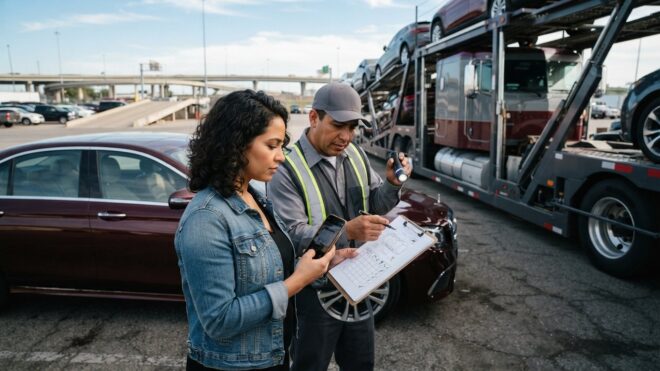
Your car shipping insurance is essentially powerless without a correctly completed Bill of Lading. Most vehicle owners feel a wave of anxiety when their car is loaded onto a trailer, worrying that a small scratch might go unnoticed or that technical jargon might sign away their rights. It’s natural to feel pressured when a driver appears to be in a hurry, but understanding the car shipping bill of lading is the only way to ensure your vehicle is legally protected. This document acts as your primary shield against disputes and hidden costs during the transport process.
This guide provides a methodical approach to mastering this vital document so your vehicle remains fully insured from pickup to delivery. We’ll walk through how to document your car’s condition accurately, what specific terms to look for, and how to handle the inspection process with absolute confidence. Whether you’re utilizing Open Carrier Car Transportation or Enclosed Transport Services, you’ll gain the knowledge needed for a stress-free experience. We’ve designed this 2026 update to help you navigate the paperwork like a seasoned professional, protecting your investment every mile of the journey.
Key Takeaways
- Identify the Bill of Lading as your primary legal shield that functions as a receipt, contract, and condition report for your vehicle.
- Master the inspection process by using standardized condition codes to document every detail before your car is loaded onto the trailer.
- Grasp the critical importance of understanding the car shipping bill of lading to ensure your insurance coverage remains valid from pickup to delivery.
- Learn why your signature at delivery acts as a binding release and how to avoid common pitfalls that could jeopardize a future damage claim.
- Navigate the transition to digital documentation by learning how to review and sign an electronic Bill of Lading (eBOL) on mobile devices.
What is a Bill of Lading in Auto Transport?
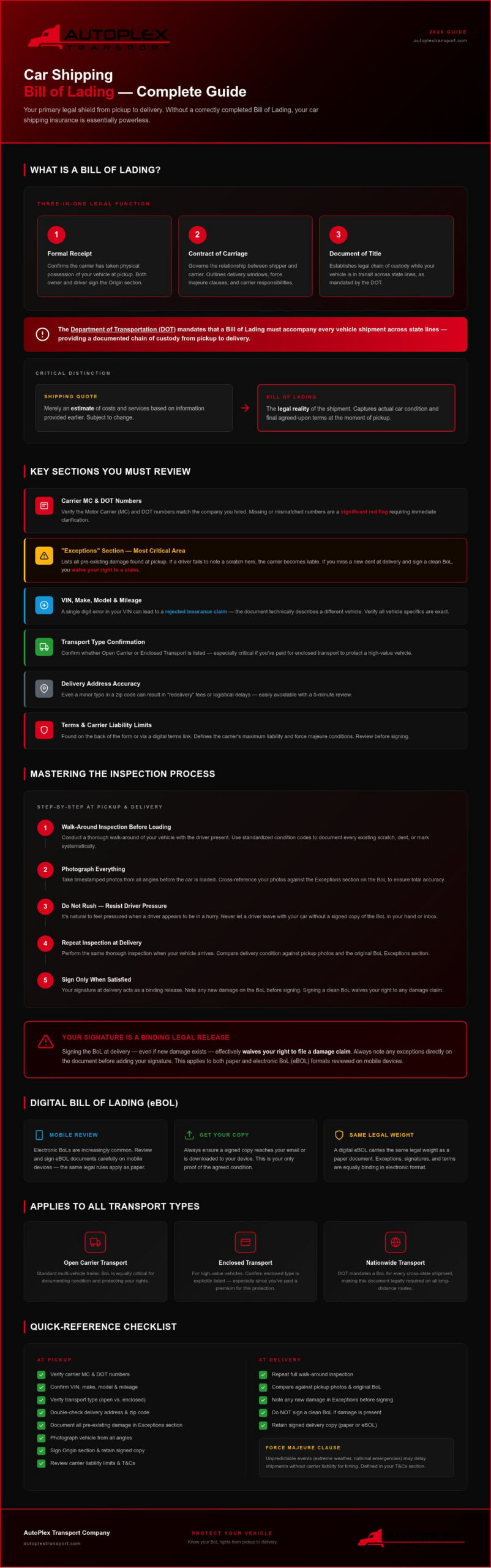
Understanding the car shipping bill of lading starts with recognizing its legal weight. While many people view it as a simple receipt, it actually serves a three-in-one purpose in the logistics industry. It functions as a formal receipt of goods, a legally binding contract of carriage, and a document of title while your vehicle is in transit. The Bill of Lading is the definitive legal record of a vehicle’s condition and transport terms. Because of its importance, the Department of Transportation (DOT) mandates that a bill of lading must accompany every vehicle shipment across state lines. This requirement ensures there is a clear, documented chain of custody from the moment the car is loaded until it reaches its final destination.
It’s vital to distinguish between your initial shipping quote and the final BoL. Your quote is merely an estimate of costs and services based on the information you provided earlier. In contrast, the Bill of Lading is the reality of the shipment. It captures the actual condition of the car and the final agreed-upon terms at the moment of pickup. Professional carriers like AutoPlex insist on a thorough BoL process because it provides a transparent framework that protects both the owner and the transport provider from misunderstandings or fraudulent claims.
The Receipt of Goods Function
When the driver arrives for pickup, the BoL acts as a formal confirmation that the carrier has taken physical possession of your vehicle. This is a critical hand-off point. Both the vehicle owner and the driver must sign the document at the “Origin” section. By signing, you’re verifying that the carrier is now responsible for the asset. You should never, under any circumstances, let a driver pull away with your car without having a signed copy of this document in your hand or your inbox. It is your only proof that the car was legally handed over to the carrier in a specific condition.
The Contract of Carriage Explained
Beyond being a receipt, the BoL serves as the contract that governs the relationship between the shipper and the carrier. The fine print, typically found on the back of the form or within a digital terms link, outlines the specific responsibilities of the transport company. These clauses cover essential details such as delivery windows and “force majeure” events. Force majeure refers to unpredictable circumstances, such as extreme weather or national emergencies, that may delay a shipment without the carrier being held liable for the timing. Reviewing these terms ensures you know exactly how the carrier handles different logistical scenarios during Nationwide Transportation Services.
Anatomy of the Document: Key Sections You Must Review
A Bill of Lading is more than a list of names and numbers; it is a structured legal framework that defines the safety of your asset. Understanding the car shipping bill of lading requires a keen eye for detail because every field serves a legal purpose. Before you sign, you must verify the carrier’s information, including their Motor Carrier (MC) and Department of Transportation (DOT) numbers. These identifiers prove the carrier is registered and authorized to move vehicles across state lines. If these numbers are missing or don’t match the company you hired, it is a significant red flag that needs immediate clarification.
The most critical area for any vehicle owner is the “Exceptions” section. This is where the real legal work happens during the inspection. This section lists any pre-existing damage found at the time of pickup. If a driver fails to note a scratch here, the carrier becomes liable for it upon delivery. Conversely, if you miss a new dent at delivery and sign a clean BoL, you effectively waive your right to a claim. Taking the time to cross-reference this section against your own photos is the best way to ensure total accuracy.
Verifying Vehicle and Contact Details
Precision in the vehicle specifics is non-negotiable. You must check that the VIN, make, model, and current mileage are recorded correctly. Insurance companies are notoriously strict; a single digit error in your VIN can lead to a rejected claim because the document technically describes a different vehicle. You should also confirm that the transport type is listed accurately, especially if you have paid for specialized enclosed car transport to protect a high-value vehicle. Finally, double-check the delivery address. Even a minor typo in a zip code can result in “redelivery” fees or logistical delays that are easily avoidable with a five-minute review.
The Terms and Conditions Breakdown
The back of the BoL or the digital terms link contains the carrier’s liability limits. These clauses define the maximum amount the carrier will pay in the event of a total loss. You should also look for the “Hidden Damage” clause. This typically states that the carrier isn’t responsible for mechanical failures, such as a battery dying or a transmission failing, unless the damage was caused by a clear external impact. Additionally, most BoLs strictly prohibit personal items left inside the vehicle. If you leave belongings in the trunk, the document usually clarifies that these items aren’t insured and the carrier isn’t liable for their loss or any damage they might cause to the car’s interior. For a smooth experience, it’s always best to consult with a reliable provider of Nationwide Transportation Services before the driver arrives.
Mastering the Vehicle Inspection Report
A thorough inspection is the cornerstone of any successful auto transport. While understanding the car shipping bill of lading gives you the legal framework, the inspection report provides the physical evidence required to back up any claim. Before the carrier arrives, ensure your vehicle is clean. A layer of dust or road salt can easily hide small chips or scratches, making it impossible for the driver to document the true condition accurately. Professional carriers often insist on a clean car because it eliminates ambiguity for both parties during the hand-off.
During the walk-around, the driver will use standardized condition codes to map out existing wear and tear on the document. Familiarizing yourself with these symbols is essential for maintaining an accurate record. Common codes include S for Scratch, D for Dent, C for Chipped, and SC for Scuffed. If you see a mark on your car that the driver hasn’t noted, point it out immediately. This collaborative process ensures that the document reflects reality rather than a rushed estimation. High-quality lighting and clear weather are your best allies during this phase, as shadows can easily mask structural or cosmetic issues.
Pickup Inspection: Setting the Baseline
The pickup phase is your opportunity to set a clear baseline for your vehicle’s condition. You should prepare a car for transport by removing personal items and taking high-resolution photos from every angle, including the roof and lower bumpers. If your vehicle has mechanical quirks or is being shipped as a “non-runner,” ensure the driver notes this status explicitly on the BoL. This prevents confusion if the car behaves differently at the destination. Digital photos with time stamps serve as your secondary insurance, providing undeniable proof if a dispute arises later in the journey.
Delivery Inspection: Spotting New Damage
When your car arrives at its destination, the delivery inspection is your final line of defense. You must compare the vehicle’s current state against the original pickup report. It’s common for drivers to be on a tight schedule, but you should never let a driver rush your inspection process. Take your time to circle the vehicle. If the car is delivered at night or during a rainstorm, move it to a well-lit area or use a high-powered flashlight to check the panels for new imperfections. If you find new damage, it must be noted on the BoL before you sign. Signing a document without noting new issues usually means you are accepting the car “as is,” which makes filing an insurance claim significantly more difficult.
The Legal Weight of Your Signature
Your signature on the delivery portion of the BoL is the most significant action you’ll take in the entire transport process. It represents a binding release of the carrier’s liability. By signing, you’re legally stating that the vehicle arrived in the condition described on the document. If you sign a “clean” BoL and then discover a dent an hour later, your chances of a successful claim drop to nearly zero. Understanding the car shipping bill of lading means recognizing that this document is the primary evidence used in insurance subrogation cases where one insurance company seeks reimbursement from another. It is the final word on the state of your asset.
Many vehicle owners try to protect themselves by writing “Subject to Inspection” near their signature. It is a common misconception that this phrase provides a safety net. In reality, it rarely holds up in court or during insurance disputes. Adjusters view it as a vague statement that doesn’t prove damage occurred during transit. If the car is dirty or it’s dark outside, you must still perform a physical inspection or note the specific conditions that prevented a full review on the form itself. Vague phrases don’t replace concrete documentation.
Signing Under Protest: When to Do It
If you discover new damage and the driver disagrees with your assessment, you must sign “under protest.” Use specific, clear language such as “Damage noted on front passenger door at delivery; driver disputes.” You must ensure the driver acknowledges this discrepancy on their copy as well as yours. Most professional carriers require you to notify them of damage within 24 to 48 hours of delivery, but the formal insurance claim process often has a longer window. Documenting the discrepancy immediately on the BoL is the only way to preserve your right to file that claim.
Insurance and the Bill of Lading
Insurance adjusters rely almost exclusively on the BoL to determine liability. They compare the pickup inspection report to the delivery report to see where the “chain of custody” was broken. While the carrier’s cargo insurance is the primary coverage, your personal policy might act as a secondary layer depending on your provider. However, without a documented exception on the BoL, no insurance company will pay out. A “clean” document effectively tells the insurer that no damage happened, making it impossible to win a dispute later. For the most secure experience, always work with a provider of Nationwide Transportation Services that prioritizes a transparent and methodical inspection process.
Navigating Digital BoLs and Final Procedures
As we move through 2026, the industry has largely transitioned away from messy, carbon-copy paper forms. Understanding the car shipping bill of lading now involves getting comfortable with the Electronic Bill of Lading, or eBOL. These digital documents provide a more secure and transparent record of your vehicle’s journey than their paper predecessors. Instead of squinting at smudged handwriting, you’ll review a clear digital interface on a driver’s tablet or smartphone. Once the final inspection is complete and the digital signature is captured, the system generates an immediate PDF copy. This document is sent directly to your email, ensuring you have an unalterable record of the transaction before the driver even leaves your driveway. It’s a faster, cleaner, and more reliable way to close out your transport contract.
The final steps of the process are just as important as the initial inspection. Once the paperwork is signed and the PDF is in your inbox, you’ll handle the final payment if a balance is due. This is also the moment for the key exchange. Always verify that you have all sets of keys and any spare remotes before the carrier departs. Closing out the transport properly means ensuring that the physical handover matches the digital record exactly. Taking these final minutes to be methodical prevents lingering questions and provides the peace of mind that your vehicle has been returned to your care safely.
The eBOL Experience
Digital documentation offers several advantages that traditional paper simply can’t match. Every eBOL entry is automatically backed by precise timestamping and GPS location data, providing undeniable proof of exactly when and where the inspection occurred. Modern systems allow drivers to attach high-resolution digital photos directly to the electronic record. This creates a single, comprehensive file that links the condition codes to visual evidence. Before you tap the “sign” button, you must verify that the digital version accurately reflects the physical walk-around you just performed. Understanding the car shipping bill of lading in its digital form requires checking that all photos are clear and all noted exceptions are legible on the screen.
Closing the Loop with Your Transport Company
It’s important to distinguish between the carrier’s BoL and the paperwork provided by an open transport car shipping broker. While the broker’s order confirmation sets the stage for the move, the carrier’s Bill of Lading is the final legal authority regarding the vehicle’s condition and the delivery terms. You should store this document carefully in your records. It serves as valuable proof of mileage for tax deductions or future resale value, showing exactly how many miles were on the odometer during Nationwide Transportation Services. Finalizing your transaction with a professional team like AutoPlex ensures that every digital detail is handled correctly for a truly seamless experience from start to finish.
Securing Your Vehicle’s Journey with Confidence
Mastering the logistics of vehicle transport doesn’t have to be an overwhelming task. By prioritizing a thorough inspection and understanding the car shipping bill of lading, you transform a complex legal document into your most powerful insurance shield. It’s essential to remember that your signature at delivery represents a final release of liability. Taking those extra minutes to verify the vehicle’s condition against the pickup report ensures your investment remains fully protected throughout the entire process. Whether you’re navigating digital eBOLs or traditional paperwork, clear documentation is the foundation of a successful move.
As a fully licensed and bonded nationwide carrier, AutoPlex Transport Company provides expert guidance on all shipping documentation to ensure your car is covered every mile of the way. We specialize in safe interstate vehicle transportation and maintain a transparent, methodical process from the initial pickup to the final delivery. You deserve a reliable partner who treats your vehicle with the same care you do. Get a Transparent Nationwide Shipping Quote from AutoPlex Transport today and move your vehicle with the peace of mind you deserve.
Frequently Asked Questions
Is the Bill of Lading the same thing as a car shipping contract?
No, they serve different purposes. Your initial shipping order or quote is the agreement for service, while the Bill of Lading acts as the final legal record of the vehicle’s condition and the specific terms of the actual transport. It is a three-in-one document that functions as a receipt, a contract of carriage, and a document of title once the car is in the carrier’s possession. Understanding the car shipping bill of lading ensures you recognize it as the definitive authority over the shipment.
What should I do if the driver refuses to note damage on the Bill of Lading?
You should never sign a document that you believe is inaccurate. If a driver refuses to acknowledge new damage at delivery, contact your transport coordinator immediately before the driver leaves. If you feel pressured to sign to receive your vehicle, clearly write “Driver refuses to note damage” next to your signature. Ensure you take high-resolution photos of the damage with the transport truck in the background to provide undeniable evidence for your insurance claim later.
Can I sign the Bill of Lading if my car is dirty and I can’t see the paint clearly?
Signing a Bill of Lading when a car is dirty is risky. If you can’t see the paint clearly, you might miss existing or new scratches. Professional carriers recommend washing your vehicle before pickup to ensure an accurate inspection. If the car is delivered dirty, you must note on the document that the “Vehicle was too dirty for a full exterior inspection at delivery.” This specific phrasing helps protect your right to a claim once the car is cleaned.
What happens if I lose my copy of the Bill of Lading?
Don’t panic if you misplace your copy. Since most professional carriers have transitioned to electronic Bill of Lading (eBOL) systems in 2026, a PDF version should be in your email inbox. If you only had a paper copy, contact the carrier or your broker immediately. Federal Department of Transportation regulations require carriers to maintain copies of these documents for their records. They can typically provide a digital scan or a duplicate copy to assist with your records or insurance needs.
Does the Bill of Lading cover personal items left in the trunk?
Generally, the Bill of Lading does not cover personal belongings. Most transport contracts explicitly state that the carrier’s cargo insurance only applies to the vehicle itself. Leaving items in the trunk can also lead to issues with DOT weight limits for the transport truck. If you choose to leave items inside, you do so at your own risk. Understanding the car shipping bill of lading means knowing that personal items are usually excluded from any damage or theft protection.
How long do I have to file a claim after signing the Bill of Lading?
Most transport companies require you to report damage within 24 to 48 hours of delivery. However, the formal insurance claim process may have a longer window depending on the carrier’s specific policy. The most important factor is that the damage must be noted on the Bill of Lading at the time of delivery. If you sign a “clean” document without noting exceptions, winning an insurance claim becomes nearly impossible regardless of how quickly you file the paperwork later.
Can someone else sign the Bill of Lading for me at pickup or delivery?
Yes, you can appoint an authorized agent to sign on your behalf. This person must be at least 18 years old and should be someone you trust to perform a meticulous inspection. Since their signature is legally binding, they must understand the importance of documenting every scratch or dent accurately. Make sure your agent has your contact information and knows to call you immediately if any discrepancies arise during the walk-around with the transport driver.
Why is the mileage on the Bill of Lading different from my odometer at delivery?
A minor difference in mileage is normal and expected. Drivers must move the vehicle to load and unload it from the trailer, and they may need to reposition it during the journey to accommodate other vehicles. Usually, this adds fewer than two or three miles to the odometer. If you notice a significant discrepancy, such as twenty miles or more, you should document the difference on the Bill of Lading and ask the driver for an immediate explanation before signing.