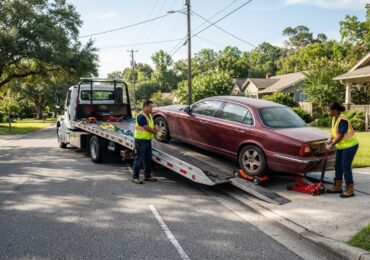

Imagine handing over your keys in Houston, only to spend the next 1,000 miles worrying if your vehicle will arrive in Miami without a single scratch. It’s a common anxiety for many drivers, especially when you consider that car shipping from Texas to Florida involves crossing multiple state lines and trusting a carrier with your second most valuable asset. You’ve likely heard stories about unreliable brokers or unexpected delays, and it’s natural to want a shipping experience that’s both transparent and secure.
We’re here to ensure your transition is seamless and stress-free. This guide provides the expert insights you need to master the logistics of interstate transport, from choosing the right carrier type to understanding the latest 2026 federal regulations. You’ll gain a clear understanding of the 3 to 8 day transport timeline, the benefits of open versus enclosed carriers, and the specific steps required to meet Florida’s 10-day registration deadline. By the end of this article, you’ll have the confidence to manage your vehicle’s journey with the precision of a seasoned logistics professional.
Key Takeaways
- Understand the importance of FMCSA and DOT compliance to ensure your carrier meets the highest safety and legal standards for interstate travel.
- Determine whether open or enclosed methods are right for your car shipping from Texas to Florida by considering vehicle value and Southern climate factors.
- Learn how to navigate the 2026 shipping timeline by identifying how seasonal “Snowbird” peaks influence carrier availability.
- Follow a professional preparation checklist to ensure your vehicle is ready for a smooth, damage-free delivery experience.
- Discover the specific criteria for vetting a reliable logistics partner that offers door-to-door convenience and nationwide reach.
Navigating the Texas to Florida Interstate Vehicle Transport Corridor
The journey from the Lone Star State to the Sunshine State spans a significant distance, often exceeding 1,000 miles depending on your specific origin and destination. Attempting to drive this yourself involves multiple days on the road, high fuel costs, and inevitable wear and tear on your vehicle. Choosing professional car shipping from Texas to Florida removes these burdens, replacing them with a streamlined logistical process managed by experienced carriers. This approach prioritizes the safety of your asset while allowing you to focus on the other details of your move.
Understanding the Southern Route Logistics
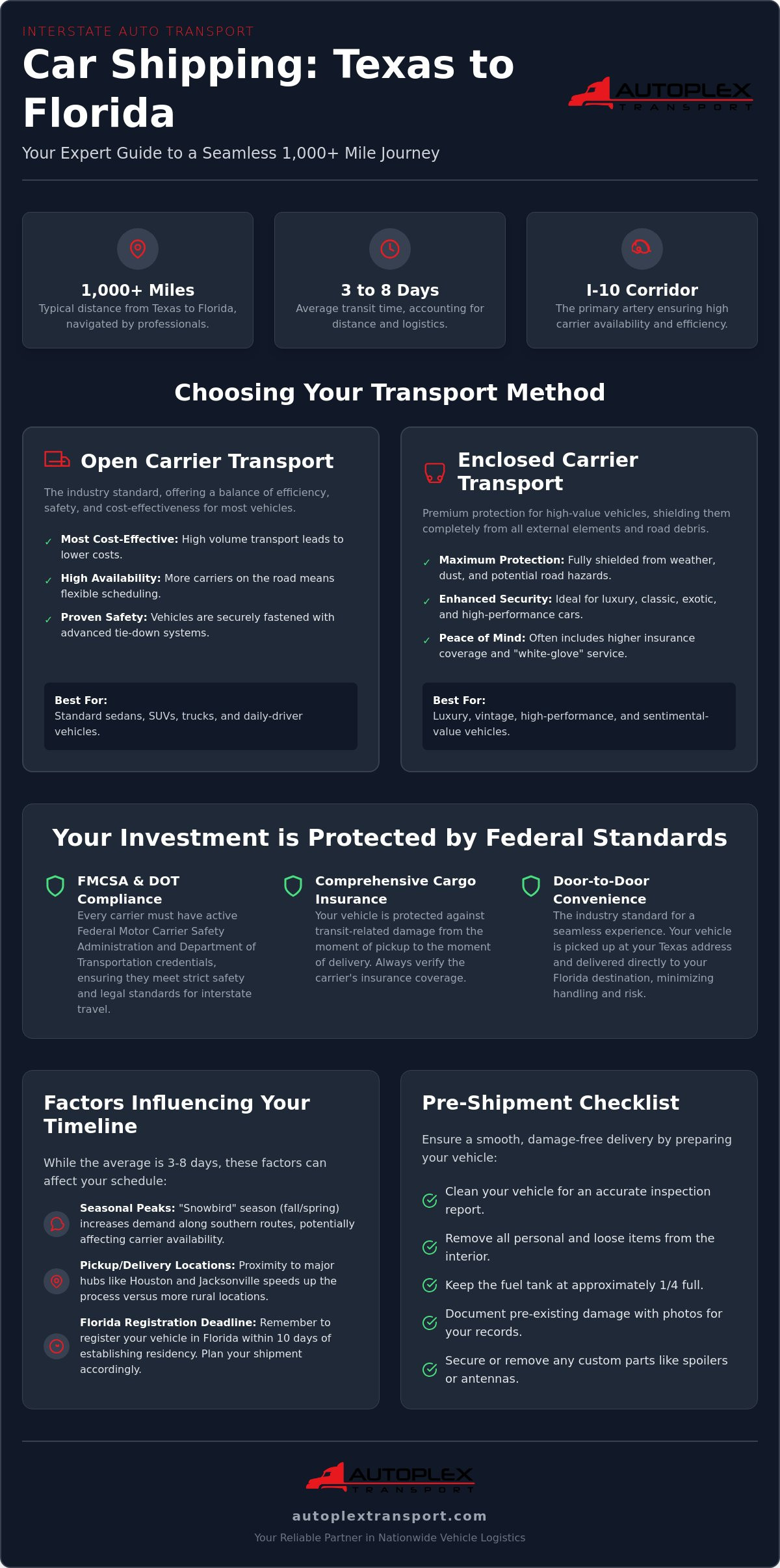
The primary artery for vehicle movement between these two states is the Interstate 10 corridor. Because this route connects major hubs like Houston, San Antonio, and Jacksonville, it maintains a high density of carrier traffic. This density is beneficial for you because it leads to greater carrier availability and more flexible scheduling options. Interstate vehicle transport is defined as a regulated commerce activity governed by federal standards to ensure safety and accountability across state lines. By utilizing these established lanes, professional transporters can maintain efficient transit times while navigating the diverse weather conditions found across the Gulf Coast.
Professional Standards and Regulatory Compliance
Safety in the auto transport industry isn’t just about careful driving; it’s about strict adherence to federal law. Every legitimate carrier must possess an active Department of Transportation (DOT) number and be registered with the Federal Motor Carrier Safety Administration (FMCSA). These credentials signify that the company meets specific safety ratings and insurance requirements. When you are deciding on open or enclosed transport, verifying these numbers is your first line of defense against unreliable operators.
Reliable interstate vehicle transportation also hinges on comprehensive cargo insurance. This coverage protects your vehicle against transit-related damage from the moment it’s loaded until it reaches its destination. Transparency between the broker and the carrier is equally vital. You should always know exactly who is hauling your vehicle and have access to their compliance records. This level of detail ensures a secure experience and provides peace of mind throughout the car shipping from Texas to Florida process.
The Advantage of Door-to-Door Logistics
Modern logistics has evolved beyond terminal-to-terminal shipping, which often requires you to drop off and pick up your vehicle at crowded industrial lots. Door 2 Door Transportation is now the industry standard for convenience. A carrier arrives as close to your specific Texas address as possible and delivers directly to your Florida destination. This service minimizes the risk of damage during the loading process and eliminates the logistical headache of arranging secondary transport to and from a shipping hub. It’s a methodical, protective approach designed to make your move as simple as possible.
Choosing Between Open and Enclosed Transport for Your Move
Selecting the right trailer type is one of the most critical decisions you’ll make when arranging car shipping from Texas to Florida. This 1,000 mile transit route exposes your vehicle to varied conditions, from the intense heat of the Texas plains to the sudden tropical downpours of the Florida panhandle. While both primary methods are secure, the choice often depends on your vehicle’s value and your personal tolerance for environmental exposure. It’s a balance between cost-efficiency and maximum protection.
Open Carrier Car Transportation: The Industry Standard
For the vast majority of vehicle owners, open transport car shipping represents the most efficient and cost-effective solution. These are the familiar multi-car trailers frequently seen on major highways like I-10. Because these carriers move in high volumes along the Texas to Florida corridor, they offer the greatest scheduling flexibility. The structural safety of these trailers is exceptional; vehicles are secured using specialized tie-down systems that prevent movement during transit. While your car is exposed to the elements, this is the same environment it faces during daily driving. It’s a practical, reliable choice for standard sedans, SUVs, and trucks.
Enclosed Transport Services: Premium Asset Protection
If you own a luxury, vintage, or high-performance vehicle, enclosed car transport is the recommended standard. These trailers feature hard-sided walls that provide a complete barrier against road debris, heavy rain, and harsh sunlight. This is particularly important for the Gulf Coast climate, where salt air and unpredictable storms can be factors. Beyond weather protection, enclosed trailers often utilize hydraulic lift gates. This specialized equipment is essential for low-clearance vehicles that might otherwise scrape on standard loading ramps. It ensures your car shipping from Texas to Florida occurs in a completely controlled environment.
Professionalism in this industry starts with verifying carrier registration with the FMCSA to ensure the company follows strict safety protocols. Regardless of the trailer type you choose, you should prioritize providers that maintain high standards for their equipment and staff. If you’re still weighing the benefits of each method for your specific move, you can request a detailed assessment to see which option aligns best with your vehicle’s needs. This methodical approach ensures your car arrives in Florida in the same condition it left Texas.
Key Factors Influencing Your Interstate Shipping Timeline
When you’re planning car shipping from Texas to Florida, understanding the timeline is essential for a smooth transition. While the physical distance is roughly 1,000 miles, the actual transit usually takes between 3 and 8 days. This window isn’t just about driving time; it accounts for the complex logistics of carrier loading, mandatory driver rest periods, and local traffic conditions in major hubs like Houston or Miami. It’s helpful to view your delivery date as a target window rather than a fixed minute-by-minute appointment. This flexibility allows carriers to navigate the road safely while ensuring every vehicle on the trailer is handled with care.
Seasonality and Market Demand
The time of year you choose to move significantly impacts how quickly a carrier can be assigned to your route. The industry experiences a primary peak season from June to September, which often sees a surge in demand. A secondary peak occurs between January and March, driven by “snowbird” traffic as residents move between Texas and the Florida coast. During these high-demand periods, booking your service 2 to 4 weeks in advance is a smart strategy to secure your preferred dates. If budget is also a consideration, understanding the cheapest way to ship a car cross country can help you identify which months offer the most cost-effective scheduling opportunities. Weather patterns along the Gulf Coast also play a role. Tropical storm activity or heavy seasonal rains can occasionally necessitate minor reroutes to maintain the safety of your asset, though experienced drivers are adept at managing these shifts.
The Impact of Vehicle Specifications
Your vehicle’s physical characteristics are just as important as the route itself. Larger vehicles like full-size SUVs and heavy-duty trucks occupy more “real estate” on a trailer and add significant weight to the load. This is especially relevant for electric vehicles (EVs), which have seen a 300% increase in transport requests since 2019. Because EVs are typically heavier than their internal combustion counterparts due to battery weight, carriers must carefully balance their trailers to stay within federal weight limits.
If you own a modified vehicle, such as a lifted truck or a lowered sports car, you must communicate these details early. These specifications often require specialized ramps or specific positions on the trailer to ensure safe clearance. Following Essential Preparation Steps for Long-Distance Transport ensures that your car shipping from Texas to Florida starts on the right foot, regardless of your vehicle’s make or model. Finally, if your vehicle is non-running, it requires a carrier equipped with a winch to load and unload the asset, which may slightly narrow the pool of available trailers and affect your initial pickup window.
Essential Preparation Steps for Long-Distance Transport
Preparing for car shipping from Texas to Florida isn’t just about handing over the keys. It’s a methodical process that ensures your vehicle is protected against the unique environmental stressors of the Southern corridor. From the dry, dusty winds of West Texas to the intense humidity and sudden squalls of the Florida coast, your car faces a variety of conditions during its 1,000 mile journey. Taking the time to ready your vehicle correctly minimizes the risk of loading delays and provides a clear baseline for its condition.
Physical Vehicle Readiness
A successful transport starts with a trip to the car wash. While it might seem counterintuitive to clean a car before it travels on an open trailer, a clean exterior is essential for a precise pre-trip inspection. Dust and road grime can easily hide small chips or scratches. For a comprehensive look at the process, you can follow our guide on how to prepare a car for transport. This checklist covers everything from checking tire pressure to ensuring there are no active fluid leaks. Carriers require tires to be properly inflated to safely secure the vehicle to the trailer deck.
You also need to manage your fuel levels and personal belongings. Per DOT safety standards and carrier weight limits, it’s recommended to have no more than a quarter tank of fuel. This reduces unnecessary weight and addresses safety protocols for interstate movement. While most carriers allow up to 100 lbs of personal items in the trunk, these are not insured by the transporter. You should remove all loose parts, toll tags, and parking passes. Disabling your car’s alarm system is also a mandatory step to prevent the battery from draining if the alarm is triggered by the motion of the trailer.
The Inspection and Bill of Lading Process
The most critical moment of your car shipping from Texas to Florida experience happens during the initial walk-around. When the driver arrives, you’ll perform a joint inspection to document the vehicle’s current state. We recommend taking high-resolution, time-stamped photographs from every angle, including the roof and undercarriage. This documentation serves as your primary evidence of the vehicle’s condition before it enters the carrier’s possession.
Once the inspection is complete, you will sign the Bill of Lading (BOL). This document is much more than a simple receipt; it’s a legally binding contract that outlines the terms of service and the condition of the cargo. It lists the pickup and delivery locations, the carrier’s insurance details, and any pre-existing damage noted during the walk-around. You must review this document carefully before signing. If you have questions about the logistics or want to ensure your vehicle meets all carrier requirements, consult with our transport specialists to finalize your preparation plan. Understanding your rights and responsibilities on the BOL ensures you’re fully protected throughout the interstate journey. For a complete step-by-step overview of what to do before your carrier arrives, our how to prepare a car for transport essential checklist walks you through every mechanical, cosmetic, and legal requirement in detail.
Selecting a Reliable Partner for Nationwide Transportation
Choosing a provider for car shipping from Texas to Florida is a decision that extends beyond finding the lowest estimate. You’re selecting a logistical partner to manage a significant asset across a 1,000 mile corridor. A reliable partner acts as a bridge between your expectations and the realities of the road, providing the infrastructure necessary for a damage-free delivery. In an industry with over 30,000 active property brokers licensed by the FMCSA, identifying a company with a proven history of success is the most effective way to ensure peace of mind. Our detailed guide on how to choose a car transportation company provides a thorough framework for evaluating carriers against the latest 2026 safety and compliance standards.
Evaluating Reputation and Service History
A company’s history is the most accurate predictor of your future experience. When evaluating potential providers, you should look for consistent safety records on independent review platforms rather than relying solely on marketing claims. Pay close attention to how a company handles challenges; responsive customer support during the transit phase is often what separates a professional entity from a “fly-by-night” operation.
Experienced dispatchers are the unsung backbone of successful logistics. They understand the nuances of the Southern route, from the traffic patterns in Dallas to the congestion in the Miami metro area. These professionals ensure that carriers aren’t just available, but are also properly equipped for your specific vehicle type. This human element in logistics provides a level of oversight that automated platforms simply cannot match, ensuring that your car shipping from Texas to Florida stays on schedule despite any unforeseen road conditions. Just as you rely on experts for the road, property owners in the Arkansas region can turn to Airlift Concrete Experts to ensure their driveways and foundations are stable and ready for their vehicles.
The AutoPlex Advantage in Interstate Logistics
At AutoPlex Transport Company, we combine deep local expertise with the expansive reach of auto shipping america to provide a superior transport experience. We manage the specific complexities of the Texas and Florida markets by utilizing a network of vetted carriers who meet our stringent insurance and safety standards. Whether you’re moving a daily driver or a high-value collector car, our approach is methodical and transparent. We provide the real-time communication you need to feel supported from the moment of pickup in the Lone Star State until the final delivery in the Sunshine State.
AutoPlex Transport Company maintains a rigorous vetting process for every driver in our network, ensuring that vehicle safety remains the primary metric of our operational success. Our team understands that interstate movement is a partnership built on trust and professional accountability. By prioritizing clear documentation and proactive updates, we simplify the logistics of your journey and deliver the confidence you deserve during your move. If your destination is the Orlando area, you can also learn more about PDA Limo for luxury car services to assist with your local transportation needs upon arrival.
Secure Your Vehicle’s Future on the Southern Corridor
Managing a successful relocation across the 1,000 mile distance between the Lone Star State and the Sunshine State requires more than just a truck and a trailer. By now, you understand that the key to a damage-free experience lies in selecting the carrier type that best suits your vehicle’s value and the Gulf Coast climate. You’ve also learned that a methodical approach to preparation, coupled with a thorough inspection and a signed Bill of Lading, provides the legal and physical protection your asset deserves. Selecting a partner for car shipping from Texas to Florida is the final step in ensuring your transition is handled with the precision it requires.
AutoPlex Transport Company stands ready to serve as your reliable partner throughout this journey. As an FMCSA Licensed and Bonded provider with an extensive national carrier network, we’re recognized specialists in Southern interstate routes. We prioritize safety and transparency at every stage of the process, from the initial quote to the final door-to-door delivery. You can Request a Professional Car Shipping Quote from AutoPlex Transport today to begin your move with confidence. We look forward to delivering the peace of mind you need for a smooth arrival in Florida.
Frequently Asked Questions
How long does it typically take to ship a car from Texas to Florida?
It typically takes between 3 and 8 days to complete car shipping from Texas to Florida. This timeline accounts for the approximately 1,000 mile journey and the necessary stops for driver rest and other vehicle deliveries along the route. Factors such as weather conditions along the Gulf Coast and traffic in major metropolitan areas like Houston or Miami can influence the final arrival date.
Is my vehicle insured while it is on the transport truck?
Yes, your vehicle is protected by the carrier’s cargo insurance from the moment it is loaded until it is delivered. Every legitimate transporter is required by federal law to maintain active insurance coverage for the assets they haul. You should always verify the specific coverage limits and ask for a copy of the insurance certificate before the pickup occurs to ensure your asset is fully protected.
Can I leave personal belongings inside the car during transport?
Carriers generally allow a small amount of personal items, typically under 100 lbs, to be stored in the trunk of the vehicle. However, these items are not covered by the carrier’s insurance policy and are left at your own risk. It’s best to remove all valuables, electronics, and important documents from the car to ensure they remain safe throughout the interstate journey.
What is the difference between a transport broker and a carrier?
A transport broker acts as a logistical coordinator that connects customers with a network of vetted drivers, while a carrier is the entity that physically owns the truck and hauls the vehicle. Brokers provide value by vetting carriers for safety compliance and insurance, offering you more scheduling flexibility. Carriers focus on the physical transportation and are responsible for the hands-on care of your vehicle during transit.
Do I need to be present for the pickup and delivery of my vehicle?
You or a designated representative over the age of 18 must be present at both pickup and delivery. This presence is necessary to conduct the joint inspection and sign the Bill of Lading, which serves as the official record of your vehicle’s condition. If you can’t be there personally, ensure your representative understands the importance of documenting the vehicle’s state with high resolution photography.
How does door-to-door service work for residential areas?
Door-to-door service means the carrier will attempt to get as close to your specific address as legally and safely possible. Because large transport trailers are difficult to maneuver on narrow residential streets or under low hanging trees, the driver may ask to meet at a nearby shopping center or large parking lot. This approach ensures the safety of your vehicle and the carrier’s equipment while maintaining the convenience of a local delivery.
What happens if my vehicle is damaged during the shipping process?
In the rare event that damage occurs, you must note the specific issues on the Bill of Lading at the time of delivery. You should then take clear photos of the damage and contact the transport company immediately to begin the claims process. Having a thorough pre-trip inspection report with photos is essential for a smooth resolution, as it provides undeniable proof of the vehicle’s condition before the car shipping from Texas to Florida process began.
Are there any specific regulations for shipping a car into Florida?
Florida law requires new residents to register their out-of-state vehicles within 10 days of establishing residency or starting employment. While there are no mandatory safety or emissions inspections for personal vehicles, you’ll need a physical Vehicle Identification Number (VIN) verification. Additionally, all vehicles registered in the state must carry a minimum of $10,000 in Personal Injury Protection and $10,000 in Property Damage Liability insurance.