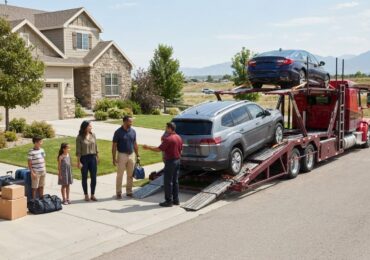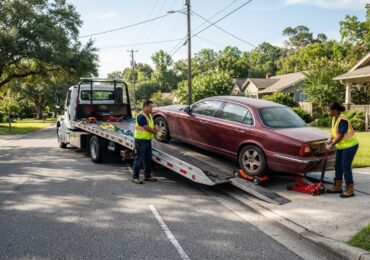
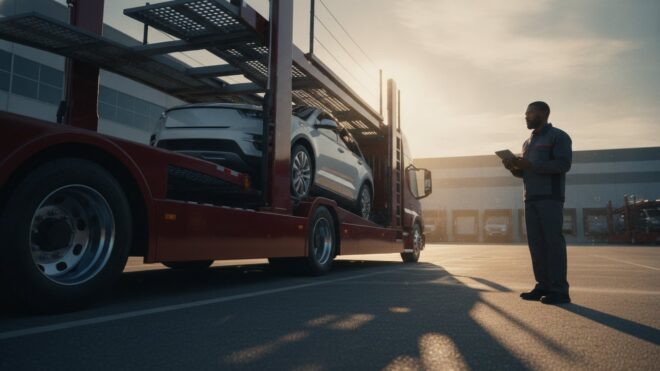
If open transport was as risky as the internet rumors suggest, why do nearly 90% of professional dealerships and manufacturers still rely on it to move their most valuable inventory? You’ve likely seen a car carrier vehicle on the highway and wondered if a single stray rock or a sudden storm might affect the finish of your vehicle. It’s completely natural to feel protective of your car, especially when you’re planning a cross-country move and handing your keys to a logistics provider for the first time.
At AutoPlex Transport Company, we believe that trust is earned through transparency and facts rather than empty promises. This guide will dismantle the common myths surrounding open transport and demonstrate why this industry-standard method remains the most reliable and efficient choice for your daily driver in 2026. We’ll provide the clarity you need to move past the confusion of different trailer types and the general distrust often associated with the shipping industry.
You will learn about the advanced engineering behind modern trailers, the rigorous tie-down protocols used by experienced drivers, and how to verify carrier safety using the latest USDOT single-identifier system. This overview explains exactly how your vehicle is secured and monitored, giving you the peace of mind required for a successful long-distance relocation.
Key Takeaways
- Learn how modern car carrier vehicle engineering uses hydraulic ramps and precise weight distribution to ensure a stable, secure journey for all vehicle types.
- Understand the reality of road debris risks and why statistics prove that open transport is a safe, high-standard choice for your daily driver.
- Discover the essential steps for preparing your vehicle for transit, including why a pre-trip cleaning is vital for an accurate condition report.
- Gain the tools to verify carrier legitimacy by checking USDOT and MC numbers, ensuring your provider meets 2026 federal safety standards.
- Recognize how a methodical, step-by-step loading process protects your vehicle and provides the peace of mind needed for long-distance moves.
What is a Car Carrier Vehicle? Understanding the Industry Standard
A car carrier vehicle is a precision-engineered tool designed specifically for the safe movement of multiple automobiles across vast distances. It’s much more than a standard freight trailer. To understand the technical foundations of these machines, one might ask, What is a Car Carrier Vehicle? Essentially, it’s a specialized semi-trailer, often featuring a skeleton-like frame, that allows for the efficient stacking and securing of vehicles. These trailers are built with high-strength steel and integrated ramps, ensuring that every car remains stationary regardless of road conditions.
These vehicles typically come in two primary configurations. Single-deck trailers are frequently used for shorter distances or smaller loads, carrying between three and four cars. In contrast, the double-deck trailers are the true workhorses of the interstate highways, capable of transporting seven to ten vehicles at once. This high-capacity design makes them the backbone of the open transport car shipping industry. By maximizing the number of cars on a single trip, these carriers offer a reliable and cost-effective solution for anyone moving a vehicle across the country.
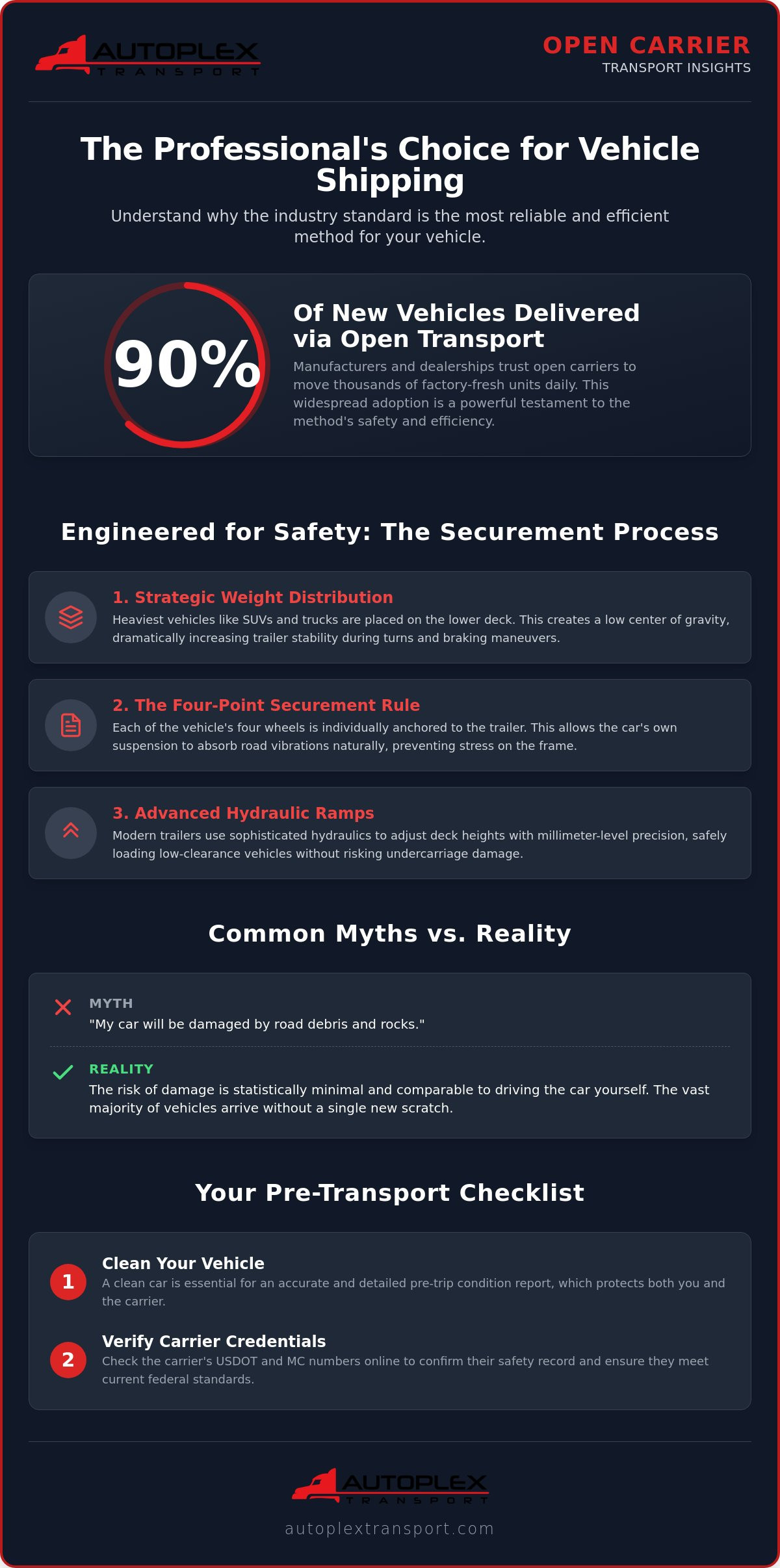
The reliability of this system is proven by its widespread use. Approximately 90% of all new vehicles in the United States arrive at dealerships via open transport. If manufacturers trust a car carrier vehicle to deliver thousands of factory-fresh units every single day, it’s a strong testament to the safety and efficiency of the method. It’s the industry standard for a reason; it works consistently and safely.
Open vs. Enclosed Carriers: A Quick Overview
The most visible difference between transport types is the trailer’s structure. Open carriers use a steel skeleton frame, while enclosed carriers utilize hard-shell walls. While enclosed trailers offer protection from the elements, open designs provide a significant advantage: constant visibility. Drivers can perform frequent, easy inspections of the load at every stop. The natural airflow also prevents the buildup of heat or fumes, which is a practical consideration for most standard vehicles.
The Role of the Modern Car Hauler in 2026
By 2026, the technology behind these carriers has advanced significantly. Modern trailers utilize high-strength, lightweight alloys that improve fuel efficiency and lower the center of gravity for better road stability. Advanced logistics software now optimizes national routes in real-time, ensuring that “daily drivers” move through the network with minimal downtime. This methodical approach to routing and equipment maintenance is what allows an experienced partner to manage your asset with such high levels of care and precision.
The Engineering of Safety: How Your Vehicle is Secured
Safety isn’t an accident in the auto transport industry; it’s the result of rigorous engineering and strict adherence to federal safety regulations. The stability of a modern car carrier vehicle is rooted in the laws of physics. To maintain a low center of gravity, experienced drivers place the heaviest vehicles, such as electric SUVs and full-size trucks, on the lower deck. This methodical loading pattern prevents the trailer from becoming top-heavy, which is essential for maintaining control during sharp turns or sudden braking maneuvers on the interstate.
Professional logistics providers follow the “Four-Point” securement rule for every transport. This means that each of the vehicle’s four wheels is individually anchored to the trailer deck. By securing the wheels rather than the frame, the car’s own suspension is allowed to absorb road vibrations naturally. This prevents the “bouncing” effect that can lead to structural stress or loosened tie-downs over long distances. If you’re planning a move, you can see how these standards apply to our interstate vehicle transportation options.
Hydraulic Systems and Loading Ramps
Modern trailers utilize sophisticated power hydraulics to adjust deck heights with millimeter-level precision. This flexibility is vital for loading low-clearance vehicles without risking damage to the front bumper or undercarriage. To ensure maximum safety, these systems include:
- Safety Locks: Mechanical pins that lock decks into place once the desired height is reached.
- Redundant Hydraulics: Backup systems that prevent a deck from shifting even in the rare event of a pressure loss.
- Optimized Angles: Adjustable ramps that create a shallow incline, protecting the vehicle’s approach and departure angles.
Tie-Down Methods: Chains vs. Soft Straps
The industry has largely moved away from heavy steel chains, which can scratch wheels or put undue tension on a car’s suspension. Instead, professional carriers now use soft nylon straps that provide immense strength without the risk of cosmetic damage. Over-the-tire strapping is a specialized securement technique where nylon webbing wraps directly over the tread of the tire and ratchets into the trailer deck, ensuring the car’s suspension can move naturally without the vehicle shifting.
Drivers perform standardized inspections at regular intervals during a trip. They check the tension of every strap and the integrity of the car carrier vehicle components at every rest stop. This proactive approach ensures that the vehicle remains exactly where it was placed during the initial loading process, regardless of weather or road conditions. It’s this attention to detail that provides the peace of mind our customers expect.
5 Common Myths About Open Carrier Auto Transport
Misconceptions often arise when drivers see a car carrier vehicle on the highway and imagine the worst-case scenario for the vehicles onboard. These fears are typically fueled by anecdotal stories rather than the data-driven reality of modern logistics. By examining the facts, we can separate common anxieties from the actual standards of the industry.
- Myth 1: Road debris will inevitably crack your windshield. In reality, the risk of damage from road debris is less than 1%. The height of the trailer and the structure of the tractor-cab provide a significant natural shield against most kicked-up stones.
- Myth 2: Open transport is only for “cheap” or used cars. As previously noted, the vast majority of new inventory for luxury dealerships moves via open trailers. It is the gold standard for reliability across all price points.
- Myth 3: Your car will arrive covered in oil and grime. Modern fleets must adhere to strict Federal Motor Carrier Safety Regulations regarding equipment maintenance. This includes preventing fluid leaks that could impact other vehicles on the rack.
- Myth 4: Weather exposure causes permanent paint damage. Automotive clear coats are engineered to withstand years of outdoor exposure; a few days in transit is no more taxing than parking in a standard driveway.
- Myth 5: Cars frequently fall off trailers. Thanks to the redundant strapping methods discussed in the previous section, a vehicle falling from a trailer is an extremely rare event that usually involves a catastrophic collision, not a failure of the securement system.
Addressing the “Exposed to Elements” Fear
It’s helpful to remember that a vehicle in transit experiences the same environment it faces during a typical week of being driven or parked outside. While your car will likely arrive with a layer of road dust, this is purely cosmetic. Modern automotive finishes are incredibly resilient. Additionally, the position of a car on the trailer can mitigate exposure; vehicles on the top deck are further from the road surface, while those in the middle are shielded by the cars above and below them.
The Truth About Damage Claims and Insurance
The industry maintains remarkably low damage ratios, far below what public perception suggests. Your primary safeguard is the Bill of Lading, which serves as a detailed condition report at both pickup and delivery. This document ensures total transparency throughout the process. When evaluating the open vs enclosed car transport cost, most owners find that the high safety ratings of open transport provide the best overall value for a daily driver. It’s a methodical, proven system that prioritizes the protection of your asset while keeping logistics manageable.
Choosing and Preparing for Your Car Carrier Service
Selecting a reliable service provider begins with verifying their federal operating authority. Every legitimate company operating a car carrier vehicle must possess active USDOT and MC numbers, which you can verify through the FMCSA’s public database. This step ensures the carrier meets current 2026 safety and insurance standards, protecting you from unlicensed operators. Once you’ve confirmed their credentials, the focus shifts to preparing your vehicle for its journey.
A thorough pre-trip cleaning is not merely for aesthetics; it is a functional necessity for a proper inspection. Dirt and grime can easily hide small chips or scratches, making it difficult to establish an accurate baseline of the vehicle’s condition. You must also remove all personal items from the interior. Federal regulations prohibit auto transporters from carrying household goods, and items left inside are not covered by the carrier’s cargo insurance. For optimal safety and weight management in 2026, most carriers require that your fuel tank be no more than one-quarter full at the time of loading.
The Pre-Loading Inspection Checklist
Before the car carrier vehicle arrives at your door, conduct a methodical walkthrough. Take high-resolution photographs of the car from every angle, including the roof and undercarriage. Document any existing mechanical issues or cosmetic flaws on your own records so you can compare them against the driver’s Bill of Lading. Ensure that loose exterior parts, such as custom spoilers or non-retractable antennas, are either removed or securely fastened to prevent wind damage during high-speed highway transit.
What to Look for in a Transport Partner
A trustworthy partner provides a transparent quote without hidden fuel surcharges or administrative fees. They should offer a clear communication protocol, allowing you to stay informed as your vehicle moves across state lines. While most daily drivers are perfectly safe on an open trailer, you might consider enclosed car transport if you are moving a high-value classic or a luxury vehicle with a sensitive custom finish. For a standard relocation, our nationwide transportation services provide the ideal balance of security and value.
Why AutoPlex Transport Company is Your Trusted National Partner
Choosing a transport provider involves more than just comparing prices; it’s about finding a partner that understands the weight of your investment. At AutoPlex Transport Company, we’ve built our reputation on a methodical approach to national logistics that prioritizes the security of every vehicle we handle. Whether you’re moving a family SUV or a company fleet, we treat every car carrier vehicle as a vital link in a carefully managed chain of custody. We don’t believe in high-pressure tactics; instead, we rely on our history as a seasoned industry veteran to offer the stability you need during a major move.
Our commitment to safety begins long before the loading process starts. We maintain rigorous standards for driver vetting and equipment maintenance to ensure that every truck in our network meets or exceeds 2026 industry requirements. By balancing operational cost-efficiency with uncompromising safety protocols, AutoPlex Transport Company provides a service that is both accessible and exceptionally reliable. Our goal is to offer the authority of a large-scale national entity while maintaining the attentive, protective nature of a personal guide. This balance ensures that your daily driver is managed by an experienced hand capable of navigating any logistical challenge.
- Comprehensive Driver Vetting: We verify safety records and experience levels to ensure only seasoned professionals handle your car.
- Strict Equipment Maintenance: Regular inspections of hydraulic systems and tie-down equipment prevent mechanical failures before they happen.
- Door 2 Door Transportation: Our focus on direct delivery reduces the risks associated with multiple loading and unloading cycles at storage terminals, which significantly lowers the potential for cosmetic damage.
National Reach with a Personal Touch
Managing complex interstate routes requires more than just a fleet of trucks; it requires a dedicated support team that understands the nuances of cross-country logistics. AutoPlex Transport Company focuses on educating our clients throughout the process, providing the clarity needed to transform a stressful relocation into a manageable experience. In 2026, our track record of safe deliveries continues to grow because we refuse to cut corners on the methodical steps that ensure a damage-free arrival. We don’t view our customers as mere order numbers. We view them as partners who deserve transparency and professional communication at every turn.
Ready to Move Your Vehicle?
The journey toward a successful transport begins with a simple, transparent quoting process designed to eliminate guesswork. Once you’ve secured your booking with AutoPlex Transport Company, our team moves into action immediately. Within the first 24 hours, we begin the process of route optimization and carrier matching, ensuring that your vehicle is assigned to a driver who specializes in your specific lane. This proactive communication ensures you’re never left wondering about the status of your move. If you’re ready to experience a higher standard of logistical care, get a free quote for your car carrier vehicle transport today and let our experts handle the details.
Secure Your Vehicle’s Future on the Open Road
The transition from feeling anxious to feeling confident about your relocation happens when you replace mystery with the data-driven engineering of the modern car carrier vehicle. By understanding that open transport is a deliberate choice made by manufacturers for its visibility and safety, you can approach your move with clarity rather than concern. It isn’t just about moving a car from one point to another; it’s about utilizing a refined, professional system that has been perfected over decades of national logistics to protect your daily driver.
AutoPlex Transport Company stands ready to be that reliable partner for your next interstate journey. We combine our A+ rated national logistics network with comprehensive insurance coverage and an expertly maintained 2026 fleet to ensure your expectations are met at every mile of the journey. Request your professional vehicle transport quote from AutoPlex Transport Company today. We look forward to providing the methodical care and seasoned expertise your vehicle deserves, ensuring it arrives safely and on schedule.
Frequently Asked Questions
Is my car insured while it is on the car carrier vehicle?
Yes, your vehicle is protected by the carrier’s cargo insurance policy from the moment it is loaded onto the car carrier vehicle until it reaches its final destination. Federal law requires all motor carriers to maintain specific liability levels, though professional logistics providers often carry higher limits to protect valuable assets. You should always review the specific coverage details and the Bill of Lading to understand the protection provided during your vehicle’s transit.
Can I put personal belongings inside my car during transport?
You should not leave personal belongings inside your vehicle during the shipping process. The Federal Motor Carrier Safety Administration (FMCSA) prohibits auto transporters from carrying household goods, and any extra weight can cause the carrier to exceed legal weight limits at highway scales. Additionally, items left inside are not covered by the carrier’s insurance, and the added weight can put unnecessary stress on your vehicle’s suspension during the journey.
How long does it take to ship a car across the country on an open carrier?
Shipping a vehicle across the country typically takes between seven and ten days, depending on the specific route and current weather conditions. Local or regional deliveries may only take one to three days. Drivers are strictly limited by federal “Hours of Service” regulations to ensure safety, so transit times are calculated to allow for necessary rest periods while maintaining a steady, methodical pace toward the delivery point.
What happens if it rains or snows while my car is on the trailer?
Your vehicle will experience the same weather conditions it would face while being driven on the highway or parked in a driveway. Modern automotive paint and clear coats are engineered to withstand rain, snow, and road salt without sustaining permanent damage. While your car will likely require a standard wash upon arrival to remove road grime, the structural integrity and finish remain fully protected by factory-standard coatings.
Do I need to be present when the car carrier vehicle arrives for pickup?
Yes, either you or a designated representative over the age of 18 must be present when the car carrier vehicle arrives at the pickup location. This is essential for conducting the initial inspection and signing the Bill of Lading, which serves as the official record of your vehicle’s condition. If you cannot be there personally, ensure your representative knows how to document existing chips or scratches thoroughly before the loading process begins.
How is the final delivery price determined for national shipping?
The final price is determined by several logistical factors, including the total distance, the size and weight of the vehicle, and current fuel prices. Seasonal demand and the specific accessibility of your pickup and delivery locations also play a role. Larger vehicles like full-size SUVs or trucks take up more space and add more weight to the trailer, which is reflected in the overall cost of the service.
Can an open carrier transport a non-running vehicle?
Yes, many open carriers can transport non-running vehicles, provided the car still rolls, steers, and brakes. This requires a specialized trailer equipped with a winch to pull the vehicle onto the deck safely. It’s important to notify your transport partner in advance if your car is inoperable, as this requires specific equipment and may involve additional handling fees for the extra labor and equipment involved.
What is the difference between a car carrier and a car broker?
A car carrier is the entity that owns the trucks and performs the actual transportation, while a broker acts as a professional intermediary to connect shippers with a network of vetted carriers. Brokers provide flexibility by matching your specific route and timeline with available drivers. This ensures you’re paired with a reliable partner who meets strict safety and insurance standards, even during peak seasons when individual carriers may be at capacity.