What if the $1,000,000 insurance policy listed on a transport website doesn’t actually cover your specific vehicle during an accident? It’s an unsettling question that many car owners don’t think to ask until a claim is denied. Understanding the nuances of car carrier insurance is the only way to ensure your investment is truly safe while it’s on the road. Most people feel a natural sense of anxiety when handing over their keys for a nationwide move; you aren’t alone in wondering if “fully insured” means what you think it means.
We believe that transparency is the foundation of a successful transport experience. This 2026 guide will teach you how car carrier insurance works, what it covers, and how to ensure your vehicle is fully protected during nationwide shipping. We’ll provide a clear, methodical breakdown of the differences between cargo and liability insurance, explain the impact of new FMCSA financial responsibility rules, and show you exactly how to verify a carrier’s coverage. By the end of this article, you’ll have the expert knowledge needed to secure total peace of mind throughout the shipping process.
Key Takeaways
- Understand the legal requirements for interstate transport and why specialized car carrier insurance is mandatory for protecting your vehicle during a move.
- Learn to distinguish between cargo insurance, which covers damage to your vehicle, and liability insurance, which covers damage caused by the transport truck.
- Identify why your personal auto policy likely excludes coverage during commercial transport and how to navigate the “primary vs. secondary” rule.
- Follow a step-by-step process to verify a carrier’s credentials and insurance status using the FMCSA SAFER website.
- Discover how a rigorous vetting and monitoring system provides an extra layer of security and professional oversight for every nationwide shipment.
What is Car Carrier Insurance and Why Does It Matter?
Car carrier insurance is a specialized form of commercial coverage that protects vehicles while they’re in the custody of a transport company. It isn’t a single policy but rather a suite of protections designed to address the unique risks of moving high-value assets across state lines. When you hand over your keys for interstate vehicle transportation, you’re trusting that the carrier has the financial backing to handle any unforeseen incidents. Without this specific coverage, a simple transit mishap could turn into a significant financial burden for the vehicle owner.
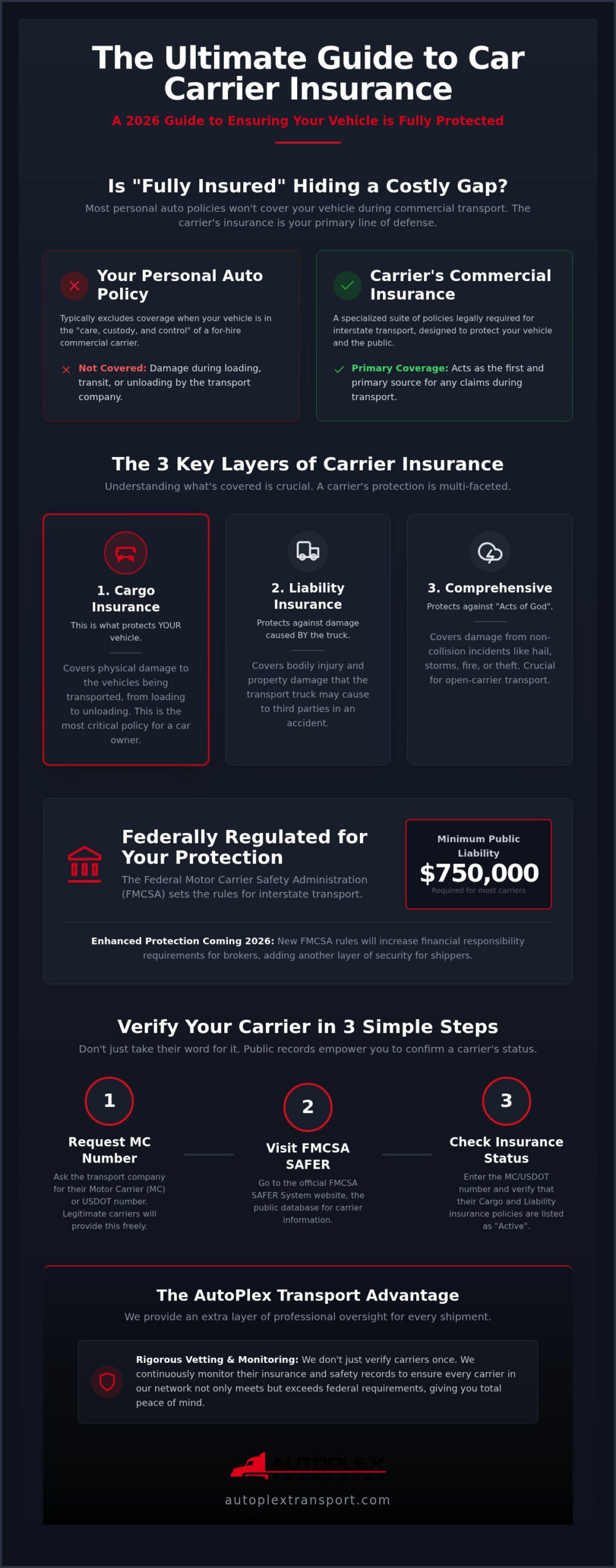
Every interstate carrier is legally required to maintain active insurance, but there’s a vital distinction between a carrier’s general business insurance and the specific cargo protection for your vehicle. Relying solely on your personal auto policy during transport is a high-risk mistake. Most personal insurers exclude coverage for vehicles while they’re on a commercial trailer, leaving car carrier insurance as your primary line of defense against damage or loss.
The Role of the FMCSA in Carrier Insurance
The Federal Motor Carrier Safety Administration (FMCSA) acts as the industry regulator, setting the minimum standards for financial responsibility. For most for-hire interstate property carriers operating vehicles over 10,001 pounds, the FMCSA mandates a minimum of $750,000 in public liability coverage. This requirement ensures that the carrier can cover damages to other people or property in the event of an accident. You can verify a company’s compliance by checking their Motor Carrier (MC) number, which provides a transparent record of their current insurance status.
Regulations have become even more stringent recently. As of January 16, 2026, new FMCSA rules have enhanced the financial responsibility requirements for brokers and freight forwarders. These updates provide an additional layer of protection for nationwide shippers by ensuring that everyone involved in the logistics chain is properly vetted and financially sound. This methodical approach to regulation helps maintain safety across the thousands of shipments moving daily.
Why “Fully Insured” Isn’t Always Enough
When you hear a transport company claim they’re “fully insured,” it’s important to ask for specifics. This phrase is often used as a broad marketing term, but it might only refer to the carrier’s general liability limits rather than the protection for the vehicles they carry. General liability covers the truck and the driver’s actions, but it doesn’t necessarily pay for a scratch on your car’s hood or a dent in the door. You need to know that the carrier has specific cargo limits that match or exceed your vehicle’s value.
Cargo insurance is the specific policy that covers the physical vehicle being transported. Understanding the layers of coverage is essential for peace of mind. While liability is the legal baseline, cargo insurance is what truly protects your investment during the shipping process. At AutoPlex, we prioritize transparency by ensuring every carrier in our network maintains robust cargo limits that exceed the bare minimums. This detail-oriented vetting process is what allows us to offer secure nationwide transportation services with confidence.
The Different Layers of Auto Transport Insurance Coverage
Understanding the specific layers of car carrier insurance is the next step in securing your vehicle for transit. While the legal minimums provide a baseline for operation, the actual protection for your car comes from a combination of distinct policies. These layers work together to ensure that whether the truck is involved in a collision or a hail storm passes over the trailer, a financial safety net is in place. Knowing how these policies interact allows you to identify potential gaps before the journey begins.
Liability insurance is the foundation required by federal law. It covers bodily injury or property damage caused by the carrier’s equipment to third parties. However, it’s a common misconception that this policy covers the cars on the trailer. For that, you need cargo insurance. This is the primary protection for your vehicle against damage during loading, transit, and unloading. If a strap fails or a vehicle shifts during the haul, the cargo policy is the specific mechanism that triggers the repair process. Additionally, comprehensive coverage protects against “Acts of God” such as extreme hail or storm damage. This is especially critical for open trailers where vehicles are exposed to the elements.
A common point of confusion for many customers is the deductible. In a professional transport arrangement, the carrier is responsible for paying their own deductible. You shouldn’t be asked to pay an out-of-pocket cost to initiate a claim against the carrier’s insurance. Confirming this detail beforehand prevents unexpected expenses if a minor claim arises during the shipping process.
Cargo Insurance Limits for Open vs. Enclosed Transport
The amount of coverage provided often depends on the equipment used for the job. For open transport car shipping, cargo limits typically range between $100,000 and $150,000 per trailer. This is usually sufficient for standard daily drivers or family SUVs. However, for high-value exotics, luxury sedans, or vintage collections, enclosed car transport is the preferred choice. These carriers often maintain cargo limits reaching $1,000,000 or more to accommodate the higher market value of their freight. Always compare your vehicle’s current market value against the carrier’s policy limit to ensure you aren’t underinsured.
Gap Insurance and Supplemental Policies
Sometimes, a standard policy isn’t enough for rare or highly customized vehicles. In these specialized cases, you might consider purchasing supplemental “gap” coverage to bridge the difference between a standard policy limit and the true replacement value of your car. It’s also vital to remember that standard car carrier insurance does not cover personal items left inside the vehicle. Household goods, electronics, or valuables are almost always excluded from cargo policies. Most professional shippers advise removing all personal belongings to avoid loss and to stay within FMCSA weight regulations. If you have questions about specific high-value assets, our team can help you navigate nationwide transportation services with the right level of protection.
Carrier Insurance vs. Personal Auto Insurance: A Comparison
A common misconception among vehicle owners is that their standard personal auto policy provides comprehensive protection while their car is on a transport trailer. In reality, most personal policies stop at the trailer ramp. While your daily coverage is designed for road use, commercial transport introduces a different set of legal and financial frameworks. Understanding the interaction between your policy and car carrier insurance is essential for avoiding expensive coverage gaps during a move.
The relationship between these two types of insurance is governed by the “Primary vs. Secondary” rule. In the event of an accident or damage during transit, the carrier’s insurance acts as the primary policy. This means the carrier’s cargo insurance is the first line of defense and should cover the costs of repairs or replacement up to the policy’s limits. Your personal insurance is typically considered secondary, only potentially coming into play if the carrier’s limits are exhausted or if a specific type of damage is explicitly excluded from their commercial policy.
Filing a claim through the carrier’s insurance is also a strategic move to protect your own financial standing. Since the carrier is at fault for transit-related damage, their policy absorbs the cost. This prevents a claim from appearing on your personal insurance record, which is particularly important given that commercial auto insurance rates have seen steady increases of 7% to 15% in 2026. Keeping your personal claims history clean helps you avoid premium hikes. Before you begin the process of how to prepare a car for transport, you should always notify your insurance provider of the upcoming move to confirm exactly where their responsibility ends.
When Your Personal Policy Might Kick In
There are rare scenarios where your personal coverage might provide a safety net. For instance, some “Acts of God,” such as specific types of extreme weather damage, might not be covered by a basic carrier policy but could be covered under your own comprehensive plan. Personal insurance often excludes commercial transit unless a specific rider is added. We recommend having your insurance agent review the carrier’s certificate of insurance before pickup. This methodical review ensures you understand any potential vulnerabilities before the truck leaves your driveway.
Claim Filing Process: Personal vs. Commercial
If damage occurs, the process of seeking compensation differs significantly from a standard fender-bender. Commercial claims are handled by specialized cargo underwriters who require detailed documentation, including the Bill of Lading and clear “before and after” photographs. The timeline for these claims can vary depending on the underwriter’s requirements. AutoPlex facilitates communication between the customer and the insurance provider to ensure the process remains transparent and efficient. This professional oversight helps lead you from a state of inquiry to a state of resolution without the stress of managing commercial adjusters on your own.
How to Verify a Carrier’s Insurance Status and Coverage
Verification is the bridge between a verbal promise and a legal reality. While many companies claim to be “fully bonded and insured,” you shouldn’t take this statement at face value. A methodical verification process ensures that the car carrier insurance protecting your vehicle is active, sufficient, and specific to the type of transport you’ve selected. By following a few clear steps, you can move from a state of uncertainty to total confidence before your vehicle ever touches a trailer ramp.
The first step is requesting a Certificate of Insurance (COI) directly from the carrier or your broker. This document serves as a summary of the carrier’s active policies. Once you have the COI, you should cross-reference the information using the FMCSA SAFER website. By entering the carrier’s Motor Carrier (MC) number, you can view their current insurance status in real time. This public database is the most reliable way to confirm that a company hasn’t let its coverage lapse or had its authority revoked due to safety violations.
During your review, pay close attention to the expiration dates and the specific cargo limits listed. If you’re shipping a high-value vehicle, ensure the cargo limit is high enough to cover the total value of all vehicles on the trailer, not just yours. Additionally, confirm that the policy covers the specific equipment being used. Some insurance providers offer different rates for open versus enclosed trailers, and a policy meant for one might not extend to the other. If you want a partner that manages this complex vetting process for you, you can request a quote from AutoPlex Transport to ensure your vehicle is matched with a verified, high-rated carrier.
Reading a Certificate of Insurance (COI)
A COI can look like a wall of text, but three sections are vital. First, identify the policyholder and the underwriter to ensure they match the company you’re hiring. Second, look at the coverage amounts for “Motor Truck Cargo” and “Commercial General Liability.” Finally, check the “Description of Operations” box at the bottom. This section often contains specific exclusions or notes about the types of vehicles the carrier is authorized to move. Warning signs include policies set to expire within days of your shipment or cargo limits that fall below the $100,000 industry standard for standard open carriers.
The Bill of Lading: Your Most Important Insurance Document
The Bill of Lading (BOL) is more than just a receipt; it’s the foundation of any potential insurance claim. During the pre-trip inspection at pickup, you and the driver will note any existing scratches, dents, or mechanical issues. This report is your primary evidence if you need to file a claim later. You should take clear, high-resolution photos of your vehicle from all angles at the point of pickup to supplement the BOL. When the car arrives at its destination, perform another thorough walkthrough before signing the final document. Your signature on the BOL at delivery signifies that the vehicle was received in the condition described, making it the most legally significant document in the entire shipping process.
Why AutoPlex Transport Prioritizes Fully Vetted, Insured Carriers
Choosing a transport provider is about more than finding a trailer; it’s about finding a partner that values your asset as much as you do. Our team maintains a rigorous vetting system that goes beyond a simple check of car carrier insurance documents. We don’t just look for a policy number; we verify that the carrier maintains a high safety rating and that their coverage limits are appropriate for the specific vehicles they move. This methodical approach ensures that every driver in our network meets the highest industry standards for reliability and financial responsibility.
Verification isn’t a one-time event for us. We utilize continuous monitoring tools to track the insurance status of our carriers in real time. If a carrier’s policy lapses or their safety rating drops, they’re immediately removed from our active network. This level of professional oversight means you don’t have to spend your time navigating the FMCSA SAFER website or decoding complex insurance certificates. We handle the logistical heavy lifting so you can focus on your move, knowing that your vehicle is in safe, verified hands.
Transparency is the foundation of the AutoPlex experience. You won’t find hidden fees or “insurance surcharges” added to your bill at the last minute. We believe in clear, upfront communication regarding what is covered and how your vehicle is protected. If an incident does occur, we don’t leave you to deal with commercial adjusters alone. We act as your advocate throughout the claims process, helping you organize documentation and facilitating communication with the insurance underwriters to ensure a fair and timely resolution.
Safe Nationwide Logistics with Peace of Mind
Our network is designed to provide seamless protection across the entire country. Whether you’re arranging interstate vehicle transport or a shorter regional move, our logistics experts ensure that constant coverage remains in place across every state line. By choosing a professional company that handles the insurance paperwork for you, you eliminate the risk of hiring an underinsured “ghost” carrier. Our commitment to door-to-door safety and reliability is reflected in every shipment we manage, providing a sense of security that few others can match.
Request Your Secure Shipping Quote Today
We believe that comprehensive car carrier insurance should be a standard feature of every shipment, not an expensive add-on. Our quotes are built with your protection in mind, providing an all-inclusive look at the cost of secure transport. Scheduling your shipment with a partner who values safety and transparency is the best way to protect your investment. When you’re ready to experience a higher standard of vehicle shipping, Get a secure car shipping quote from AutoPlex Transport and move with confidence.
Secure Your Vehicle with Confidence
Ensuring your vehicle’s safety during transit requires more than just a verbal promise of coverage. You’ve learned that true protection lies in the specific details of the cargo policy and the methodical verification of a carrier’s credentials. Understanding how car carrier insurance functions allows you to move forward without the fear of hidden damage or denied claims. By prioritizing transparency and properly utilizing the Bill of Lading, you maintain control over your asset’s journey from pickup to delivery.
AutoPlex Transport simplifies this complex process by providing an A+ rated nationwide logistics network. We only work with vetted carriers who maintain verified cargo insurance of $100,000 or more; this includes providing specialized handling for classic and exotic vehicles. You don’t have to navigate these technical insurance hurdles alone when you have a reliable partner managing the vetting for you. We’re committed to being a comprehensive resource for your shipping needs.
Request a Secure National Car Shipping Quote today and take the first step toward a worry-free transport experience. We look forward to providing the peace of mind you deserve during your next move.
Frequently Asked Questions
Is insurance included in my car shipping quote?
Yes, standard car carrier insurance is a mandatory component of any professional shipping quote. At AutoPlex, we include this coverage as a standard feature rather than an add-on. This ensures that the rate you’re provided reflects the total cost of secure transport without hidden surcharges appearing later. Every quote we issue is backed by a carrier that meets our high standards for financial responsibility.
What happens if my car is damaged during transport?
If damage occurs, the resolution process starts with the Bill of Lading at the point of delivery. You must record all discrepancies on this document and take high-resolution photos of the affected areas immediately. Once the damage is documented, you’ll file a claim against the carrier’s cargo policy. Our team supports you by acting as an advocate and helping you navigate the communication with commercial insurance adjusters.
Does my personal car insurance cover my vehicle during shipping?
Most standard personal auto policies exclude coverage for vehicles while they’re being moved by a commercial transport company. While your comprehensive coverage might apply in very specific weather-related scenarios, it shouldn’t be relied upon as your primary protection. The carrier’s cargo insurance is designed to be the first line of defense for any damage that occurs while the vehicle is in their custody during transit.
What is the difference between cargo insurance and liability insurance?
Liability insurance covers damage the transport truck might cause to other people or property, while cargo insurance is what protects your specific vehicle. For example, if a truck hits a fence, liability pays for the fence. If a car shifts on the trailer and gets a dent, the cargo policy covers the repair. Understanding this distinction helps you verify that your carrier has sufficient limits for their cargo.
How do I know if a car transport company is actually insured?
You can verify a company’s insurance status by requesting their Certificate of Insurance (COI) and cross-referencing it with the FMCSA SAFER website. By entering the carrier’s Motor Carrier (MC) number, you can see their active insurance filings in real time. This public record is the most reliable way to confirm that a provider’s car carrier insurance is current and hasn’t lapsed or been revoked by the federal authorities.
Are personal items inside the car covered by the carrier’s insurance?
No, car carrier insurance policies explicitly exclude personal belongings left inside the vehicle. Policies are strictly limited to the vehicle itself and its factory-installed equipment. Most professional carriers advise against leaving any valuables, electronics, or household goods inside the car. Doing so not only risks theft or damage but can also cause the truck to exceed federal weight limits, potentially leading to delays during transit.
What should I do if I notice damage at the time of delivery?
If you notice damage at delivery, you must document it on the Bill of Lading before the driver leaves the destination. Be specific about the location and nature of the damage and take multiple photographs from different angles. This report is the most important piece of evidence for your claim. Once the driver leaves with a signed, clean Bill of Lading, it becomes much harder to prove transit-related damage.
Does enclosed transport have better insurance than open transport?
Enclosed transport typically offers higher coverage limits rather than better insurance in terms of policy quality. While open carriers usually maintain cargo limits between $100,000 and $150,000, enclosed carriers often have limits ranging from $250,000 to over $1,000,000. This higher limit is necessary to provide adequate protection for the high-value exotic and classic vehicles that typically utilize enclosed trailers to avoid exposure to the elements during shipping.