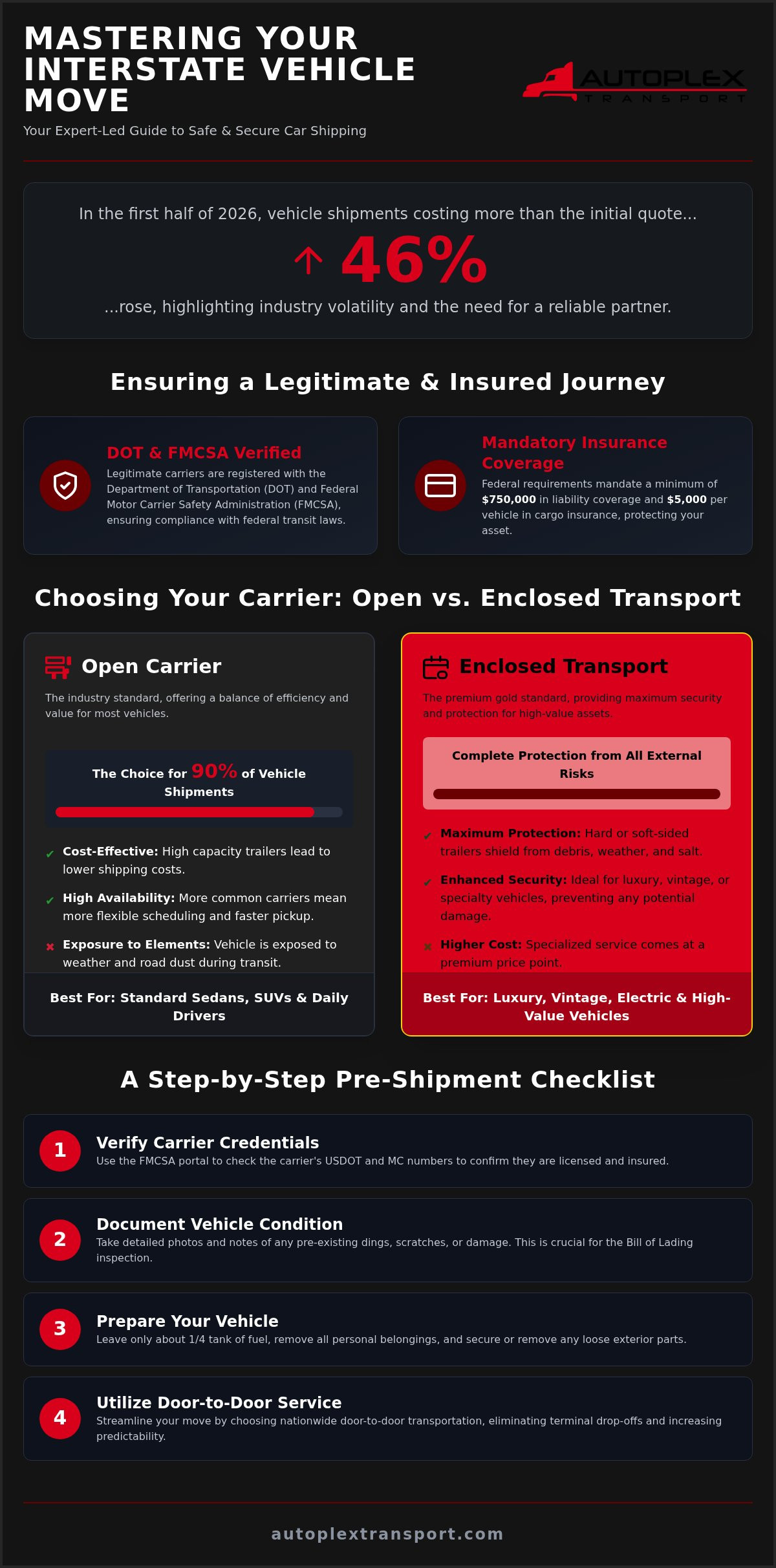
Did you know that in the first half of 2026, the number of vehicle shipments costing more than the initial quote rose by 46%? This volatility makes it harder than ever to plan your move when you need to ship car to another state without fearing hidden expenses or sudden price hikes. You likely feel that the process of moving your vehicle across state lines should be more transparent and secure. It’s natural to worry about potential damage during a long journey or wonder if the transporter you hired is actually licensed according to current FMCSA standards.
We understand these frustrations and believe that interstate transport should be a strategic, stress-free part of your relocation. This guide provides an expert-led framework to help you master the complex logistics and safety requirements of the modern industry. You’ll learn how to manage price fluctuations, verify carrier credentials, and secure a reliable partner for your move. We’ll walk through the essential steps for choosing between open and enclosed carriers, understanding insurance minimums, and ensuring your car arrives at its destination in the same condition it left your driveway.
Key Takeaways
- Identify the critical roles of the DOT and FMCSA in regulating the industry to ensure your vehicle is handled by a legitimate, insured professional.
- Evaluate the differences between standard Open Carrier Car Transportation and specialized Enclosed Transport Services to choose the right level of protection for your asset.
- Master the primary factors that influence the total cost to ship car to another state, including vehicle dimensions and 2026 seasonal market trends.
- Prepare your vehicle for transit using a methodical checklist that covers everything from fuel level requirements to documenting pre-existing conditions.
- Streamline your relocation by utilizing nationwide Door 2 Door Transportation, which eliminates the need for terminal drop-offs and increases delivery predictability.
Understanding the Logistics of Shipping a Car to Another State
Interstate vehicle transport is a complex logistical operation governed by strict federal safety standards. It isn’t just about moving a car; it’s about managing a mobile asset across state lines. To navigate this, you’ll encounter two main types of entities: brokers and carriers. Understanding how auto transport brokers work is essential. These coordinators connect you with the physical carriers who own the trucks and handle the actual driving. When you decide to ship car to another state, you’re hiring a regulated professional to mitigate the risks inherent in long-haul travel.
The Regulatory Framework: DOT and FMCSA
Every legitimate transport company must maintain active registration with the Department of Transportation (DOT). You can verify a provider’s authority by checking their USDOT and Motor Carrier (MC) numbers on the FMCSA’s official portal. This verification ensures the carrier meets the 2026 federal requirement of at least $750,000 in liability coverage. Carriers must also carry cargo insurance, which has a federal minimum of $5,000 per vehicle. Many professional transporters exceed these minimums to protect high-value assets. The FMCSA monitors carrier safety ratings to ensure ongoing compliance with federal transit laws.
Driving vs. Shipping: A Cost-Benefit Analysis
Many people initially consider driving their vehicle to save money. However, the hidden costs often outweigh the perceived savings. You must factor in fuel, overnight hotel stays, meals, and the rapid depreciation caused by adding thousands of miles to the odometer. The “DIY” approach quickly becomes expensive. There’s also the physical toll and safety risks associated with navigating heavy traffic on major interstate corridors for multiple days.
Choosing professional auto transport services allows you to reclaim your time. By opting to ship car to another state with a professional, you ensure your vehicle is handled by experts who understand weight distribution and securement. This methodical approach prioritizes your vehicle’s safety while providing a predictable delivery timeline. It is a strategic move for any long-distance relocation, and for those who also need to manage a business or workspace transition, you can check out Anspach Removals & Storage for professional commercial moving assistance.
Choosing Your Carrier: Open vs. Enclosed Interstate Transport
Deciding how to ship car to another state often comes down to balancing your budget with the level of protection your vehicle requires. Most owners find that Open Carrier Car Transportation meets their needs, but high-value assets often warrant an upgrade to Enclosed Transport Services. Understanding your consumer rights in interstate transport is the first step in making an informed choice between these two primary methods. Each option offers distinct advantages depending on the vehicle’s value and the specific route conditions you expect to encounter.
Open Carrier: Efficiency and Value
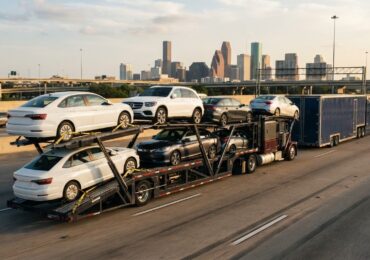
Open carrier shipping is the industry standard for a reason. Approximately 90% of vehicles moved across state lines utilize this method without incident. These multi-car haulers are a familiar sight on interstate highways, typically carrying seven to ten vehicles at once. This high-capacity logistics model makes it the most cost-effective option for daily drivers and standard SUVs. Because these carriers are so common, they offer the most flexible scheduling for those on a tight timeline.
While the vehicle is exposed to the elements, professional carriers use advanced securement techniques to minimize movement. If you’re shipping a standard sedan or a family SUV, which accounted for 43.9% of shipments in early 2026, an open trailer offers the best value. It’s the most available service, meaning you can often secure a pickup date more quickly than with specialized equipment. For most drivers, the small risk of road dust is a fair trade for the significant cost savings.
Enclosed Transport: The Gold Standard for High-Value Cars
For owners of luxury, vintage, or electric vehicles, Enclosed Transport Services provide an essential layer of security. These trailers feature hard or soft sides that shield your car from road debris, hail, and corrosive road salt during winter transit. This is vital for long-distance routes where weather patterns change drastically across multiple states. By eliminating exposure, you ensure the vehicle arrives in the exact condition it was in when it left your driveway.
Beyond protection from the environment, enclosed trailers offer increased privacy and security. For more details on these specialized features, you can consult our enclosed car transport guide. When you ship car to another state, the trailer type directly impacts the delivery window. While this service carries a higher price point and may have a slightly longer lead time due to the scarcity of specialized equipment, the peace of mind it provides for a prized asset is often worth the investment. If you aren’t sure which level of care your vehicle needs, you can speak with a logistics coordinator to evaluate your specific route and vehicle type.
Calculating the Real Cost of State-to-State Vehicle Shipping
When you prepare to ship car to another state, the final price is determined by a shifting set of variables rather than a fixed flat rate. In the first half of 2026, consumer prices for car shipping rose by 14.6%, reflecting broader economic trends in the logistics sector. It’s vital to look past the initial number on a quote and understand the underlying factors. Many people fall into the “cheap quote” trap, where a low bid fails to attract a carrier. In fact, bookings canceled because the rate was too low to attract a driver increased by more than three times in the 12 months leading up to mid-2026. A realistic, transparent price ensures your vehicle actually moves according to your schedule.
Choosing Door 2 Door Transportation often provides better long-term value than terminal-to-terminal options. While terminals might seem cheaper initially, they frequently involve hidden storage fees and the added cost of getting your vehicle to and from the facility. Professional interstate logistics prioritize a seamless transition from your old driveway to your new one, which eliminates these secondary expenses and reduces the risk of multiple hand-offs. This level of service is a core part of any comprehensive guide to shipping a car to another state.
Distance and Route Logistics
The total mileage is the most obvious cost factor, but the specific route matters just as much as the distance. Major interstate corridors, such as those connecting the East Coast to the West Coast, benefit from high traffic volume, which can sometimes stabilize pricing. Conversely, shipping to or from rural delivery points often requires carriers to deviate from primary routes, increasing their operational costs. Vehicle weight and dimensions directly impact fuel consumption and pricing because larger assets take up more physical space and increase the load on the transport trailer. This is particularly true for full-size trucks and large SUVs, which dominated 43.9% of the shipping market in early 2026.
Timing and Seasonality
Carrier availability fluctuates significantly throughout the year due to seasonal migration patterns. The “Snowbird” effect, where thousands of residents move between northern and southern states, can cause prices to spike by 15% to 25% during late spring and summer. If your timeline is flexible, booking during off-peak windows can lead to more favorable rates. However, if you require expedited service, expect to pay a premium for a guaranteed spot on a trailer. To navigate these complexities, it’s essential to obtain detailed car shipping quotes that account for 2026 market realities and specific seasonal demand.
A Step-by-Step Checklist for a Successful Out-of-State Move
Organizing your move requires more than just a quote; it demands a methodical approach to preparation. When you prepare to ship car to another state, your coordinator needs specific details to secure a reliable carrier. Have your Vehicle Identification Number (VIN), precise pickup and delivery addresses, and a realistic window for transit ready before you call. Providing accurate information ensures the carrier assigned to your route has the right equipment for your vehicle’s weight and dimensions. As part of your preparation, you should also ensure your vehicle is up to date on maintenance and state-specific requirements; for instance, San Juan Auto Smog in Fair Oaks specializes in STAR-certified smog checks and full synthetic oil changes to help your car transition smoothly to its new home. This initial coordination sets the stage for a secure, transparent transport experience.
Cleaning your car inside and out is the first step toward a successful inspection. A clean exterior allows the driver to identify and document any pre-existing scratches or dents accurately. According to Department of Transportation (DOT) regulations, you shouldn’t use your vehicle to transport household goods on an open trailer. While some carriers may allow up to 100 lbs of soft items in the trunk, these are transported at your own risk and aren’t covered by cargo insurance. Keeping your fuel level at approximately a quarter tank is another essential requirement. This provides enough fuel for loading and unloading while minimizing unnecessary weight on the trailer. For a detailed breakdown of these steps, see our guide on how to prepare a car for transport.
The Inspection Process: Door-to-Door Protocol
The Bill of Lading (BOL) is the legal document that governs your shipment. It’s much more than a simple receipt; it’s a comprehensive condition report that protects both you and the carrier. During pickup, you and the driver will walk around the vehicle to note any current damage. Don’t rush this process. Take high-resolution, dated photos of the vehicle’s exterior from every angle, including the roof and lower bumpers. These photos serve as your baseline for the entire journey.
Upon arrival at your destination, perform a second thorough walk-around. Compare the vehicle’s current state to the notes on the original BOL. If you notice a discrepancy upon delivery, it’s vital to document it on the BOL before the driver leaves. This signed document is your primary evidence for any insurance claims. Professional logistics providers prioritize this level of detail to ensure your vehicle arrives in the same condition it was picked up. If you’re ready to begin your move, you can request a professional shipping coordinator to guide you through the logistics.
Why AutoPlex Transport is the Reliable Partner for Your Vehicle
Moving a vehicle across the country is a significant logistical undertaking that requires more than just a truck and a trailer. When you need to ship car to another state, you deserve a partner that prioritizes the safety of your asset as much as you do. AutoPlex Transport Company operates with a steady, confident hand, managing every detail of the process to provide peace of mind. We position ourselves as a knowledgeable authority, ensuring that the complexities of interstate travel never become a burden for our clients.
Our commitment to professional, safety-first logistics is evident in our specialized focus on Door 2 Door Transportation. This service eliminates the uncertainty and potential damage associated with terminal drop-offs, ensuring a direct, transparent chain of custody for your vehicle. We maintain a transparent pricing model with no hidden interstate fees. The price we discuss is grounded in the 2026 market realities we’ve covered, ensuring your vehicle actually moves on schedule. Whether you’re moving a daily commuter or require specialized classic car transport, our team has the expertise to handle the unique requirements of every vehicle type.
Nationwide Reach, Personal Service
Our network manages complex logistics across all 48 contiguous states. We don’t just find any driver; we use a rigorous vetting process to select high-safety-rated carriers who meet our strict standards for reliability. This “reliable partner” approach means we’re with you at every step, from the initial booking to the final signature on the Bill of Lading. We prioritize clear, descriptive communication, breaking down logistical hurdles into manageable information. You’ll find that our team functions as a seasoned industry veteran, offering stability in an industry that often feels unpredictable.
Getting Started with Your Interstate Move
Taking the first step is simple and informative. When you request a personalized quote for your specific route, you’ll speak with a transport expert who understands the nuances of current shipping trends. During this first conversation, we’ll discuss your vehicle’s specifications, your preferred timeline, and the best carrier options for your needs. We believe in education over high-pressure sales tactics. This ensures you have all the information necessary to make a confident decision about your vehicle’s journey. Ready to secure your vehicle’s spot on a reliable trailer? Get your interstate car shipping quote today and experience a professional, safety-first approach to vehicle relocation.
Securing Your Vehicle’s Future Across State Lines
Success in interstate relocation depends on understanding federal safety standards and choosing a logistics partner that prioritizes asset protection. We’ve discussed how FMCSA compliance and methodical preparation form the essential foundation for a secure journey. Whether you choose the efficiency of an open carrier or the specialized security of an enclosed trailer, your decision should be grounded in transparency and expert guidance. When you prepare to ship car to another state, having a professional framework in place ensures your vehicle arrives safely while you focus on the other details of your move.
AutoPlex Transport is here to serve as your steady, reliable partner throughout this process. Our team is fully licensed and FMCSA certified, providing nationwide door-to-door service with comprehensive cargo insurance included in our fees. We take pride in managing the complexities of long-distance transport so you don’t have to. Get Your Free Interstate Car Shipping Quote from AutoPlex Transport today. We look forward to helping you start your next chapter with confidence and peace of mind.
Frequently Asked Questions
How long does it typically take to ship a car to another state?
The duration for interstate transport depends primarily on the total distance and the carrier’s route efficiency. For distances under 500 miles, you can expect delivery within one to three days. Longer cross-country hauls exceeding 2,000 miles typically require seven to ten days in transit. Other factors like weather conditions, mandatory driver rest periods, and seasonal demand can also influence the timeline. We provide estimated delivery windows to help you plan your relocation effectively.
Is my vehicle insured while it is being transported across state lines?
Your vehicle is covered by comprehensive cargo insurance throughout the entire shipping process. Federal regulations require all interstate carriers to maintain a minimum of $750,000 in liability coverage and $5,000 in cargo insurance per vehicle. At AutoPlex Transport, we ensure that comprehensive coverage is included in our service fees to protect your asset against transit-related damage. It is always a good practice to review the specific terms of the carrier’s policy before pickup.
Can I leave personal items inside the car during transport?
Department of Transportation regulations generally prohibit the transport of household goods inside a vehicle on an open trailer. While some carriers might allow up to 100 pounds of personal items secured in the trunk, these are not covered by the carrier’s insurance policy. We recommend removing all personal belongings and aftermarket accessories to ensure the safety of your vehicle and to comply with weight restrictions. This practice also prevents internal damage from shifting items during transit.
Do I need to be present for the pickup and delivery of my vehicle?
You or a designated representative over the age of 18 must be present at both the pickup and delivery locations. This is necessary to perform the joint inspection with the driver and to sign the Bill of Lading, which serves as your official condition report. If you cannot be there personally, you can appoint a trusted friend or family member to act on your behalf. Ensuring someone is available prevents delays and protects your legal rights during the process.
What is the difference between a broker and a carrier?
A broker acts as a logistical coordinator that connects customers with a vast network of vetted transporters. They handle the administrative side, such as vetting safety ratings and verifying insurance. A carrier is the company that owns the physical trucks and employs the drivers who perform the actual transportation. Understanding this distinction is vital when you ship car to another state, as both entities play a critical role in ensuring a successful and safe delivery.
How much does it cost to ship a car to another state in 2026?
Shipping costs in 2026 are influenced by vehicle size, transport method, and the current price of fuel. While industry averages for open transport range between $500 and $1,700, the final quote depends on your specific route and vehicle requirements. For example, shipping a large SUV generally costs more than a standard sedan due to the extra weight and space required on the trailer. Seasonal demand during the summer months can also cause prices to fluctuate by up to 25%.
What happens if my car is damaged during the shipping process?
If you notice damage upon delivery, you must document it immediately on the Bill of Lading before the driver leaves the site. Take clear, high-resolution photos of the new damage to compare with the pickup photos. Once the discrepancy is noted on the official condition report, you should contact your transport coordinator to initiate the insurance claim process. Having a signed Bill of Lading with the noted damage is essential for a successful resolution with the insurance provider.
Can you ship a non-running vehicle to another state?
Yes, we can ship car to another state even if it is not in running condition. However, the vehicle must still be able to roll, steer, and brake to be safely loaded onto the trailer. Shipping a non-running vehicle requires specialized equipment, such as a winch or a forklift, which typically adds an additional fee of $150 to $300 to the total cost. You must inform your coordinator in advance so we can assign a carrier with the necessary tools.