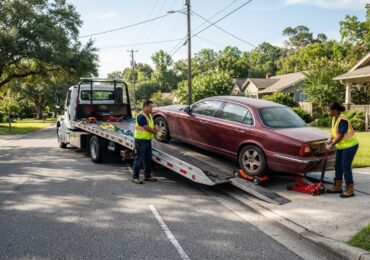
Approximately 85% to 90% of all vehicles moved across state lines travel on an open trailer, making it the primary method for national logistics. If you’re planning a long-distance move, you likely feel a mix of relief at finding a cost-effective solution and a lingering anxiety about road debris or unpredictable delivery windows. It’s natural to feel protective of your vehicle while trying to navigate the complexities of interstate open carrier transport during a major life transition.
This guide serves as your comprehensive resource to master the logistics of moving your car across the country with the industry’s most reliable method. We’ll show you how to achieve lower shipping costs and safe delivery without adding unnecessary mechanical wear to your engine. You will find clarity on the latest 2026 regulatory updates, such as mandatory digital medical certifications for drivers and new financial standards for brokers. By the end of this article, you’ll have a clear roadmap for communication and preparation that ensures a seamless door-to-door experience.
Key Takeaways
- Understand the engineering behind multi-car trailers and how dual-deck systems provide a secure, efficient solution for moving vehicles across state lines.
- Compare the total expense of professional interstate open carrier transport against the hidden costs of driving, such as depreciation and mechanical wear over 1,500+ miles.
- Master the updated 2026 vehicle preparation protocols to streamline your shipment, from managing fuel levels to complying with federal cargo regulations.
- Learn how to navigate the latest USDOT digital verification requirements to ensure your chosen carrier meets modern insurance and safety standards.
- Discover the benefits of a methodical door-to-door service that prioritizes clear communication and predictable delivery timelines for a stress-free move.
What is Interstate Open Carrier Transport?
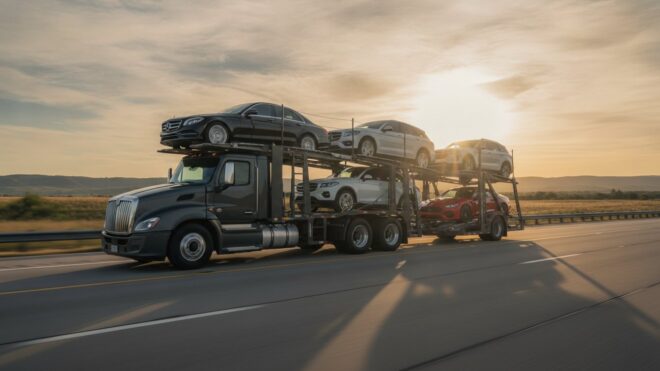
At its core, interstate open carrier transport refers to the movement of vehicles across state lines using specialized, multi-car trailers that aren’t enclosed by walls or a roof. These open carrier trailers are the most recognizable sight in the logistics industry, often seen on highways carrying between seven and ten vehicles at once. Because the vehicles are exposed to the elements, this method is remarkably efficient and serves as the primary choice for over 90% of all vehicle shipments within the United States.
The “interstate” designation is more than just a description of the distance; it defines the legal and regulatory environment of the shipment. When a carrier moves a vehicle from one state to another, they fall under the strict jurisdiction of the Federal Motor Carrier Safety Administration (FMCSA). This federal oversight ensures that the company maintains specific safety standards, driver hour regulations, and insurance protocols that differ significantly from local, within-state towing services. Choosing this method means you’re tapping into a massive, highly regulated network designed for long-distance reliability.
The Legal Framework of State-to-State Shipping
Operating an interstate carrier requires specific federal authority. As of 2026, the USDOT number has become the primary identifier for carriers to improve compliance monitoring and reduce industry fraud. You should always verify that a carrier has active operating authority before booking. This registration isn’t just a formality; it’s your assurance that the company is tracked by federal authorities for safety performance.
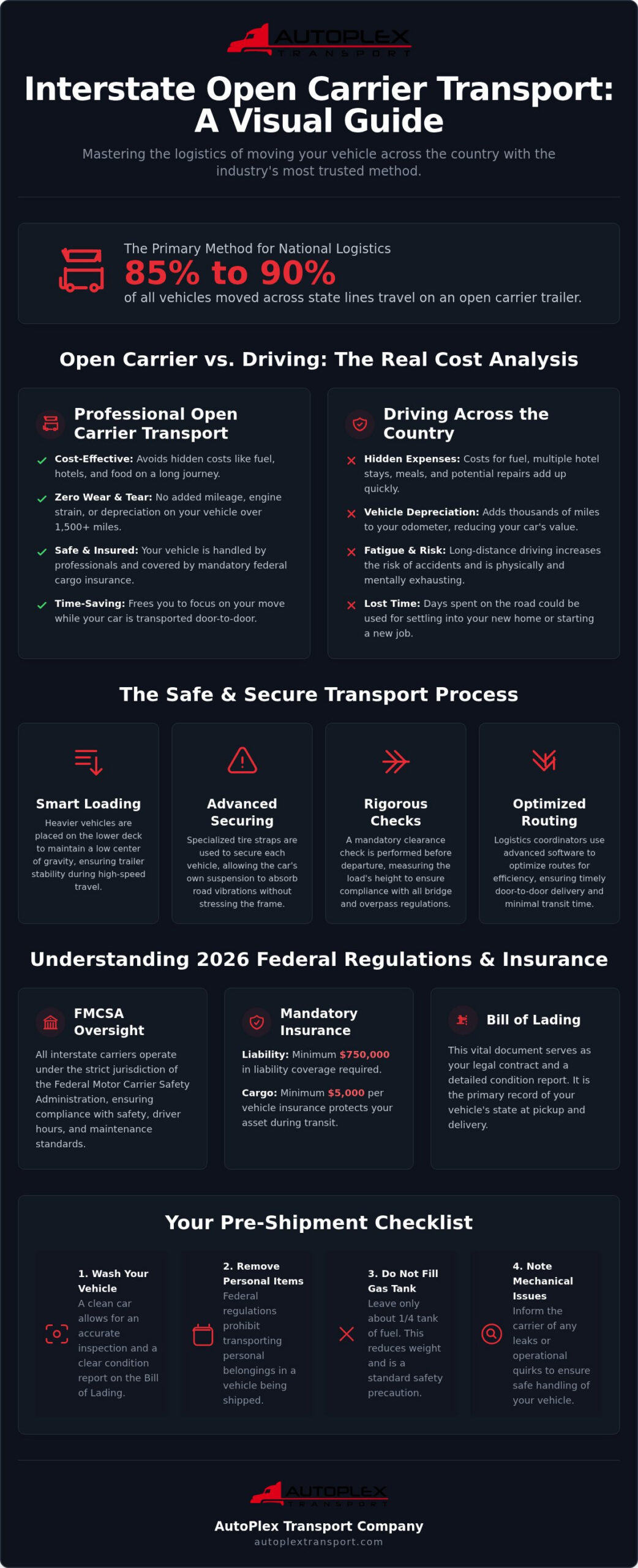
Insurance requirements also shift when crossing state lines. The FMCSA mandates a minimum of $750,000 in liability coverage for these carriers. Additionally, federal cargo insurance minimums are set at $5,000 per vehicle and $10,000 per occurrence. Throughout this process, your most vital document is the Bill of Lading. This acts as your official contract and a detailed condition report, serving as the primary legal record of your vehicle’s state at both pickup and delivery.
Who Should Choose Open Carrier Transport?
This transport method is the ideal solution for the vast majority of drivers moving cross-country. It’s perfectly suited for daily drivers, standard SUVs, and fleet vehicles that are already accustomed to outdoor conditions. Dealerships and manufacturers rely almost exclusively on this method to move inventory because it offers the best balance of safety and speed. If your vehicle is a standard model used for regular commuting, the cost savings of an open carrier far outweigh the specialized protection of an enclosed trailer. It’s a practical choice that provides professional-grade security without the premium price tag associated with niche transport services.
The Logistics of Long-Distance Open Carrier Shipping
Managing the movement of multiple vehicles across thousands of miles requires a sophisticated blend of engineering and coordination. Modern multi-car haulers typically carry between seven and ten vehicles, utilizing advanced dual-deck systems that allow for maximum capacity without compromising safety. These trailers are designed to distribute weight evenly; this ensures the truck remains stable during high-speed interstate travel even in windy conditions. In 2026, logistics providers rely on direct door-to-door routing and centralized hubs to streamline these complex journeys, reducing the time a vehicle spends sitting in a yard. Dispatching in the context of national car shipping is the strategic coordination of vehicle pickups and deliveries to ensure trailers are fully loaded and routes are geographically optimized for efficiency.
The Loading and Securing Process
The safety of your vehicle begins with how it’s positioned on the trailer. Experienced drivers carefully arrange vehicles to maximize stability, often placing heavier trucks or SUVs on the lower deck to maintain a low center of gravity. To secure the load, professional carriers primarily use specialized tire straps that wrap over the wheels. This prevents the vehicle from shifting while allowing the car’s own suspension to absorb road vibrations naturally. It’s a significant improvement over older chain-down systems that could potentially stress the vehicle’s frame or cause alignment issues. Drivers don’t just load and go; before they ever merge onto an highway, they perform a rigorous clearance check. This involves measuring the highest point of the load to ensure it complies with all bridge and overpass regulations along the planned route, preventing any overhead damage during the interstate open carrier transport process.
Route Optimization and Transit Times
Predicting transit times for interstate open carrier transport involves analyzing several variables, including total distance, seasonal weather patterns, and strict driver safety standards. Driver safety is paramount; all transit schedules must strictly adhere to Federal Motor Carrier Safety Administration (FMCSA) regulations regarding Hours of Service (HOS). These rules prevent driver fatigue by mandating specific rest periods, which directly impacts how quickly a vehicle moves from coast to coast. By utilizing nationwide networks, carriers can offer more consistent pickup windows and more reliable delivery estimates than smaller, localized operations. For a deeper look at how these variables influence your specific move, you can consult The Comprehensive Guide to Open Transport Car Shipping in 2026. Understanding these logistical layers helps you feel more confident when scheduling your nationwide transportation services with a reliable partner who values transparency throughout the journey.
Open Carrier vs. Driving: The Real Cost and Safety Analysis
Deciding whether to drive your vehicle across the country or book interstate open carrier transport usually begins with a look at the budget. At first glance, a road trip might seem like a way to save money; however, the cumulative expenses of fuel, lodging, and meals often match or exceed a professional transport fee. Beyond these visible costs, there’s the significant “hidden cost” of vehicle depreciation. Adding 1,500 or 2,500 miles to your odometer in a single week doesn’t just bring you closer to your next major service; it actively lowers your car’s resale value and accelerates wear on your tires and suspension.
From a safety perspective, professional logistics offer a distinct advantage. National carriers employ drivers who are trained to manage long-haul routes while adhering to federal rest requirements. A solo driver attempting to cross several states in a few days often faces extreme fatigue, which is a leading cause of highway accidents. Additionally, moving ten vehicles on a single trailer is far more environmentally efficient than ten individual cars making the same journey, significantly reducing the overall carbon footprint of your move.
Shipping vs. Driving: A Financial Breakdown
When you calculate the price per mile for interstate open carrier transport, the efficiency of the “hub and spoke” model becomes clear. Because the cost of the driver, fuel, and tolls is shared across multiple vehicles, the per-unit price remains remarkably competitive for the average consumer. For most moves, this method is the most logical choice because it’s typically 30-50% more affordable than specialized alternatives. If you’re transporting a high-value asset and want to compare these savings against maximum protection, see our Enclosed Car Transport: The Definitive Buying Guide for 2026.
Mitigating Road Risks on Open Trailers
A common concern among vehicle owners is the potential for road debris damage. While open trailers do expose vehicles to the elements, the statistical risk of significant damage is actually lower than the risks associated with driving the car yourself. Professional drivers use strategic positioning on the trailer to protect vehicles, often placing cars in spots that minimize exposure to kick-up from the road. In contrast, driving the car yourself exposes the front bumper, windshield, and headlights to thousands of miles of direct impact from gravel, salt, and insects. To ensure total transparency, every professional shipment includes a rigorous pre-delivery inspection. This process ensures your vehicle’s integrity is verified both at pickup and after the journey, providing the peace of mind you need during a national relocation.
Preparing Your Vehicle for an Interstate Journey
When you schedule interstate open carrier transport, the physical safety of your vehicle depends heavily on the steps you take before the driver arrives. Proper preparation isn’t just a recommendation; it’s a critical part of the logistics chain that ensures your insurance remains valid and your vehicle arrives in the same condition it left. You’ll want to start by giving the car a thorough wash. A clean exterior is necessary for a clear, accurate inspection, as dust and road salt can easily hide small scratches or dents that need to be documented. For a step-by-step guide on every detail, you can refer to our How to Prepare a Car for Transport: The 2026 Essential Checklist.
The “less is more” philosophy is your best strategy for a smooth pickup. We recommend keeping your fuel tank at approximately one-quarter full. This provides enough fuel for the driver to load and unload the vehicle while significantly reducing the total weight of the trailer. In the world of national logistics, every pound matters for fuel efficiency and regulatory compliance. You should also remove all toll tags and parking passes to prevent accidental charges as the truck passes through interstate gantries.
The Inspection and Documentation Phase
The pickup window is the most vital time for documentation. You need to take carrier-grade photos of your vehicle from every angle, including the roof and lower bumpers. Ensure these photos are taken in high-resolution during daylight hours. If your car has specific mechanical quirks, such as a sensitive alarm or a trick to the parking brake, you must communicate these to the driver and note them in writing. The Bill of Lading (BOL) is your primary legal safeguard during this phase. It’s the official contract between you and the carrier; it must accurately reflect the vehicle’s condition before it’s loaded onto the trailer. Never sign a BOL that has incomplete sections or doesn’t match your own observations.
Mechanical and Personal Item Readiness
Before the truck arrives, check that your battery is fully charged and your tires are properly inflated. Vehicles that don’t roll, brake, or steer require specialized equipment and will result in higher costs if not disclosed upfront. Regarding personal belongings, Department of Transportation (DOT) regulations prohibit the transport of household goods inside a vehicle on an open trailer. While many carriers allow up to 100 lbs of items in the trunk at your own risk, these items are never covered by the carrier’s insurance. Finally, secure or remove any loose parts like aftermarket spoilers, bike racks, or non-retractable antennas. Taking these steps ensures your vehicle is ready for a safe interstate open carrier transport experience. If you’re ready to start your move, you can request a quote for our nationwide transportation services today.
Why AutoPlex Transport is the Trusted Partner for National Logistics
Choosing a provider for interstate open carrier transport involves more than just finding the lowest price; it requires a partner who understands the weight of your investment. At AutoPlex Transport, we position ourselves as a seasoned industry veteran with a proven history of success in managing complex logistical challenges. Our commitment to a “reliable partner” approach means we don’t just move cars; we manage the entire lifecycle of your shipment with a steady and confident hand. By leveraging a nationwide network of vetted carriers, we ensure that every driver meeting your vehicle has been thoroughly screened for safety compliance and professional reliability.
We take the burden of regulatory complexity off your shoulders. The 2026 landscape for national shipping includes stricter USDOT monitoring and centralized digital verification for driver medical certifications. These administrative layers can be overwhelming for the average consumer, but our team handles these details as a standard part of our service. We bridge the gap between rigorous federal requirements and your personal need for a simple, stress-free move, ensuring that every interstate open carrier transport route is optimized for both safety and efficiency.
Our Professional and Reassuring Service Model
Our communication rhythm is designed to lead you from a state of inquiry to a state of total understanding. We utilize a methodical process that prioritizes transparency, starting with a clear explanation of how your vehicle will be handled. You won’t encounter high-pressure sales tactics here. Instead, you’ll find a team dedicated to detailed logistical planning and protective service. Whether we’re coordinating the door-to-door pickup or managing the final inspection at delivery, our expertise translates into the peace of mind that comes from knowing your vehicle is in experienced hands.
Requesting Your Interstate Shipping Quote
Getting an accurate and transparent quote is the first step in our methodical journey together. To provide a precise estimate, we require basic information including your vehicle’s make and model, the specific pickup and delivery locations, and your desired timeframe. We calculate our fees based on several logistical factors:
- The total distance of the interstate route.
- The size and weight of the vehicle, which affects trailer capacity.
- Current seasonal demand, as peak summer months often see higher volume.
- The specific level of service, such as our standard door-to-door delivery.
Our goal is to provide a comprehensive resource that helps you make an informed decision for your upcoming move. When you’re ready to experience a professional and detail-oriented approach to vehicle shipping, get your professional interstate transport quote from AutoPlex today.
Moving Forward with Confidence in Your National Relocation
Navigating the complexities of a cross-country move doesn’t have to be a source of anxiety. By understanding the logistics of interstate open carrier transport, you’ve taken the first step toward a more efficient and affordable relocation. You now know that professional transport protects your vehicle’s resale value by avoiding thousands of miles of unnecessary wear, while our methodical 5-step logistics process ensures every detail is handled with precision.
AutoPlex Transport stands ready to serve as your authoritative expert in this journey. We provide nationwide door-to-door service using fully insured interstate carriers, giving you the security that comes from working with a seasoned industry veteran. Our focus remains on transparency and thorough communication from the initial inspection to the final delivery. When you’re ready to transition to your new destination without the stress of long-distance driving, we’re here to help.
Request a Professional Interstate Shipping Quote from our team today. We look forward to ensuring your vehicle arrives safely and on schedule.
Frequently Asked Questions
Is my car insured during interstate open carrier transport?
Yes, every vehicle moved via interstate open carrier transport is covered by federally mandated insurance. The Federal Motor Carrier Safety Administration (FMCSA) requires transporters to maintain a minimum of $750,000 in liability coverage. Additionally, cargo insurance minimums are set at $5,000 per vehicle. Most professional carriers in our network exceed these requirements, often carrying $1,000,000 in liability to ensure your asset is fully protected against transit-related incidents during its journey across state lines.
How long does it typically take to ship a car across multiple states?
Transit times vary based on total mileage and strict federal Hours of Service (HOS) regulations for drivers. On average, a cross-country trip of 2,500 miles takes approximately 7 to 10 days. Shorter interstate routes under 1,000 miles typically arrive within 3 to 5 days. These timelines account for mandatory rest periods and the multi-car nature of open transport, where the driver may have several scheduled stops to unload other vehicles along the route.
Can I put personal belongings in my car during open transport?
Department of Transportation (DOT) regulations strictly prohibit the transport of household goods inside a vehicle being shipped. While some carriers allow up to 100 pounds of personal items secured in the trunk, these belongings are not covered by the carrier’s insurance policy. It’s best to remove all valuables, electronics, and toll tags before pickup. Packing the main cabin can also obstruct the driver’s view during loading, potentially creating a safety hazard on the trailer.
Does open carrier transport cause damage from weather or road debris?
While vehicles on an open trailer are exposed to weather and road elements, significant damage is statistically rare. This method accounts for nearly 90% of all national shipments because it’s a proven, reliable balance of cost and safety. Professional drivers use strategic loading patterns to minimize exposure to kick-up from the road. If you own a high-value collector car, you might consider our enclosed transport services for total protection during interstate open carrier transport.
What is the difference between an auto transport broker and a carrier?
An auto transport broker acts as a logistics coordinator, utilizing a vast network to find the best route and vetted carrier for your specific needs. The carrier is the entity that owns the physical truck and performs the actual transportation. Working with a professional service provider like AutoPlex ensures you have a single point of contact who handles the vetting, insurance verification, and scheduling, saving you from the complexity of managing individual carrier contracts yourself.
Is door-to-door service available for all interstate routes?
Door-to-door service is a standard feature for most national routes, though physical accessibility plays a role. Large multi-car haulers cannot always navigate tight residential streets, low-hanging trees, or areas with strict weight limits. In these cases, your driver will coordinate a meeting at a nearby large parking lot or wide street. This approach maintains the convenience of a direct move while ensuring the safety of the equipment and your vehicle during the loading process.
What happens if my car is damaged during an interstate move?
If you notice damage at delivery, you must document it immediately on the Bill of Lading (BOL) before the driver leaves. This document serves as the primary legal record for insurance claims. Take clear, high-resolution photos of the new damage and compare them to your pickup photos. Once the discrepancy is noted on the signed BOL, you can begin the formal claims process through the carrier’s insurance provider. Our team provides guidance through this methodical process.