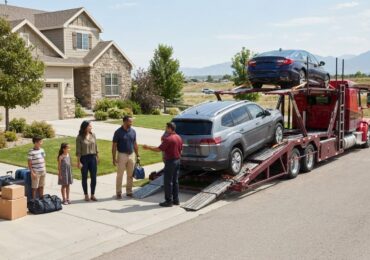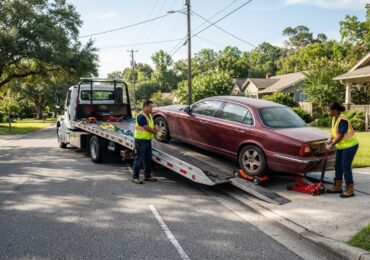
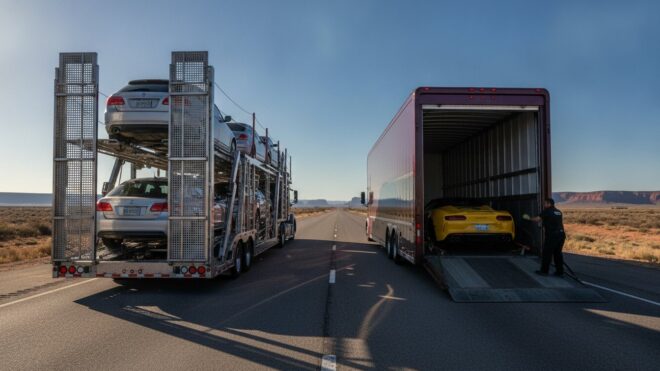
Did you know that approximately 95% of all vehicles in the United States are moved via open carriers? While this method is the industry standard for most daily drivers, the remaining 5% represent a vehicle owner’s most prized assets. Choosing between open vs enclosed car transport often comes down to a single question: is the extra layer of physical protection worth the investment for your specific vehicle?
We understand that handing over your keys can be an anxious experience. It’s natural to feel uneasy about unpredictable weather, flying road debris, or whether the insurance coverage is truly sufficient to protect your car’s resale value during an interstate move. You deserve a reliable partner who treats your asset with the same care you do and provides total transparency regarding the shipping process.
This 2026 guide is designed to remove that uncertainty by providing a clear, methodical breakdown of how each method impacts your vehicle’s safety and your budget. We’ll explore the critical risk-to-cost ratios, explain the latest 2026 FMCSA insurance requirements for carriers, and provide the insights you need to ensure a damage-free delivery experience. By the end of this article, you’ll have the confidence to choose the right protection for your car’s journey.
Key Takeaways
- Learn the fundamental trailer differences between open and enclosed shipping to determine which environment best suits your vehicle’s physical requirements.
- Understand why open carrier transportation remains the most efficient and budget-friendly option for standard SUVs, sedans, and daily trucks.
- Discover how enclosed transport services provide total isolation from road debris and weather while using specialized soft-tie equipment for delicate suspensions.
- Apply the “Vehicle Value Rule” to help you decide on open vs enclosed car transport by calculating the risk-to-cost ratio relative to your car’s market value.
- See how door-to-door nationwide service simplifies the logistics process by removing terminal wait times and providing a direct delivery experience.
Understanding the Fundamental Differences in Auto Transport
When you begin researching vehicle shipping, the primary decision you will face involves the trailer environment. At its core, the choice of open vs enclosed car transport refers to whether your vehicle is exposed to the elements or shielded within a protective structure during its journey. This distinction affects everything from the final quote to the specific equipment used to secure your car.
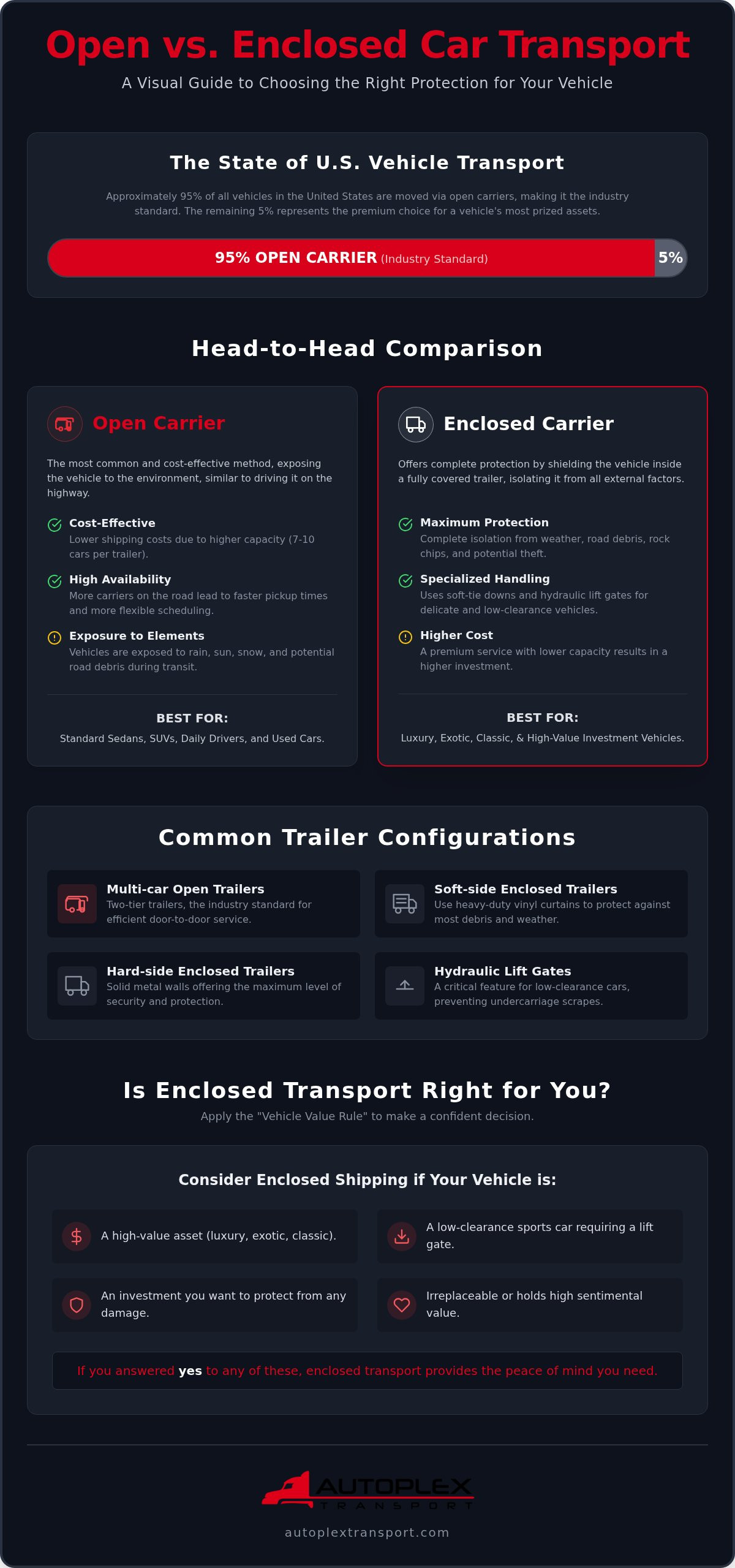
Open carrier transportation is the industry workhorse. Approximately 95% of all vehicles moved in the United States travel on these open-air trailers. Because these carriers can hold up to ten vehicles at once, they offer the most efficient and cost-effective solution for standard daily drivers. Enclosed transport serves as the premium alternative. These trailers utilize solid walls or heavy-duty curtains to completely isolate the cargo from the external environment. While this method requires a higher investment, it provides a level of security that many owners of high-value assets find indispensable.
Logistical drivers usually dictate which path a customer chooses. Open transport offers higher availability and more frequent routes, which often leads to faster pickup times. Enclosed transport focuses on protection and specialized handling, making it the preferred choice when the car’s market value or sentimental importance outweighs the need for the lowest possible price.
The Role of Exposure in Vehicle Logistics
Understanding the risks of the road helps clarify why different protection levels exist. During a cross-country haul, a vehicle on an open trailer faces various environmental factors including heavy rain, snow, and prolonged UV ray exposure. While modern automotive paint is durable, these elements are constant companions on a multi-day trip. Mechanical factors pose a different set of challenges. Interstate highways often have loose gravel, road salt in winter months, and various debris that can be kicked up by other motorists.
Exposure control is the intentional reduction of external variables and environmental stressors that a vehicle encounters during transit. By opting for a fully shielded environment, you effectively eliminate the risk of rock chips or weather-related wear before the car even reaches its destination.
Trailer Configurations: A Quick Overview
The equipment used for these services varies significantly in design and function. You can identify the right fit by looking at these common configurations:
- Multi-car Open Trailers: These are the familiar two-tier trailers seen on highways. They are highly maneuverable and allow for easy door-to-door service in most residential areas.
- Soft-side Enclosed Trailers: These use heavy-duty vinyl curtains. They protect against most debris and weather but lack the rigid security of a hard-shell trailer.
- Hard-side Enclosed Trailers: These feature solid metal walls and offer the maximum level of protection against theft, weather, and road hazards.
- Hydraulic Lift Gates: Many premium enclosed carriers use these horizontal platforms to load vehicles. This is a critical feature for low-clearance sports cars, as it prevents the undercarriage from scraping against traditional loading ramps.
Each configuration has a specific purpose. Our goal is to help you match the trailer’s capabilities to your vehicle’s unique needs, ensuring a safe arrival regardless of the distance.
Open Carrier Car Transportation: Efficiency and Accessibility
Open carrier car transportation is the backbone of the American logistics industry. For the vast majority of vehicle owners moving SUVs, sedans, and trucks, this method provides the ideal balance of speed and value. When weighing open vs enclosed car transport, it’s helpful to realize that open carriers aren’t just a budget choice; they’re a highly optimized system designed for maximum throughput across the nation’s highways.
The primary advantage of this method lies in its cost-effectiveness. By loading between seven and ten vehicles onto a single multi-car trailer, carriers significantly reduce the price per unit for each customer. This shared logistical burden makes interstate moves accessible for families and individuals alike. Because there are significantly more open trailers on the road compared to enclosed ones, open transport car shipping is much easier to schedule on short notice. If you need a vehicle moved within a tight timeframe, an open carrier is almost always the most responsive option.
Visibility also plays a crucial role in safety. Drivers can easily inspect every vehicle during their mandated rest stops and refueling breaks. This allows them to monitor securement straps and check for any shifts in the load without needing to open trailer doors or use specialized lighting, ensuring that potential issues are addressed immediately.
Why Open Transport Dominates the Market
The market dominance of open carriers is driven by fundamental logistics. Open trailers are considerably lighter than their enclosed counterparts, which leads to better fuel efficiency and lower overhead for the transport company. This efficiency is passed directly to the consumer. The sheer density of the open carrier network also means that trucks are constantly moving along every major interstate. This creates flexible route options that can accommodate even the most remote pickup and delivery locations with ease. Decades of safety records prove that for standard vehicle types, the risk of damage is statistically very low.
Mitigating Risks on an Open Trailer
While the vehicle is exposed to the elements, professional carriers use specific strategies to minimize potential issues. One common request is the ‘Top Load’ strategy. By placing a vehicle on the upper deck of a two-tier trailer, owners can avoid the rare risk of fluid leaks from cars positioned above them. This is a simple way to add an extra layer of protection without the full cost of an enclosed upgrade.
Distance also matters. Open transport is perfectly safe for hauls exceeding 1,000 miles, provided the vehicle is secured correctly. Modern carriers prefer high-quality wheel straps over older frame hooks. Wheel straps secure the car by its tires, allowing the vehicle’s own suspension to absorb road vibrations naturally. This prevents unnecessary structural stress on the frame during long-distance transit. If you’re ready to see how these logistics work for your specific route, you can request a transparent quote from our team today.
Enclosed Transport Services: Maximum Protection for High-Value Assets
While open carriers are the standard for daily commutes, certain vehicles require a higher tier of care. Enclosed transport provides total isolation from the outside world. This means your car is 100% protected from road debris, inclement weather, and the unpredictable variables of the highway. When choosing between open vs enclosed car transport, the decision often hinges on the level of risk you are willing to accept for an investment that can’t be easily replaced.
Beyond simple shielding, these services utilize specialized equipment to maintain vehicle integrity. Professional carriers employ “soft-tie” tie-downs, which secure the vehicle by its wheels or chassis using high-strength nylon instead of metal chains. This protects delicate suspensions and prevents the micro-scratches that can occur with traditional hardware. For owners of classic, exotic, or luxury vehicles, enclosed car transport offers a level of privacy that open trailers simply can’t match; keeping your asset out of sight is often the first line of defense against theft or unwanted attention during cross-country hauls.
Preserving Resale Value and Paint Integrity
A primary reason to upgrade is the preservation of a vehicle’s original finish. Even a single rock chip can significantly diminish the resale value of a collector car. On an open trailer, vehicles are subject to a “sandblasting” effect from highway dust and grit at high speeds. Enclosed trailers eliminate this risk entirely. Additionally, the interior remains pristine. There’s no exposure to soot, exhaust fumes, or industrial fallout that can settle on upholstery during transit. We provide a “white glove” inspection report for these moves, documenting every detail to ensure the car arrives in the exact condition it was loaded.
When Enclosed is Non-Negotiable
For some vehicles, an enclosed trailer isn’t just a preference; it’s a mechanical necessity. If your car has low ground clearance, such as a modern supercar or a lowered custom build, traditional ramps on an open trailer can cause severe undercarriage damage. Enclosed carriers often feature hydraulic lift gates that remain level with the ground during the loading process. Custom paint jobs also demand this environment. Matte finishes or specialized vinyl wraps are notoriously difficult to repair; you can’t simply buff out a scratch on a matte surface. Finally, for inoperable classic cars that require a winch to load, the controlled environment of an enclosed trailer provides the necessary security and specialized tools to manage the move safely.
Decision Framework: When to Choose Enclosed Over Open Shipping
Deciding between open vs enclosed car transport isn’t merely a matter of budget. It’s a strategic calculation of risk management. While we’ve established that open trailers are the industry standard for most moves, certain variables make the upgrade to an enclosed environment the more logical choice. To make an informed decision, you must evaluate your vehicle’s market equity, the timing of your move, and the specific geographic challenges of your route.
The “Vehicle Value Rule” is a helpful benchmark used by many industry veterans. If the cost of the transport upgrade represents less than 1% to 2% of the vehicle’s total market value, the added protection is almost always justified. For example, a $100,000 investment grade vehicle faces a much higher financial risk from a single rock chip than a $25,000 daily driver. Seasonal factors also play a role. During winter months, northern routes are often treated with heavy road salt and magnesium chloride. If your vehicle will be traveling through these regions, an enclosed carrier prevents these corrosive chemicals from reaching your undercarriage and paint.
Timeline requirements are another critical factor. Because there are significantly more open carriers on the road, they typically offer faster pickup windows and more flexible scheduling. If you’re on a strict deadline, open transport may be the only viable option. However, for long-distance hauls where terrain varies significantly, such as an interstate vehicle transport route involving coastal humidity or desert sand, the shielding provided by an enclosed trailer becomes a vital asset.
The Cost-to-Protection Ratio
When analyzing the typical 30% to 50% price premium for enclosed services, it’s essential to look at the underlying insurance structures. Most open carriers maintain cargo insurance limits between $100,000 and $250,000 per shipment. In contrast, enclosed carriers frequently carry policies ranging from $250,000 to over $1,000,000. This higher coverage reflects the increased value of the cargo they are designed to protect. The best transport method is the one where the cost of protection is less than the potential loss in vehicle equity.
Evaluating Your Specific Vehicle Type
Your car’s role in your life often dictates the logistics. For daily drivers, open transport is the logical, budget-friendly choice that provides reliable nationwide service without unnecessary overhead. For investment vehicles, enclosed transport acts as a mandatory insurance policy, ensuring that the car’s “concours” condition remains intact for future resale or exhibition. We also see many customers choose enclosed for sentimental assets. Even if a car’s market price is low, its emotional value can make the maximum level of protection a worthwhile investment. If you’re unsure which category your vehicle fits into, you can request a personalized shipping consultation with our logistics experts to find the right match.
Navigating Your Nationwide Transportation Strategy with AutoPlex
Deciding on open vs enclosed car transport is only the first step in a successful relocation. At AutoPlex, we apply the same rigorous safety protocols to both methods, ensuring that whether you’re moving a standard family SUV or a high-value vintage asset, the process remains professional and secure. Our goal is to act as your knowledgeable guide, removing the logistical hurdles that often cause anxiety during interstate moves.
We prioritize a door-to-door transportation model as our standard. This approach removes the need for terminal drop-offs and eliminates the long wait times associated with centralized hubs. By picking up and delivering your vehicle as close to your residence as local laws allow, we reduce the number of times your car is handled. This direct service is a critical component in ensuring a damage-free delivery experience. Transparency remains at the heart of our operations. You can obtain an accurate vehicle shipping quote that reflects the true cost of your specific route, free from hidden fees or unexpected surcharges. To ensure everything goes smoothly on pickup day, we encourage you to review our checklist on how to prepare a car for transport, which covers everything from fluid levels to personal item removal.
The AutoPlex Professional Process
Our commitment to excellence is backed by a strictly vetted carrier network. We ensure that every driver we work with complies with the latest 2026 FMCSA safety standards, including the updated CDL medical certification requirements and Electronic Logging Device (ELD) enforcement rules. We understand that communication is the key to peace of mind. You’ll receive real-time updates from the moment of pickup until the final inspection at your destination. While we take every precaution to protect your vehicle, we also provide dedicated claims assistance. If the unthinkable happens, our team is prepared to support you through the resolution process with speed and integrity.
Ready to Move? Your Next Steps
Starting your journey with us is a straightforward process. Having your information ready helps us provide the most accurate logistical plan for your vehicle. Before you reach out, please have the following details available:
- Vehicle Details: Know the exact year, make, model, and current operational status of the car.
- Your Shipping Window: Consider your level of flexibility; being open to a range of dates can often lead to more efficient scheduling and better rates.
- The Destination: Confirm the specific pickup and delivery locations to ensure we can plan the most direct route.
Once you have these details, requesting your quote is the final step toward a confident and secure transport experience. We look forward to serving as your reliable partner for all your nationwide transportation needs.
Securing Your Vehicle’s Future on the Road
Selecting the right shipping method is a vital step in maintaining your car’s long-term value and integrity. As we’ve explored, the choice between open vs enclosed car transport depends on balancing your budget with the specific vulnerability of your asset. Whether you opt for the efficiency of an open carrier for your daily driver or the total isolation of an enclosed trailer for a collector vehicle, the priority remains a safe and predictable arrival.
By applying the decision framework and understanding the 2026 logistical landscape, you can move forward with total clarity. Our team is here to ensure your transition is managed with the precision of an A+ rated nationwide service and the security of fully insured professional carriers. We integrate the latest 2026 logistics technology to keep you informed at every milestone of the journey.
When you’re ready to experience a stress-free move, we invite you to Get Your Instant Nationwide Car Shipping Quote from AutoPlex Transport. We look forward to being the reliable partner you need for a seamless delivery experience.
Frequently Asked Questions
Is enclosed car transport worth the extra cost for a standard sedan?
For most standard sedans used as daily drivers, the additional cost of enclosed transport is typically not necessary. These vehicles are designed to withstand regular road exposure, and open transport provides a reliable, cost-effective way to move them across the country. Enclosed shipping is generally reserved for vehicles where the market value or delicate nature of the paint justifies the higher investment.
What is the price difference between open and enclosed car shipping?
The price difference between these two methods is primarily driven by trailer capacity and the specialized equipment required for enclosed hauls. Because enclosed trailers carry fewer vehicles and offer total environmental protection, you can expect to pay a percentage-based premium over standard open carrier rates. This cost reflects the increased insurance limits and the specialized handling involved in the process.
Can personal items be left in the car during open transport?
Carriers strongly discourage leaving personal items in your vehicle during transit for safety and regulatory reasons. Most transport insurance policies do not cover household goods; additionally, the extra weight can cause the carrier to exceed Federal Motor Carrier Safety Administration (FMCSA) weight limits. It is best to remove all personal belongings to ensure a smooth inspection and transport process.
How do I know if my car has low enough clearance to require an enclosed lift gate?
If your vehicle has less than five inches of ground clearance, you likely require an enclosed carrier equipped with a hydraulic lift gate. Standard loading ramps on open trailers can be too steep for many sports cars or modified vehicles, which often results in undercarriage or bumper damage. Measuring your car’s lowest point before booking ensures we assign the correct equipment for your move.
Does open transport insurance cover rock chips and weather damage?
Standard cargo insurance for open trailers typically covers damage caused by carrier negligence or accidents, but it does not usually cover road wear like rock chips or weather-related issues. This is a primary factor to consider when weighing open vs enclosed car transport for your vehicle. If your car has a custom or sensitive finish, the total isolation of an enclosed trailer is the only way to guarantee protection from these external variables.
Which transport method is faster for cross-country delivery?
Open transport is generally the faster option for cross-country delivery due to the sheer density of the carrier network. Because approximately 95% of trailers on the road are open carriers, it is much easier to secure a pickup window that fits your schedule. Enclosed trailers are fewer in number, which can sometimes lead to longer wait times for a matching route to become available.
What happens if my car is damaged during open carrier transport?
If you notice damage upon delivery, you must document the issues immediately on the Bill of Lading (BOL) while the driver is still present. This document is the essential legal record required to file a claim with the carrier’s insurance provider. Our team at AutoPlex assists you by verifying the carrier’s coverage and supporting you through the communication process to reach a resolution.
How does AutoPlex vet the drivers for enclosed transport services?
We utilize a rigorous vetting process that includes real-time verification of 2026 FMCSA safety ratings and insurance validity. For our enclosed transport services, we specifically select carriers with a proven history of handling high-value assets and exotic vehicles. This ensures that the driver assigned to your car is experienced with specialized securement methods and the unique requirements of enclosed logistics.