
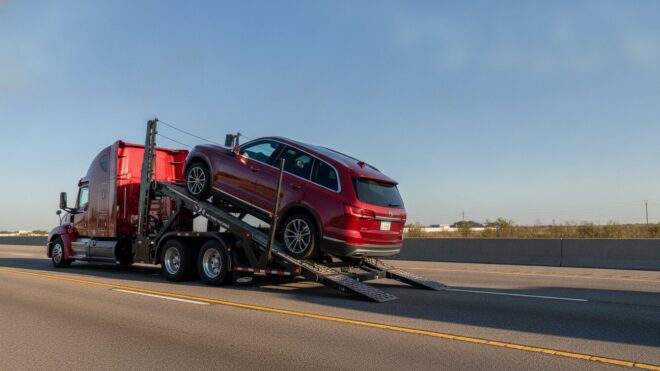
Why do so many vehicle owners assume that shipping a full-size SUV is the same as shipping a standard sedan? While it’s tempting to think of it as just a larger load, the reality of SUV transport services involves complex weight-load planning and height-clearance logistics that can catch even experienced car owners off guard. You might be worried about unexpected oversized vehicle surcharges or the risk of damage during a long interstate journey across the country. These concerns are valid, especially as the industry adapts to stricter 2026 safety and compliance standards.
We understand that your SUV is more than just a way to get around; it’s a significant investment that requires a steady hand and professional care. This 2026 guide is designed to help you navigate the nuances of nationwide shipping, from understanding why SUVs carry a different price structure than smaller vehicles to ensuring your carrier follows the latest federal regulations. You’ll learn how to select a reliable national carrier that offers door-to-door convenience while protecting your vehicle during transit. We will break down the differences between open and enclosed transport so you can make an informed, confident decision for your specific needs.
Key Takeaways
- Understand the fundamental difference between professional SUV transport services and chauffeur-style “black car” services to ensure you are hiring a logistics expert rather than a personal driver.
- Evaluate whether the cost-effectiveness of open carrier transport or the premium protection of an enclosed trailer is the right choice for your specific vehicle type and value.
- Identify how “oversized vehicle” variables and specific interstate route logistics influence your national shipping quote and expected transit timeline.
- Learn the essential steps for vehicle preparation, including why a clean exterior is vital for a thorough Bill of Lading inspection during the pickup and delivery process.
- Discover how to verify critical markers of a legitimate carrier, such as active FMCSA registration and comprehensive insurance coverage, to ensure your asset is fully protected.
What Are SUV Transport Services? Defining Professional Vehicle Shipping
When you search for SUV transport services, you might encounter a confusing mix of results. Many listings refer to “black car” chauffeur services or airport shuttles. However, in the logistics industry, SUV transport refers to the professional interstate relocation of crossovers, full-size SUVs, and luxury 4x4s using specialized equipment. This service is designed for owners who need to move their vehicle across the country without adding thousands of miles to the odometer. Unlike standard car shipping, these services account for the unique physical profile of larger vehicles to ensure a safe journey.
Professional SUV transport services utilize a network of nationwide interstate transportation routes. This specialized focus is necessary because a standard sedan trailer isn’t always the best fit for a vehicle with non-standard dimensions. Whether you’re moving a family Suburban or a modified Jeep, the logistics provider must plan for the specific footprint of your vehicle. This involves selecting the right trailer type and ensuring the driver has experience handling the weight and height of larger assets.
For readers who require shipping solutions that extend beyond vehicle transport to global parcel delivery, you can discover Parcel International to explore their comprehensive logistics network covering over 220 countries.
Why SUV Logistics Differ from Standard Sedans
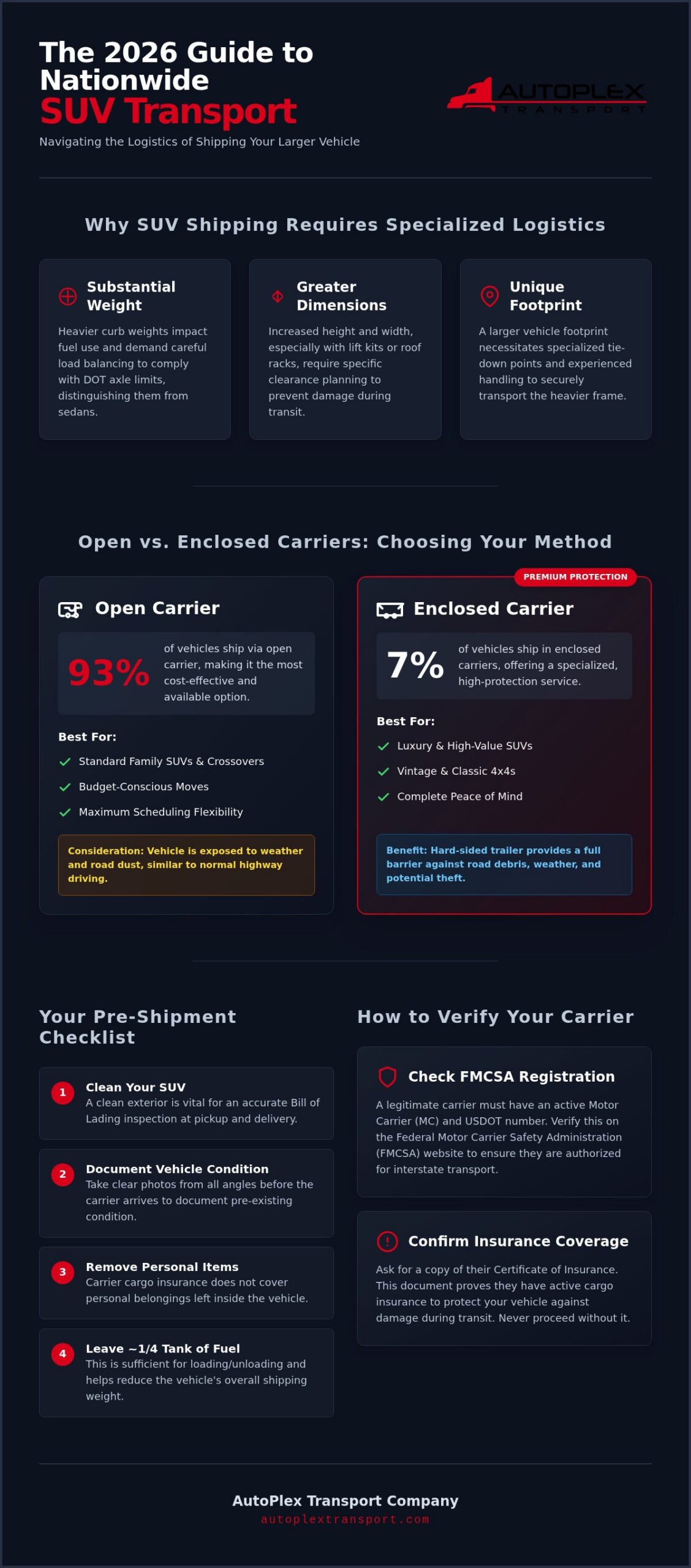
The primary challenge with SUVs is their substantial curb weight. Heavier vehicles increase fuel consumption and can push a trailer toward legal axle weight limits. Carriers must balance the load to stay compliant with DOT regulations. Height is also critical. Roof racks or lift kits change the clearance needed on open and enclosed carriers. Professionals ensure your vehicle avoids contact with overhead structures while using specialized tie-down points to secure heavier frames during transit.
The Convenience of National Door-to-Door Service
Managing a move is stressful, so most owners prefer door-to-door transportation. This model allows the carrier to pick up and drop off the SUV as close to your home as possible. While a 75-foot carrier might not fit on every residential street, drivers coordinate nearby meeting points, like a local shopping center, for safe loading. This method saves you significant time and provides the security of watching your vehicle be safely secured onto the trailer.
Open vs. Enclosed Carriers: Which is Best for Your SUV?
Choosing the right equipment for your vehicle is one of the most important decisions you’ll make when arranging SUV transport services. The two primary options, open and enclosed carriers, offer different levels of protection and price points. While both methods are safe, your choice should depend on the value of your SUV, its physical condition, and your tolerance for weather exposure during a long cross-country trip. Drivers must also account for the increased footprint of larger vehicles when loading these different trailer types.
Open carriers are the industry standard, moving roughly 93% of vehicles on the road today according to 2026 industry data. These trailers are highly efficient because they can carry multiple vehicles at once, which helps lower the individual cost to ship a car. However, because the trailer lacks sides or a roof, your SUV is exposed to rain, snow, and road dust. For a standard daily driver, this exposure is no different than what the vehicle experiences during a typical highway commute.
When to Choose Open Carrier Auto Transport
Open transport car shipping is the ideal solution for standard family SUVs, crossovers, and lease returns. Since these trailers are the most common type on the road, they offer the greatest flexibility in scheduling and route availability. If you’re moving on a budget and your vehicle is a reliable daily driver, this method provides the best balance of safety and affordability. It’s the go-to choice for most nationwide moves where the goal is reliable transit without the premium price tag of a specialized trailer.
The Case for Enclosed SUV Shipping
For owners of high-end luxury models like Range Rovers, G-Wagons, or vintage 4x4s, enclosed car transport is often the preferred route. These hard-sided trailers provide a complete barrier against road debris, hail, and harsh sunlight. This protection is essential if your vehicle has a custom matte finish, specialized exterior modifications, or is a rare collector’s item. While the premium for this service is higher than open transport, the peace of mind knowing your asset is shielded from every external element is invaluable for many owners.
Ultimately, the decision rests on how much protection your specific vehicle requires for the journey. Professional SUV transport services should always provide clear guidance on which trailer type suits your vehicle’s weight and value. If you’re unsure which level of service fits your needs, exploring interstate vehicle transportation options can help you weigh the benefits of each carrier type against your relocation timeline. Regardless of the carrier you choose, ensuring the company uses modern equipment and follows strict safety protocols is the key to a successful move.
Factors That Influence SUV Shipping Quotes in 2026
Understanding how pricing is calculated for SUV transport services is essential for budgeting your move. Quotes are built on a foundation of logistical variables that go beyond simple mileage. In 2026, carriers face tighter regulations and higher operational costs, which directly influence the final number you see on a contract. From the physical size of your vehicle to the timing of your relocation, every detail helps determine the resources required for a safe delivery.
Weight and Dimensions: The SUV Premium
A primary driver of cost is the physical footprint of your vehicle. A compact crossover like a Honda CR-V is relatively easy to load, but a full-size Chevy Suburban occupies significantly more “real estate” on a carrier. Because trailers have strict height and weight limits, a larger vehicle often displaces a spot that could have held a smaller car. This logistical displacement is why SUVs typically carry a premium of $150 to $250 compared to standard sedans. If your SUV is equipped with a lift kit or a permanent roof rack, it might require a specific spot on the trailer to clear highway overpasses. Beyond that, the increasing weight of electric SUVs is making load configuration more complex. Carriers must plan carefully to comply with federal axle weight restrictions while maintaining fuel efficiency.
Route Accessibility and Delivery Timelines
Your proximity to major interstate highways plays a significant role in your quote and pickup speed. Carriers prefer routes along main corridors because they can load and unload vehicles without deviating hundreds of miles from their path. Shipping an SUV to or from a rural area requires more fuel and driver time, which naturally increases the price. If you live in a remote location, meeting a driver at a nearby metro hub can often help you secure a more favorable rate and a faster timeline.
You should also consider seasonal trends and insurance requirements. The peak moving season, which runs from May through September, often sees higher rates due to increased demand. Additionally, operational costs have shifted recently. Monthly insurance premiums for auto transporters rose by approximately 20% in late 2025, a change that continues to influence 2026 pricing. Most professional brokers now require $1,000,000 in liability coverage for their carriers. Ensuring your quote reflects these modern standards protects your asset against unforeseen events during transit. Professional SUV transport services will always provide a detailed breakdown of these factors to ensure transparency in your shipping agreement.
How to Prepare Your SUV for Nationwide Transport
Preparing your vehicle is a critical step that ensures SUV transport services can proceed without delay or complication. This process isn’t merely a suggestion; it’s a fundamental part of the professional logistics chain that protects your asset from pickup to delivery. By following a methodical approach, you help the carrier maintain safety standards and ensure that the documentation accurately reflects your vehicle’s condition before it begins its journey.
A clean exterior is the first requirement for a successful handoff. While it might seem counterintuitive to wash a car that will be traveling on an open trailer, a clean surface is necessary for a proper Bill of Lading inspection. Dust and road grime can hide small chips or scratches, making it difficult to verify the vehicle’s state at the point of origin. You should also ensure the fuel level is at approximately 1/4 tank. This amount provides enough fuel for the driver to load and unload the vehicle while minimizing unnecessary weight and complying with 2026 safety regulations. For a more detailed guide, you can review our checklist for vehicle preparation.
The Pre-Shipping Inspection Process
Your involvement in the initial inspection is your best defense against potential disputes. When the driver arrives, you will perform a joint walk-around to document any existing dings, scratches, or mechanical issues. We recommend taking high-resolution photos from multiple angles, including the roof and undercarriage, immediately before the carrier arrives. These photos serve as a digital timestamp of your SUV’s status. The driver will record these findings on the inspection report; ensure you receive a signed copy before they depart.
Securing Exterior Accessories
Preparing your vehicle for SUV transport services requires attention to detail regarding exterior accessories. You must remove or retract antennas, bike racks, and specialized spare tire covers before the truck arrives. Folding in side mirrors is a simple but effective way to maximize space on the carrier. Additionally, verify that your vehicle is free of fluid leaks. A leak from an upper-deck SUV can cause significant damage to vehicles loaded below, potentially leading to liability concerns. Finally, remember to remove toll tags and all personal items; carriers are not licensed to transport household goods, and these items won’t be covered by the transporter’s insurance.
Taking these steps ensures that your vehicle is ready for a seamless journey across the country. If you are ready to begin the process, you can book your nationwide transportation services with a team that prioritizes your vehicle’s safety and professional logistics.
Choosing the Right SUV Transport Company for Your Move
Selecting a provider for SUV transport services requires a careful evaluation of their operational history and legal standing. You aren’t just hiring a driver; you’re entrusting a valuable asset to a logistics network that must navigate complex federal regulations. A professional company should be transparent about their FMCSA registration and provide proof of active insurance coverage upon request. These requirements are especially critical in 2026 as the FMCSA has updated financial responsibility requirements for property brokers and freight forwarders, effective January 16, 2026. Understanding these legal safeguards ensures you are working with a legitimate entity that values compliance and accountability.
Evaluating Carrier Reliability and Reviews
When you examine customer testimonials, look for specific feedback regarding the handling of oversized or heavy vehicles. It’s helpful to remember that approximately 95% of companies listed as “carriers” online are actually brokers who post shipments to a load board. This isn’t necessarily a drawback, but it means you need a partner who vets the final carrier with extreme precision. Be wary of quotes that seem significantly lower than the industry average. For heavy vehicles, the lowest price often indicates a carrier that might lack the specialized equipment needed for secure loading or the higher liability coverage required for larger assets. Professional SUV transport services prioritize safety over high-speed sales tactics.
The AutoPlex Transport Company Advantage in National Logistics
AutoPlex Transport Company positions itself as a “steady hand” for your most valuable vehicle assets. Our approach is grounded in practicality and experience, ensuring that every crossover or luxury 4×4 is managed with methodical care. We simplify the process of getting a professional quote for any SUV model, providing clear information without high-pressure sales tactics. By focusing on professional door-to-door logistics and maintaining a history of successful interstate moves, we provide the peace of mind you need during a nationwide relocation. Your SUV’s safety is our priority, and our commitment to transparency ensures you remain informed at every stage of the journey. We handle the logistical complexities so you can focus on the other aspects of your move.
Finalizing Your SUV Shipping Strategy
Moving a larger vehicle across the country shouldn’t be a source of stress if you have the right information. By prioritizing specialized weight-load planning and verifying carrier credentials, you protect your vehicle from the common pitfalls of long-distance transit. Selecting the appropriate carrier type and following a thorough preparation routine ensures that your SUV remains in top condition from the moment it leaves your driveway until it arrives at its new home. Professional SUV transport services provide the infrastructure needed to handle these larger assets with the precision they deserve.
AutoPlex Transport Company serves as your dedicated partner throughout this entire process. We combine expert interstate logistics with comprehensive carrier insurance to provide a secure environment for your vehicle. Our nationwide door-to-door service is designed to simplify your move, offering a “steady hand” that manages every logistical detail. When you are ready to begin, we invite you to Get a Professional SUV Shipping Quote from AutoPlex Transport Company. We look forward to helping you complete a successful move with the peace of mind you’ve earned.
Frequently Asked Questions
How much does it cost to ship an SUV state-to-state?
Pricing depends on distance, weight, and the specific route. In 2026, the nationwide average for shipping a vehicle is $1,215, but SUVs typically carry a premium of $150 to $250 due to their larger footprint. For long-haul trips over 1,501 miles, costs generally range between $0.60 and $0.95 per mile. These rates reflect recent 20% increases in insurance premiums that carriers faced in late 2025.
Is my SUV too big for a standard car transport trailer?
Most SUVs fit on standard multi-car trailers, though oversized models require specific placement. While crossovers and mid-size SUVs are handled easily, full-size models or lifted 4x4s might need a specialized spot for height clearance. Carriers must also manage the heavier curb weight of modern SUVs to stay within federal axle limits. If your vehicle has significant modifications, it’s best to provide exact dimensions during the quote process.
How long does nationwide SUV transport usually take?
Nationwide transport typically takes between 7 and 10 days for cross-country routes. Shorter interstate trips under 500 miles can often be completed in 1 to 3 days. Several factors influence this timeline, including driver rest requirements and the number of stops along the route. As of February 2026, strict ELD enforcement ensures drivers follow legal hours of service, which prioritizes safety and makes delivery windows more predictable.
Can I ship personal items inside my SUV during transport?
It’s generally advised not to ship personal items inside your vehicle during transport. Auto transport carriers aren’t licensed to move household goods, and their insurance typically won’t cover items left inside. If you must leave belongings, they should weigh under 100 pounds and stay out of sight in the cargo area. Extra weight can also impact the carrier’s total load capacity and fuel efficiency across long distances.
What is the difference between open and enclosed SUV shipping?
Open transport uses an exposed multi-car trailer, while enclosed transport uses a hard-sided trailer for maximum protection. Open carrier shipping accounts for about 93% of all SUV transport services because it’s the most cost-effective option. Enclosed shipping typically costs 40% to 60% more but protects luxury or classic SUVs from road debris and weather. For standard daily drivers, open transport is the industry standard for reliable relocation.
Does insurance cover my SUV while it is on the transport truck?
Yes, your vehicle is covered by the carrier’s cargo insurance while it is on the transport truck. Federal law requires auto transporters to carry a minimum of $750,000 in liability insurance, though most professional brokers now require $1,000,000 in coverage. This insurance protects against damage caused by the carrier during loading, transit, or unloading. You should always verify the specific insurance limits of your assigned carrier before the journey begins.
Is door-to-door SUV delivery available in all states?
Door-to-door delivery is available nationwide, though local accessibility for large trucks can vary. While we provide service across all lower 48 states, some residential streets are too narrow for a 75-foot transport trailer to navigate safely. In these cases, the driver will coordinate a meeting at a nearby parking lot or wide street for the pickup or delivery. This model remains the most convenient way to manage interstate moves.
How do I prepare my oversized SUV for a long-distance move?
Preparing an oversized vehicle involves securing exterior parts and documenting its current condition. You should retract or remove antennas, bike racks, and spare tire covers to maximize clearance on the trailer. Folding in side mirrors is also a helpful step for SUV transport services. Ensure the fuel tank is only about 1/4 full to reduce weight and take high-resolution photos of the exterior for an accurate inspection report.