

Did you know that as of October 2026, the traditional Motor Carrier numbers used to verify shippers for decades have been officially eliminated by the FMCSA? This regulatory shift means that the USDOT number is now your primary tool for vetting the company you hire to transport an auto across the country. It’s completely natural to feel a sense of anxiety when handing over your keys to a carrier. You might worry about potential transit damage or feel confused by the fine print in a complex insurance policy. These concerns are valid because your vehicle is a significant personal asset that requires professional, steady hands.
We believe that clarity is the best antidote to the stress of nationwide logistics. This guide promises to help you master the complexities of vehicle shipping with a comprehensive, step-by-step checklist designed for a safe and seamless experience. We’ll guide you through the essential stages of preparation, from understanding the new 2026 regulatory environment to finalizing the legal paperwork. By following this methodical approach, you can ensure a damage-free delivery and a transparent, fixed price without the typical industry headaches.
Key Takeaways
- Learn how the 2026 regulatory updates change carrier verification and why the USDOT number is now your primary tool for ensuring safety.
- Discover the essential mechanical and cosmetic steps required to prepare your vehicle for a successful nationwide journey.
- Master the differences between open and enclosed carriers to choose the most secure method to transport an auto based on your specific needs.
- Understand why the Bill of Lading is your most critical legal protection and how to manage the handover process effectively.
- Gain a clear protocol for the final delivery inspection to ensure your vehicle arrives in the exact condition it was picked up.
Understanding the Logistics: What Does It Mean to Transport an Auto Safely?
Professional vehicle shipping is much more than a simple truck ride. It’s a sophisticated managed logistics chain that coordinates timing, equipment, and safety regulations. When you decide to transport an auto, you aren’t just paying for a trip; you’re investing in a system designed to protect a valuable asset. This process involves precise scheduling and constant communication between various logistics professionals to ensure a smooth transition from your driveway to the final destination.
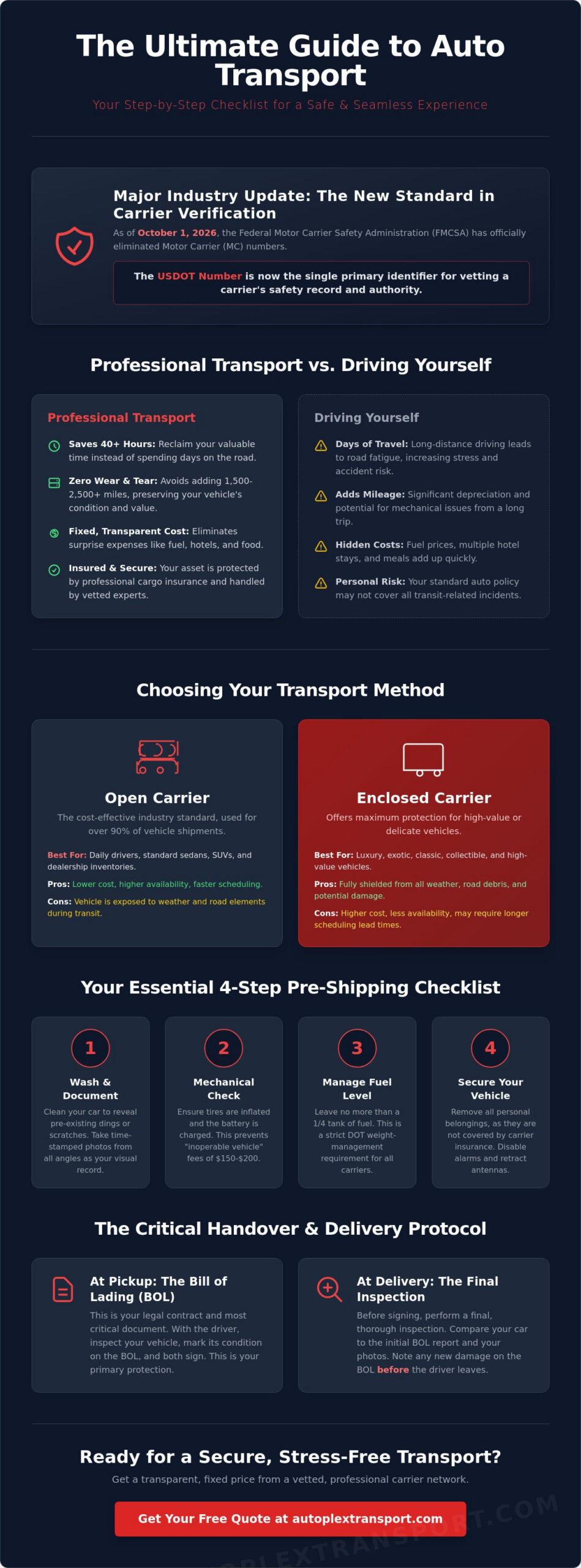
Safety is the cornerstone of this industry. The Department of Transportation (DOT) provides the framework for these standards. A major regulatory change is set for October 1, 2026, when the FMCSA will officially eliminate Motor Carrier (MC) numbers. From that point forward, the USDOT number serves as the single, primary identifier for all companies. This shift simplifies your vetting process, allowing you to verify a carrier’s safety record and authority with much greater clarity than in previous years.
Understanding who handles your vehicle is also vital. You will typically interact with an auto transport broker. These professionals act as your logistical coordinators, using their industry expertise to match your specific needs with a vetted carrier from a nationwide network. This ensures you receive a competitive price and a reliable driver without the stress of searching for individual carriers yourself. Most modern services utilize Door 2 Door Transportation, which has become the industry standard for convenience. While some narrow residential streets might require a nearby meeting point like a large parking lot, the goal is always to provide the most direct service possible.
The Core Components of Professional Auto Transport
Professional logistics providers utilize a variety of specialized equipment. This includes multi-car open haulers for standard moves and enclosed trailers for high-value vehicles. Route optimization is another critical piece of the puzzle. Specialists analyze nationwide traffic data and seasonal weather patterns to minimize delays. Perhaps most importantly, professional shipping includes cargo insurance. This coverage is essential because it protects your vehicle against transit-related incidents in a way that standard personal auto insurance policies often do not.
Why Professional Transport Beats Driving Yourself
Many people consider driving their own vehicle to save money, but the hidden costs are often surprising. When you factor in fuel, multiple hotel nights, and meals, the price gap narrows quickly. You also have to consider the rapid depreciation and mechanical wear that comes with a 1,500-mile or 2,500-mile trip. Safety is another major concern. Long-distance driving increases the risk of road fatigue and accidents. By choosing to transport an auto through a professional service, you can reclaim over 40 hours of your life. This time is much better spent managing your move or settling into your new home rather than staring at highway mile markers.
Pre-Shipping Checklist: Preparing Your Vehicle for Nationwide Transport
Proper preparation is the most effective way to ensure your vehicle arrives in the same condition it left. When you prepare to transport an auto, your checklist should begin with a thorough exterior wash. This isn’t just about aesthetics; a clean car allows the carrier to perform an accurate inspection. Dust and dirt can easily hide small chips or scratches, leading to potential disputes later. Once the car is clean, take high-resolution, time-stamped photographs from every angle. These images serve as your baseline evidence should any transit-related issues arise.
Mechanical health is equally important for a smooth loading process. Ensure your tires are properly inflated and the battery is fully charged to avoid inoperable vehicle fees, which can add $150 to $200 to your total. Carriers also strictly enforce the 1/4 tank rule. Keeping fuel at this level provides enough for loading and unloading while significantly reducing the carrier’s total weight. This helps transport companies stay within legal weight limits set by the DOT, which is a key part of maintaining The Comprehensive Guide to Car Carrier Services for nationwide moves.
Regarding legalities, you must have your documentation organized. Many owners forget that interstate transport requires specific paperwork beyond a simple handshake. You’ll need a copy of the vehicle’s registration or title and a valid photo ID. If you aren’t the registered owner, a notarized letter of authorization is mandatory. Reviewing the FMCSA Consumer Advisory can help you understand your rights and the specific legal requirements for interstate shipping. This level of detail ensures that your vehicle’s journey remains compliant with all federal regulations.
Interior and Exterior Preparation Steps
- Remove all personal items: DOT regulations generally prohibit carriers from transporting household goods inside a vehicle. Items left inside aren’t covered by cargo insurance and can lead to fines for the driver.
- Secure loose parts: Remove or retract antennas, fold in side mirrors, and remove any non-permanent spoilers or custom mirrors that could catch the wind.
- Manage electronics: Deactivate toll tags and alarm systems. An alarm triggered by road vibrations can drain your battery during transit, leading to a dead vehicle upon delivery.
The Documentation Folder: What to Have Ready
Keeping a dedicated folder for your transport paperwork prevents last-minute stress during the handover. Along with ownership documents, you’ll need to provide the driver with a spare set of keys. This should include keys for the ignition, trunk, and any locking gas caps. If you have questions about specific requirements for your vehicle, our team is ready to help you coordinate your Interstate Vehicle Transportation details with precision and care.
Evaluating Your Options: Open vs. Enclosed Auto Transport Services
Selecting the appropriate method to transport an auto requires a careful evaluation of your vehicle’s specific needs and your overall relocation budget. While the logistics of how to ship a car might seem overwhelming at first, the decision usually comes down to two primary carrier types: open and enclosed. Each serves a distinct purpose in the nationwide logistics chain, and understanding their engineering differences is the key to a stress-free experience. We recommend assessing your vehicle’s vulnerability to external factors before making a final commitment.
The choice between these two levels of service often depends on a combination of factors, including the vehicle’s market value, the time of year, and your comfort level with road exposure. Professional logistics providers offer these options to ensure that every type of vehicle, from a standard sedan to a custom luxury car, has a safe path to its destination. It’s about finding the right balance between cost efficiency and maximum protection. Before committing to any carrier, it’s worth understanding how a reputable professional car shipping service evaluates carrier capacity, pricing structures, and FMCSA compliance to protect your vehicle throughout the entire journey.
When to Choose Open Carrier Shipping
Open Carrier Car Transportation is the backbone of the industry. These are the multi-car haulers you frequently see on the interstate, capable of carrying up to ten vehicles at once. It remains the most cost-effective solution for standard daily drivers, SUVs, and fleet vehicles. The multi-car ‘stack’ configuration is highly efficient and safe, though it does leave vehicles exposed to the elements and road debris. For many owners, this exposure is a minor trade-off for the significant savings and higher availability of these carriers. You can find more details in The Comprehensive Guide to Open Transport Car Shipping in 2026.
The Case for Enclosed Vehicle Transportation
Enclosed Transport Services provide a higher tier of protection. These trailers feature hard sides that shield your vehicle from weather, dust, and road stones. This is the preferred choice for classic cars, exotic models, and high-value electric vehicles (EVs). One specific advantage of high-end enclosed carriers is the use of lift-gate loading. This hydraulic system keeps the vehicle level during the loading process, which is essential for low-clearance sports cars that might otherwise scrape on traditional ramps. If you are moving a luxury asset, you should consult Enclosed Car Transport: The Definitive Buying Guide for 2026.
Seasonal patterns play a larger role in this decision than many realize. During peak season, which runs from June through September, demand often causes pricing to increase by 15% to 30%. If you are moving during the winter months through Northern routes, enclosed transport becomes more attractive to avoid the salt and slush common on snowy roads. Ultimately, the choice to transport an auto should match the replacement value of your vehicle. If the cost of potential minor paint chips from road debris outweighs the higher service fee, enclosed is the logical path. If efficiency and value are your priorities, open transport remains a reliable and professional standard.
The Booking and Pickup Protocol: Managing the Handover Process
The moment the carrier arrives to transport an auto is the most critical phase of the logistical chain. This is where your preparation transforms into a binding legal contract. Before the driver even lowers the ramps, you must verify their credentials. As of October 1, 2026, the Federal Motor Carrier Safety Administration (FMCSA) has officially eliminated Motor Carrier (MC) numbers, making the USDOT number the single primary identifier for all carriers. Confirming this number on the side of the truck matches your booking paperwork is a vital step to take before you transport a car with a new partner.
Clear communication is essential during this stage. You’ll typically work within a pickup window rather than a specific hour. This flexibility is necessary because drivers manage complex routes with multiple stops, and traffic or weather can cause minor shifts in their schedule. A professional dispatcher will provide regular updates, but having the driver’s direct cell phone number ensures you’re ready when they’re twenty minutes away. This steady communication builds the trust necessary for a successful move.
Mastering the Bill of Lading (BOL)
The Bill of Lading is your primary legal protection. It serves as both a receipt and a condition report. During the pickup inspection, you and the driver must walk around the vehicle together. Use a methodical approach to mark every existing scratch, dent, or paint chip on the report. Ensure the odometer reading is recorded exactly as it appears on the dashboard. You should never sign a ‘clean’ BOL if there is any visible wear. If the document is digital, which is now common due to the 2026 allowance of electronic reports, ensure you receive an emailed copy immediately after signing.
Logistics of the Pickup Location
A multi-car hauler is a massive piece of equipment, often reaching 80 feet in length. While we specialize in Door 2 Door Transportation, some residential areas have low-hanging trees, tight turns, or weight limits that prevent these large trucks from entering. If your street isn’t accessible, the driver will suggest a nearby staging area, such as a large supermarket parking lot or a wide industrial road. This ensures the loading process is safe and avoids unnecessary risks to your vehicle or the carrier’s equipment.
The handover ritual ends with a verification of the driver’s ID and a final check of the paperwork. Once you’re confident in the documentation and the carrier’s authority, you can release the keys with peace of mind. If you’re ready to start your journey with a reliable partner, you can request a quote for our Nationwide Transportation Services to secure your spot on a vetted carrier’s route.
Destination and Delivery: The Final Inspection and Verification Checklist
The arrival of your vehicle at its destination marks the conclusion of a complex logistical journey. We refer to this period as the ‘Golden Hour’ of delivery because it represents your final opportunity to verify the condition of your asset before the carrier departs. When you transport an auto across the country, the delivery process requires the same level of methodical attention as the initial pickup. You should plan to be present for at least thirty minutes to conduct a thorough walkthrough. Having your original pickup photos and the initial Bill of Lading (BOL) ready on your smartphone is essential for an accurate side-by-side comparison.
Before the driver unloads the vehicle, observe the process carefully. Once the car is on the ground, your first step is to perform a mechanical verification. Start the engine, check the dashboard for any new warning lights, and test the basic functions such as the headlights and wipers. Since the FMCSA explicitly allowed the use of electronic driver’s vehicle inspection reports (eDVIRs) as of March 23, 2026, you will likely receive your final documentation digitally. Ensure you have a clear cellular or Wi-Fi connection to receive and review these documents in real-time while the driver is still on-site.
The 10-Point Delivery Inspection Checklist
- Undercarriage and Roof: Use a flashlight to check the undercarriage for new leaks or scrapes and inspect the roof, as these areas are frequently overlooked on larger SUVs.
- Odometer Verification: Compare the current mileage against the figure recorded at pickup to ensure no unauthorized distance was driven.
- Interior Assessment: Open the doors to check for any signs of mishandling, debris, or shifts in the upholstery that may have occurred during transit.
- Glass and Mirrors: Inspect all windows and side mirrors for small chips or stress cracks that might have developed from road vibrations.
- Body Panels: Carefully scan each panel for new scratches or ‘rail dust’ that can sometimes settle on vehicles during long-distance open transport.
What to Do If You Discover Transit Damage
If you identify any discrepancies, you must remain calm and follow a specific protocol to protect your interests. The most important step is to note the specific damage clearly on the Bill of Lading before signing it. Be descriptive; use terms like ‘three-inch scratch on driver-side door’ rather than ‘damage to side.’ Take clear, close-up photographs of the new damage with the carrier’s truck in the background if possible. You must contact the transport company’s claims department immediately. Most insurance frameworks require that damage be reported while the driver is still present to maintain a clear chain of custody. Your decision to transport an auto concludes with the final payment and the receipt of your signed, completed BOL, which serves as your permanent record of a successful delivery.
Take the Next Step Toward a Stress-Free Move
Successfully managing vehicle logistics in 2026 requires a blend of careful preparation and the right professional partnership. By following a methodical checklist, from verifying the latest FMCSA standards to mastering the delivery inspection, you’ll eliminate the uncertainty that often accompanies long-distance shipping. You now have the tools to protect your asset through every stage of the process. Whether you choose the efficiency of an open carrier or the specialized protection of an enclosed trailer, your focus should always remain on safety and transparency.
As you prepare to transport an auto, choosing a partner who understands these complex nationwide logistics is essential. AutoPlex Transport Company provides nationwide door-to-door service and remains fully licensed and FMCSA compliant. We’re specialists in both open and enclosed carrier logistics, ensuring your vehicle is handled with the highest level of care. Get a Reliable Auto Transport Quote from AutoPlex Today and start your move with the peace of mind you deserve. We look forward to supporting your transition with the expertise of a seasoned industry veteran.
Frequently Asked Questions
How much does it typically cost to transport an auto across the country?
The total cost to transport an auto depends on several variables, including the total distance, the size of your vehicle, and your choice between open or enclosed transport. Factors such as current fuel prices and seasonal demand also influence the final rate. While longer routes naturally involve higher fuel and labor costs, professional logistics providers work to provide a transparent price that reflects these operational realities without hidden fees.
Is my vehicle insured while it is on the transport carrier?
Yes, all legitimate carriers are required by federal law to maintain cargo insurance that protects your vehicle during transit. This coverage is designed to address damage resulting from carrier negligence or transit-related incidents. We recommend asking for a copy of the carrier’s insurance certificate before your pickup date to understand the specific coverage limits and deductible structures involved in your shipment.
How long does it take to ship a car from one coast to the other?
A cross-country journey typically takes between 7 and 10 days from the point of pickup. This duration accounts for the thousands of miles of travel, mandated driver rest periods, and other scheduled stops along the route. While unexpected weather or traffic can cause minor shifts in the timeline, a professional dispatcher will keep you updated on the vehicle’s progress toward the destination.
Can I leave personal items inside the car during transport?
No, you should remove all personal belongings before you transport an auto. DOT regulations strictly prohibit carriers from hauling household goods inside a vehicle, and these items are not covered by the carrier’s cargo insurance. Leaving extra weight in the car can also lead to the carrier exceeding legal weight limits, which may result in delays or regulatory fines at weigh stations.
Do I need to be present at the pickup and delivery locations?
Yes, you or a designated representative over the age of 18 must be present at both the pickup and delivery points. This presence is required to perform the joint vehicle inspection with the driver and to sign the Bill of Lading. Being on-site allows you to verify the condition of the vehicle and ensures that the legal handover process is completed correctly.
What happens if my car is damaged during the shipping process?
You must document any new damage on the Bill of Lading before the driver departs the delivery location. This notation is the critical first step for any insurance claim. Take clear, time-stamped photographs of the damage in the presence of the driver and contact the transport company’s claims department immediately to begin the formal resolution process.
How do I verify if an auto transport company is legitimate?
You can verify a company’s authority by checking their USDOT number through the Federal Motor Carrier Safety Administration’s (FMCSA) official registry. Following the 2026 regulatory changes that eliminated MC numbers, the USDOT number is now the primary identifier for all legitimate carriers. A reputable company will also provide clear proof of insurance and a physical business address upon request. For a deeper understanding of the full vetting and booking process, our step-by-step guide on how to transport a car in 2026 walks you through every stage from quote to delivery.
Can you ship a non-running vehicle to another state?
Yes, vehicles that do not start can still be shipped as long as they can roll, steer, and brake. Shipping an inoperable vehicle requires a carrier equipped with a specialized winch to safely load the car onto the trailer. Because of the additional equipment and labor involved in the loading process, carriers typically apply a specific fee for handling non-running units.