
What if the lowest quote you received for a car shipping service is actually the most expensive mistake you could make for your vehicle’s safety? Many owners view transport as a simple commodity, yet the reality of national logistics in 2026 involves a complex web of updated FMCSA regulations and fluctuating carrier capacities. You likely feel a familiar sense of anxiety regarding potential transit damage or those unpredictable price shifts that often happen at the last minute. It’s a common concern, and you deserve a partner who prioritizes the protection of your asset over a quick sale.
In this guide, you’ll master the complexities of vehicle logistics and discover how to select a car shipping service that balances safety, speed, and value. We’ll explore the impact of the 2026 FMCSA Broker Financial Responsibility Rule and the shift toward electronic DVIRs to ensure you’re fully informed. From achieving damage-free delivery to securing transparent pricing without hidden fees, this overview provides the clarity you need for a seamless transport experience.
Key Takeaways
- Understand how digital tracking and modern fleet management in 2026 have transformed vehicle transport into a high-precision logistical operation.
- Learn how to evaluate a car shipping service by balancing your specific protection needs against budget constraints across various transport tiers.
- Discover the essential safety protocols, including the vital role of the Bill of Lading and thorough inspections, that safeguard your vehicle’s resale value.
- Gain the ability to accurately interpret transport quotes and identify the key factors, such as seasonal demand and vehicle dimensions, that influence final costs.
- Identify the importance of a consultative logistics partnership that prioritizes clear communication and transparent documentation over the lowest market price.
Understanding the Modern Car Shipping Service Landscape
A professional car shipping service involves the coordinated logistics of moving a vehicle via specialized transport carriers. It’s not merely about finding a driver with an empty trailer. It’s a structured system of safety protocols and scheduling precision designed to protect your vehicle as a valuable asset. By 2026, the industry has undergone a significant transformation toward digital integration. Modern fleet management and real-time tracking systems now allow for delivery precision that was once impossible. This shift is partly driven by the Federal Motor Carrier Safety Administration’s focus on a technology-driven approach to oversight. These advancements mean you can expect more accurate timelines and enhanced transparency throughout the transport process.
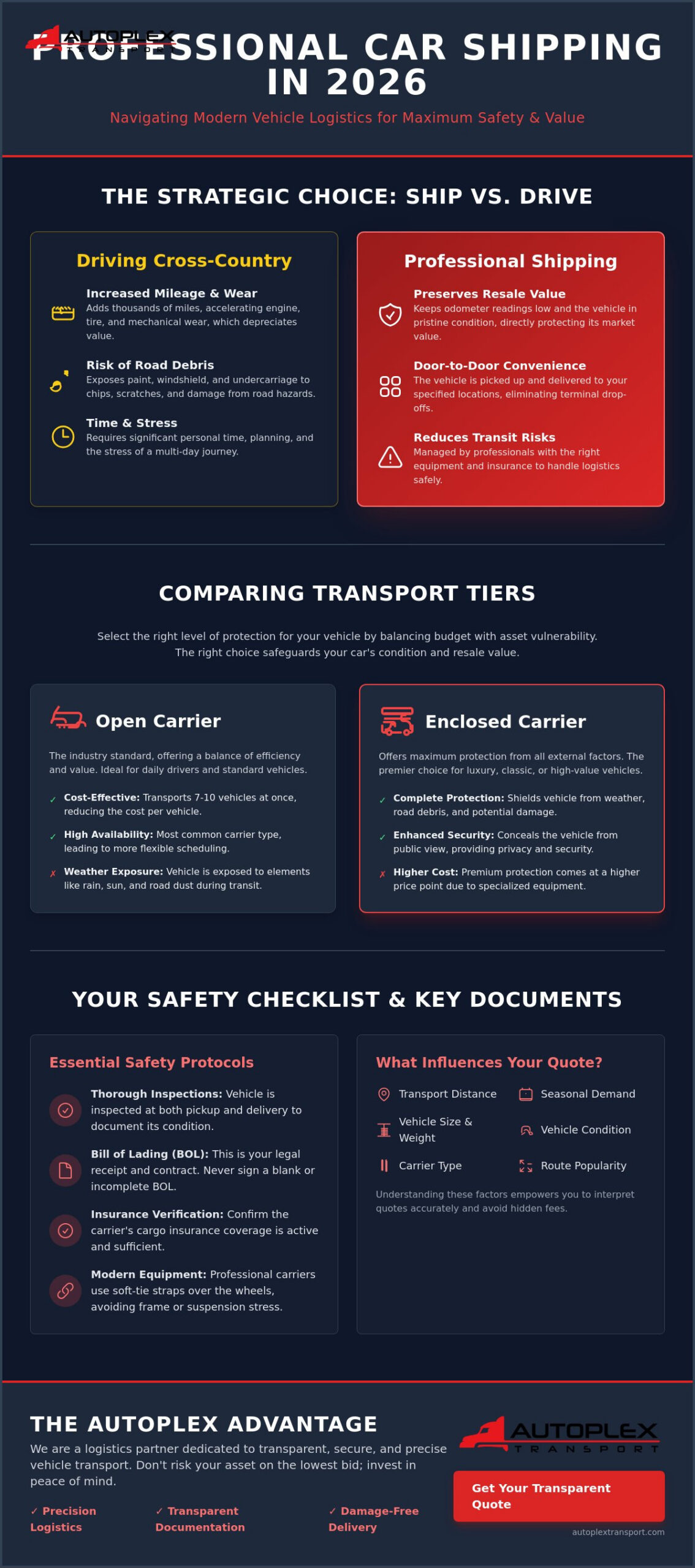
Choosing professional transport over driving is often a strategic choice for your vehicle’s long-term value. Driving a car cross-country adds significant mileage and increases mechanical wear on the engine and tires. It also exposes the paint and glass to road debris for thousands of miles. Utilizing a professional service preserves the odometer reading and protects the vehicle’s resale value. Understanding the various Types of car carriers helps you decide which equipment best suits your specific needs, whether you require an open or enclosed setup.
It’s helpful to understand the roles of the players involved in your shipment. Carriers are the companies that own the trucks and perform the physical labor. Brokers act as intermediaries to find available space on those trucks. A logistics partner provides a more comprehensive approach, acting as a reliable guide through the entire process. To learn more about how a professional freight broker facilitates these services, you can visit their website for further details. They manage the communication and documentation to ensure every safety standard is met without confusion. This partnership approach is essential for successful Interstate Vehicle Transportation.
Key Scenarios Requiring Professional Transport
Relocating for a new career or lifestyle change often necessitates moving multiple vehicles across state lines without the stress of a long drive. You might also find yourself purchasing a vehicle from an out-of-state dealership or an online auction platform. In these cases, a professional car shipping service is the most efficient way to bring your new purchase home. Similarly, owners of classic or luxury vehicles use these services to transport their cars to shows or new buyers while keeping them in pristine condition. For those with vintage or collector vehicles, understanding the specialized requirements of classic car transport Houston services ensures your irreplaceable investment receives the dedicated care it demands.
The Core Benefits of Door 2 Door Logistics
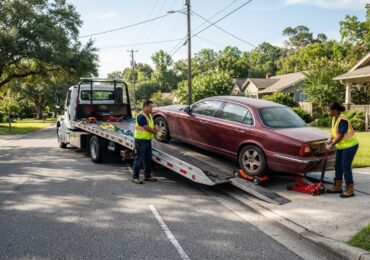
One of the primary advantages of modern transport is Door 2 Door Transportation. This service eliminates the need for you to drop off or pick up your vehicle at a remote terminal. Instead, the carrier meets you at your residence or a nearby accessible location. This reduces the risk of damage because the vehicle is handled fewer times. It also offers the ultimate convenience of managing the entire pickup and delivery process from the comfort of your home, ensuring Nationwide Transportation Services are accessible to everyone.
Comparing Transport Tiers: Protecting Your Vehicle’s Resale Value
Selecting the right car shipping service requires a strategic balance between your financial plan and the specific vulnerabilities of your vehicle. It’s helpful to view this decision through the lens of asset protection rather than just a one-time expense. A vehicle that arrives with pristine factory paint and a clean undercarriage naturally maintains a higher market value. In 2026, as vehicle prices continue to fluctuate, the return on investment for high-quality transport has never been more apparent. You must decide if the environmental exposure of an open trailer is acceptable for your specific make and model or if the shield of an enclosed unit is a necessary safeguard.
Professional carriers operate under strict federal guidelines to ensure your property is handled with care. Understanding these consumer protection regulations helps you identify a provider that takes their legal and ethical responsibilities seriously. By choosing a tier that matches your car’s value, you’re effectively buying insurance against the depreciation that occurs from road wear and weather damage.
Open Carrier Efficiency and Value
Open carriers are the most common sight on American highways, often transporting between seven and ten vehicles at once. These multi-car trailers optimize routes to provide more accessible pricing for standard sedans and SUVs. Safety protocols have improved significantly; modern carriers now prioritize soft-tie wheel straps that secure the vehicle without putting stress on the frame or suspension components. Open carrier transport serves as the most cost-effective method for standard interstate moves. While your car is exposed to the elements, this tier remains the reliable choice for daily drivers where the primary goal is safe, efficient delivery.
Enclosed Shipping: The Gold Standard for Protection
Enclosed shipping offers a premium level of security by housing your vehicle within a fully shielded trailer. Hard-side trailers are particularly effective in 2026 for protecting against the increasing frequency of extreme weather events and road debris. These trailers often feature hydraulic lift gates, which are essential for low-clearance sports cars to prevent scraping during the loading process. Beyond the physical protection, there’s a significant psychological peace of mind that comes with knowing your high-sentiment or high-value asset is hidden from public view and shielded from the sun’s UV rays. If you’re transporting a rare find or a modern electric vehicle, exploring Enclosed Transport Services can provide the specialized care your investment deserves. Collectors seeking the highest standard of protection for vintage vehicles should also review our dedicated guide to professional classic car transport and national auto transport services for a comprehensive look at the specialized equipment and protocols involved.
Reliability Standards: How Professional Carriers Ensure Safety
A reliable car shipping service operates within a rigorous framework established by the Department of Transportation (DOT) and the Federal Motor Carrier Safety Administration (FMCSA). These agencies don’t just issue licenses; they monitor safety data and enforce strict operational standards. In 2026, the FMCSA has prioritized a technology-focused approach to oversight, implementing rules like the electronic Driver Vehicle Inspection Reports (DVIRs) to ensure equipment is roadworthy. This shift toward digital accountability reduces the risk of mechanical failure during your vehicle’s journey. The civil penalty for willfully falsifying a DVIR has also increased significantly as of February 2026, reaching up to $19,000 per violation. This steep fine compels carriers to maintain higher maintenance standards across the board.
Addressing the fear of damage requires a clear understanding of insurance benchmarks. Professional carriers carry both liability and cargo insurance. Liability coverage protects against third-party damage caused by the truck, while cargo insurance specifically covers your vehicle while it’s being transported. You should always verify that a carrier’s cargo policy limit exceeds the current market value of your vehicle. If an incident does occur, a reputable logistics partner guides you through the claims process with transparency. They act as a bridge between you and the carrier’s insurance provider to ensure a fair resolution.
The Vetting Process for Nationwide Carriers
Vetting is more than a simple background check. It involves verifying safety ratings and analyzing historical performance data through federal databases. In early 2026, the FMCSA began placing vehicles out of service immediately if carriers use revoked Electronic Logging Devices (ELDs). An experienced car shipping service monitors these updates to ensure your vehicle is never on a truck that’s at risk of being sidelined by enforcement officers. Working with professional drivers who have a proven track record of handling high-value assets is the best way to ensure Nationwide Transportation Services remain safe and predictable.
Documentation and the Bill of Lading
The Bill of Lading (BOL) serves as the most important legal document in the transport industry. It acts as both a receipt for your vehicle and a detailed condition report. Before the driver loads your car, you must conduct a thorough pre-shipment inspection together. This process involves noting every existing scratch or chip on the document. Following a reputable guide to shipping a car can help you prepare for this inspection effectively. Documenting the condition with high-resolution photos provides the evidence needed for a smooth claims process. When the car arrives, you’ll perform a final inspection and sign the BOL to confirm the vehicle was delivered in the same condition it was received.
Optimizing Your Shipment: Timelines, Logistics, and Costs
Understanding the variables that influence the cost of a car shipping service allows you to plan your move with greater financial precision. Distance is the most obvious factor, but vehicle dimensions play an equally significant role in 2026 logistics. Larger vehicles like SUVs or pickup trucks often require more space on a trailer, which can lead to a size surcharge compared to a standard sedan. Seasonal demand also creates predictable fluctuations in the market. The peak season typically runs from June to September, driven by summer relocations, while a secondary peak occurs between January and March as snowbirds travel south. By scheduling your shipment during off-peak windows, you can often secure more favorable rates without compromising on service quality.
Transparency in pricing is essential to avoid the frustration of hidden terminal fees. Some low-cost quotes rely on terminal-to-terminal shipping, which requires you to drop off and pick up your vehicle at a distant storage lot. These lots often charge daily storage fees that aren’t included in the initial estimate. Choosing a provider that specializes in Door 2 Door Transportation ensures that the price you’re quoted covers the entire journey. This approach eliminates the middleman and provides a much clearer picture of your total investment. When you’re ready to move forward, you can request a transparent quote that accounts for all logistical variables up front.
Scheduling requires a realistic understanding of pickup windows and delivery dates. Carriers rarely provide a specific hour for arrival days in advance because they must account for traffic, weather, and the loading times of other vehicles on the trailer. Most professional services offer a two to three day window for pickup. It’s also important to consider the physical logistics of residential streets. A standard multi-car carrier can be up to 80 feet long, making it difficult to navigate tight cul-de-sacs or low-hanging trees. If your street isn’t accessible for a large truck, your driver will coordinate a meeting at a nearby parking lot to ensure a safe loading process.
Preparing Your Vehicle for Transport
A successful shipment begins with proper preparation. You should clean your vehicle’s exterior thoroughly so that the pre-shipment inspection can accurately document any existing paint chips or dings. Remove all personal items and aftermarket accessories like bike racks or GPS units to prevent loss or damage. Ensure the battery is charged and tires are properly inflated, as this facilitates a smoother loading process. For a more detailed walkthrough, you can learn how to transport a car using our comprehensive preparation guide.
Navigating Interstate Logistics
The speed of your shipment is often determined by your proximity to major highway corridors. Routes that stay on primary interstates generally move faster than those requiring long detours into rural areas. Additionally, vehicle modifications like lift kits or roof racks can change the height and weight of your car, potentially affecting which trailers can accommodate it. It’s vital to disclose these details early to avoid delays at the pickup point. You can review our checklist on how to transport an auto to ensure no logistical detail is overlooked before the carrier arrives.
The AutoPlex Advantage: Precision Logistics for Every Vehicle
AutoPlex Transport Company views vehicle transport as a strategic partnership rather than a mere transaction. We prioritize a consultative approach to vehicle logistics because we understand that every car shipping service request involves a valuable asset with a unique story. Whether you’re relocating for a career change or moving a rare investment, our team focuses on providing the specific level of care your vehicle requires. This methodical approach helps us address common industry pains like price fluctuations and window anxiety before they become stressors. By acting as your knowledgeable guide, we ensure that the complexities of 2026 national logistics remain manageable and clear.
Our commitment to nationwide safety is grounded in a deep understanding of current federal regulations. We ensure that every carrier in our network strictly adheres to the 2026 FMCSA financial responsibility rules and equipment standards. This vetting process isn’t a one-time check; it’s a continuous part of our quality control. We bridge the gap between technical logistical data and your peace of mind by offering a dedicated support team that remains accessible throughout the shipping journey. You won’t have to navigate confusing automated systems; instead, you’ll have a reliable partner who values transparent communication as much as you do.
Nationwide Reach with a Personal Touch
Managing the logistics of Interstate Vehicle Transportation requires a balance of broad reach and attention to detail. We’ve cultivated a network of vetted carriers across the United States that meet our high standards for performance and reliability. This allows us to provide Nationwide Transportation Services that feel local and personalized, regardless of the distance. Our team understands how major highway corridors and regional weather patterns affect delivery precision in 2026. For a deeper look at the equipment we use to keep your vehicle safe, please refer to our car carrier service guide.
Ready to Move? Your Next Steps
Securing a car shipping service that balances safety, speed, and value starts with a conversation about your specific needs. We’ve simplified the booking process to ensure you stay in control without feeling overwhelmed by paperwork. Our quotes are comprehensive and transparent, reflecting the true cost of professional transport without hidden terminal fees or unexpected surcharges. When you’re ready to experience a logistics partnership built on trust and expertise, our team is standing by to assist. Request your professional car shipping quote today and let us handle the complexities of your next move.
Securing Your Vehicle’s Future on the Road
Mastering the logistics of a car shipping service requires a shift in perspective from simply finding the lowest price to identifying a strategic safety partner. You’ve learned how modern digital tracking and updated FMCSA standards have improved delivery precision while also understanding the critical role of the Bill of Lading in protecting your legal interests. Whether you’re choosing the efficiency of an open carrier or the specialized protection of an enclosed unit, the primary goal remains the same: preserving your vehicle’s long-term market value and your own peace of mind throughout the entire journey.
AutoPlex Transport Company stands ready to guide you through this process with our vetted nationwide carrier network and comprehensive cargo insurance coverage. As specialists in both open and enclosed transport, we provide the authoritative expertise needed for a seamless and predictable interstate move. We bridge the gap between complex logistical data and a stress-free customer experience by prioritizing transparent communication at every step. Get Your Reliable Car Shipping Quote from AutoPlex Transport Company today and move forward with the confidence that your vehicle is in expert hands. We look forward to being your trusted partner on the road ahead.
Frequently Asked Questions
Is a car shipping service safe for my vehicle?
Professional vehicle transport is one of the safest methods for moving a car over long distances. Carriers must adhere to strict DOT and FMCSA safety standards, using specialized equipment like soft-tie wheel straps to secure vehicles without damaging the frame. This method eliminates the risks associated with a cross-country drive, such as road debris, mechanical wear, and unpredictable traffic accidents.
How much does it typically cost to ship a car cross-country?
The total cost is determined by several logistical variables, including the total distance, the size and weight of your vehicle, and the type of transport you choose. In 2026, rates are also influenced by seasonal demand fluctuations and current fuel prices. Larger vehicles like SUVs generally require more space on a trailer, which results in a higher rate compared to a standard sedan.
How long does the car shipping process take from pickup to delivery?
Transit times depend largely on the total mileage, with cross-country shipments typically taking between 7 and 10 days once the vehicle is loaded. Drivers generally cover about 400 to 500 miles per day while adhering to federal hours-of-service regulations. Shorter interstate moves of less than 500 miles can often be completed within 1 to 3 days, though weather and traffic can affect the final schedule.
Can I ship personal items inside my car during transport?
Most carriers prohibit shipping personal items inside the vehicle because they aren’t licensed to transport household goods. Extra weight can also put the truck over federal limits at weigh stations, leading to delays and potential fines. Additionally, the carrier’s cargo insurance typically doesn’t cover personal belongings, so it’s best to keep the car empty except for standard factory equipment.
What is the difference between an auto transport broker and a carrier?
A carrier is the company that owns the trucks and performs the physical transport, while a broker acts as a logistics partner to coordinate the move. Utilizing a broker for your car shipping service provides access to a much larger network of vetted drivers. This ensures you find a reliable carrier that matches your specific route and timeline requirements without having to vet dozens of individual companies yourself.
What kind of insurance coverage is included in a car shipping service?
A professional car shipping service includes both liability and cargo insurance to protect your asset during transit. Liability insurance covers damage the transport truck might cause to others, while cargo insurance specifically covers your vehicle against damage during loading, unloading, and transit. You should always confirm that the carrier’s cargo policy limit meets or exceeds the current market value of your vehicle.
Do I need to be present for the pickup and delivery of my vehicle?
You or a designated representative over the age of 18 must be present to sign the Bill of Lading and conduct the vehicle inspection. This process is vital for documenting the car’s condition at both ends of the journey. If you can’t be there personally, you can appoint a trusted friend or family member to act on your behalf and ensure the documentation is handled correctly.
What happens if my car is damaged during the shipping process?
If you notice any new damage upon delivery, you must document it clearly on the Bill of Lading before the driver leaves. Take high-resolution photos of the affected areas and contact your logistics provider immediately to start the claims process. Having a detailed pre-shipment inspection report makes this process much smoother; it provides the evidence needed to ensure the carrier’s insurance covers the necessary repairs.