What if the true cost of shipping your vehicle isn’t the number on your initial quote, but the potential for damage and delays caused by a lack of transparency? It’s a question many owners ask when they first begin searching for a reliable car carrier service to move their vehicle across state lines. Handing over your keys to a transport company requires a significant amount of trust, particularly when you’re worried about hidden fees or the safety of your asset during its long journey.
We understand that the logistics of nationwide transport can feel overwhelming and unnecessarily complex. You deserve a clear, straightforward path from pickup to delivery without any surprises at the final destination. In this guide, we’ll explain how to master the complexities of vehicle logistics to ensure your car is transported safely and efficiently. We will explore the critical differences between transport options, review the 2026 FMCSA regulatory updates regarding USDOT identifiers, and provide the tools you need to secure a damage-free delivery with total peace of mind.
Key Takeaways
- Understand the national infrastructure and professional logistics required for a secure car carrier service to operate across state lines.
- Determine whether the cost-efficiency of open transport or the enhanced protection of enclosed services is the right fit for your specific vehicle.
- Learn how to manage the logistics of door-to-door transportation, including navigating common residential loading obstacles like narrow streets.
- Identify the key factors that impact your shipping quote, from vehicle operability to the physical dimensions and weight of your asset.
- Master the process of verifying FMCSA registration and insurance to ensure you’re partnering with a reliable, legally compliant transport partner.
What is a Car Carrier Service? Defining Professional Vehicle Logistics
A car carrier service is far more than a simple truck trip from point A to point B. It represents a sophisticated, specialized logistics solution designed specifically for the safe transit of motor vehicles across vast distances. This industry relies on a massive national infrastructure, including specialized loading terminals, dispatch networks, and heavy-duty equipment capable of securing multiple tons of machinery. To understand the process, one must first understand What is a Car Carrier Trailer; these trailers are engineered with hydraulic ramps and specialized tie-down systems to prevent movement during transit. Professional transport ensures that your vehicle is treated as a valuable asset rather than just another piece of freight.
It’s helpful to distinguish between the carrier and the logistics provider. The carrier refers to the physical truck and driver performing the haul. The logistics provider manages the complex scheduling, route optimization, and customer communication that makes the trip possible. By coordinating these elements, a professional service ensures that vehicles move efficiently through interstate corridors without the risks associated with solo long-distance driving. This partnership between management and execution is what provides the reliability you need when moving a car across the country, and you can discover GAATCO to see how a specialized provider manages these logistics with care.
The Role of the Modern Car Carrier
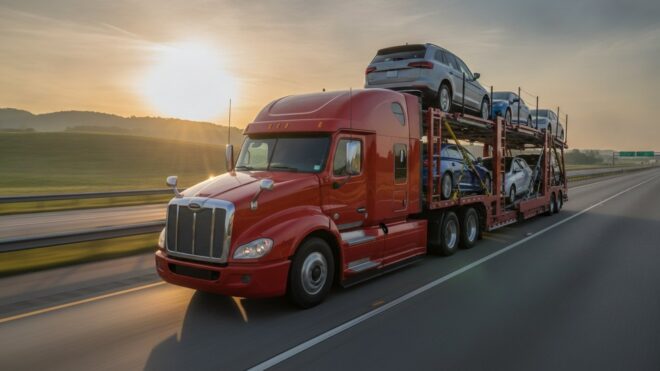
Modern vehicle transportation involves highly specialized equipment designed to maximize safety and capacity. Most nationwide hauls utilize multi-car trailers that can carry between five and nine vehicles at once. Logistics providers use advanced software to coordinate these loads, ensuring that every car on the trailer follows a logical pickup and delivery sequence. This coordination is what makes a car carrier service affordable for the average consumer. Beyond the equipment, safety is maintained through strict Department of Transportation (DOT) compliance and mechanical reliability. Professional carriers often rely on expert semi-truck repair from Complete Truck Services LLC to ensure their fleet meets these high standards during long-distance hauls. Every professional carrier must maintain an active USDOT number, which serves as a primary identifier for their safety records and insurance status.
Why Professional Transport Beats Driving
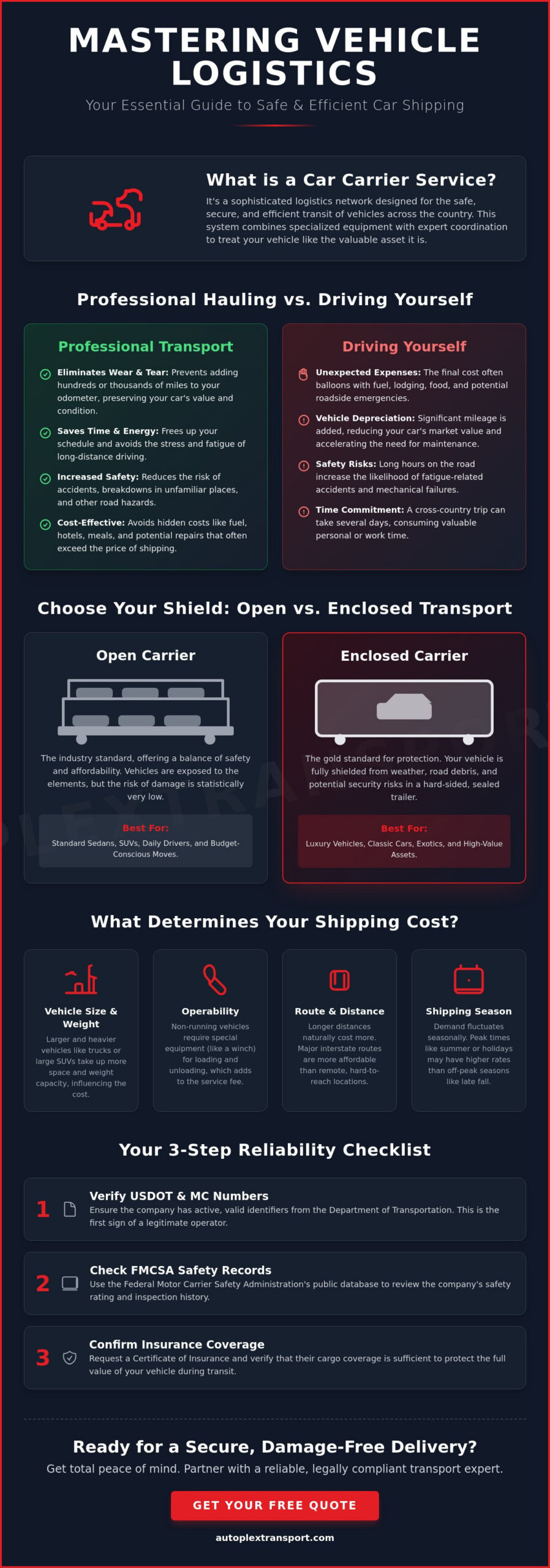
Many vehicle owners initially consider driving the car themselves to save money. However, a closer look reveals several hidden costs that often exceed the price of professional hauling. Fuel expenses, overnight hotel stays, and meals quickly add up during a multi-day trip. Perhaps more significantly, long-distance driving adds hundreds or thousands of miles to your odometer, leading to immediate vehicle depreciation and increased wear on tires and engine components.
Choosing a professional service also offers a higher level of personal safety. Long-distance solo driving increases the risk of fatigue-related accidents and mechanical breakdowns in unfamiliar areas. By utilizing a professional hauler, you protect both your time and your asset, ensuring the car arrives at its destination in the same condition it left your driveway. This methodical approach to transportation removes the stress and physical toll of cross-country travel. If you want a complete walkthrough of every decision involved, our step-by-step guide on how to transport a car in 2026 covers the full process from initial research to final delivery.
Open vs. Enclosed Carriers: Selecting Your Level of Protection
Choosing the right car carrier service involves more than just finding a transport date. It requires a clear understanding of how different equipment types impact the safety, timeline, and cost of your shipment. Most vehicles on the road today travel via open carriers, which provide a reliable and efficient solution for daily drivers. However, for those with high-value investments or sentimental assets, enclosed transport offers a higher tier of security against external elements. It’s a balance of budget and protection that every owner must evaluate based on their specific vehicle’s needs.
The Mechanics of Open Carrier Transport
Open trailers are the standard workhorse of the nationwide logistics industry. These trailers typically feature a two-tier design that allows for the transport of up to nine vehicles simultaneously. This high capacity is exactly why open transport remains the most cost-effective method for interstate moves. While the vehicles are technically exposed to weather and road conditions, the actual risk of damage is statistically very low. Professional drivers are trained to use strategic loading patterns to minimize the exposure of vehicles to road debris. It’s the same method manufacturers use to deliver new cars to dealerships across the country, proving its long-term reliability for standard sedans and SUVs.
The Advantages of Enclosed Vehicle Shipping
For luxury, classic, or exotic cars, enclosed transport is the gold standard of the industry. These trailers are fully walled, protecting the contents from rain, snow, road salt, and wind-blown debris. There’s a significant difference in the equipment used here as well. Many enclosed trailers feature hard-sided walls for maximum protection, while others use heavy-duty soft-sided curtains. Because high-value vehicles often have low ground clearance, enclosed carriers frequently utilize hydraulic liftgates. This specialized equipment ensures the car remains perfectly level during the loading and unloading process, preventing any undercarriage scrapes that might occur on standard ramps. Beyond the physical safeguards, many owners choose this for the psychological peace of mind that comes with knowing their “investment” is shielded from public view during its journey.
When you’re weighing these options, it’s helpful to consult the FMCSA’s consumer protection guidelines to understand the safety standards every legitimate provider must follow. Whether you choose the efficiency of an open trailer or the premium security of a sealed unit, verifying the carrier’s credentials is a non-negotiable step in the process. If you’re moving a high-end vehicle and want to ensure it receives the highest level of care, you can explore our Enclosed Transport Services to see if they align with your protection requirements. Ultimately, the right choice depends on the value of the vehicle and your personal comfort level with environmental exposure during transit.
The Logistics of Door-to-Door Car Carrier Service
Door-to-door transportation is the preferred choice for busy professionals and families who value convenience during a major relocation. This service eliminates the need for you to travel to a distant shipping hub or terminal to drop off or retrieve your vehicle. Instead, the logistics provider coordinates a schedule that brings the truck as close to your home as physically possible. While this sounds simple, executing a successful residential pickup requires careful planning and clear communication between the owner, the dispatcher, and the driver. It’s a premium level of service that prioritizes your time and reduces the logistical burden of an interstate move.
While door-to-door is the standard for modern convenience, some situations may make a terminal-to-terminal move more practical. Terminals are often used when an owner cannot be present for a specific pickup window or when living in a highly restricted urban area. However, most people find that the added cost of traveling to a terminal and the potential for the vehicle to sit in an unsecured lot makes door-to-door the superior option. Before you commit to a provider, it’s a good idea to review the FMCSA’s Guide to Avoiding Moving Fraud to ensure your chosen company follows legitimate residential protocols. A professional car carrier service will always be transparent about the physical limitations of their equipment and won’t make promises that compromise safety.
Navigating Residential Street Loading Challenges
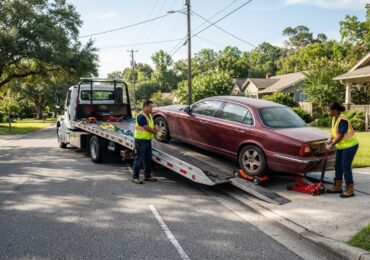
The primary challenge in residential loading is the sheer size of the transport equipment. Most interstate car carriers utilize trailers that are 75 to 80 feet long. These massive rigs cannot safely navigate tight cul-de-sacs, narrow one-way streets, or neighborhoods with low-hanging power lines and trees. If your street has these obstacles, your driver will likely request a meeting at a nearby large parking lot or a wide thoroughfare. This isn’t a reduction in service; it’s a vital safety protocol to protect your vehicle and the driver’s equipment. When choosing a meeting spot, look for a level, well-lit area with plenty of room for the driver to deploy their ramps safely.
The Inspection Process and the Bill of Lading
The Bill of Lading is the essential legal contract and condition report that serves as a receipt for your vehicle and a record of its physical state at the time of pickup. You must perform a meticulous pre-shipment inspection with the driver before the car is loaded onto the trailer. Walk around the vehicle together and note any existing scratches, paint chips, or dings on the document. We recommend taking high-resolution photos of the car from all four corners, including the roof and odometer, in clear daylight. This documentation provides the necessary evidence to ensure a smooth claims process in the unlikely event that damage occurs during transit. Both you and the driver must sign the Bill of Lading to acknowledge the starting condition of the asset.
Navigating Car Carrier Service Costs and Timelines
Understanding the financial and temporal aspects of a car carrier service is essential for a stress-free move. Many first-time shippers assume that mileage is the only factor in a quote, but the reality involves a complex calculation of equipment availability, fuel costs, and specific vehicle requirements. By peeling back the curtain on how these logistics are managed, you can better prepare for your interstate move and avoid the frustration of unexpected fees or missed deadlines. A transparent provider will always explain these variables upfront to ensure your expectations align with the logistical reality of the road.
Factors That Impact Your Vehicle Shipping Quote
Several physical and economic variables dictate the final price of your transportation. While distance is the primary driver, the physical dimensions and weight of your vehicle play a significant role. For instance, larger vehicles like SUVs, trucks, and vans typically incur a surcharge of $100 to $200 compared to standard sedans. This is because their size limits the number of vehicles a trailer can safely carry. Additionally, the increasing weight of electric vehicles (EVs) in 2026 has impacted trailer capacity, often leading to higher per-vehicle costs for heavy battery-equipped models.
Other critical factors include:
- Vehicle Operability: If a car cannot be driven onto the trailer, it is considered “inoperable.” This requires a winch and specialized labor, resulting in a surcharge.
- Modifications: Lift kits, roof racks, and oversized tires change the vehicle’s footprint and may require specialized pricing or specific trailer placements.
- Seasonality: Demand peaks during the summer months and the “Snowbird” season from January to March. Shipping during the late autumn months of November and December is typically the most affordable period.
Realistic Delivery Windows vs. Guaranteed Dates
Setting a realistic timeline is just as important as the budget. It is vital to understand that delivery dates are almost always estimates rather than hard guarantees. Professional drivers are bound by Federal Motor Carrier Safety Administration (FMCSA) Hours-of-Service (HOS) regulations, which strictly limit how many hours they can spend behind the wheel each day. These safety mandates, combined with unpredictable factors like traffic congestion in major corridors and weather delays, make precise minute-by-minute scheduling impossible.
While some companies offer “guaranteed dates,” these usually come with a significant premium because they require the logistics provider to prioritize your vehicle over others or utilize a dedicated truck. Most standard shipments operate on a window of several days. This flexibility allows the driver to navigate the 2026 regulatory environment, including the recent enforcement of English proficiency and electronic medical certifications, without compromising safety or legal compliance. If you need a reliable estimate for moving your vehicle across state lines, you can request a quote through our Interstate Vehicle Transportation services to get a clear picture of current market rates and timelines.
Choosing Your National Car Carrier: Why Reliability Matters
Selecting a car carrier service is the final and most critical step in your vehicle logistics journey. While price is always a factor, the reliability of the company determines whether your experience is a seamless transition or a logistical headache. A trustworthy partner doesn’t just move a vehicle; they manage the entire process with a commitment to safety and transparency. This means verifying credentials, understanding insurance nuances, and ensuring the company has a proven track record of handling interstate claims with integrity. When you prioritize reliability, you’re investing in the safe arrival of your asset rather than just paying for a spot on a trailer.
Evaluating customer reviews and a company’s history of handling claims provides a window into their operational standards. Look for patterns in feedback regarding communication and how the company responds when challenges arise. A professional provider will have a clear, documented process for resolving issues and won’t hide behind vague contract language. This level of accountability is what separates industry veterans from fly-by-night operations that lack the infrastructure to support a nationwide move.
Essential Vetting Checklist for Car Shippers
Before you sign a contract, you should perform due diligence to protect your vehicle. The Federal Motor Carrier Safety Administration (FMCSA) provides the SAFER system, a public database where you can check a carrier’s safety record and active authority. As of late 2026, the USDOT number is the sole identifier for carriers, making it easier to track their compliance history and safety ratings. For a comprehensive walkthrough of every verification step you need to take before handing over your keys, our guide on how to transport an auto in 2026 provides a detailed checklist aligned with the latest FMCSA regulatory changes. Beyond registration, ask specific questions about their insurance policy. You need to know if the policy covers the full market value of your vehicle and if there is a “gap” in coverage during transit. If a company offers a quote that is significantly lower than the market average or lacks a verifiable physical office, treat these as significant red flags.
The AutoPlex Transport Company Difference in Nationwide Shipping
At AutoPlex Transport Company, we approach vehicle transportation as a methodical, detail-oriented partnership. We understand that your car is a significant investment, which is why we bridge the gap between technical logistics and personal customer service. Our team manages every aspect of the move, from coordinating specialized equipment to providing clear communication from the initial pickup to the final drop-off. We don’t rely on high-pressure sales tactics; instead, we focus on a seasoned, practical approach refined through years of experience. This grounded personality ensures you receive peace of mind, knowing that every possible scenario has been planned for by experts who value your vehicle’s safety as much as you do.
Choosing a partner with a proven history of success is the best way to ensure a damage-free and stress-free delivery. By prioritizing reliability over the lowest possible price, you protect the longevity and value of your vehicle. Get a transparent car shipping quote from AutoPlex Transport Company today. and experience a service built on trust and professional expertise.
Securing Your Vehicle’s Future with Expert Logistics
Navigating the complexities of nationwide vehicle transport doesn’t have to be a stressful endeavor. By understanding the critical differences between open and enclosed protection, you can make an informed decision that aligns with your vehicle’s value and your personal budget. We’ve explored how professional door-to-door logistics management simplifies the process, even when faced with the physical challenges of residential loading. Mastering these details, from verifying USDOT credentials to documenting your vehicle’s condition, ensures that your asset remains protected from the first mile to the last.
Choosing a professional car carrier service is ultimately about establishing a partnership based on transparency and proven expertise. Whether you require nationwide interstate vehicle transportation for a daily driver or comprehensive open and enclosed carrier options for a rare classic, the right provider will prioritize your peace of mind. You deserve a logistical experience that is efficient, predictable, and entirely free of hidden surprises. When you’re ready to move forward with a team that values precision and reliability, we invite you to Request your professional car carrier service quote from AutoPlex Transport. We look forward to helping you complete your journey with total confidence.
Frequently Asked Questions
How much does a car carrier service cost on average?
Average costs for a car carrier service are determined by several variables, including total distance, vehicle dimensions, and the specific time of year. Because fuel prices and carrier availability change frequently, most providers avoid flat-rate pricing in favor of customized quotes. You should expect the weight of your vehicle to play a role; heavier trucks and SUVs require more fuel and space on the trailer, which influences the final transportation fee.
What is the difference between an open and an enclosed car carrier?
Open carriers are the standard multi-car trailers you often see on the highway, transporting vehicles exposed to the elements. This is the most cost-effective method and is perfectly safe for daily drivers. Enclosed carriers use fully walled trailers to protect high-value assets from weather and road debris. This premium service is the preferred choice for classic cars, luxury vehicles, and exotic models that require an extra layer of security.
Can I put personal items inside my car during transport?
Most carriers prohibit the inclusion of personal items inside the vehicle because they aren’t covered by the carrier’s cargo insurance policy. Additionally, the Department of Transportation (DOT) has strict weight limits for transport trucks, and extra items can lead to fines or mechanical strain on the trailer. It’s best to remove all belongings and keep the fuel tank at about one-quarter full to ensure the vehicle meets weight safety standards.
How long does it take to ship a car across the country?
Shipping a car across the country typically takes between seven and ten days, though this window can shift based on weather and route complexity. Drivers must follow strict hours-of-service regulations, which limit their daily driving time to ensure safety on the road. Your logistics provider will coordinate with the driver to provide a realistic delivery window that accounts for these safety mandates and the multiple stops required for other vehicles on the trailer.
Is my vehicle insured while it is on the car carrier?
Yes, every professional car carrier service is legally required to maintain cargo insurance that protects your vehicle from the moment it is loaded until it is delivered. You should request a copy of the carrier’s insurance certificate to verify their coverage limits and understand the deductible. While the carrier’s insurance is comprehensive, you may also want to check if your personal auto policy offers any additional protection during a long-distance relocation.
What happens if the car carrier cannot reach my front door?
If a large transport rig cannot safely navigate your residential street due to narrow lanes or low-hanging trees, the driver will arrange a meeting at a nearby accessible location. This is a standard safety protocol for door-to-door service in neighborhoods with tight corners or strict truck restrictions. Common meeting points include large retail parking lots or wide industrial roads where the driver can safely deploy the ramps and load your vehicle without obstruction.
Do I need to be present for the pickup and delivery of my vehicle?
You or a designated representative must be present at both the pickup and delivery locations to complete the necessary inspections and sign the paperwork. This person must be at least 18 years old and authorized to acknowledge the condition of the vehicle. Being present allows you to perform a joint walk-around with the driver, ensuring that any existing wear and tear is documented correctly before the car begins its journey on the carrier.
What is a Bill of Lading and why is it important for car shipping?
The Bill of Lading is the essential legal contract and condition report that serves as a receipt for your vehicle. It documents the physical state of the car at the time of pickup and is used again at delivery to verify that no new damage occurred during transit. This document is your primary protection in the event of an insurance claim; therefore, you must keep a signed copy until the vehicle is safely in your possession. For a deeper understanding of every step involved when you need to transport a car in 2026, including how to properly handle this documentation, our comprehensive guide walks you through the entire process from start to finish.