What if the lowest quote in your inbox is actually a signal of a massive logistical risk? For many drivers, the process of interstate car shipping Houston feels like a gamble where the stakes are your most valuable mobile asset. You likely worry about “bait-and-switch” pricing or the nightmare of discovering a fresh dent upon delivery. It’s understandable to feel frustrated by technical jargon and the confusing distinction between brokers and carriers.
We believe that moving your vehicle across state lines should be a source of relief, not stress. This guide promises to help you master the complexities of modern vehicle logistics by leveraging expert insights on carrier types and professional safety standards. You’ll learn how to use the 2026 FMCSA Motus platform for carrier verification and understand the impact of new financial responsibility rules. We’ll explore the essential differences between open and enclosed transport to ensure you receive a damage-free delivery with transparent, all-inclusive pricing and clear communication throughout the transport process.
Key Takeaways
- Understand the 2026 FMCSA Motus platform requirements to verify carrier legitimacy and ensure your vehicle is protected by modern insurance standards.
- Evaluate the differences between open and enclosed carriers to find the most secure method for your interstate car shipping Houston.
- Identify how vehicle dimensions, route popularity, and seasonal trends interact to determine your final nationwide transport costs.
- Follow a professional preparation checklist to document your car’s condition and minimize the risk of disputes during state-to-state transit.
- Recognize the value of door-to-door logistics and transparent communication when selecting a reliable nationwide transportation partner.
The Fundamentals of Interstate Vehicle Transportation
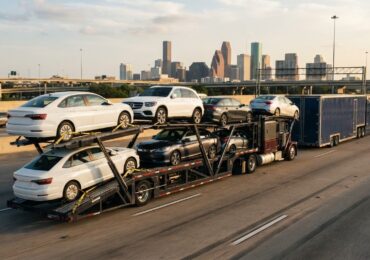
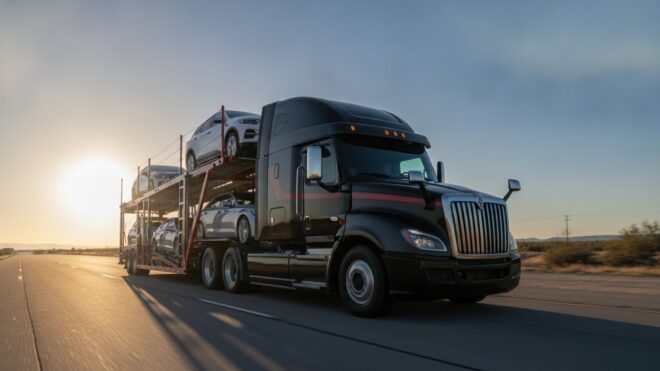
Interstate car shipping is a specialized logistics service designed to move vehicles across state lines with precision and care. Unlike a local tow, these operations involve heavy-duty Open or Enclosed Carriers that travel thousands of miles through varying climates and terrains. When you’re planning for interstate car shipping Houston, you’re engaging a complex network of professionals who prioritize the safety of your asset over long distances. It’s often a more cost-effective choice than driving yourself because you avoid the immediate costs of fuel, lodging, and road meals, while also preventing hundreds of miles of mechanical wear and tear on your engine.
Understanding the players in this industry is vital for your peace of mind. A direct carrier owns the trucks and employs the drivers who physically move your car. An auto transport broker acts as a specialized coordinator, matching your specific route and vehicle needs with a vetted carrier from their network. Both roles are essential, but they offer different levels of contact. A reliable partner like AutoPlex Transport manages these logistical hurdles so you don’t have to worry about the minute details of the journey.
National Safety and Regulatory Standards
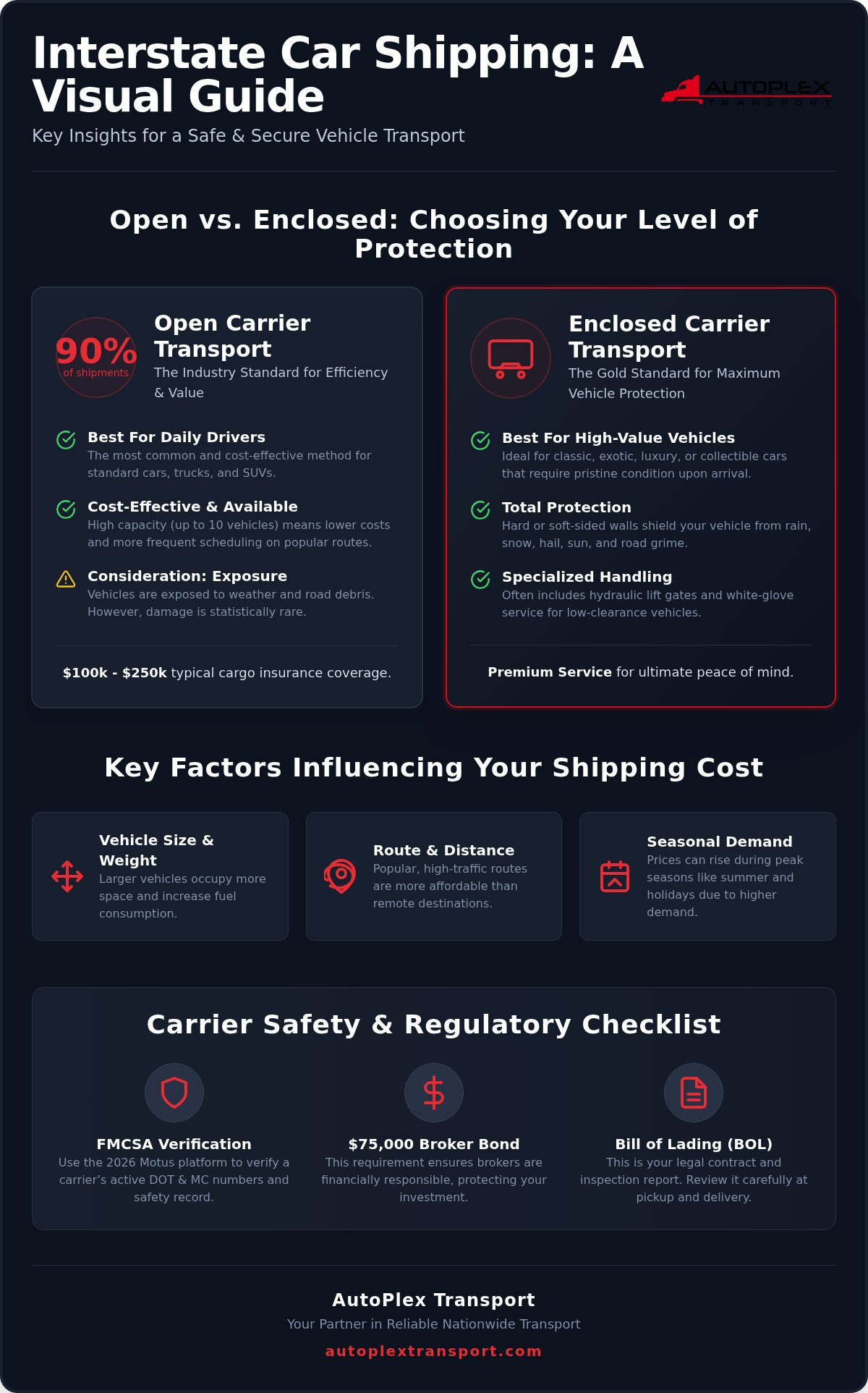
The Federal Motor Carrier Safety Administration (FMCSA) serves as the primary watchdog for the industry. Every legitimate transporter must possess active DOT and MC numbers, which serve as their federal fingerprints. As of early 2026, the FMCSA has transitioned to the Motus platform, making it easier for you to verify a company’s authority and safety record in real-time. Additionally, brokers are now required to maintain a $75,000 bond to ensure financial responsibility. These national regulations are designed to protect you from fraudulent operators and ensure high safety standards across state lines. The Bill of Lading is the essential legal contract and inspection report that governs every shipment from pickup to delivery.
The Logistics of Door-to-Door Service
Door-to-door transport is the preferred logistical model for modern car shipping because it prioritizes your convenience. In this setup, the carrier picks up and drops off your vehicle as close to your specified locations as legally and safely possible. Sometimes, residential access challenges like low-hanging branches, tight cul-de-sacs, or local weight limits prevent a large multi-car hauler from reaching your exact driveway. In these cases, your transport coordinator will help you arrange a meeting at a nearby parking lot or wide-access area. This process requires clear communication between you and the driver to ensure the timing aligns with your schedule.
Open vs. Enclosed Carriers: Selecting the Right Level of Protection
Choosing the right equipment for interstate car shipping Houston is the most critical decision in your logistics plan. Most vehicles move via one of two methods: open-air trailers or fully enclosed containers. While the goal remains a delivery free of any issues, the level of exposure to external elements varies significantly between these options. Understanding the technical differences helps you balance your budget with the specific protection needs of your vehicle. It’s helpful to view these carrier types as different levels of a security plan tailored to your asset’s value and your own risk tolerance.
Open Carrier Transport: Efficiency and Value
Open trailers are the backbone of the industry, accounting for approximately 90% of all vehicle shipments in the United States. These open transport car shipping systems utilize multi-car trailers that can carry up to ten vehicles at once. This high capacity creates significant cost benefits, especially on popular interstate routes where carriers can maximize their fuel efficiency. A common concern for owners is the risk of damage from road debris or weather. However, statistics show that transport-related damage is rare. Most open carriers maintain cargo insurance between $100,000 and $250,000 to provide peace of mind. For a daily driver, this method offers the best intersection of reliability and value.
Enclosed Shipping: Maximum Security for High-Value Vehicles
If you own a classic, exotic, or luxury vehicle, enclosed car transport is the gold standard for protection. These trailers feature hard or soft-sided walls that create a physical barrier against rain, snow, hail, and road grime. Beyond weather protection, enclosed shipping often involves specialized equipment like hydraulic lift gates. These are essential for cars with low ground clearance, as they allow the vehicle to remain perfectly level during the loading process, preventing undercarriage scrapes. You can learn more about How to Ship a Car safely by reviewing professional standards for high-value assets. While this service typically costs 30% to 60% more than open transport, the added security is a worthwhile investment. Enclosed carriers also typically offer higher insurance limits, often ranging from $250,000 to over $1,000,000 per shipment.
Deciding between these two methods doesn’t have to be a guessing game. If you’re still weighing the options for your move, you can consult with a professional transport coordinator to determine which trailer type best suits your vehicle’s specific requirements and your timeline.
Key Factors Influencing Nationwide Shipping Costs and Timelines
Calculating the investment for interstate car shipping Houston requires looking beyond simple mileage. While distance provides the baseline, several variables interact to determine your final quote and delivery date. Route popularity plays a major role; carriers frequenting major interstate corridors often offer more competitive rates because they can easily fill their trailers. Conversely, if your pickup or delivery point sits far off the beaten path, the carrier may charge a premium to cover the extra fuel and time required for the detour. Your vehicle’s physical profile also dictates the price. Larger, heavier vehicles like full-size SUVs or modified trucks occupy more space and increase fuel consumption, which naturally leads to a higher rate than a compact sedan.
Seasonality is another critical driver of both cost and availability. During the peak moving months of May through August, demand for carriers spikes, often leading to a 10% to 15% increase in rates on certain high-traffic routes. Similarly, the “snowbird” migration in late autumn and early spring creates a surge in demand for north-to-south and south-to-north transit. Your choice between an open or enclosed carrier also shifts the final number, as the specialized equipment and higher insurance limits of enclosed transport reflect a premium service level.
Understanding Transport Lead Times
It’s vital to distinguish between your “pickup window” and the actual “transit time.” The pickup window is the span of days during which a carrier will arrive at your door, while transit time is the duration of the journey itself. Federal Hours-of-Service (HOS) regulations strictly limit how many hours a driver can spend behind the wheel each day to ensure road safety. These safety mandates mean that a cross-country trip cannot be rushed. If you can maintain a flexible schedule for your interstate car shipping Houston, you’re more likely to secure a better rate, as it allows coordinators to match your vehicle with the most efficient carrier route available.
Calculating the Real Cost of Interstate Shipping
Price transparency is the hallmark of a reliable transport partner. You should be cautious of “low-ball” quotes that seem significantly lower than the industry average. These often result in “bait-and-switch” pricing or long delays because carriers won’t accept a job that doesn’t cover their operating costs. A professional quote should account for current fuel surcharges and administrative requirements. For those moving vehicles for business or sale, staying current on Vehicle Preparation and Documentation standards is essential for a smooth logistical experience. Always compare quotes based on total value, including insurance coverage and the company’s reputation, rather than just the bottom-line figure.
How to Prepare Your Vehicle for Long-Distance Transit
Proper preparation is your best defense against potential disputes during the shipping process. While professional carriers take every precaution, documenting your vehicle’s condition before it leaves your sight is essential. This protects you. For those arranging interstate car shipping Houston, this isn’t just a suggestion; it’s a critical part of the logistical contract. You should also be aware that leaving personal items inside the vehicle is generally prohibited by federal law for non-household goods carriers. These items aren’t covered by the carrier’s cargo insurance. They can also add weight that affects the truck’s legal limits, potentially leading to delays at weigh stations.
The Pre-Transport Inspection Checklist
Following a methodical approach ensures nothing is overlooked. You can find a detailed breakdown in our guide on how to prepare a car for transport. Start by thoroughly washing the exterior; dirt can hide small scratches or dings that need to be documented. This level of detail is what makes interstate car shipping Houston a predictable and safe experience.
- Take high-resolution photos of every angle, including the roof, bumpers, and undercarriage. Use a date-stamp feature if possible.
- Ensure the fuel tank is approximately one-quarter full. This reduces weight while allowing for loading and unloading.
- Check tire pressure and ensure the battery is secured and fully charged. Drivers need the car to start easily during the multi-car loading process.
- Note any existing mechanical quirks or leaks and inform the driver during the handover. Providing a written note for the driver is often helpful.
Administrative Readiness and Insurance
Before your vehicle is loaded, you must verify the carrier’s cargo insurance limits. Most open carriers provide coverage between $100,000 and $250,000. Enclosed carriers often offer much higher limits to accommodate high-value assets. It’s helpful to remember that your personal auto insurance typically acts as secondary coverage during transit. The most important document you’ll handle is the Bill of Lading, which serves as the essential legal contract and official record of the vehicle’s condition for every shipment. It documents every scratch, chip, or dent present at pickup. Don’t sign until you agree with the driver’s assessment. You must ensure you have a signed copy of this inspection report before the truck leaves your location. Reviewing this document carefully is your right as a customer.
If you’re ready to start your journey with a partner who values transparency, request a detailed transport quote today.
Choosing a Reliable Partner for Your Interstate Move
Selecting a transport partner is the final and most important step in your logistical journey. It’s about finding a company that treats your vehicle as a priority rather than just another VIN on a manifest. A reliable provider acts as a steady hand, guiding you through the complexities of state-to-state movement with a focus on safety and clear expectations. When you’re coordinating interstate car shipping Houston, you need a partner who understands the high stakes of long-distance transport and provides the reassurance of a proven track record. This choice ultimately determines whether your move is a source of relief or a source of persistent stress.
Vetting Your Transport Specialist
When you evaluate potential specialists, you should look beyond the initial price. Check independent review platforms to see how a company handles long-distance transport challenges over time. It’s vital to ask specific questions about their driver vetting process and their safety records. Transparency in the quote-to-delivery process is a non-negotiable trait of a professional service. You should feel empowered to ask for proof of insurance and operating authority before any contract is signed. A company that hesitates to provide these details or uses high-pressure tactics is likely not the reliable partner you need for a stress-free move. Knowledgeable specialists will always prioritize your education over a quick sale.
The AutoPlex Advantage in National Shipping
AutoPlex Transport offers a comprehensive approach to nationwide shipping that balances technical expertise with a reassuring and informative communication style. Our national reach allows us to manage complex door-to-door logistics for busy professionals who cannot afford delays or surprises. Whether you require the cost-efficiency of open carriers or the high-security environment of enclosed transport, our team understands the nuances of both methods and can advise you on the best fit for your specific vehicle. We prioritize a methodical handling process that ensures your vehicle arrives in the same condition it was picked up, regardless of the distance traveled. This commitment to professional standards makes interstate car shipping Houston a predictable and safe experience for every client we serve.
Don’t leave your vehicle’s safety to chance. Get your professional interstate car shipping quote from AutoPlex Transport today and experience a transport process built on trust, transparency, and expert care.
Secure Your Vehicle’s Journey Across State Lines
Mastering the logistics of state-to-state movement is about more than just finding a truck. It’s about understanding 2026 safety standards and choosing a trailer type that matches your car’s value. You’ve learned how to verify carrier authority and why a meticulous Bill of Lading is your best protection. When you prioritize professional logistics over the lowest possible price, you ensure a damage-free delivery and total peace of mind. This methodical approach is the only way to manage valuable assets with the care they deserve.
AutoPlex Transport serves as your reliable partner for this journey. We’re an FMCSA licensed and insured nationwide provider specializing in both open and enclosed logistics. Our comprehensive door-to-door service is included to remove the stress of long-distance moves. If you’re ready to plan your interstate car shipping Houston with a team that values transparency and safety, we’re here to guide you through every step of the process.
Request Your Professional Interstate Shipping Quote today and let our experts handle the heavy lifting. Your vehicle’s safe arrival is our primary mission, and we look forward to delivering the security you need.
Common Questions About National Vehicle Transport
How much does it cost to ship a car interstate in 2026?
Costs are determined by a combination of distance, vehicle size, and current fuel market rates. Seasonal demand and your choice of carrier type also influence the final quote. For interstate car shipping Houston, routes along major corridors often provide more competitive rates due to high carrier volume. It’s best to request a customized quote to account for your specific vehicle dimensions and desired protection level rather than relying on generic estimates.
How long does it typically take to ship a vehicle across the country?
Most cross-country shipments take between 7 to 10 days once the vehicle is loaded. Transit time is governed by Federal Hours-of-Service regulations, which limit a driver’s daily distance to ensure road safety. Shorter interstate trips may take 3 to 5 days depending on the specific route. Factors like weather conditions, traffic along major interstates, and the number of stops the carrier has for other vehicles can also impact the final delivery window.
Is my car insured while it is being transported by a professional carrier?
Yes, every legitimate interstate carrier must maintain cargo insurance to protect your vehicle during transit. Open carriers typically offer coverage between $100,000 and $250,000, while enclosed carriers often provide higher limits exceeding $500,000. It’s essential to verify these limits and understand that the Bill of Lading serves as the primary document for any potential claims. Your personal auto policy often acts as secondary coverage during this period for added peace of mind.
Can I ship personal items inside my car during interstate transport?
Most carriers strictly prohibit personal items inside the vehicle due to federal weight regulations and safety standards. Items left in the car aren’t covered by the carrier’s cargo insurance and can lead to fines at weigh stations if the truck exceeds its legal limit. Some carriers may allow a small amount of soft goods in the trunk, but it’s always best to clear the cabin completely to ensure a smooth inspection process and avoid unnecessary delays.
What is the difference between an auto transport broker and a carrier?
A carrier owns the trucks and performs the physical transport, while a broker coordinates the logistics between you and a network of vetted carriers. Brokers provide the advantage of a wider reach and more flexible scheduling options, as they can match your specific route with the best available driver. Carriers offer direct communication with the person hauling your vehicle. A reliable partner manages these relationships to ensure you receive professional service regardless of the provider type.
Do I need to be present for the pickup and delivery of my vehicle?
You or a designated representative must be present at both pickup and delivery to sign the Bill of Lading. This document is the official record of your vehicle’s condition at the start and end of the journey. If you cannot be there, you must appoint someone you trust to perform the joint inspection with the driver. This ensures that any existing wear or new issues are documented accurately, which is the most important step in protecting your interests.
What happens if my car is damaged during the shipping process?
If you notice damage upon delivery, you must document it immediately on the Bill of Lading before the driver leaves. Take clear photos of the new damage and compare them to the photos taken during the pickup inspection. You’ll then contact the transport coordinator to initiate a claim through the carrier’s cargo insurance. Professional companies prioritize a transparent resolution process to ensure your vehicle is returned to its pre-transport condition as quickly as possible through their insurance network.
Should I choose open or enclosed transport for my daily driver?
Open carrier transport is the industry standard and most cost-effective choice for daily drivers. This method offers excellent reliability and is used for roughly 90% of all interstate car shipping Houston moves. While your car is exposed to weather and road elements, the risk of damage is statistically very low. Enclosed transport is typically reserved for high-value assets, such as classic or exotic cars, where the extra cost for a physical barrier is a necessary investment for maximum protection.