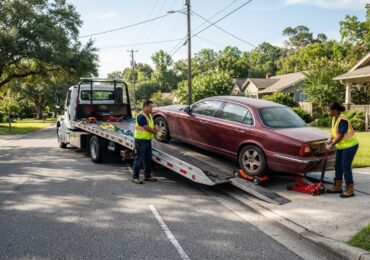
Did you know that approximately 95% of all vehicle carriers on American roads today are open trailers? While it’s common to worry about weather exposure or road debris, open car carrier transport remains the trusted backbone of the national logistics industry for a reason. It’s a highly engineered system designed for efficiency and safety, making it the standard choice for professional dealerships and private owners alike.
We understand that handing over your keys to a carrier feels daunting. You’re likely facing concerns about fluctuating quotes, driver reliability, or whether the insurance coverage is actually sufficient to protect your asset. It’s a complex process, and the anxiety surrounding logistical “what-ifs” during a cross-country move is something every responsible vehicle owner feels. You deserve a partner who prioritizes transparency over high-pressure tactics.
This guide will help you master the logistics, costs, and safety protocols of open car carrier transport so you can move your vehicle with complete peace of mind. We’ll explain the latest 2026 FMCSA standards, including the shift to the Motus registration platform and the phasing out of traditional MC numbers. By the end of this article, you’ll have a clear roadmap for achieving a damage-free delivery at the best possible rate for your journey.
Key Takeaways
- Learn how modern engineering and professional loading protocols maintain vehicle stability throughout the open car carrier transport process.
- Compare the protection levels and cost-efficiency of open versus enclosed shipping to determine the best value for your specific vehicle.
- Understand the practical logistics of door-to-door service, including how transit times are optimized through high-density interstate corridors.
- Gain the tools to effectively vet transport partners using USDOT identifiers and safety ratings to ensure a reliable, damage-free delivery.
Understanding Open Car Carrier Transport: The Industry Standard
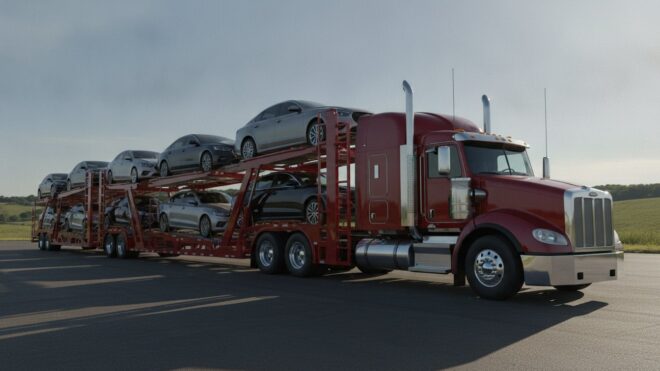
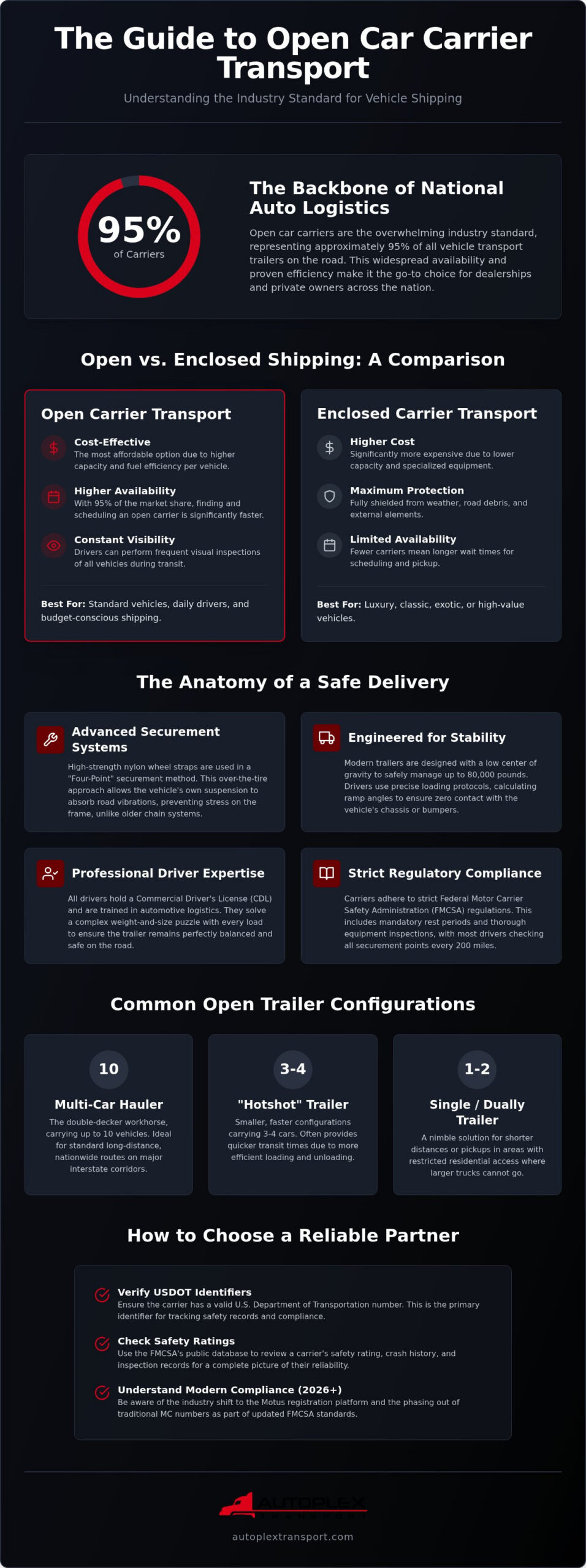
Open car carrier transport is the method of moving vehicles on a trailer without side walls or a roof. This configuration allows for maximum space and efficiency, serving as the primary mode of transportation for the vast majority of vehicles moved across the United States. Industry reports indicate that approximately 95% of all car carriers on the road are open trailers. By utilizing a Car Carrier Trailer, companies can transport multiple vehicles simultaneously, which significantly reduces the operational costs for each individual customer.
Beyond the financial benefits, this method offers a lower environmental footprint compared to individual driving. A single tractor-unit hauling nine or ten vehicles uses far less fuel than ten separate cars traveling the same distance. This consolidated approach streamlines national logistics while maintaining a steady flow of traffic on major interstate corridors. It’s a proven system that has reliably served the automotive industry for decades.
The Different Types of Open Transport Trailers
Not all trailers are built the same. The most common sight is the multi-car hauler, a double-decker powerhouse capable of carrying up to ten vehicles. These are ideal for long-distance, nationwide routes. For shorter distances or areas with restricted residential access, single-car or dually trailers provide a more nimble solution. Some customers prefer “hotshot” trailers, which typically carry three to four cars. These smaller configurations often offer faster transit times because they can load and unload more quickly than the massive ten-car variants.
Why 90% of Vehicle Owners Choose Open Shipping
Most daily drivers don’t require the specialized protection of an enclosed container. Choosing open car carrier transport provides a practical balance between security and affordability. Because there are so many open carriers active on national routes, finding a pickup date is usually much faster than waiting for an enclosed spot. Additionally, the open design allows the driver to perform frequent visual inspections during rest stops. They can easily verify that straps are tight and vehicles haven’t shifted, ensuring a higher level of oversight throughout the journey. This constant visibility provides peace of mind that your vehicle is being monitored at every stage of the process.
How Open Car Carriers Ensure Safe National Delivery
Safety is the top priority in the auto logistics industry. Modern trailers are masterpieces of engineering, specifically balanced to maintain a low center of gravity while carrying up to 80,000 pounds of total weight. The engineering behind open car carrier transport ensures that vehicles remain secure even during high-speed interstate travel. Achieving this stability requires precise loading protocols where the driver must calculate the approach angle of the ramps to ensure no contact with the vehicle’s bumpers or chassis.
Beyond the physical equipment, strict operational standards govern every mile of the journey. Drivers must adhere to comprehensive Federal Motor Carrier Safety Administration (FMCSA) regulations, which include mandatory rest periods and frequent equipment checks. Most professional carriers perform a thorough vehicle inspection every 200 miles to verify that all securement points remain tight and the cargo is undisturbed. This methodical approach to monitoring is what allows for the safe delivery of thousands of vehicles every day.
Advanced Securement and Tie-Down Systems
Modern open car carrier transport relies on high-strength nylon wheel straps rather than old-fashioned metal chains, which could exert excessive stress on a car’s frame. These straps utilize a “Four-Point” securement method, locking each tire individually to the trailer deck. Over-the-tire securement is preferred because it allows the vehicle’s suspension to absorb road vibrations naturally without straining the tie-down points. Deck clearance is the vertical gap between a vehicle’s undercarriage and the trailer ramps or floor, carefully managed by drivers to prevent any contact during the loading process.
The Role of the Professional Transport Driver
Drivers must possess a valid Commercial Driver’s License (CDL) and specialized training in automotive logistics to manage these massive rigs. They solve a complex loading “puzzle” for every trip, arranging cars by weight and size to keep the trailer balanced and safe. This expertise is paired with real-time communication, providing you with updates as the carrier moves along national corridors. If you want a partner that prioritizes this level of driver detail, consider professional nationwide shipping options that value veteran industry experience.
Open vs. Enclosed Transport: Comparing Cost and Protection
Choosing between shipping methods often comes down to a balance of budget and the specific value of the asset. On average, open car carrier transport costs between 30% and 40% less than enclosed options. This price gap exists because open trailers can carry more vehicles per trip, distributing the fuel and labor costs across a larger inventory. While some owners worry about road debris, industry data suggests that damage from road elements is remarkably rare. Shipping on an open trailer is statistically safer than driving the vehicle yourself. It eliminates the risk of mechanical failure, unnecessary mileage, and driver fatigue over long distances.
There are specific scenarios where an upgrade to enclosed car transport is the logical choice. High-end luxury models, vintage collectibles, or vehicles with custom “show” paint finishes benefit from the climate-controlled, dust-free environment. However, for the standard daily driver, the protection offered by open shipping is more than sufficient. Understanding your legal protections is also vital. We recommend reviewing FMCSA’s Your Rights and Responsibilities to see how federal law safeguards your interests during an interstate move.
The Economics of Your Car Shipping Quote
Rates are never static. They shift based on national fuel prices, the total weight of the vehicle, and the distance of the route. Large SUVs and heavy electric vehicles often cost more to ship because they take up more space and weight capacity on the trailer. Seasonality plays a massive role too. During the “snowbird” seasons, when thousands of people move between northern and southern states, demand for space spikes significantly. This can lead to higher rates on popular corridors. Calculating the return on investment for a standard SUV or sedan usually shows that open car carrier transport is the most sensible financial decision, as it preserves the car’s resale value by keeping the odometer stagnant.
Evaluating Your Vehicle’s Specific Needs
Before booking, check your car’s ground clearance. Vehicles with low-profile bodies or aftermarket spoilers might require specialized ramps to avoid undercarriage contact during loading. If your car has a standard factory finish, it’s designed to withstand highway conditions, making open transport a safe bet. To ensure everything goes smoothly, follow a clear guide on how to prepare a car for transport. This preparation helps minimize any potential for minor issues, such as loose parts or alarms triggering, during the loading and unloading process. Taking these small steps ensures that the driver can focus entirely on the safety of the journey.
Navigating the Logistics of National Interstate Shipping
Logistics for open car carrier transport involve more than just driving from one point to another. Many customers anticipate “door-to-door” service, but the reality of residential street restrictions often dictates the final meeting point. Large multi-car haulers, which can be up to 80 feet long, frequently encounter weight limits, low-hanging trees, or tight cul-de-sacs that prevent them from entering specific neighborhoods. In these situations, your driver will coordinate a convenient meeting at a nearby wide thoroughfare or large parking lot to ensure a safe loading environment.
Transit speed is also a product of interstate route density. Major highway corridors that connect large population centers see the highest volume of carrier traffic. This density is beneficial for you because it means trailers fill up faster and departures are more frequent. If your vehicle is traveling along a primary national artery, you can generally expect a more predictable schedule than if the pickup or delivery location is far removed from the main interstate system.
Managing Timelines for Cross-Country Shipping
For journeys spanning 1,000 miles or more, typical transit windows usually fall between five and nine days. These timelines are strictly governed by DOT “Hours of Service” regulations, which mandate specific rest periods for drivers to ensure highway safety. While it might be tempting to look for the fastest possible delivery, a reliable carrier will provide a realistic window that accounts for these legal safety requirements. Coordinating your pickup and delivery works best when you maintain an open line of communication with the driver during the final 24 hours of the window.
The Bill of Lading and Insurance Coverage
Documentation is the foundation of a successful move. Before the car is loaded onto the trailer, you must perform a joint walk-around with the driver to record the vehicle’s current condition. The Bill of Lading serves as the legal contract and receipt of condition for your vehicle throughout the transport process. It’s also vital to distinguish between the carrier’s cargo insurance and your personal policy. While the carrier’s insurance covers damage occurring during transit, your personal insurance often remains the primary coverage for incidents outside of the carrier’s direct control.
The 5-Minute Post-Delivery Inspection
When your vehicle arrives, taking five minutes to conduct a methodical inspection ensures your protection. Use this checklist to verify the delivery:
- Check the roof and bumpers: These areas are the most likely to encounter road debris or loading contact.
- Verify the glass: Look closely for any new chips or cracks in the windshield and side windows.
- Compare photos: Use the photos you took during the pre-shipment walk-around to confirm no new blemishes exist.
- Review the undercarriage: Ensure there is no new fluid leakage or contact damage.
If you discover any discrepancies, document them clearly on the Bill of Lading before the driver leaves. For a professional approach to your next move, explore our nationwide transportation services to see how we manage these details for you.
Choosing a Reliable Partner for Your Open Carrier Transport
Selecting a partner for your vehicle’s journey requires more than just looking at a price tag. In 2026, the industry has moved toward greater transparency with the Federal Motor Carrier Safety Administration (FMCSA) replacing legacy systems with the Motus registration platform. When vetting a potential company, your first step should be verifying their USDOT number, which is now the primary identifier for carriers and brokers. A legitimate partner will have a clear safety record and maintain the mandatory $75,000 bond required by federal law to protect shippers. Taking the time to verify these credentials ensures you’re working with a stable entity that values regulatory compliance.
Transparency starts with the very first interaction. You should look for companies that provide detailed, no-obligation car shipping quotes that break down the costs of the route. AutoPlex Transport focuses on national logistical excellence by providing a “reliable partner” approach rather than a high-pressure sales pitch. We believe that an informed customer is a confident customer, and we prioritize building that trust through clear, informative communication from the moment you request information until your car is safely in your driveway.
Red Flags to Avoid in the Auto Transport Industry
The “low-ball” quote trap is one of the most common issues facing vehicle owners. If a quote seems significantly lower than the market average, it often indicates a broker who won’t be able to secure a carrier at that price, leading to frustrating delays. You should also be wary of hidden fees. A professional contract should offer all-inclusive pricing that covers fuel, tolls, and insurance without surprise surcharges. Finally, pay attention to communication. If a company is difficult to reach during the quoting phase, they’re unlikely to provide the dedicated support you need when your vehicle is actually in transit across the country.
Why AutoPlex is the Strategic Choice for 2026
AutoPlex stands out as a seasoned industry veteran with a proven history of success in national logistics. We don’t just move cars; we manage a complex logistical process with a focus on professional driver vetting and interstate safety. Our systems are designed for a hassle-free door-to-door experience, ensuring that every detail of the move is handled with precision. While open car carrier transport is the standard for most, we also offer professional classic car transport for those who require specialized care for high-value assets.
Booking your transport is the final step in a methodical process. Once you’ve selected your window, prepare your vehicle by removing personal items and ensuring it has about a quarter tank of fuel. This preparation, combined with a partner that understands the intricacies of national shipping, allows you to move your vehicle with absolute confidence. We’re here to act as your knowledgeable guide, providing the peace of mind that comes from decades of practical experience in the field.
Secure Your Vehicle’s Journey with Professional Logistics
Mastering the complexities of vehicle shipping ensures that your national move is as smooth as possible. By understanding the engineering behind modern trailers and the importance of thorough documentation like the Bill of Lading, you can eliminate the anxiety often associated with long-distance logistics. Choosing open car carrier transport remains the most efficient way to move your vehicle without sacrificing safety or reliability, provided you partner with a provider that values transparency.
AutoPlex Transport Company positions itself as your seasoned industry veteran, offering nationwide door-to-door logistics expertise. We work exclusively with fully licensed and insured carriers and provide A+ rated customer support for every interstate route. Our methodical approach ensures that every detail, from the initial quote to the final inspection, is managed with a commitment to protecting your asset. You don’t have to handle the stress of transport alone when you have a reliable partner by your side.
Ready to take the next step in your move? Get Your Instant Open Carrier Transport Quote from AutoPlex and experience a higher standard of vehicle shipping. We look forward to helping you move forward with complete confidence.
Frequently Asked Questions
Is open car carrier transport safe for my vehicle?
Yes, open car carrier transport is a highly secure method that handles approximately 95% of all road-based vehicle shipments in the United States. Modern trailers utilize specialized engineering to maintain a low center of gravity and ensure perfect balance throughout the journey. While the vehicle is exposed to the elements, professional loading protocols and advanced nylon wheel straps significantly minimize the risk of movement or mechanical stress during transit. It’s a reliable choice used by manufacturers and private owners for millions of successful deliveries annually.
How much does open transport car shipping cost on average?
The cost of shipping varies based on factors like total distance, vehicle weight, and current fuel prices. Generally, this method is the most cost-effective option available, typically costing 30% to 40% less than enclosed alternatives. Because open trailers accommodate up to ten vehicles per trip, the operational costs are distributed across multiple units, allowing for more competitive rates. Market demand and seasonal shifts, such as the northern “snowbird” migration, also influence the final quote you receive for your specific route.
How long does it take to ship a car across the country via open carrier?
For journeys exceeding 1,000 miles, you should expect a transit window between five and nine days. These timelines are strictly regulated by DOT “Hours of Service” requirements, which ensure drivers remain rested and alert for highway safety. Transit speed is also affected by route density; vehicles traveling along major interstate corridors often arrive faster than those requiring pickup or delivery in remote areas. Your driver will typically provide a 24-hour notice before arrival to help you coordinate the final delivery.
Will my car be insured during open carrier transport?
Yes, every professional carrier is required by law to maintain cargo insurance that covers your vehicle while it is in their care. This coverage protects against damage occurring during the loading, transport, and unloading phases of the journey. We recommend reviewing the carrier’s specific policy limits and verifying their credentials through the Motus registration platform. Your personal auto insurance often acts as secondary coverage, providing an additional layer of financial protection and peace of mind during the interstate move.
What is the difference between an open and enclosed car carrier?
The primary difference lies in the trailer’s design and the level of protection provided from the environment. Open carriers move vehicles on an exposed, multi-level trailer, which is the most common and affordable method for daily drivers. Enclosed carriers use a fully covered trailer with side walls and a roof, protecting assets from weather and road debris. While enclosed shipping is ideal for vintage or luxury models, open car carrier transport remains the industry standard for most national deliveries due to its efficiency and availability.
Can I put personal items in my car during open transport?
Most carriers prohibit personal items inside the vehicle because they add unregulated weight and are not covered by the carrier’s cargo insurance policy. Federal regulations also restrict the transport of household goods in vehicles loaded onto car haulers. A few items, such as a spare tire or a jack, are perfectly acceptable. We advise removing all loose valuables, electronics, and toll tags to prevent theft or damage from shifting during transit, ensuring the driver can focus entirely on road safety.
What happens if my car is damaged during open carrier shipping?
If you notice any discrepancies upon delivery, you must document them immediately on the Bill of Lading before the driver departs. This document serves as the legal receipt of condition and is essential for the claims process. Take clear, timestamped photos of the affected area and contact the transport company right away. A professional partner will guide you through the insurance claim steps and work toward a resolution based on the documentation from the pre-shipment inspection and the final delivery report.
How do I prepare my vehicle for open carrier pickup?
Preparing your vehicle starts with a thorough cleaning so you can accurately document its condition during the pre-shipment walk-around. You should leave approximately one-quarter tank of fuel to minimize total weight while allowing for loading and unloading. Ensure all alarms are disabled and remove any aftermarket accessories like bike racks or spoilers that could be damaged by the trailer’s clearance. Finally, verify that you have a spare set of keys ready for the driver to facilitate the loading and logistics process.