

Most vehicle owners assume that booking car shipping from Texas to Florida is as simple as clicking a button and waiting for a trailer to appear. In reality, this 1,000-mile journey across the Gulf Coast is a sophisticated logistical operation that requires more than just a truck. With the U.S. auto transport market growing steadily, the industry has become a complex landscape of federal safety regulations and digital tracking systems. You’re likely concerned about the risk of hidden fees or the possibility of vehicle damage during transit. These are valid anxieties. It’s often difficult to distinguish between a licensed carrier and a third-party broker while searching for a reliable service.
We understand that you want a partner who treats your vehicle with the same care you do. This guide will help you master the logistics of shipping your vehicle by providing expert advice on timing, carrier types, and professional preparation. You’ll learn how to navigate the specific challenges of the Texas-to-Florida corridor, including seasonal price shifts and weather considerations. Our goal is to provide you with a clear understanding of the delivery timeline and the knowledge needed to secure a quote that remains stable. We’ll walk through every step to ensure your vehicle arrives safely and on schedule.
Key Takeaways
- Learn how to navigate the unique seasonal challenges and high-demand routes of the 1,000-mile Southern corridor.
- Determine whether open or enclosed transport is the right choice for your specific vehicle and budget when arranging car shipping from Texas to Florida.
- Identify how vehicle size, weight, and the timing of “Snowbird Season” impact both your total investment and the delivery schedule.
- Follow a professional preparation checklist to protect your assets and ensure your insurance documentation is accurate before the carrier arrives.
- Gain clarity on the industry roles of brokers and carriers to ensure you partner with a service provider that prioritizes safety and transparent logistics.
Navigating the Texas to Florida Vehicle Shipping Corridor
The journey from the Lone Star State to the Sunshine State is one of the most active logistical corridors in the southern United States. Spanning anywhere from 800 to over 1,500 miles depending on your specific pickup and delivery points, this route connects two of the nation’s largest economies. In 2026, car shipping from Texas to Florida has reached record volumes due to high interstate migration and seasonal relocation trends. Moving a vehicle across this distance involves crossing multiple state lines and shifting through diverse climate zones, from the dry heat of West Texas to the intense humidity of the Florida peninsula.
Managing this trip requires a deep understanding of the southern infrastructure. Carriers must account for the unique traffic patterns of major hubs like Houston, New Orleans, and Jacksonville. Many customers start their journey by contacting an Auto transport broker to understand the market rates, though working with an experienced interstate provider like AutoPlex ensures a more streamlined communication channel. Professional logistics planning is the only way to guarantee that a vehicle survives the trek without unnecessary delays or mechanical strain.
The Logistics of a 1,000-Mile Interstate Move
The primary artery for this move is the I-10 corridor, a massive stretch of highway that serves as the backbone for southern freight. High route density along this path is actually a benefit for you. Because so many carriers travel this specific line, pickup windows are often shorter and availability is more consistent than on rural routes. For a 1,000-mile journey, transit time is defined as the period between the actual vehicle loading and the final delivery at your Florida destination, which typically spans several days depending on traffic and weather. This timeline allows drivers to comply with federal safety rest requirements while maintaining a steady pace toward your driveway.
Why Professional Transport Outperforms Driving
Many owners initially consider a DIY road trip to save money, but the true cost of driving often exceeds the price of professional car shipping from Texas to Florida. When you factor in fuel, multiple nights in hotels, meals, and the depreciation caused by adding 1,200 miles to the odometer, the financial gap closes quickly. Safety is the most significant factor. Professional interstate vehicle transportation places your car on a specialized trailer, lifting it away from road debris and the physical stress of a multi-day drive. This method eliminates the risk of tire wear, engine strain, and potential highway accidents that can occur during a solo long-distance trip. Choosing professional logistics means your vehicle arrives in the same condition it left, without the hidden expenses of a cross-country drive.
Choosing Your Transport Method: Open vs. Enclosed Carriers
Selecting the right transport method is a pivotal decision that balances your budget against the level of protection your vehicle requires. For car shipping from Texas to Florida, the choice often comes down to the specific value of your car and your tolerance for environmental exposure. The Southern United States is known for its volatile weather, including high humidity and sudden tropical downpours along the Gulf Coast. These climate factors should weigh heavily on your decision, as they influence how your vehicle interacts with the elements during its 1,000-mile journey.
Before making a final selection, it’s wise to consult the FMCSA consumer advisory to ensure you’re following federal safety recommendations for interstate moves. This oversight helps you verify that your chosen provider maintains the necessary standards for both open and enclosed configurations. Whether you’re moving a standard sedan or a custom show car, understanding the price-to-protection ratio ensures you don’t overpay for unnecessary features or under-protect a valuable asset.
The Benefits of Open Carrier Auto Transport
Open carrier transport is the most popular choice for car shipping from Texas to Florida because it offers the highest level of efficiency. These trailers are the ones you typically see on the highway, capable of carrying seven to ten vehicles at once. This high capacity leads to lower individual costs and significantly more flexible scheduling. If you’re moving a daily driver, a standard SUV, or a pickup truck, this method provides a reliable and cost-effective solution. For a deeper look at how these carriers operate, you can explore The Comprehensive Guide to Open Transport Car Shipping in 2026. While your vehicle is exposed to the air, professional drivers utilize strategic loading patterns to minimize the risk of road debris impact.
When to Choose Enclosed Car Shipping
Enclosed transport is the premium alternative designed for vehicles that require a shield from the outside world. This method is essential for classic cars, luxury sedans, and exotic sports cars that might be sensitive to the intense Southern humidity or road salt and grime. Enclosed trailers feature hard or soft sides that completely seal the vehicle away from weather and prying eyes. You can find more details on this specialized service in our Enclosed Car Transport: The Definitive Buying Guide for 2026. This method often includes specialized equipment like hydraulic lift gates to handle low-clearance vehicles safely. If you aren’t sure which level of care your vehicle needs, our team can help you evaluate interstate vehicle transportation options that fit your specific timeline and protection requirements.
Calculating the Logistics: Timeframes and Cost Factors
Understanding the financial and temporal investment required for car shipping from Texas to Florida involves looking at several shifting variables. Your vehicle’s physical profile is the primary driver of the initial quote. Larger SUVs and heavy pickup trucks occupy more space on a trailer and increase fuel consumption due to their weight, which naturally adjusts the logistics of the load. Beyond the vehicle itself, 2026 has introduced tighter operational costs, including fluctuating diesel prices and the widespread use of Electronic Logging Devices (ELDs) that standardize driver hours. These factors, combined with interstate tolls along the Gulf Coast, mean that professional quotes are calculated with precision to ensure a sustainable and safe delivery.
While some consumers look for the lowest possible number, it’s essential to consider the cost to ship a car in the context of the service level provided. Modern logistics standards prioritize door-to-door service as the gold standard. This approach eliminates the need for you to drop off or pick up your vehicle at a remote, often unsecured terminal. Instead, the carrier maneuvers as close to your specific residential or business locations as legally and physically possible. This saves you time and reduces the risk of your vehicle sitting in an unattended lot for days.
For businesses relocating to South Florida hubs like Miami, ensuring your digital infrastructure is as secure as your physical assets is vital; Telx Computers provides the managed IT support necessary for a smooth transition.
Estimated Timelines for the Texas-Florida Route
The transit period for this corridor typically ranges from 2 to 8 days once the vehicle is loaded onto the trailer. Pickup windows usually span 1 to 5 business days, depending on your proximity to major cities like Dallas, Houston, or San Antonio. While carriers strive for punctuality, external factors such as seasonal tropical storms or heavy traffic in metropolitan hubs like Mobile or Pensacola can cause minor adjustments to the schedule. Maintaining a degree of schedule flexibility often allows logistics providers to secure more favorable rates by matching your vehicle with the most efficient carrier route available.
Seasonal Demand and Price Fluctuations
The Texas-to-Florida route is highly susceptible to “Snowbird Season,” a period in late autumn and early winter when thousands of residents move south for the warmer climate. During this time, the surge in demand for car shipping from Texas to Florida can lead to higher premiums and tighter carrier availability. To ensure you receive a competitive rate and your preferred dates, we recommend booking your transport at least 2 to 3 weeks in advance. Planning ahead helps you avoid the peak interstate congestion and ensures your vehicle is prioritized during these high-volume months. This proactive approach provides peace of mind and a much clearer understanding of your total move timeline.
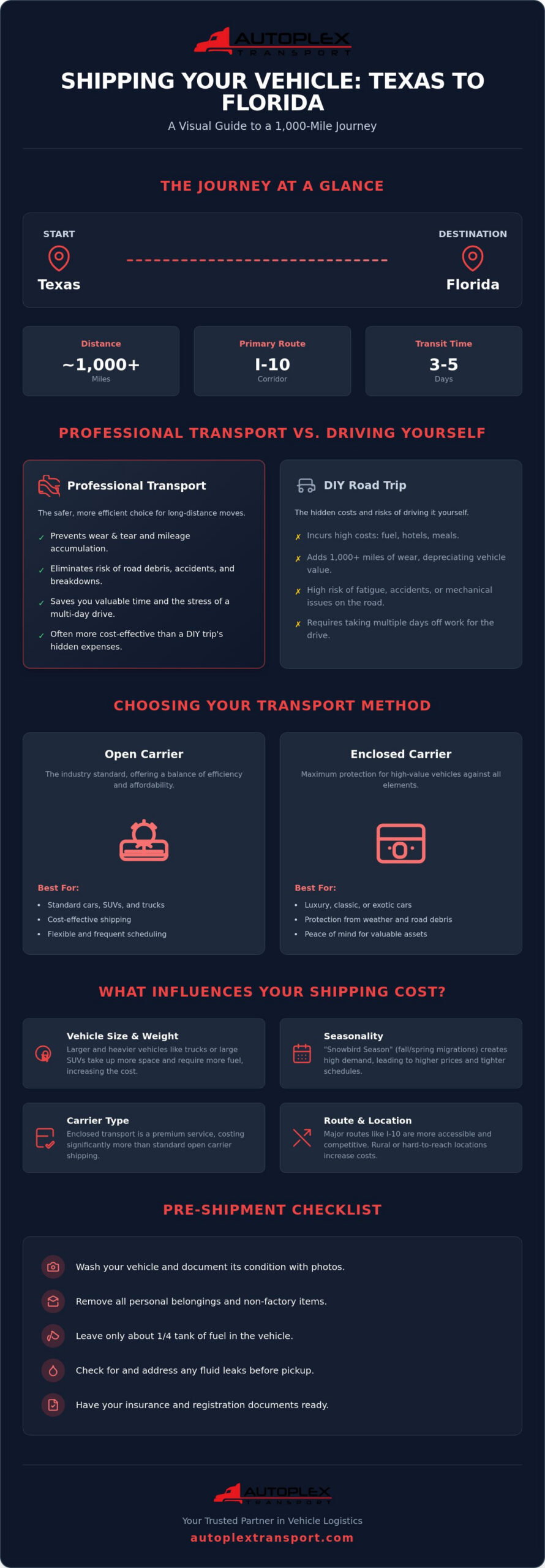
Essential Preparation for Your Interstate Vehicle Move
Preparing your vehicle for car shipping from Texas to Florida is a process that extends far beyond a simple car wash. While tidiness is helpful, the primary goal of preparation is to create a clear, documented baseline of your vehicle’s condition before it enters the logistics chain. Professional transporters rely on a standardized inspection process to ensure transparency. If your car is covered in road salt or Texas dust, identifying pre-existing chips or scratches becomes nearly impossible. A clean exterior is your first line of defense in protecting your insurance interests, as it allows the driver to note the exact state of the bodywork during the initial pickup.
You must also address the interior and any aftermarket additions. Federal regulations strictly prohibit the transport of personal household items inside a vehicle on an auto carrier. These items aren’t covered by the carrier’s cargo insurance and can add significant weight to the trailer, potentially leading to DOT fines for the driver. We recommend removing all toll tags, parking passes, and loose accessories like external bike racks or custom spoilers that could be damaged by the movement of the trailer. Once the car is empty and clean, take high-resolution, time-stamped photos of every panel, the glass, and the odometer. These photos serve as your objective evidence should any discrepancies arise at the destination.
The Pre-Transport Inspection Checklist
Mechanical readiness ensures your vehicle can be safely loaded and unloaded without delays. You should verify that the battery is fully charged, the tires are properly inflated, and there are no active fluid leaks that could drip onto vehicles loaded below yours. A critical requirement is maintaining your fuel level at precisely one-quarter full. This amount provides enough fuel for the driver to maneuver the car on and off the trailer while keeping the overall weight of the shipment within legal limits. For a more detailed breakdown of these steps, consult our How to Prepare a Car for Transport: The 2026 Essential Checklist.
Legal Safeguards and Insurance Coverage
The Bill of Lading is the most important document in the car shipping from Texas to Florida process. It acts as your contract, a receipt for your vehicle, and an official record of its condition. You must review this document carefully at both pickup and delivery. While every carrier we partner with maintains primary cargo insurance as required by 2026 federal standards, your personal insurance policy may also provide secondary coverage. In the rare event that you notice new damage during the delivery inspection, you must note it clearly on the Bill of Lading before the driver leaves. This notation is the legal trigger for a claim. If you’re ready to begin your move with a team that prioritizes these safety protocols, you can book your interstate vehicle transportation with confidence today.
Why AutoPlex Transport is the Reliable Partner for Your Move
Choosing a provider for car shipping from Texas to Florida is ultimately a decision about trust. You aren’t just moving a piece of machinery; you’re relocating a significant personal asset across multiple state lines and varying climate zones. At AutoPlex Transport, we position ourselves as a steady, experienced hand in a complex industry. Our history as a seasoned veteran of the Southern routes means we understand the nuances of the Gulf Coast infrastructure, from the traffic bottlenecks of the I-10 corridor to the humidity challenges of the Florida panhandle. This experience allows us to anticipate potential delays and manage your logistics with a level of precision that less specialized companies simply cannot match.
Our commitment to transparent communication is the cornerstone of our service model. We don’t believe in leaving our clients in the dark during a 1,000-mile trip. By providing clear updates and maintaining a direct line of contact, we eliminate the anxiety often associated with long-distance vehicle moves. This proactive approach ensures you always know the status of your delivery, allowing you to plan your own arrival in Florida with confidence. We treat every vehicle as if it were our own, prioritizing safety and reliability above all else.
A Detailed and Methodical Shipping Process
Our vetting process is rigorous and uncompromising. We don’t just verify that a carrier has an active USDOT number; we analyze their safety history, insurance standing, and historical performance on the specific Texas-to-Florida corridor. This methodical vetting ensures that every driver in our network meets the high standards our clients expect for professional handling. As your reliable partner, we manage the entire logistics chain, from the initial door-to-door pickup to the final signature on the Bill of Lading. This comprehensive oversight is why so many families and professionals trust us with their interstate vehicle transportation needs year after year.
Get Started with Your Professional Shipping Quote
Securing a professional logistics plan for your car shipping from Texas to Florida is a straightforward process designed around your convenience. When you request a quote, you receive more than just a price; you get a detailed overview of the timing, carrier type, and safety protocols tailored to your specific vehicle and route. We prioritize accuracy in our planning to ensure there are no last-minute surprises or hidden fees. If you’re ready to experience a move defined by professional handling and reliable service, we invite you to request your professional shipping quote today. Let us handle the complexities of the road while you focus on your new beginning in the Sunshine State.
Streamlining Your Southern Vehicle Relocation
Successfully managing car shipping from Texas to Florida requires balancing schedule flexibility with thorough vehicle preparation. By understanding the differences between open and enclosed transport and following a methodical inspection process, you’ve already mitigated the most common risks associated with long-distance moves. Whether you’re relocating for work or following the seasonal migration south, your focus should remain on the safety and security of your vehicle throughout its 1,000-mile journey. Once you reach your destination, you can discover The Garage RX to help create an organized and efficient garage space for your vehicle.
AutoPlex Transport provides the expert nationwide interstate logistics necessary to navigate this high-volume corridor without the stress of hidden fees or delivery delays. Our comprehensive insurance coverage on every shipment and standard door-to-door service offer the ultimate convenience for busy owners. We take the technical complexities of the road off your plate so you can focus on your arrival in the Sunshine State. If you’re ready to move forward with a partner who prioritizes your vehicle’s safety, take the next step in your planning today.
Get Your Professional Texas to Florida Car Shipping Quote and experience a seamless transition to your new destination.
Frequently Asked Questions
How long does it take to ship a car from Texas to Florida?
Transit time for car shipping from Texas to Florida typically ranges between 2 and 8 days once the vehicle is loaded onto the trailer. The specific duration depends on the exact mileage between your pickup and delivery points, as well as traffic conditions in major southern hubs like Houston or Mobile. While drivers aim for efficiency, they must also adhere to federal safety regulations regarding driving hours to ensure your vehicle arrives safely.
Can I leave personal belongings in my car during transport?
You shouldn’t leave personal items inside your vehicle because carriers aren’t licensed to transport household goods. Federal law prohibits auto transporters from hauling personal belongings, and these items aren’t covered by the carrier’s cargo insurance. Additionally, extra weight can lead to DOT fines for the driver or even cause damage to the vehicle’s interior during transit. It’s best to remove all electronics, documents, and valuables before the driver arrives.
Is my vehicle insured while it is on the transport truck?
Every legitimate interstate carrier must maintain active cargo insurance as required by the Federal Motor Carrier Safety Administration (FMCSA). This coverage protects your vehicle against damage caused by carrier negligence or equipment failure during the transit process. We verify the insurance credentials and safety ratings of every driver in our network to ensure your asset is fully protected throughout the entire 1,000-mile journey across the southern corridor.
Do I need to be present for the pickup and delivery of my car?
You or a designated representative over the age of 18 must be present at both the pickup and delivery locations. This presence is necessary to perform the initial and final inspections alongside the driver. You’ll need to sign the Bill of Lading to verify the vehicle’s condition at both ends of the trip, which is a critical step for protecting your insurance interests and ensuring a transparent delivery process.
What is the difference between a broker and a carrier in auto transport?
An auto transport broker acts as a logistics coordinator that matches your shipment with a qualified driver from a large, vetted network. A carrier is the actual company that owns the trucks and performs the physical transportation of your vehicle. Working with a professional logistics partner allows you to access a wider range of carrier options while maintaining a single, reliable point of contact for your car shipping from Texas to Florida.
How much notice do I need to give to schedule a car shipment?
We recommend scheduling your shipment at least 2 to 3 weeks in advance to secure your preferred dates and the most competitive rates. While we can often arrange pickups on shorter notice, planning ahead is especially important during peak seasons like the late autumn migration. Early booking gives our logistics team more time to match your vehicle with the most efficient route and a carrier that meets our high safety standards.
What happens if my car is damaged during the shipping process?
If you discover damage upon delivery, you must note the specific issues clearly on the Bill of Lading before the driver leaves the destination. This document serves as the official record of the vehicle’s condition and is required by insurance companies to initiate a claim. After noting the damage on the paperwork, you should take high-resolution photos and contact our support team immediately to begin the professional claims resolution process.
What is a Bill of Lading and why is it important for my car shipment?
The Bill of Lading is a legally binding document that functions as both a receipt for your vehicle and a detailed condition report. It records all pre-existing scratches or dents at pickup and confirms the state of the car at delivery. This document is the primary evidence used by insurance companies to settle disputes, making it the most important piece of paperwork you’ll handle during the interstate transportation process.