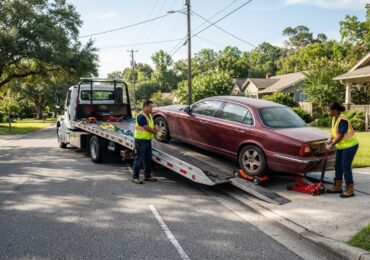
Would you trust your second most valuable asset to a carrier that hides its true costs behind a low-ball quote? Moving a vehicle across the 1,400-mile I-10 corridor is a significant logistical undertaking, and it’s natural to feel uneasy about “bait-and-switch” pricing or the risk of road debris damage. You deserve more than just a transport slot; you deserve a reliable partner who treats your car with the same care you do.
We understand that car shipping from Florida to Texas involves more than just getting from point A to point B. It’s about protecting your investment and maintaining peace of mind throughout the interstate journey. This guide will help you master the complexities of the process by providing expert insights on modern logistics, carrier selection, and asset protection strategies.
You’ll learn about the 2026 FMCSA regulatory landscape, including stricter Electronic Logging Device enforcement and new financial responsibility requirements for brokers. We will also explore how professional door-to-door service and specialized carrier methods ensure your vehicle arrives in Texas safely, transparently, and exactly when you expect it.
Key Takeaways
- Understand why professional interstate transport is the safer, more efficient alternative to self-driving across the 1,400-mile Southern corridor.
- Learn how to choose between open and enclosed transport based on your vehicle’s specific value and protection needs when arranging car shipping from Florida to Texas.
- Discover the critical distinction between logistics managers and carriers to ensure your shipment complies with the latest 2026 FMCSA safety standards.
- Master the essential vehicle preparation steps that safeguard your asset and facilitate a seamless inspection process.
- Explore how standard door-to-door service provides a transparent and convenient solution for cross-country vehicle relocation.
The Logistics of the Florida to Texas Shipping Corridor
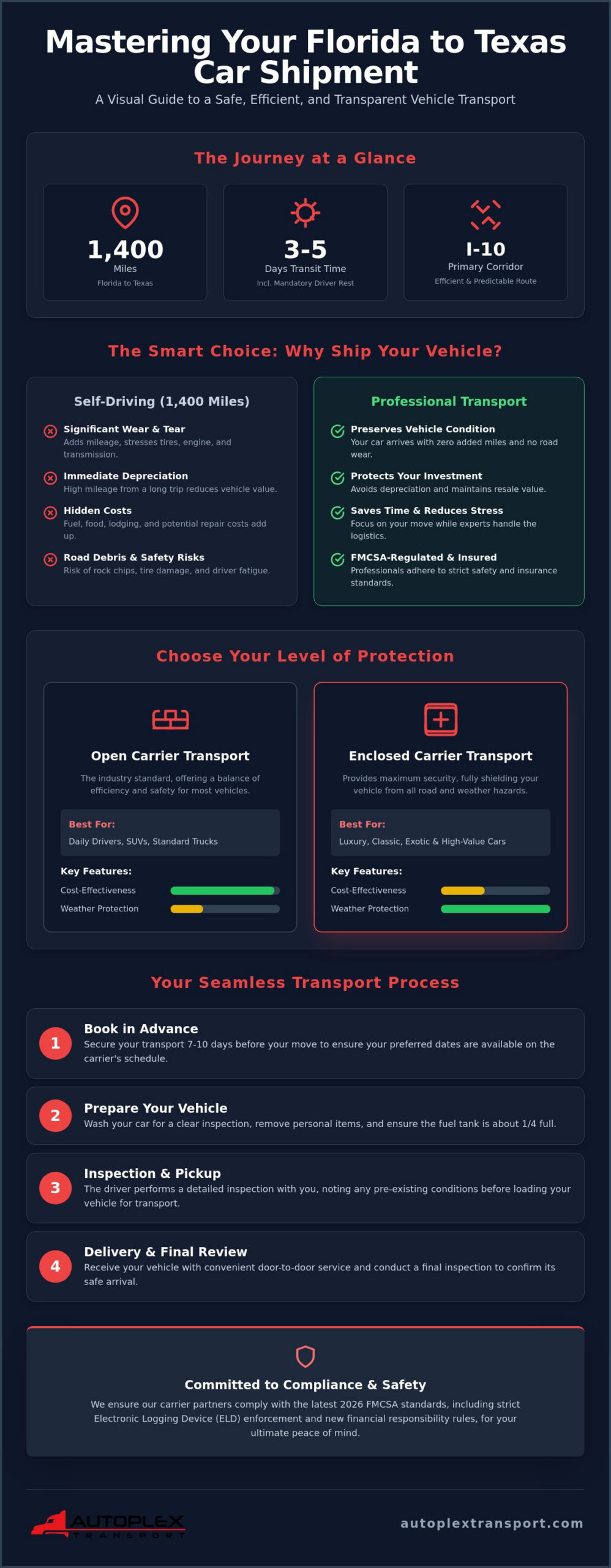
Florida and Texas represent two of the busiest economic hubs in the American South. The route between them is far more than just a long stretch of highway; it’s a primary interstate logistics corridor that demands precision and careful planning. While driving the vehicle yourself might initially seem like a straightforward road trip, the reality of a 1,100 to 1,400-mile journey involves significant hidden costs. Professional car shipping from Florida to Texas eliminates the immediate depreciation, mechanical wear, and safety risks that occur during such a long haul. It effectively shifts the burden from the owner to a professional system designed specifically for asset safety.
Reliable logistics rely on a delicate balance between efficiency and protection. Professional carriers prioritize the latter by adhering to strict Federal Motor Carrier Safety Administration (FMCSA) regulations. These rules dictate “Hours of Service” for drivers, ensuring they remain alert and capable of handling their equipment safely. Because drivers must take mandatory rest periods, a journey of this length typically requires a 3 to 5 day transit window. Working with an experienced auto transport broker or a dedicated logistics provider helps bridge the gap between these regulatory requirements and your personal relocation schedule.
The Role of the I-10 Corridor and National Hubs
The I-10 interstate serves as the logistical lifeline for this southern route. It connects major Florida departure points like Miami, Orlando, and Jacksonville directly to Texas metropolitan centers like Houston, San Antonio, and El Paso. Logistics hubs along this path allow carriers to consolidate loads efficiently, which keeps the industry moving smoothly. This established infrastructure is why interstate corridors offer much more predictable scheduling than rural or off-path routes. If you require specialized freight services for high-value cargo beyond vehicle transport, you can find out more about global logistics solutions. When a carrier stays on these primary arteries, they encounter fewer variables that could disrupt the delivery timeline, providing you with a more reliable service experience.
Factors Influencing Your Interstate Shipping Timeline
Several variables can shift your delivery window, and understanding them is key to a stress-free experience. Seasonal weather is a primary concern; Florida and the Gulf Coast are prone to heavy rain and hurricane activity, which can occasionally halt transport to ensure vehicle safety. Additionally, the standard 4 to 6 day transit window is a direct result of the physical distance combined with federal driver rest requirements. In high-volume states like Florida, pickup windows are generally more flexible due to the high density of available carriers. Planning ahead is still the best strategy. We recommend booking your transport at least 7 to 10 days before your move to ensure your preferred dates are secured within the carrier’s schedule.
Comparing Open and Enclosed Carriers for the Florida-Texas Route
Choosing how to move your vehicle is a decision that impacts its physical condition and long-term resale value. When arranging car shipping from Florida to Texas, you’ll choose between two primary methods: open and enclosed transport. This choice should be viewed as a strategic investment in asset protection rather than just a logistical expense. Factors like the car’s market value, ground clearance, and your tolerance for weather exposure during the 1,400-mile journey will dictate which trailer type is appropriate for your needs.
Selecting the right carrier is the first step in a successful interstate move. Whether you prefer the efficiency of open transport or the total protection of an enclosed unit, our team serves as your reliable partner in vehicle logistics. We focus on matching your specific car with the equipment best suited to preserve its condition from the Florida coast to the Texas plains.
Open Carrier Transport: Reliable and Cost-Effective
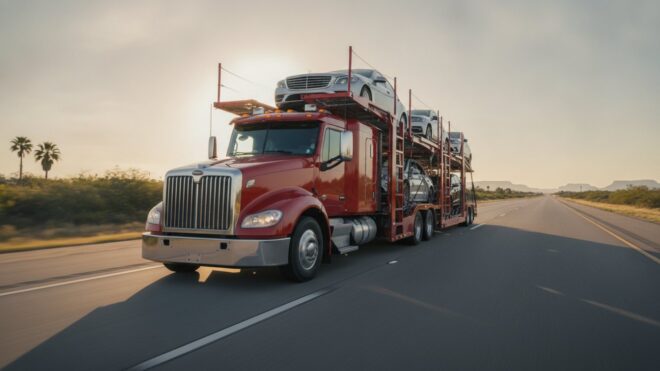
Open trailers are the familiar multi-car haulers seen on every major highway. They’re the industry standard for daily drivers, SUVs, and standard trucks because they offer a balance of efficiency and safety. While the vehicle is exposed to the elements, it’s secured using rigorous Federal Motor Carrier Safety Administration (FMCSA) cargo securement rules. Professional drivers use specialized tire straps to anchor the vehicle to the trailer structure, preventing movement during transit. For more details on this method, see The Comprehensive Guide to Open Transport Car Shipping in 2026.
Enclosed Shipping: Premium Protection for High-Value Assets
If you’re moving a classic, luxury, or low-clearance vehicle, enclosed shipping provides a higher tier of security. These trailers feature solid walls that shield your car from road debris, precipitation, and UV exposure. You’ll typically find two varieties: hard-side trailers with rigid walls and soft-side trailers with heavy-duty canvas. High-value assets benefit from the added privacy and climate protection these units offer. For a deeper dive into these options, consult our Enclosed Car Transport: The Definitive Buying Guide for 2026. If your vehicle has less than five inches of ground clearance, enclosed carriers often use hydraulic lift gates to ensure a safe loading process without risking undercarriage damage.
Understanding Interstate Regulations and Insurance Coverage
The regulatory framework governing car shipping from Florida to Texas is designed to protect your asset, but it requires a clear understanding of the players involved. In this industry, you’ll encounter two distinct entities: the carrier and the logistics manager. The carrier owns the trucks and physically moves the vehicle. The logistics manager, often acting as a professional agent, oversees the entire process, vetting carriers for safety compliance and insurance validity. Many consumers mistakenly believe that going “carrier-direct” is the safest route, but this often limits your options to a single truck’s schedule and removes the layer of professional oversight that a dedicated logistics partner provides.
Navigating national Federal Motor Carrier Safety Administration (FMCSA) regulations is a complex task that requires constant vigilance. As of 2026, the FMCSA has intensified its enforcement of Electronic Logging Devices (ELDs) and updated financial responsibility requirements for brokers. When you’re reviewing company credentials online, watch for “red flags” such as a lack of a visible USDOT number or suspiciously low “bait-and-switch” pricing that doesn’t account for these mandatory compliance costs. A reliable partner will always be transparent about their licensing and the rigorous standards they demand from their driving teams.
The Vital Role of Fully Licensed and Insured Drivers
Before any vehicle is loaded, you must verify that the company has an active FMCSA status. This isn’t just a formality; it’s your primary defense against unauthorized or unsafe operators. You should also distinguish between two types of coverage: liability insurance, which covers damage caused by the truck to third parties, and cargo insurance, which specifically protects your vehicle while it’s in transit. The Bill of Lading serves as the primary legal document of carriage, acting as both a receipt for the vehicle and a contract of terms between the shipper and the carrier. Ensuring this document is accurately completed at both pickup and delivery is essential for maintaining your legal protections.
Navigating the Insurance Claim Process
While damage is rare in professional transport, knowing how to handle a claim provides essential peace of mind. The pre-shipment inspection is the most critical step for insurance validity. During this stage, you and the driver will document every existing scratch or dent. Learning how to prepare a car for shipping properly includes cleaning the exterior so that this inspection is thorough and undisputed. If a claim does arise, professional companies typically handle the deductible and work directly with the cargo insurance provider to resolve the issue. For those planning a return trip or looking for a different perspective on interstate movements, our guide on car shipping Texas to Florida: the 2026 guide to accurate quotes and logistics offers valuable reverse-route context.
Preparing Your Vehicle for the Interstate Journey
Successful car shipping from Florida to Texas relies on a collaborative effort between you and your transport provider. While we handle the complex logistics and equipment, your role as the owner is to ensure the asset is ready for its journey. We recommend starting your preparation process at least 48 hours before the scheduled pickup window. This timeframe allows you to address minor mechanical issues or cleaning requirements without the stress of a looming deadline. For a detailed step-by-step guide, please review our How to Prepare a Car for Transport: The 2026 Essential Checklist.
Exterior and Interior Cleaning Protocols
A thorough exterior wash is more than just a matter of aesthetics; it’s a mandatory requirement for a valid condition report. When the driver arrives, they will conduct a physical inspection to document any existing damage. Dirt and road grime can easily hide small scratches or chips, which might lead to disputes during the delivery inspection. A clean surface ensures that the Bill of Lading remains an accurate legal record of your car’s state at the moment of transfer.
Inside the vehicle, you should remove all personal belongings. Carriers face strict weight restrictions at interstate scales, and your personal items are not covered by the carrier’s cargo insurance policy. Additionally, you must secure or remove loose parts that could be damaged by wind or vibrations during the long-haul transit. Common items to check include:
- Removable spoilers, fairings, or roof racks
- Aftermarket antennas
- Toll tags and electronic parking passes
- External spare tire covers
Mechanical Readiness and the ‘Quarter Tank’ Rule
Safety protocols require that your vehicle remains in good mechanical standing, even if it’s being carried rather than driven. The “quarter tank” rule is an industry standard for several reasons. It provides enough fuel for the driver to load and unload the vehicle safely while minimizing the total weight and fire risk on the trailer. A full tank of gasoline adds significant weight to a multi-car carrier, which can push the truck over federal weight limits and impact transport efficiency.
Checking for fluid leaks is equally vital for asset protection. If your vehicle is leaking oil, transmission fluid, or brake fluid, it could drip onto vehicles positioned below it on the trailer. Most professional carriers will refuse to load a vehicle with active leaks to protect other customers’ assets. Finally, ensure your battery is fully charged and your tires are properly inflated. These small checks prevent delays during the loading process and ensure your car is ready to drive the moment it reaches its destination. If you’re ready to secure your transport dates, you can request a professional shipping quote from our logistics team today.
Why AutoPlex is Your Reliable Partner for Florida to Texas Transport
AutoPlex Transport Company doesn’t just move vehicles; we manage valuable assets with a commitment to long-term value preservation. Choosing us for car shipping from Florida to Texas means partnering with a national leader that prioritizes safety over high-pressure sales. We’ve built our reputation on being a steady, knowledgeable hand in a complex industry. Our approach is grounded in the belief that every customer deserves a transparent, stress-free interstate journey. We position ourselves as your reliable partner, ensuring that the logistical burden of a cross-country move stays entirely off your shoulders.
Our Commitment to Safety and Transparent Communication
We maintain a rigorous vetting process for every carrier in our national network. This is especially important for the high-volume Florida-Texas lane, where road conditions and weather can change quickly. We verify that every driver is fully licensed, bonded, and insured according to the latest 2026 FMCSA standards. You won’t have to wonder where your vehicle is located or if it’s being handled properly. We provide proactive updates throughout the transit, ensuring you’re informed from the moment of pickup to the final delivery. For owners of high-value or vintage vehicles, our Professional Classic Car Transport: A 2026 Guide to National Auto Transport Services provides deeper insights into how we handle specialized assets with extra care.
Seamless Door-to-Door Logistics from Pickup to Delivery
Many customers worry about how a large multi-car carrier will reach their specific neighborhood. We offer Door 2 Door Transportation as a standard feature, navigating the logistical hurdles of residential access with professional ease. If a street is too narrow for a full-sized trailer, we coordinate a safe, nearby meeting point to ensure the loading process remains secure and controlled. This level of service eliminates the need for you to drop off or pick up your car at a distant terminal.
Once your vehicle arrives in the Lone Star State, we facilitate a final inspection. This step ensures total satisfaction and confirms that the vehicle’s condition matches the initial Bill of Lading. We believe in total transparency from the initial quote to the moment you receive your keys. When you’re ready to start your move, you can request a professional Florida to Texas transport quote from AutoPlex Transport Company today. Our team is here to provide the clarity and reliability you need for a successful interstate relocation.
Securing Your Vehicle’s Future on the Road to Texas
Successfully managing car shipping from Florida to Texas requires more than just a truck; it requires a strategy rooted in asset protection. By now, you understand how choosing the right carrier method and adhering to 2026 FMCSA regulations directly impacts the safety of your vehicle. Whether you opt for the efficiency of an open trailer or the total shield of an enclosed unit, your preparation remains the foundation of a successful delivery. Don’t leave your second most valuable investment to chance when professional oversight is available.
While protecting your vehicle is paramount, securing your new premises is the next logical step in a successful relocation; for expert advice on site safety, 11 Bravo Security helps owners navigate the complexities of hiring professional security personnel.
AutoPlex Transport Company stands ready to serve as your seasoned industry veteran. We specialize in national interstate logistics, providing professional door-to-door service as a standard for every client. Our network consists exclusively of fully licensed, bonded, and insured carriers who share our commitment to transparency. It’s time to move forward with confidence. Get a Reliable Florida to Texas Auto Transport Quote from our team today. We look forward to ensuring your vehicle arrives safely, allowing you to focus on your new beginning in the Lone Star State.
Frequently Asked Questions
How long does it typically take to ship a car from Florida to Texas?
The transit time for vehicle transport between these two states typically ranges from 3 to 5 days. This window accounts for the 1,100 to 1,400-mile journey along the I-10 corridor while ensuring drivers comply with federal safety regulations regarding driving hours. Total time can vary slightly based on the specific metropolitan hubs involved, such as moving from Miami to El Paso versus Jacksonville to Houston.
Is my vehicle insured during the entire Florida to Texas transport process?
Yes, your vehicle is covered by the carrier’s cargo insurance from the moment it is loaded onto the trailer until the final delivery inspection is completed. Federal law requires all interstate auto transporters to maintain active insurance policies to protect the assets they carry. We verify the coverage limits and licensing status of every carrier in our network to provide you with complete peace of mind.
Can I ship personal belongings inside my car during the move?
We recommend that you do not ship personal items inside your vehicle during transit. Carriers face strict weight restrictions at interstate scales, and personal belongings are not covered under the carrier’s cargo insurance policy. If you must leave items in the car, they should weigh less than 100 pounds and be secured in the trunk or below the window line to ensure the driver has a clear view for safe loading.
What is the difference between an open and enclosed carrier for this route?
Open carriers are the standard multi-car trailers seen on highways and are the most cost-effective solution for daily drivers. Enclosed carriers utilize hard-side or soft-side trailers to provide total protection from road debris and weather. While open transport is the most popular choice for car shipping from Florida to Texas, enclosed shipping is the preferred method for luxury, classic, or low-clearance vehicles.
How much does it cost to ship a car from Florida to Texas in 2026?
The total cost for car shipping from Florida to Texas is determined by the vehicle’s size, the distance between specific zip codes, and your choice of transport method. Factors such as seasonal demand and current fuel prices also influence the final rate. To ensure you receive transparent and all-inclusive pricing without hidden fees, we recommend requesting a personalized quote tailored to your specific vehicle and timeline.
What happens if my vehicle is damaged during the shipping process?
If you notice any damage upon delivery, you must document it immediately on the Bill of Lading before the driver leaves. This document serves as the official record of the vehicle’s condition and is essential for the insurance claim process. Once the damage is noted, you can contact our support team to begin the claim with the carrier’s insurance provider, and we will guide you through each step of the resolution.
Do I need to be present for the pickup in Florida and delivery in Texas?
You or a designated representative over the age of 18 must be present at both the pickup and delivery locations. This is necessary to conduct a thorough physical inspection of the vehicle with the driver and to sign the Bill of Lading. If you cannot be there personally, you can appoint a trusted friend or family member to act as your agent and sign the required documentation on your behalf.
Can you ship a non-running vehicle across state lines?
Yes, we can transport inoperable vehicles as long as they can still roll, steer, and brake. Shipping a non-running car requires a carrier equipped with a specialized winch to safely load the vehicle onto the trailer. It’s important to notify us in advance if your vehicle is inoperable, as this requires specific equipment and typically involves an additional labor fee ranging from $100 to $250.