
A cross-country drive can add thousands of miles, road wear, weather exposure, and a lot of scheduling pressure to an already busy move. When comparing open vs enclosed car shipping, the right choice comes down to what you are moving, how much protection you want, and how flexible your budget and pickup window are.
Both options move vehicles safely across the United States. The difference is the trailer, the level of exposure during transit, and the price. For many everyday vehicles, open transport is the practical choice. For classics, high-value cars, or vehicles that need added protection, enclosed transport may offer greater peace of mind.
Open vs Enclosed Car Shipping at a Glance
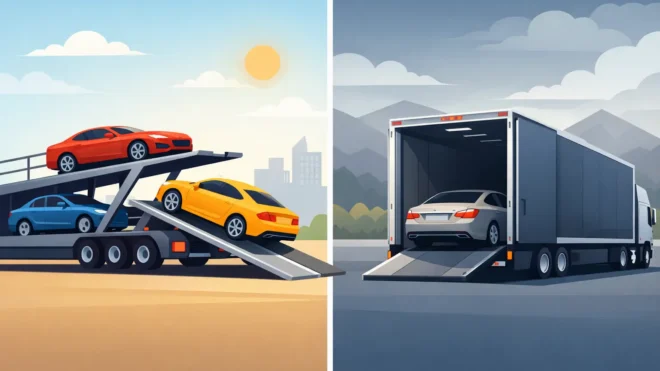
Open car shipping uses the familiar multi-level carriers you often see on highways. Vehicles are secured to an open trailer and remain exposed to normal outdoor conditions while in transit. These trailers can carry several vehicles at once, which helps keep the service widely available and more cost-effective.
Enclosed car shipping places your vehicle inside a covered trailer. The trailer protects it from rain, snow, road debris, dust, and direct sun. Because enclosed carriers have less capacity and are more specialized, this service generally costs more and may require more advance scheduling.
Neither option is automatically better for every shipment. The best fit depends on your vehicle’s value, condition, use, route, and your comfort level with normal road exposure.
When Open Car Shipping Makes Sense
Open carrier shipping is the most common way to transport cars, trucks, and SUVs. It is a dependable option for people moving to another state, sending a vehicle to a family member, purchasing a car online, or relocating seasonally without taking on a long drive.
The main advantage is value. Since open carriers can transport multiple vehicles, the cost per vehicle is usually lower than enclosed transport. Open shipping also tends to have more carrier availability across common nationwide routes, which can make pickup and delivery coordination easier when your dates are somewhat flexible.
For a daily-driver sedan, standard SUV, pickup truck, or newer family vehicle, open transport is often a sensible choice. Vehicles are professionally loaded, secured, inspected at pickup, and inspected again at delivery. Exposure to weather and road conditions is possible, just as it is when driving the vehicle yourself, but the vehicle avoids the added mileage and wear of a long-distance trip.
Open transport can also be a good fit for dealerships moving inventory or customers shipping multiple vehicles. If protecting a practical budget is the priority and the vehicle does not require a covered trailer, it delivers reliable transportation without paying for protection you may not need.
What to Expect From an Open Carrier
Most open trailers are large, so they need safe access for loading and unloading. A residential street may work, but tight turns, low-hanging trees, narrow roads, or local restrictions can require meeting the driver at a nearby open lot. This is normal and helps keep the pickup safe and efficient.
Your vehicle will be loaded with other customer vehicles, and routing can involve multiple pickups and deliveries. That is one reason shipping windows are more realistic than exact arrival times. A professional transport coordinator can help you understand the expected schedule and prepare for pickup.
When Enclosed Car Shipping Is Worth It
Enclosed transport is designed for owners who want an additional layer of protection throughout the trip. The covered trailer shields the vehicle from outside elements and helps reduce exposure to dirt, debris, precipitation, and road spray.
This option is especially popular for classic cars, collector vehicles, exotic models, luxury vehicles, custom builds, and cars with fresh paint or other delicate finishes. Owners shipping a vehicle to a show, auction, restoration shop, or major event may also prefer enclosed service because vehicle presentation matters as much as getting it there.
Enclosed shipping can make sense even for a newer vehicle when the route involves winter weather, long distances, or challenging conditions. It may also be the right decision if the extra cost feels small compared with the value of added protection and personal peace of mind.
Some enclosed carriers offer equipment and loading approaches better suited to low-clearance vehicles. If your car sits low, has a specialty body kit, or needs particular loading care, share those details when requesting a quote. The transport team can match the shipment with an appropriate carrier rather than treating every vehicle the same.
Why Enclosed Shipping Costs More
The higher price is tied to capacity, equipment, and availability. Enclosed trailers typically carry fewer vehicles than open carriers, and covered equipment is in greater demand for specialty shipments. A carrier may also need to travel farther to serve a less common route.
That does not mean enclosed shipping is always expensive beyond reach. Prices vary by distance, vehicle size, pickup and delivery locations, season, and timing. The best way to evaluate the difference is to request a quote for both service levels and decide whether the extra protection is worth it for your specific shipment.
Compare Cost, Protection, and Availability
When deciding between the two services, focus on three practical questions: What is the vehicle worth to you? How much exposure are you comfortable with? How quickly do you need a carrier?
Open transport usually offers the lower price and broader availability. It is an efficient solution for standard vehicles and routine long-distance moves. Enclosed transport usually provides more protection, but the carrier pool is smaller and the rate is higher.
Timing can change the decision. If you need expedited vehicle shipping, an open carrier may be easier to locate on many routes. However, if you are moving a high-value vehicle on a fixed schedule, booking enclosed transport early gives you more options. Flexibility around pickup dates often helps control cost with either service.
The route matters, too. Major metro-to-metro lanes usually have more transport activity than remote pickup or delivery points. Door-to-door service is available whenever access is safe for the carrier, but rural roads or restricted neighborhoods may require a convenient nearby meeting location. A good plan accounts for the actual logistics, not just the map distance.
Prepare Your Vehicle for Either Service
A few simple steps make pickup and delivery easier, whether you choose open or enclosed shipping. Clean the exterior enough to document the vehicle’s condition clearly, then remove personal belongings and loose accessories. Take dated photos from multiple angles before the driver arrives.
Make sure the vehicle has a working battery, properly inflated tires, and enough fuel to load and unload – about a quarter tank is typically sufficient. Tell your transport advisor about non-running conditions, modifications, low ground clearance, alarms, oversized tires, or any mechanical concern. Accurate details help prevent avoidable delays and ensure the carrier arrives prepared.
At pickup, review the vehicle inspection report with the driver. Note any existing scratches, dents, or other visible condition details before the vehicle is loaded. At delivery, inspect the vehicle again before signing the final paperwork. This straightforward process gives you a clear record at both ends of the shipment.
Choosing the Right Service for Your Vehicle
Choose open car shipping when you want a dependable, cost-conscious way to move a standard vehicle without adding long-distance mileage. It is the everyday choice for relocations, online purchases, student moves, snowbird travel, and routine vehicle transportation.
Choose enclosed car shipping when your vehicle has significant financial, collectible, or personal value and you want it shielded from normal road exposure. It is also a strong option for specialty vehicles that need extra attention during loading and transit.
The most useful decision is not based on a one-size-fits-all rule. It is based on your vehicle, your route, your dates, and what will make the shipment feel worry-free. AutoPlex Transport can help you compare available options, explain the expected timeline, and coordinate a transport plan that fits your needs. Request a quote with the vehicle details and pickup information, then choose the service that lets you hand over the keys with confidence.
