
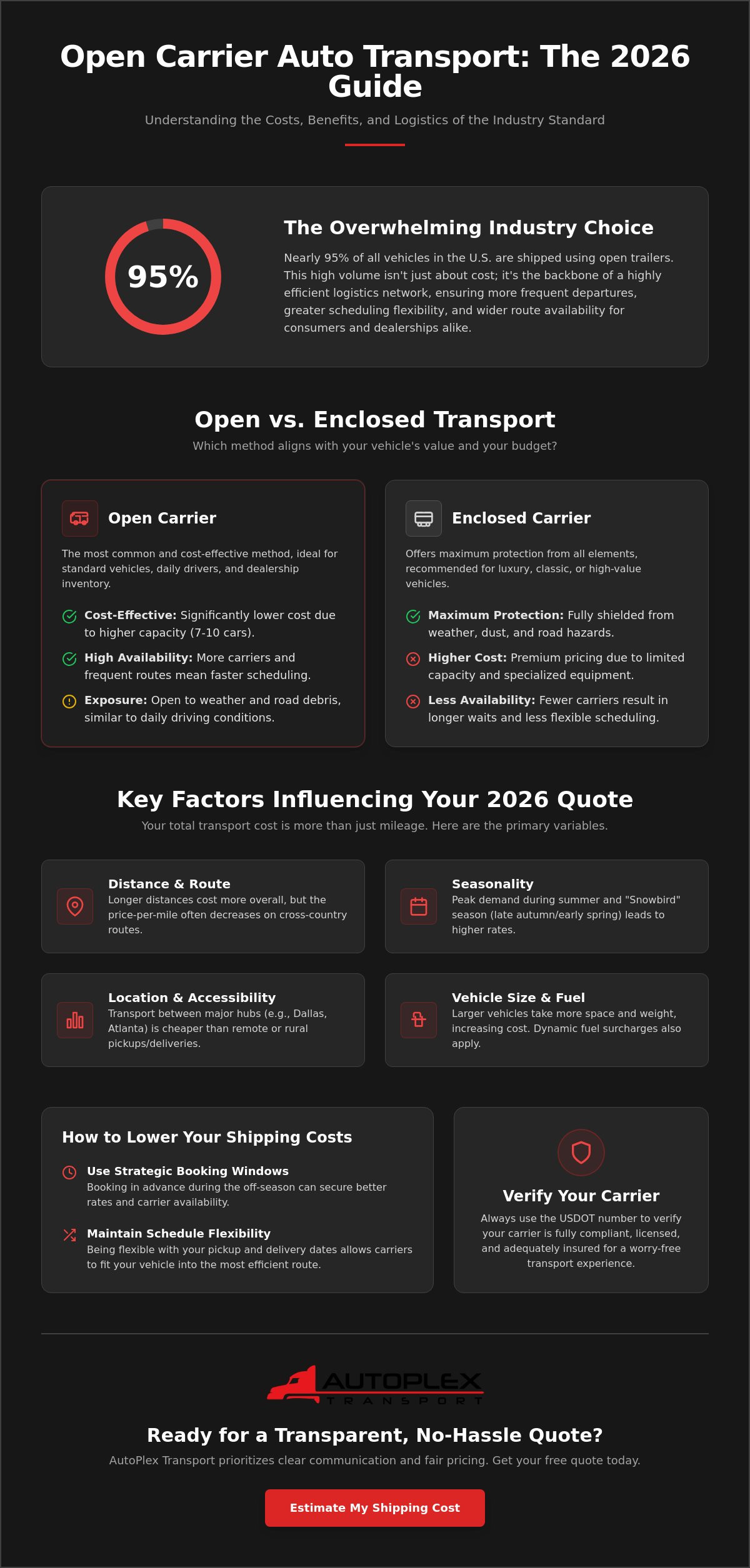
Did you know that nearly 95% of all vehicles shipped across the United States travel on an open trailer? While most owners initially focus on the open carrier transport cost as a budget-friendly choice, this method is actually the backbone of a highly optimized logistical network designed for efficiency. It’s understandable to feel a sense of unease when online quotes vary wildly or when you’re worried about how your vehicle will handle the elements on the road. You want a fair price, but you also need to know that no hidden fees will appear once your car is loaded.
We believe that transparency is the foundation of a successful transport experience. This guide will help you master the variables of modern auto shipping so you can secure the most reliable national rates available in 2026. We’ll examine the specific components that dictate pricing, including new USDOT digital compliance standards and vehicle weight considerations. By the end of this article, you’ll have a clear framework for comparing quotes accurately and the confidence to choose the right carrier for your specific needs.
Key Takeaways
- Identify why the vast majority of vehicle shipments utilize open trailers and how this high volume translates into more frequent and flexible scheduling options.
- Master the specific logistical variables, such as trailer capacity and route distance, that directly impact your open carrier transport cost in the current market.
- Evaluate the differences between open and enclosed transport to determine which level of protection and price point aligns with your vehicle’s value.
- Use strategic booking windows and flexible scheduling to lower your shipping expenses without compromising on service quality or safety.
- Learn how to verify carrier credentials using 2026 USDOT standards to ensure your transport partner is fully compliant and adequately insured.
What is Open Carrier Transport and Why is it the Industry Standard?
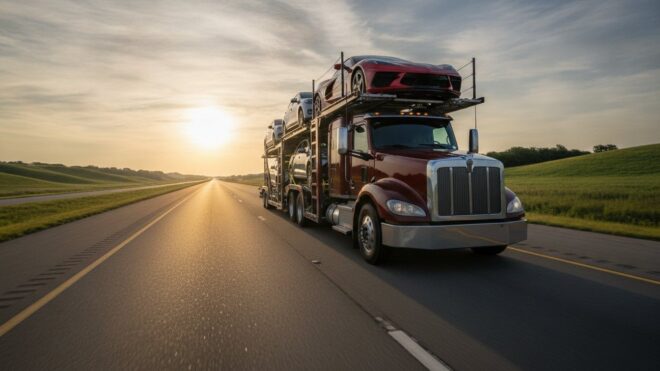
Open carrier transport is the most recognizable sight in the American logistics network. It involves a specialized trailer, often a double-decker, designed to carry multiple vehicles simultaneously. Because these trailers are open to the air, they can accommodate 7 to 10 cars at once, depending on the specific configuration of the rack. This high-capacity design is the primary reason why about 90% of consumers choose this method for their daily drivers. It isn’t just about availability; it’s about the logistical efficiency that keeps the overall open carrier transport cost manageable for the average car owner.
The open auto transport trailer serves as the essential backbone of the open transport car shipping infrastructure across the country. By maximizing the number of units moved per gallon of fuel, these carriers create a dense network of reliable routes. This density means that whether you’re shipping a sedan from a major city or a suburban neighborhood, there’s likely a carrier already moving along that path. This established framework ensures that standard vehicles can be moved quickly without the need for specialized, low-volume equipment.
The Mechanics of the Open Car Carrier
Structural safety is the core of the open carrier design. These trailers use multi-car racks engineered to distribute weight evenly across the axles. To secure the vehicles, modern carriers generally prefer soft ties, which are heavy-duty nylon straps, over traditional chain tie-downs. Soft ties wrap securely around the tires to prevent frame stress, whereas chains can sometimes cause structural tension or surface scratches if not handled with extreme precision. A significant safety benefit of this setup is visibility. Drivers can perform 360-degree inspections of every vehicle on the rack during every rest stop. This constant monitoring ensures that the load remains secure throughout the journey.
Why Open Transport is the Preferred Choice for Dealerships
Dealerships and large fleet managers rely heavily on volume to maintain their operations. By shipping up to 10 cars at once, the individual unit cost drops significantly compared to smaller, specialized trailers. This efficiency is supported by a national hub network where standard vehicles move through high-traffic corridors with predictable timelines. Additionally, open trailers often offer better accessibility in varied environments. While a massive enclosed trailer might struggle with low-hanging branches or tight corners in a residential cul-de-sac, the open design provides better clearance and maneuverability. This makes interstate vehicle transportation more feasible in a wider variety of locations, providing a more direct service for the end consumer.
Key Factors Influencing Open Carrier Transport Costs in 2026
Total distance remains the most obvious variable in logistics, yet the relationship between miles and money isn’t linear. While a cross-country haul from California to New York naturally costs more than a regional trip, the cost per mile typically decreases as the distance increases. This happens because the fixed logistical expenses, such as loading time and administrative processing, are spread across a longer journey. Understanding these nuances helps you estimate and lower your vehicle shipping expenses by identifying the best time to book based on route efficiency rather than just total mileage.
Seasonality also plays a major role in the 2026 market. The “Snowbird” effect continues to drive up demand during the late autumn and early spring as vehicles move between northern and southern states. Similarly, summer moving peaks create high competition for trailer space. As of early 2026, energy market volatility has made fuel surcharges a more dynamic component of your total auto shipping cost. These surcharges are often adjusted weekly to reflect real-time diesel prices, ensuring that carriers can maintain safety standards without compromising their operational stability.
Route Density and Accessibility
Where your vehicle starts and ends its journey significantly impacts the final open carrier transport cost. Major highway corridors and proximity to logistics hubs like Atlanta, Dallas, or Chicago offer the lowest rates because carriers can easily find “backhaul” loads to fill their trailers. If you require delivery to a rural “off-path” location, the price may rise to account for the extra time and fuel spent away from high-density routes. For those living on narrow residential streets, consider meeting a driver at a nearby large parking lot. This small adjustment can often waive the additional fees associated with maneuvering a large multi-car carrier through tight neighborhoods.
Vehicle Specifications and Modifications
The physical characteristics of your car are more important than ever in 2026. The increasing weight of electric vehicles (EVs) has forced carriers to be more precise with load planning to stay under the 80,000-pound federal weight limit. Because heavy battery packs reduce the total number of cars a trailer can legally carry, EVs often command a premium. Additionally, modifications like lift kits on SUVs or low-profile spoilers on sports cars can change the logistics. Low-clearance vehicles might require specialized ramps to avoid undercarriage damage, while inoperable vehicles necessitate a winch and extra labor. If you’re planning a move, checking our Interstate Vehicle Transportation options can help you find a carrier equipped for your specific vehicle type.
Comparing Open and Enclosed Carrier Costs: Which is Right for You?
The decision between shipping methods often comes down to a simple calculation of risk versus reward. While the open carrier transport cost is significantly lower, you are paying for a service that exposes your vehicle to the elements. Verified industry data shows that enclosed transport typically costs 30% to 60% more than open transport. For a cross-country trip, this price gap can range from $400 to $1,200. This premium covers more than just a roof. It accounts for higher insurance limits and the lower number of vehicles on the trailer, which typically carries only two to six cars compared to the seven to ten found on a standard open rack.
Insurance coverage is a critical differentiator that many owners overlook. Most open carriers maintain cargo insurance between $100,000 and $250,000 per shipment. While this is sufficient for standard sedans and SUVs, it might not provide enough protection for a trailer full of high-end assets. In contrast, enclosed carriers often provide limits starting at $250,000 and reaching well over $1,000,000. Before finalizing your booking, evaluate your vehicle’s current market worth against the enclosed auto transport cost to see if the added financial protection is a logical investment for your specific car.
When to Save with Open Transport
If you’re moving a daily driver, an older model, or a vehicle used for standard commuting, open transport is the most practical choice. It’s the industry standard for a reason. Because 90% to 95% of all carriers are open, scheduling is often much faster. You won’t wait weeks for a specialized trailer to become available in your area. While your car will likely arrive with a layer of road grime from rain and dust, this is purely cosmetic. It’s the same environment your car faces every day on the highway. For short-distance moves under 500 miles, the savings are even more pronounced, making it the preferred option for standard relocations.
When the Investment in Enclosed is Mandatory
Certain vehicles require a higher level of care that goes beyond standard logistics. If you own a classic, exotic, or luxury vehicle generally valued over $75,000, enclosed shipping is a necessary safeguard. These trailers protect against road debris, hail, and extreme weather. There’s also a significant security benefit. High-profile assets remain out of sight from the public, which reduces the risk of unwanted attention during overnight stops. For collectors who demand the highest level of service, adhering to enclosed car transport standards ensures that the vehicle arrives in showroom condition, ready for immediate display or use.
How to Accurately Estimate and Lower Your Vehicle Shipping Expenses
Securing a competitive open carrier transport cost often depends on how much lead time you provide. Ideally, you should aim to book your shipment two to three weeks in advance. This window allows logistics providers to match your vehicle with a carrier already scheduled for that route, preventing the need for last-minute, premium-priced arrangements. When you rush the process, you’re often forced to pay for whatever space is left, rather than benefiting from a competitive bidding environment where multiple carriers are looking to fill their final trailer spots.
Adopting a “flexibility discount” mindset can also yield significant savings. If you can provide a pickup window of three to five days rather than a single, specific date, you become a much more attractive client for drivers. Carriers prioritize full trailers to maximize fuel efficiency, so being the “filler” car on a nearly full rack often results in a lower rate. Additionally, consider the difference between terminal-to-terminal and door-to-door service. While terminals might seem cheaper initially, they often involve hidden storage fees and the logistical headache of getting yourself to a distant industrial hub. Most consumers find that our Door 2 Door Transportation provides better overall value when you factor in your own time and local travel expenses.
Be cautious of any car transport quote that seems significantly lower than the market average. In the logistics industry, a low-ball quote is a common red flag. It often suggests that the company hasn’t actually secured a carrier and is simply fishing for a driver who might never show up. This leads to frustrating delays and “bait and switch” price hikes once your moving deadline approaches. Genuine transparency in pricing is always a better indicator of a reliable partner than an unrealistically low number. To protect yourself from these tactics, reviewing the 2026 checklist for getting an accurate auto transport quote can help you identify red flags and verify that every estimate you receive reflects real market conditions.
Strategic Scheduling for Better Rates
Timing your move can be just as important as the method you choose. Try to avoid the end-of-month rush. Most residential leases and home closings happen during the final days of the month, which causes a massive spike in demand for all transport services. Driver availability is typically higher mid-week, particularly on Tuesdays and Wednesdays. If your timeline is truly urgent, you can opt for expedited shipping, but be prepared for the additional fees required to reroute a driver or prioritize your vehicle over existing bookings.
Preparing Your Vehicle to Avoid Extra Fees
Proper preparation ensures you don’t encounter unexpected surcharges at the point of pickup. Follow the “one-quarter tank” rule; keeping your fuel level low reduces the total weight of the load, which is essential for staying within federal DOT weight limits. You should also remove all personal items from the interior. Extra weight from boxes or luggage can lead to fines for the carrier, and these costs are typically passed back to the owner. Finally, always document your vehicle’s condition on the Bill of Lading. This document is your primary financial protection, acting as a formal record of the car’s state before and after transit. For a seamless experience across the country, explore our Nationwide Transportation Services to see how we manage these details for you.
Navigating the Logistics: Why AutoPlex Transport Prioritizes Transparency
Logistics often feels like a cold, corporate process where vehicles are treated as simple inventory units. At AutoPlex Transport, we bridge the gap between large-scale national logistics and the personal service you deserve. We understand that your car isn’t just a machine; it’s a valuable asset that requires a steady hand and clear communication. By focusing on a “reliable partner” approach, we ensure that every open carrier transport cost we provide is a direct reflection of current market conditions without any hidden surcharges or administrative bait-and-switch tactics.
One of the most significant “stress costs” in auto shipping is the lack of information during transit. We’ve found that real-time communication and proactive updates are essential for a positive experience. Our commitment to transparency means you’ll always know the status of your shipment. This level of detail is a standard part of our Interstate Vehicle Transportation service, designed to give you peace of mind from the moment the driver arrives for pickup until the final delivery signature.
The AutoPlex Vetting Process
Safety is the cornerstone of our operations. We don’t just work with any driver; we employ a rigorous vetting process to ensure every carrier meets the highest industry standards. This includes:
- Digital Compliance Verification: Following the 2026 USDOT standards, we verify that every driver’s medical certification is active and documented through their Motor Vehicle Record.
- Insurance Audits: We confirm that carriers maintain active cargo insurance policies, typically ranging from $100,000 to $250,000 for open trailers, to protect your investment.
- Safety Rating Checks: We monitor FMCSA safety ratings and ELD compliance to ensure our partners operate legally and safely on high-density national routes.
Getting Started with Your National Move
Requesting a quote that accurately reflects the 2026 market reality is the first step toward a successful move. To provide the most precise estimate for your open carrier transport cost, it helps to have your vehicle details ready. Having your VIN, preferred pickup dates, and specific zip codes allows us to analyze route density and carrier availability immediately. We believe in providing a comprehensive framework for comparing quotes so you can make an informed decision based on facts rather than pressure.
Our team is ready to guide you through every step of the process, from initial inquiry to door-to-door delivery. We’ve handled every possible logistical scenario and are prepared to offer the stability and experience your vehicle shipment requires. Get your transparent open carrier quote from AutoPlex Transport today.
Taking the Next Step Toward a Reliable National Move
Navigating the complexities of the modern auto shipping industry doesn’t have to be a source of stress. By understanding the specific variables that influence your open carrier transport cost, such as route density and the evolving weight requirements for electric vehicles, you’re now equipped to make a more informed decision. We’ve explored how strategic scheduling and proper vehicle preparation can lead to significant savings while ensuring your car moves through a secure, high-density network. It’s about finding a balance between efficiency and protection that fits your specific needs.
At AutoPlex Transport, we pride ourselves on providing professional logistics management and a vetted national carrier network that prioritizes the safety of your assets. Our A+ rated customer service and safety standards are designed to offer peace of mind throughout every mile of the journey. When you’re ready to experience a move defined by transparency and stability, we’re here to act as your reliable partner. Request Your 2026 Open Carrier Shipping Quote Now and let us handle the details of your next interstate relocation. We look forward to helping you reach your destination with confidence.
Frequently Asked Questions
Is open carrier transport safe for my car during a cross-country move?
Open transport is the industry standard for safe vehicle relocation, utilized for approximately 90% to 95% of all shipments in the United States. While the trailer is exposed to weather, the structural design of the multi-car rack provides a secure environment for daily drivers. Drivers perform frequent inspections at every rest stop to ensure the load remains stable. This constant visibility allows for immediate detection of any issues, making it a reliable choice for long-distance hauls.
How much does it cost to ship a car 1,000 miles on an open carrier?
Industry data for 2026 indicates that shipping a vehicle 1,000 miles typically follows a per-mile benchmark, though the final total depends on variables like vehicle weight and seasonal demand. Generally, longer distances benefit from a lower rate per mile compared to short-haul trips. Your specific open carrier transport cost will fluctuate based on current fuel surcharges and whether your vehicle is a standard sedan or a heavier model like an electric SUV.
Will my car be insured while it is on an open transport trailer?
Every legitimate carrier must maintain cargo insurance to protect the vehicles in their care. Most open transport carriers provide coverage limits ranging from $100,000 to $250,000 per shipment. It’s essential to verify the specific limits of your assigned carrier’s policy before loading. At AutoPlex Transport, we rigorously vet these insurance documents to ensure they are active and provide sufficient protection for the current market value of your vehicle.
Can I put personal items in my car during open carrier shipping to save money?
Logistics providers generally advise against placing personal items inside the vehicle. Federal DOT regulations and strict weight limits for carriers mean that extra cargo can lead to significant fines or safety risks. Additionally, carrier insurance policies do not cover personal belongings left inside the car. To avoid extra fees and ensure a smooth transit, keep your car empty and maintain only a quarter tank of fuel to minimize unnecessary weight.
How long does it take for an open carrier to deliver a vehicle nationally?
National delivery timelines typically range from 5 to 9 days for distances exceeding 1,000 miles. Short-distance moves under 500 miles are often completed within 1 to 3 days. These windows depend on route density, weather conditions, and driver hours-of-service regulations. Because open carriers are so prevalent, scheduling is usually faster than enclosed options, as there are more trailers available to pick up vehicles along major highway corridors.
What happens if my vehicle is damaged during open carrier transport?
If you notice any damage upon delivery, you must document it immediately on the Bill of Lading before the driver leaves. This document serves as the official record of the vehicle’s condition at both pickup and drop-off. Once noted, you can file a claim with the carrier’s insurance company. Having clear, time-stamped photos from the day of pickup is vital for supporting your claim and ensuring a professional resolution through the carrier’s coverage.
Are there hidden fees I should look for in an auto transport quote?
Transparency is key when evaluating a quote, as some companies may exclude essential costs. Common additional charges include fees for inoperable vehicles, which require a winch, or surcharges for oversized tires and roof racks. You should also check for residential delivery fees if your street is inaccessible to a large trailer. A comprehensive open carrier transport cost should include all fuel surcharges and insurance fees to prevent unexpected expenses at the point of delivery.
Why is open carrier shipping cheaper than enclosed transport?
The price difference is primarily driven by equipment capacity and fuel efficiency. An open carrier can typically transport 7 to 10 vehicles at once, whereas an enclosed trailer is limited to 2 to 6 cars. By spreading the operational costs across a larger number of units, carriers can offer a lower per-vehicle rate. Additionally, open trailers are lighter and more aerodynamic, which reduces the fuel consumption required to move the shipment across national highway networks.