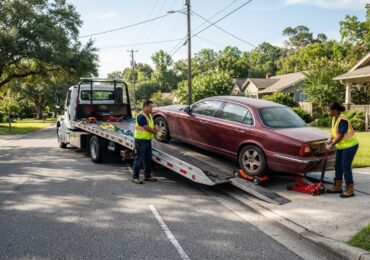
Imagine handing over the keys to your vehicle, watching the trailer pull away, and then seeing nothing but a “last updated 12 hours ago” notification on your screen. For many owners, the silence of a cross-country haul feels less like professional logistics and more like a high-stakes disappearance. Learning how to track your vehicle during transport is the only way to replace that lingering anxiety with actual data. Whether your car is crossing state lines on an open carrier or tucked away in an enclosed trailer, you deserve to know its exact location without having to play phone tag with a busy driver.
We understand that your vehicle is a significant asset; it’s natural to feel uneasy when it enters a rural “blind spot” or when a driver pauses for a mandatory rest period. This guide provides a comprehensive look at every visibility tool available in 2026, from carrier-integrated GPS portals to the nuances of personal tracking devices like AirTags. You’ll discover how to maintain a direct line of communication with your carrier and how to interpret delivery ETAs with professional accuracy. We’ll walk through technical realities like signal interference and federal safety regulations so you can monitor your car’s journey with total confidence.
Key Takeaways
- Distinguish between professional carrier-level ELD monitoring and personal tracking devices to establish multiple layers of visibility for your vehicle.
- Follow a methodical step-by-step process for how to track your vehicle during transport, beginning with securing your digital portal credentials at the time of booking.
- Evaluate the technical pros and cons of using personal GPS tags as a “silent” backup to the transport company’s primary logistics system.
- Learn to identify common reasons for tracking pauses, such as mandatory federal rest periods, and when to apply the “4-Hour Rule” for driver communication.
- Identify the essential questions regarding tracking technology and transparency that every reliable transport partner should be able to answer before you sign a contract.
Understanding the Different Methods for Vehicle Tracking
As we move through 2026, vehicle tracking in professional auto logistics has evolved into a structured framework that combines hardware, cellular networks, and human oversight. It isn’t just about seeing a dot on a map; it’s about a series of data points that ensure your asset is moving safely along its nationwide route. Understanding how to track your vehicle during transport requires a look at how data flows from the truck to your digital device. While many owners envision a live, second-by-second map, the reality is often a hybrid of automated systems and manual reporting managed by a central dispatcher. This dispatcher serves as the essential information hub, translating technical logistics data into clear, actionable updates for you.
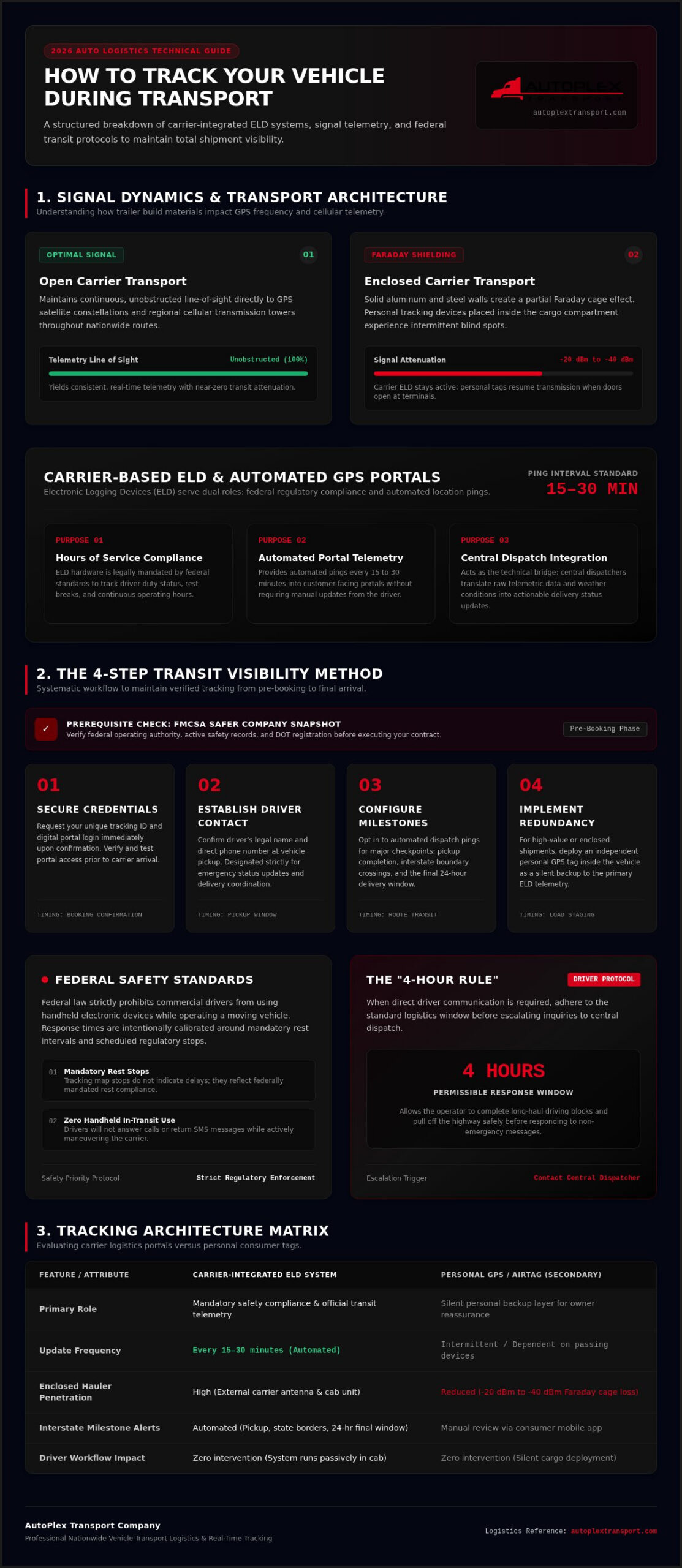
The specific method of transport you select also influences signal reliability. In open carrier transport, tracking devices usually maintain a clear line of sight to satellites and cellular towers, providing consistent updates. Enclosed transport presents a different technical scenario. The thick aluminum or steel walls of an enclosed hauler can act as a partial Faraday cage, which often reduces signal strength by 20 to 40 dBm. This means that while the carrier’s own equipment remains online, a personal device placed inside the vehicle might experience intermittent “blind spots” until the trailer doors are opened at a terminal or delivery point.
Carrier-Based GPS and ELD Systems
Most professional carriers utilize sophisticated vehicle tracking systems integrated with Electronic Logging Devices (ELDs). While the primary purpose of an ELD is to monitor a driver’s hours of service to comply with federal safety standards, these units also provide automated location pings. In standard nationwide transport, these systems typically update the company portal every 15 to 30 minutes. This integration allows you to monitor the carrier’s progress through a secure login without needing to intervene in the driver’s workflow. It’s a methodical way to maintain visibility while ensuring the driver remains focused on safe operation.
Direct Driver Communication
Despite the rise of automation, the human element remains the most accurate form of tracking. A GPS coordinate tells you where the truck is, but a driver can explain why they’ve stopped or how local weather is impacting the estimated arrival. When considering how to track your vehicle during transport, remember that professional protocols for interstate routes include check-ins at pickup, delivery, and major milestones. Because federal law strictly prohibits drivers from using handheld devices while the vehicle is in motion, you should expect response times to align with their mandatory rest periods or scheduled stops. This professional boundary ensures that safety always takes priority over an immediate text reply.
How to Track Your Vehicle: A Step-by-Step Guide
Establishing a clear visibility plan before the carrier arrives is the most effective way to eliminate transit anxiety. Learning how to track your vehicle during transport effectively starts before the truck even arrives at your driveway. By following a methodical setup, you’ll ensure that data flows correctly from the road to your screen. Before you finalize your booking, use the FMCSA SAFER Company Snapshot to verify your carrier’s safety record and operating authority. Once you’ve confirmed their credentials, follow these four essential steps to maintain a continuous line of sight on your asset.
- Step 1: Secure Your Credentials. Request your unique tracking ID or portal login immediately upon booking. Don’t wait until the vehicle is in transit to test your access.
- Step 2: Establish Driver Contact. During the pickup phase, confirm the driver’s name and a direct phone number. This isn’t for constant check-ins, but for emergency updates or specific delivery coordination.
- Step 3: Configure Milestone Alerts. Professional logistics dashboards allow you to opt-in for automated pings. Set these for pickup confirmation, state line crossings, and the final 24-hour delivery window.
- Step 4: Implement Redundancy. For high-value enclosed shipments, consider a secondary tracking method like a personal GPS tag. This provides a “silent” backup to the carrier’s primary ELD system.
Initial Setup and Portal Access
Accessing a professional logistics dashboard usually requires three pieces of information: your Order ID, the last six digits of the VIN, and the email address associated with the booking. Once logged in, verify that all pickup details are accurate. This is also the time to ensure your how to prepare a car for transport tasks are complete and documented in the system. A reliable partner like AutoPlex Transport Company can help you navigate these steps for interstate vehicle transportation, ensuring your documentation is geocoded and time-stamped for your protection.
Monitoring Milestones During Transit
The “Pickup Confirmed” status is your first major milestone; it signals that the driver has completed the initial inspection and the vehicle is legally in their care. As the truck moves across the country, you’ll receive progress pings as it passes through major highway corridors or logistical hubs. The most critical notification is the 24-hour delivery window. This alert allows you to coordinate your schedule for the final handoff. This multi-layered approach is the gold standard for how to track your vehicle during transport in 2026, providing peace of mind through every mile of the journey.
Comparing Carrier Tracking vs. Personal GPS Devices
When evaluating how to track your vehicle during transport, many owners wonder if they should rely entirely on the transport company’s platform or implement a do-it-yourself solution. Both approaches offer distinct advantages, but they serve different operational purposes. Carrier-provided portals excel at high-level trip management, giving you a macro view of the route. Adding a personal tracker introduces an extra layer of reassurance. It’s entirely legal to place a tracking device inside your own property, provided it doesn’t interfere with the safe operation of the commercial vehicle. Balancing these two methods creates the most reliable visibility strategy.
The Rise of Consumer Trackers in Auto Transport
Consumer devices like Apple AirTags or Samsung SmartTags have changed how individuals monitor their belongings. These Bluetooth trackers leverage vast networks of nearby smartphones to update their positions silently. While this works beautifully in urban environments, it creates significant limitations along rural interstate corridors where cellular traffic is sparse. If no compatible phone passes the truck, your location data will stall. Therefore, consumer tags should always be viewed as a helpful supplement for tracking your vehicle’s journey rather than a primary tool. Additionally, cross-platform anti-stalking alerts will eventually notify the driver that an unknown tag is traveling with them, so transparency with your carrier remains vital.
Professional ELD Tracking vs. DIY Solutions
The fundamental difference between professional carrier systems and DIY devices lies in how they capture and transmit data. Professional ELDs utilize direct satellite GPS pings and dedicated cellular hardware powered by the truck’s electrical system, ensuring constant uptime. In contrast, battery-powered consumer hardware faces physical constraints. For instance, standalone cellular units like Spytec require recharging every one to two weeks, while AirTags rely on a tiny CR2032 coin cell that lasts about a year but depends entirely on crowdsourced network pings.
For customers utilizing enclosed car transport to move high-value or classic assets, we recommend combining both methodologies. While the thick metal walls of an enclosed trailer can cause personal tags to drop offline temporarily due to signal attenuation, the carrier’s external ELD system continues to provide reliable data. Utilizing both systems gives you a comprehensive, fail-safe strategy for how to track your vehicle during transport without gaps in visibility.
What to Do When Your Tracking Information Isn’t Updating
It’s a common experience: you log into your portal only to find that your vehicle’s location hasn’t changed in several hours. While your first instinct might be worry, most tracking pauses are the result of routine logistical realities rather than a serious problem. Knowing how to track your vehicle during transport effectively means understanding when a lack of data is normal and when it requires action. By distinguishing between a technical “blind spot” and a genuine delay, you can maintain a steady, informed perspective throughout the journey.
Identifying Natural “Blind Spots”
Satellite and cellular signals are not always continuous, especially on long-haul interstate routes. When a truck enters mountainous terrain or remote stretches of the desert, GPS pings may fail to reach the server. Additionally, tracking often appears to “freeze” overnight. This is usually due to federal Hours of Service regulations, which require commercial drivers to take 10 consecutive hours off-duty after their driving window. During these mandatory rest periods, the truck is stationary and the ELD system may enter a power-saving mode, resulting in a static location on your map until the driver begins their next shift. Weather events like heavy snow or severe thunderstorms can also temporarily disrupt the hardware’s ability to transmit precise coordinates.
Communication Protocols for Delays
If your tracking information hasn’t updated for more than four hours during daylight driving hours, it’s appropriate to reach out for a status check. This “4-Hour Rule” allows for minor detours or cell dead zones while ensuring you aren’t left in the dark. When you contact your car transportation company, be sure to have your order ID ready. It’s helpful to understand the difference between a broker update and a carrier update. A broker manages the overall logistics and can provide a macro view of the route, while the carrier’s dispatcher has direct contact with the driver for manual location verification. This ensures that even if the GPS is glitching, the human connection remains intact.
In the rare event of a prolonged silence, escalate the concern to a logistics manager. They can determine if the issue is a simple technical glitch with the app or a logistical delay like a mechanical inspection or weather-related rerouting. Transparency is the hallmark of a professional service, and a reliable partner will always provide a clear explanation for any tracking discrepancies. If you’re ready to experience a move backed by professional oversight, you can request a transparent transport quote today and see how our communication standards set us apart.
Choosing a Transport Partner with Transparent Logistics
Transparency serves as the primary indicator of a transport provider’s professionalism and reliability. In a complex industry where vehicles travel thousands of miles across state lines, the ability to provide clear, accessible data is a sign of operational maturity. When you research how to track your vehicle during transport, look for companies that prioritize open communication channels over unverified claims. A partner that hides behind vague updates or unresponsive dispatchers is often struggling with logistical inefficiencies that could jeopardize your delivery timeline. True visibility is about more than just a GPS coordinate; it is about the accountability that comes with a documented paper trail.
Vetting a Company’s Tracking Capabilities
Before signing any contract, it’s essential to ask specific questions about the technology and human support available to you. Does the company assign a dedicated point of contact for your shipment? Having one person who understands your specific route is far more effective than navigating a generic customer service queue. You should also confirm if there is a centralized portal for national auto transport services. A professional dashboard allows you to view geocoded photos from the pickup inspection and monitor progress without needing to make a phone call. Finally, ask about their policy for delivery window updates. A reliable carrier will provide a 24-hour notice followed by a 2-hour window on the day of arrival to ensure you are prepared for the handoff.
The AutoPlex Transport Company Commitment to Peace of Mind
At AutoPlex Transport Company, we bridge the gap between advanced technology and personalized service. Our deep expertise in interstate vehicle transport allows us to anticipate potential blind spots and provide proactive updates before you even have to ask. We believe that your vehicle should never truly be off the grid. By vetting every carrier in our nationwide network for their tracking compliance and communication standards, we ensure that the data you see in your portal is both accurate and timely. This methodical approach reflects the orderly nature of the transportation industry itself, moving you from a state of inquiry to a state of total understanding.
Our personality is grounded in practicality and experience. We understand the value of the assets we move, whether it’s a standard daily driver or a high-value classic. This commitment to transparent logistics is why we facilitate direct lines of communication between owners and drivers. If you are looking for a seamless experience where you never have to wonder where your car is, we invite you to take the next step. You can request a secure, tracked transport quote today and let our seasoned team manage your vehicle’s journey with the care and visibility it deserves.
Securing Total Visibility for Your Vehicle’s Journey
Achieving peace of mind while your car is on the road comes down to having a reliable plan and the right technology in place. We’ve explored the essential methods for how to track your vehicle during transport, highlighting the importance of using a hybrid approach that combines professional ELD systems with personal tracking redundancy. Remember that brief data pauses are often a sign of a driver following mandatory safety rest periods; they aren’t a cause for alarm. By setting up your portal access early and maintaining a direct line of communication with your carrier, you ensure that you’re never left in the dark.
At AutoPlex Transport Company, we combine our 24/7 logistics support with a vetted national carrier network to keep your asset secure. As specialists in high-value enclosed transport, we understand that transparency is the foundation of a successful move. You don’t have to navigate the complexities of interstate logistics alone. Our team is here to act as your knowledgeable guide, providing the steady hand and real-time updates you deserve. Get a Transparent Quote from AutoPlex Transport Company Today and take the first step toward a stress-free delivery. We look forward to moving your vehicle safely and keeping you informed every mile of the way.
Frequently Asked Questions
Is it possible to track my car in real-time during transport?
Yes, you can monitor your vehicle’s progress, though “real-time” in the trucking industry typically refers to GPS pings sent every 15 to 30 minutes. These updates are transmitted from the truck’s Electronic Logging Device to a secure portal. This ensures you stay informed about how to track your vehicle during transport without requiring the driver to stop and manually update their status. It provides a reliable digital trail from pickup to delivery.
Will the driver call me before they arrive for pickup or delivery?
Professional drivers will always provide advance notice before arriving at your location. The standard industry protocol includes a 24-hour initial contact followed by a more precise one to two hour window on the actual day of pickup or delivery. This courtesy allows you to prepare for the vehicle inspection and ensures the door-to-door process remains efficient. Clear communication is a hallmark of our vetted national carrier network.
What should I do if the GPS location hasn’t moved in 24 hours?
If the location remains static for 24 hours, it often indicates the driver is fulfilling mandatory federal rest requirements or it’s a scheduled weekend pause. Commercial drivers must follow strict Hours of Service regulations that include long stationary periods. If the delay occurs during a standard business day and exceeds 24 hours without a status update, you should contact your dedicated logistics coordinator to request a manual verification.
Can I put an AirTag in my car while it is being shipped?
You are welcome to place a personal Bluetooth or cellular tracker like an AirTag inside your vehicle. Many owners use these as a “silent” redundancy to the carrier’s professional tracking system. However, keep in mind that metal trailers can occasionally shield the signal; updates may be intermittent until the truck reaches a more populated area. It is a helpful secondary tool for understanding how to track your vehicle during transport.
Why does my tracking link say “Information Unavailable”?
This status typically appears when a shipment has been booked but the driver hasn’t yet “activated” the load in their mobile dispatch app. It can also occur if the vehicle is currently in a remote area with limited cellular connectivity. Once the driver reaches a stronger signal area or completes the initial pickup documentation, the system will refresh with the most current geocoded data and timestamps for your review.
Do I get a direct phone number for the truck driver?
You will receive the driver’s contact information once the carrier has been assigned and the pickup is scheduled. While you have a direct line, we recommend using it primarily for coordinating the final handoff. Because federal safety laws prohibit drivers from using handheld devices while operating a commercial vehicle, your logistics portal remains the most efficient way to check location data without interrupting the driver’s focus on the road.
How often does the tracking information update on the portal?
Most professional logistics portals update every 15 to 60 minutes while the vehicle is actively in motion. When the truck stops for fuel, rest periods, or intermediate deliveries, the frequency may decrease to preserve the hardware’s battery or data usage. These automated pings provide a methodical look at the journey, ensuring you can see progress across state lines and through major highway corridors with consistent reliability.
Is tracking included in the standard car shipping quote?
Basic portal access and milestone notifications are included as a standard feature of our professional service. We believe that transparency is essential for a successful transport experience; therefore, we don’t charge extra for the peace of mind that comes with visibility. Your quote covers the full logistics chain, including the technology required to monitor your vehicle’s safety and progress throughout its nationwide journey across the United States.