
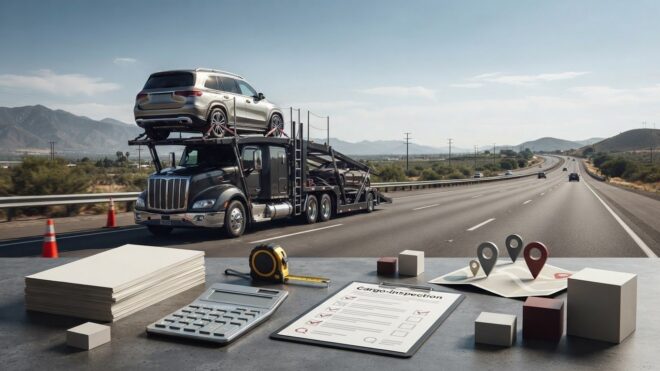
The cheapest vehicle shipping quote you receive online is almost guaranteed to be the most expensive mistake you can make. If you’ve started collecting estimates for interstate transport, you’ve probably noticed erratic price variations that make very little logistical sense. It’s completely natural to feel uneasy about aggressive sales tactics, especially when you fear a low upfront bid might lead to canceled pickups or sudden demands for additional cash upon delivery.
You shouldn’t have to guess whether a rate reflects genuine carrier dispatch economics or simply an unvetted broker’s gamble. We’ll help you deconstruct the exact factors that shape reliable transport pricing, from seasonal trailer capacity and vehicle dimensions to comprehensive cargo coverage. Ahead, we break down standard line items line by line, show you how to choose between open and enclosed transport, and give you the practical knowledge required to secure transparent door-to-door nationwide delivery without unexpected surprises.
Key Takeaways
- Learn how carrier dispatch networks evaluate real logistics expenses based on total route mileage, seasonal trailer demand, and vehicle dimensions.
- Discover how to analyze an interstate vehicle shipping quote to verify comprehensive cargo insurance and eliminate unexpected destination charges.
- Identify predatory lowball estimates and aggressive broker tactics that leave vehicles stranded without an assigned carrier.
- Determine whether open carrier car transportation or enclosed transport services offer the best protection and value for your specific vehicle.
- Master the pre-trip preparation checklist and inspection protocols needed to secure smooth, transparent door-to-door nationwide delivery.
What Is a Vehicle Shipping Quote and How Does It Work?
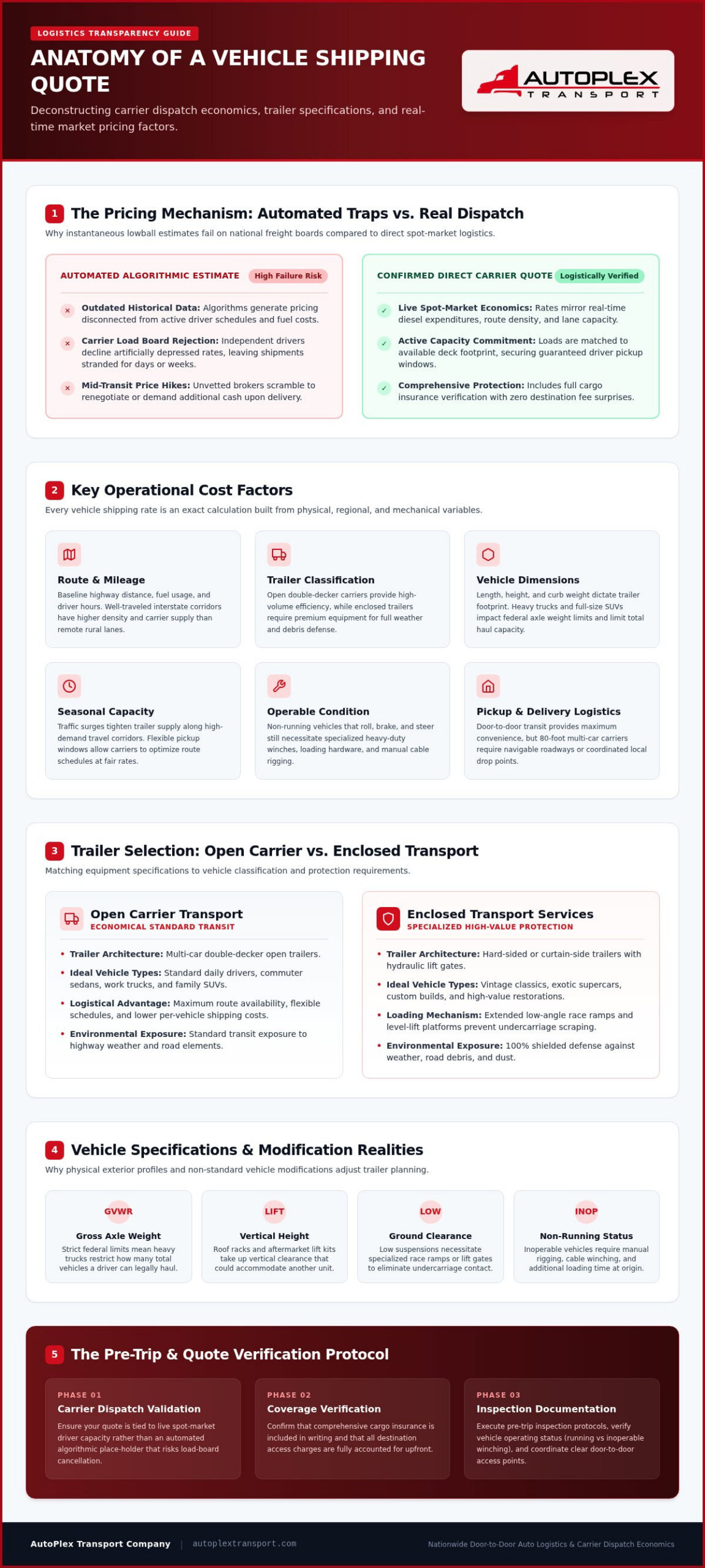
A legitimate vehicle shipping quote is a precise logistical calculation, not a random guess or an arbitrary sales figure. At its core, the quote represents the operational cost of moving a vehicle safely between locations across nationwide interstate corridors. Unlike standard parcel delivery services that rely on fixed postage tiers, auto transport relies on dynamic freight networks where trailer space, route efficiency, and fuel expenditures determine real-time pricing.
When you request pricing, logistics coordinators evaluate how your vehicle fits into active carrier schedules. A transparent estimate balances several fundamental operational factors:
- Physical dimensions: Length, height, and curb weight dictate trailer deck footprint and gross weight limits.
- Route density: Well-traveled interstate corridors offer greater carrier availability than remote, off-route locations.
- Equipment classification: Choosing between open carrier car transportation and enclosed transport services shifts operational requirements.
- Transit timing: Flexible pickup windows allow coordinators to match your vehicle with optimal routes at standard market rates.
The Mechanics of Nationwide Auto Transport Pricing
Carriers price shipments based on trailer space, overall weight, and current diesel fuel expenditures. Direct dispatch pricing mirrors live spot-market conditions along specific nationwide routes. When seasonal traffic surges occur, carrier capacity tightens across high-demand travel lanes. Honest pricing accounts for these fluctuations upfront, ensuring an active driver accepts the load rather than leaving your shipment stranded.
Automated Estimates vs. Confirmed Carrier Quotes
Many online quote calculators generate instant estimates using algorithms tied to outdated historical data. While these numbers look attractive, they rarely reflect real-time driver availability. When an automated algorithm outputs an artificially depressed vehicle shipping quote, independent carriers routinely decline the dispatch. As a result, orders linger unassigned on national load boards for days or weeks until the broker raises the price to match actual carrier rates.
Anatomy of an Auto Transport Quote: Key Cost Factors
Understanding what goes into your estimate requires dissecting the specific line items that carriers evaluate before accepting a load. Rather than viewing an estimate as a single opaque figure, breaking down its operational components gives you the leverage to determine whether an offer is mathematically sound. Every line item connects directly to the labor, equipment, and fuel needed to complete the trip safely.
Distance forms the baseline of any transport agreement. Longer routes naturally require more fuel and driver hours, though the rate calculated per mile typically decreases as total mileage expands across state lines. Beyond highway transit time, several mechanical and physical variables influence the final price:
Trailer Type: Open Carrier vs. Enclosed Transport
Most vehicles travel nationwide on double-decker open trailers. Choosing open transport car shipping provides an economical and efficient transit method for daily drivers. Conversely, vintage classics, exotic supercars, and high-value restoration projects require specialized defense against road debris and weather. Opting for enclosed car transport utilizes hard-sided or curtain-side trailers with lift-gate loading mechanisms, which command an equipment premium to preserve vehicle finishes.
Vehicle Specifications and Operable Condition
A vehicle shipping quote reflects exact gross vehicle weight ratings and physical exterior profiles. Independent carriers operate under strict federal axle weight restrictions, meaning heavy trucks and full-size SUVs limit the number of additional cars a driver can haul. Modifications also alter trailer planning:
- Aftermarket lifts and roof accessories: Taller vehicles take up vertical clearance that could otherwise accommodate another unit.
- Low ground clearance: Performance suspensions require hydraulic lift gates or extended low-angle race ramps to avoid undercarriage scraping.
- Mechanical operability: Non-running vehicles that roll, brake, and steer still necessitate heavy-duty winches and manual cable rigging to load and unload safely.
Pickup and Delivery Logistics
Standard door-to-door transportation delivers the highest level of personal convenience. However, large multi-car trailers measuring eighty feet in length cannot safely maneuver tight cul-de-sacs, low-hanging utility branches, or strict municipal access zones. In these instances, professional drivers arrange pickup and drop-off points at nearby broad-access commercial plazas. Maintaining a flexible multi-day departure window also allows dispatchers to pair your route with existing carrier patterns, avoiding expedited dispatch surcharges.
When you’re ready to arrange delivery, working directly with a proven partner like AutoPlex Transport Company ensures every equipment requirement is accounted for without unexpected surcharges at the destination.
Red Flags in Vehicle Shipping Quotes: Avoiding Hidden Fees
Evaluating multiple transport proposals requires looking past the bottom-line dollar figure to scrutinize the contractual language underneath. While healthy market competition keeps rates reasonable, predatory brokers routinely exploit consumer unfamiliarity with national freight networks. Spotting deceptive practices early protects you from unexpected expenses and logistical gridlock when your shipping timeline cannot afford delays.
Deceptive quotes typically rely on intentional ambiguity. A broker might present a minimal upfront rate while concealing fine print that exposes you to supplementary charges later in transit. Knowing which contractual clauses demand scrutiny keeps your budget secure:
- Unilateral price escalation clauses: Language stating that the price is an estimate subject to carrier availability gives the intermediary legal cover to demand more funds right before pickup.
- Non-refundable upfront deposits: Unscrupulous entities often collect non-refundable administrative fees before securing an actual truck dispatch.
- Ambiguous destination charges: Vague terms can mask extra assessments for fuel adjustments, local access, or gate fees.
The Danger of Unusually Low Estimates
An unusually cheap vehicle shipping quote often serves as classic bait-and-switch pricing. Predatory sales outfits quote artificially deflated rates simply to capture customer deposits and lock in signatures. Because independent owner-operators reject shipments that fail to cover basic operating overhead, the broker leaves the vehicle posted on load boards without an assigned driver. As your moving date approaches and panic sets in, the broker reveals that securing a driver requires paying hundreds more than originally promised.
Scrutinizing Contractual Terms and Insurance Coverage
Legitimate quotes clearly separate broker coordination fees from the carrier’s direct freight balance. Always insist on seeing proof of the hauler’s primary commercial cargo coverage before releasing your vehicle. Confirm whether the policy includes a deductible assigned to you, as quality providers ensure customer personal auto policies remain completely untouched in the rare event of transit damage. Never sign an agreement that allows the transport company to retain your deposit if they fail to assign a vetted carrier within your agreed dispatch window.
How to Compare Quotes and Prepare Your Vehicle
Preparing to evaluate competing proposals requires collecting your exact vehicle specifications before requesting numbers. Providing identical parameters to every logistics coordinator creates a true baseline comparison. If you disclose modified suspensions, oversized tires, or inoperable steering issues after receiving an initial rate, carriers can legitimately adjust billing during pickup. Precision on your end guarantees that your final invoice aligns perfectly with your initial vehicle shipping quote.
Evaluating Competing Auto Transport Proposals
Assessing proposals side by side requires looking at total door-to-door delivery obligations. Demand all-inclusive bottom-line pricing rather than contracts separating baseline freight from floating fuel adjustments. Always verify carrier credentials by checking active USDOT safety registrations directly through federal motor carrier databases. Most importantly, ensure the contract explicitly specifies direct door-to-door transit rather than shifting your vehicle between distant staging hubs.
Essential Vehicle Preparation Steps
Properly readying your car minimizes delays during driver arrival and protects your interests during pre-load inspections. Follow these standard procedures before the hauler arrives:
- Wash the exterior: Clean surfaces ensure existing cosmetic blemishes, scratches, and chips are immediately visible during the initial walkaround inspection.
- Document current condition: Review our comprehensive guide on how to prepare a car for transport to record high-resolution, time-stamped photographs of every panel.
- Clear the interior: Remove personal belongings, parking passes, and automated toll transponders to prevent theft, transit vibration damage, or automated toll charges along interstate routes.
- Cap fluid levels: Keep your fuel tank at roughly one-quarter capacity. That provides plenty of fuel for loading maneuvers while keeping gross vehicle weight low for the trailer.
To avoid confusing fee schedules and lock in transparent pricing backed by complete cargo coverage, request a reliable vehicle shipping quote from AutoPlex Transport Company today.
Securing a Reliable Quote with AutoPlex Transport
Selecting a transportation partner comes down to confidence in execution. AutoPlex Transport Company delivers nationwide transportation services anchored in straightforward logistics and pricing clarity. Instead of using speculative rates that leave customers guessing, our experienced coordinators build transport schedules around verified carrier capacity. We match your vehicle directly with fully insured open or enclosed carriers, ensuring complete accountability from initial scheduling through delivery.
Every assignment is managed with a direct focus on asset safety. By coordinating door-to-door transportation across our licensed network, we remove the friction of regional staging yards and multiple vehicle transfers. Your car remains on a single designated trailer throughout its journey, significantly reducing transit handling risks.
The AutoPlex Transport Company Standard
Our operational model emphasizes comprehensive risk management. We enforce rigorous carrier vetting procedures, confirming that every driver in our interstate network maintains active operating authority and verified commercial cargo coverage. Coordinators track scheduling parameters closely, giving you clear logistical updates as your hauler travels along national freight corridors. Whether you require open carrier car transportation for a family sedan or enclosed transport services for an exotic show car, our specialists configure equipment tailored specifically to your vehicle’s physical requirements.
Request Your Transparent Transport Quote Today
Securing accurate pricing begins with defining your shipment requirements. Simply submit your vehicle’s year, model, modifications, operational condition, and route preferences to our coordination team. We evaluate current interstate traffic density and spot-market driver availability to present an all-inclusive assessment without obscured fees or post-booking surcharges.
Avoid automated lowball bids and take control of your transit schedule. Partner with seasoned logistics professionals by securing your verified vehicle shipping quote today.
Make Confident Transport Decisions with Complete Pricing Clarity
Securing reliable interstate transport shouldn’t feel like a high-stakes gamble. When you understand the operational logistics behind trailer deck space, seasonal route density, and driver scheduling, you can easily spot and avoid predatory lowball bids. A dependable transport plan isn’t about chasing an unrealistic discount. It’s about protecting your investment with guaranteed accountability from initial pickup to final drop-off.
AutoPlex Transport Company provides reliable nationwide coverage across major interstate routes, coordinating vetted open and enclosed carriers equipped with verified cargo insurance. Our commitment to comprehensive door-to-door delivery eliminates unexpected destination fees and ensures your vehicle remains protected every mile of the journey. When you’re ready for honest logistics without surprises, request your transparent, nationwide vehicle shipping quote from AutoPlex Transport and get your move started with absolute peace of mind.
Frequently Asked Questions
How is an interstate vehicle shipping quote calculated?
An interstate vehicle shipping quote is calculated using total route mileage, vehicle size, operational condition, and equipment choice. Coordinators balance current national diesel fuel prices against driver availability along specific interstate shipping corridors. Larger vehicles take up more trailer deck footprint and weight capacity, while non-running vehicles require winching equipment. These combined logistical variables produce an all-inclusive rate reflecting live carrier market capacity.
Can a vehicle shipping quote change after booking?
A quote shouldn’t change after booking if all vehicle details and transit terms were accurately disclosed. However, predatory brokers who provide artificially deflated estimates often raise prices later when carriers refuse unprofitable loads. Rates may also legitimately change if vehicle parameters change after booking, such as undisclosed aftermarket lift kits, heavy cargo, or sudden mechanical breakdowns that prevent the vehicle from driving onto the trailer.
What is the price difference between open and enclosed auto transport?
Enclosed transport carries a noticeable percentage premium over standard open trailer transport. This difference exists because enclosed trailers typically carry fewer vehicles per trip, which significantly reduces the carrier’s overall hauling capacity. In addition, enclosed haulers utilize specialized hydraulic lift-gates, protective hard-sided walls, and carry substantially higher cargo insurance policies to protect exotic, antique, and high-value luxury vehicles from highway debris and weather conditions.
Does my auto shipping quote include full cargo insurance coverage?
Transparent transport quotes include comprehensive commercial cargo insurance coverage directly within the agreed freight rate. Reputable logistics providers vet carrier policies to guarantee active coverage limits that protect your vehicle against transit hazards from pickup through delivery. Always confirm whether the carrier’s primary cargo insurance policy applies directly to your vehicle so your personal auto insurance policy and personal deductible remain completely unaffected in the event of an incident.
Why do different auto transport companies give such varied quotes?
Quotes vary widely because companies use completely different pricing methodologies. Automated websites generate algorithmic guesses based on outdated averages without checking driver capacity, resulting in artificially cheap rates that drivers ignore. Experienced logistics providers calculate pricing based on live carrier availability, actual fuel expenditures, and genuine route conditions. Paying for a realistic rate ensures an insured carrier is promptly assigned to your order instead of lingering unfulfilled.
Can I pack personal items inside my car to save on moving costs?
Transporting personal items inside your car is generally restricted by federal transportation guidelines. Carriers face strict gross vehicle weight limits at commercial highway inspection stations, meaning excess cargo can trigger substantial fines. Most haulers allow a limited amount of personal baggage stored securely in the trunk below window level, but these items aren’t covered by carrier cargo insurance. Heavy household goods should always move via traditional moving services.
How far in advance should I request a vehicle shipping quote?
You should request a vehicle shipping quote roughly two to three weeks before your desired pickup date. This window gives logistics coordinators sufficient time to monitor national freight lanes and secure space with a top-rated carrier at competitive standard rates. While last-minute bookings can be accommodated across major routes, booking early avoids expedited dispatch fees and ensures a reliable pickup schedule that aligns smoothly with your broader moving plans.
What happens if my vehicle is inoperable when the carrier arrives?
If your car cannot run or drive, the driver must use specialized winching equipment and cable rigging to pull it safely onto the trailer. If inoperability isn’t disclosed before dispatch, an arriving carrier might lack the mechanical tools needed to load the vehicle. This mismatch can result in a canceled dispatch, rescheduled pickup, and additional equipment surcharges. Always disclose mechanical issues upfront to ensure the proper trailer arrives.