The DIY road trip is often viewed as the ultimate budget-saving hack, but the financial reality of a long-distance move has changed significantly this year. With national average gas prices reaching $4.21 per gallon and mid-range hotel rates often exceeding $200 a night, the perceived savings of driving yourself can vanish before you even cross the first state line. When you evaluate the total cost to ship a car vs driving 2026, you have to look beyond the fuel tank to account for the true “Total Cost of Movement.”
We recognize that the logistics of moving a vehicle can feel overwhelming, especially when you’re worried about unnecessary wear and tear or the fear of overpaying for professional services. You deserve a solution that protects your investment without draining your bank account. In this breakdown, we promise to uncover the hidden expenses of the road, such as the $58 daily average for food and the steady depreciation of your vehicle’s resale value. We’ll provide a transparent comparison of professional shipping options against the logistical demands of a multi-day drive. This guide will give you the clarity needed to choose the most efficient path for your vehicle and your budget.
Key Takeaways
- Define the “Total Cost of Movement” as the combination of direct road expenses and the indirect impact on your vehicle’s long-term resale value.
- Identify why the cost to ship a car vs driving 2026 often favors professional transport once a journey exceeds the critical 1,000-mile threshold.
- Quantify the hidden opportunity cost of your personal time and the physical fatigue associated with several days of long-distance travel.
- Understand how modern logistical factors, such as vehicle weight and carrier type, influence the overall efficiency of your relocation.
- Establish a clear decision-making framework to determine when a DIY drive is practical and when professional shipping provides better financial security.
Cost to Ship a Car vs. Driving: The 2026 Financial Landscape
Calculating the cost to ship a car vs driving 2026 requires more than a simple comparison between a carrier’s quote and a tank of gas. To find the most cost-effective path, you must understand the “Total Cost of Movement.” This concept accounts for both direct expenses, like fuel and service fees, and indirect costs, such as vehicle depreciation and the value of your personal time. In 2026, several factors have shifted this balance. Rising labor costs in the logistics sector and retail gas prices averaging $4.21 per gallon have made the old $1 per mile rule of thumb obsolete for long-distance hauls. You’re no longer just paying for the road; you’re paying for the inflation of every service connected to it.
For most vehicle owners, 1,000 miles serves as the critical pivot point. Below this distance, the flexibility of driving often wins. However, once you cross that four-digit threshold, the cumulative expenses of a road trip begin to rival or exceed professional transport rates. Understanding how car shipping works helps clarify why these professional services offer better value over long distances. By consolidating multiple vehicles onto a single carrier, the high costs of fuel and labor are effectively split among several customers, providing an economy of scale that a single driver cannot replicate.
The Direct Costs of Professional Shipping
Professional transport rates are determined by a combination of distance, vehicle weight, and the level of protection you require. Larger vehicles like heavy SUVs or electric vehicles command higher rates due to their footprint and weight on the trailer. Despite these variables, open transport car shipping remains the most economical choice for the majority of our clients. It provides a balance of safety and efficiency that fits most relocation budgets. In 2026, you should also account for logistics surcharges, which fluctuate based on diesel prices, and ensure your service includes comprehensive insurance coverage to protect your asset during interstate transit.
The Direct Costs of the DIY Drive
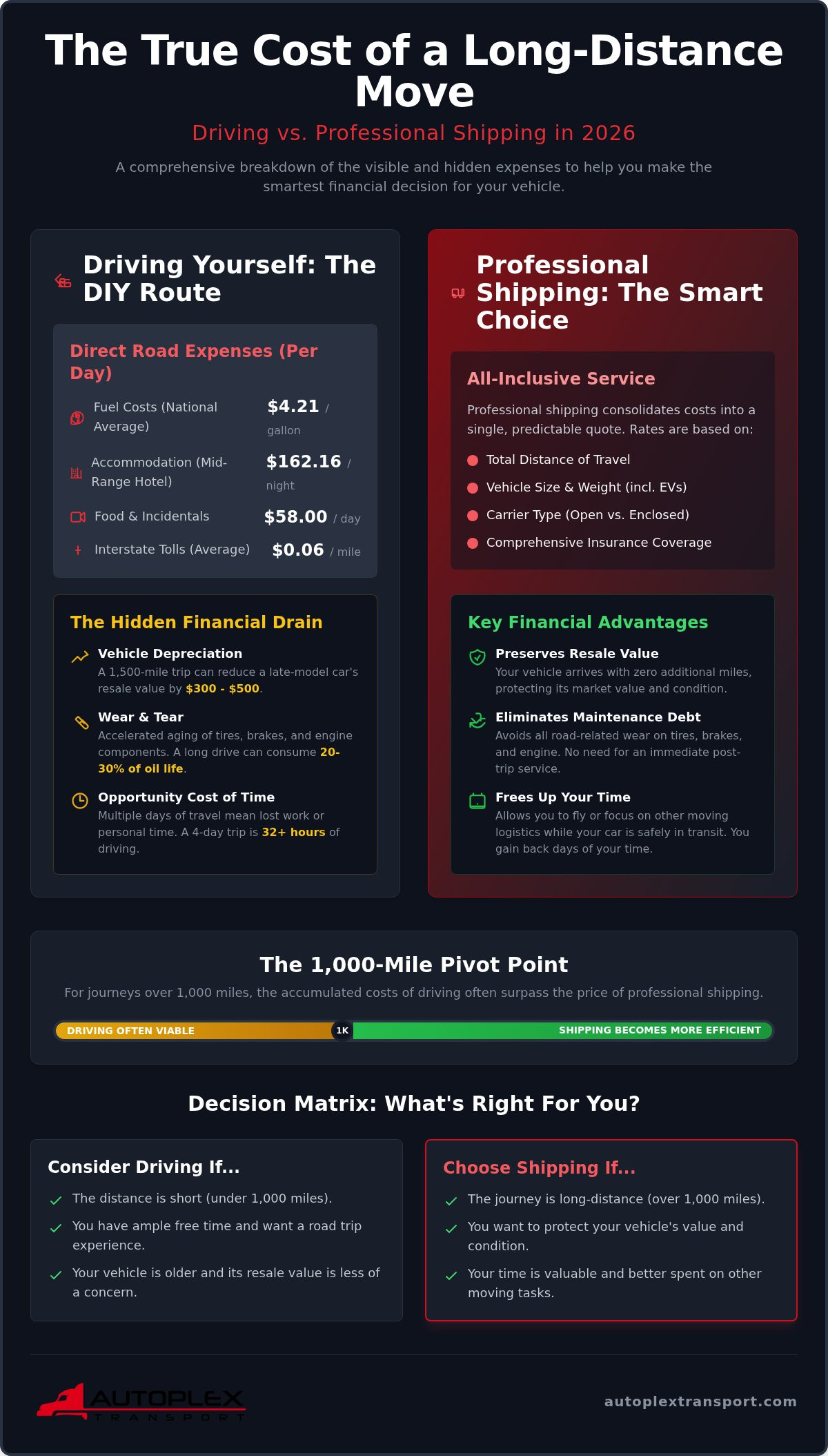
A cross-country drive involves a steady stream of small expenses that quickly add up to a significant total. Based on 2026 data, a traveler spends an average of $58 per day on food. When you add the average daily hotel rate of $162.16 and interstate tolls averaging 6 cents per mile, the daily cost of being on the road can easily exceed $250 before you even buy a gallon of gas. There is also the risk of mechanical failure. A single blown tire or engine sensor issue in a remote area can result in towing fees and repair costs that far exceed the price of a professional shipping contract. These variables make the DIY route a gamble that often costs more than the structured price of professional logistics.
Calculating the Hidden Expenses of a Long-Distance Drive
While the price of gasoline is the most visible expense on a cross-country trip, the most significant financial drain often happens silently on your odometer. Every mile you drive contributes to the inevitable depreciation of your asset. When you analyze the cost to ship a car vs driving 2026, you must account for the fact that a 2,000-mile journey isn’t just a trip; it’s an accelerated aging process for your vehicle. High-speed interstate travel exposes your car to road debris, fluctuating weather conditions, and the mechanical stress of sustained operation, all of which are avoided when using professional interstate vehicle transportation.
Vehicle Depreciation and Wear and Tear
In the 2026 automotive market, mileage is a primary driver of resale value. Adding 1,500 or more miles in a single week can lead to a measurable drop in what a dealer or private buyer is willing to pay. Beyond the valuation, you must consider the “maintenance debt” incurred during a long haul. A cross-country drive can consume 20% to 30% of your oil life and significantly accelerate the wear on your tire treads and brake pads. Based on 2026 market estimates, adding 1,500 miles to a late-model vehicle can reduce its trade-in value by approximately $300 to $500 depending on the vehicle’s class and condition. These are real dollars that leave your pocket the moment you arrive at your destination.
The Value of Your Time
Perhaps the most overlooked factor in this comparison is the “Opportunity Cost” of your personal time. If you earn $40 per hour and spend four days driving across the country, you’ve effectively “spent” over $1,200 in labor value alone. This doesn’t even account for the mental and physical exhaustion that follows ten-hour days behind the wheel. Car shipping costs often become much more attractive when you realize that shipping allows you to maintain your work schedule or enjoy your transition without burning through valuable vacation days.
Safety is another critical variable that carries a hidden price tag. Driver fatigue is a leading cause of interstate accidents, and the risk of a collision increases with every hour spent in high-traffic corridors. Professional carriers utilize specialized equipment designed to shield your vehicle from the elements and road hazards. By choosing a professional logistics partner, you eliminate the risk of windshield chips from gravel or body damage from unexpected hailstorms. This protective approach ensures your vehicle arrives in the same condition it left, preserving both its aesthetic appeal and its long-term financial value.
Factors Influencing Professional Car Shipping Rates in 2026
Professional shipping rates aren’t static. They respond to a complex web of logistical variables that have evolved significantly over the last few years. In 2026, the shift toward heavier electric vehicles has fundamentally changed how carriers calculate load capacity. If you’re weighing the cost to ship a car vs driving 2026, you must realize that a standard sedan doesn’t cost the same as a full-size SUV or a battery-heavy EV. Heavier vehicles require more fuel to transport and limit the number of cars a carrier can legally haul at once. Additionally, seasonal trends like the annual “snowbird” migration create surges in demand on specific routes, which can temporarily reduce carrier availability and influence standard rates.
Delivery speed also plays a significant role in your final quote. While standard windows are the most cost-effective, expedited services are available for those on a tight relocation timeline. When you evaluate these professional logistics against the average cost of operating a vehicle, you’ll see that shipping provides a predictable, all-inclusive price. This price covers the specialized labor and equipment costs that a DIY driver often underestimates when planning a long-haul trip across state lines.
Open vs. Enclosed Carrier Selection
Choosing the right carrier type is about matching the level of protection to your vehicle’s specific needs. Open carriers are the most common and economical choice for daily drivers, providing reliable nationwide service. However, for high-value assets, enclosed car transport is a protective investment that shields your car from road debris and weather. We recommend enclosed transport for luxury, classic, or sentimental vehicles where preserving the factory finish is a top priority. This choice effectively eliminates the risk of environmental damage during the journey, ensuring your car arrives in showroom condition.
The Logistics of Door-to-Door Service
We prioritize convenience through our door-to-door transportation model. Many people overlook the hidden costs of terminal-to-terminal shipping, such as the expense of getting to a remote industrial yard or the time lost navigating complex pickup schedules. Residential pickup and delivery simplify the entire moving process, allowing you to focus on your relocation while we handle the heavy lifting. Every shipment is documented with a detailed Bill of Lading. This document acts as your primary protection, recording the vehicle’s exact condition at both pickup and delivery to ensure full transparency and peace of mind throughout the process.
Decision Matrix: When to Ship vs. When to Drive
Determining the most efficient way to move your vehicle requires an objective look at the distance involved. We use a distance-based decision matrix to help our clients visualize where their money is best spent. For journeys under 500 miles, driving is typically the most logical choice. These trips can usually be completed in a single day; this eliminates the need for overnight lodging and multiple restaurant meals. However, once you enter the 500 to 1,000-mile range, the financial benefits begin to equalize. At this stage, the combined expenses of fuel, tolls, and a hotel stay often mirror the investment required for professional transport.
Shipping for Specialized Vehicles
High-value assets require a different level of care. You should generally avoid driving classic or exotic cars across several states. Long-distance road travel exposes these vehicles to unnecessary mechanical strain and the risk of body damage from road debris. Utilizing classic car transport ensures your investment is handled by experts who understand the nuances of low-clearance and high-value loading. Professional transport also provides specialized insurance coverage that often exceeds standard personal auto policies for vehicles in transit.
For instance, collectors purchasing enthusiast vehicles from specialized inventories like 111auto.com typically opt for professional shipping to maintain the car’s value and mechanical integrity during relocation.
Preparing for Your Choice
Success in either path depends on thorough preparation. If you choose professional shipping, following a checklist on how to prepare a car for transport is essential for a smooth pickup. This includes cleaning the vehicle and removing personal items to allow for a proper inspection. For those who decide to drive, ensure your vehicle has a fresh oil change, checked tire pressure, and a stocked emergency kit. Regardless of your choice, gathering accurate quotes early allows you to make a decision based on data rather than guesswork. To see how our rates compare for your specific route, you can request a transparent quote from AutoPlex Transport today.
Why AutoPlex Transport is Your 2026 Logistics Partner
Choosing a logistics partner is about more than just finding the lowest price; it’s about finding a team that understands the value of your asset and the importance of your schedule. After analyzing the cost to ship a car vs driving 2026, many of our clients realize that the peace of mind offered by a professional service outweighs the stress of a multi-day road trip. We position ourselves as a reliable partner, providing the steady hand needed to manage your vehicle’s transit with precision and care. Our goal is to transform a complex logistical challenge into a seamless experience for every customer we serve.
Our approach is built on transparency. One of the most common pains in the shipping industry is the fear of hidden fees or sudden price hikes after a contract is signed. We eliminate this uncertainty by providing comprehensive, all-inclusive quotes. When we calculate your rate, we factor in the specific logistics of your route, the current diesel surcharges for 2026, and the necessary insurance coverage. This methodical process ensures that the price you see is the price you pay, allowing you to budget for your move with confidence and clarity.
Comprehensive National Coverage
We maintain a proven national carrier network that allows us to offer door-to-door transportation across the entire United States. Whether you are moving between major coastal cities or relocating to a rural area, we provide a single point of contact for the entire journey. This simplifies the communication process; you won’t have to navigate a maze of different drivers or dispatchers to find an update. Our nationwide transportation services are built on decades of experience, ensuring that whether you are moving from a small town or a major metropolitan hub, your vehicle remains in safe hands throughout the process.
Get Your Personalized 2026 Shipping Quote
To receive the most accurate rate, we recommend providing specific details about your vehicle, including its current condition and any modifications that might affect its weight or size. This is particularly important when evaluating the cost to ship a car vs driving 2026, as weight is a primary factor in modern carrier logistics. Our booking process is designed to be informative and straightforward. Once you submit your information, our team evaluates the best carrier options for your specific timeline and vehicle type. We prioritize safety from the initial pickup to the final delivery, using the Bill of Lading to document every detail. Don’t let the hidden costs of the road or the fatigue of a long drive disrupt your relocation. Protect your car and your time today by choosing a partner that treats your vehicle with the respect it deserves.
Take the Efficient Path for Your 2026 Relocation
Deciding between driving and shipping is a choice between short-term visibility and long-term value. We’ve explored how the “Total Cost of Movement” includes more than just the current $4.21 retail gas price. It encompasses the hundreds of dollars in vehicle depreciation and the immense value of your personal time. When you analyze the cost to ship a car vs driving 2026, it becomes clear that professional logistics provide a level of financial predictability that a DIY road trip simply cannot match.
By choosing a partner with a proven track record, you trade the exhaustion of the interstate for the convenience of our nationwide door-to-door service. As an A+ rated vehicle logistics expert, we provide fully insured interstate transport to protect your asset throughout its journey. You can move forward with the confidence that your vehicle is in stable, experienced hands. We’re committed to being the reliable partner you need for a stress-free transition.
Get Your Instant 2026 Car Shipping Quote from AutoPlex Transport today. We’re here to make your next move your most efficient one yet.
Frequently Asked Questions
Is it cheaper to ship a car or drive it in 2026?
Whether it’s cheaper to ship or drive depends largely on the total distance of your move. For trips exceeding 1,000 miles, shipping often becomes the more economical choice due to rising fuel prices and lodging costs. When you evaluate the cost to ship a car vs driving 2026, you must factor in total road trip costs, including the $4.21 national average gas price and overnight hotel stays.
How much does it cost to ship a car 1,000 miles?
The price for a 1,000-mile shipment is determined by several logistical variables rather than a flat rate. Factors such as the vehicle’s weight, the choice between open and enclosed carriers, and the current diesel fuel surcharges all influence the final quote. While shorter distances have a higher per-mile rate, professional transport consolidates costs to remain competitive against the cumulative expenses of a multi-day road trip.
Does car shipping insurance cover everything?
Carrier insurance typically covers damage that occurs specifically during the loading, unloading, and transit process. You should understand that this coverage doesn’t extend to personal items left inside the vehicle or pre-existing mechanical issues. We use a detailed Bill of Lading to document your car’s condition at both pickup and delivery; this ensures a transparent record for your protection throughout the interstate journey.
How long does it take to ship a car cross-country?
Cross-country transportation generally takes between 7 and 10 days, depending on the specific route and weather conditions. While a single driver might push for a faster arrival, professional carriers must adhere to strict safety regulations regarding driving hours. This methodical pace ensures your vehicle’s handled with care and arrives safely at its destination without the risks associated with driver fatigue on long-haul routes.
Can I put personal items in my car when shipping it?
We generally advise against placing personal items in your vehicle during transport. Most carriers aren’t licensed to transport household goods, and insurance policies don’t cover items left in the cabin or trunk. Additionally, extra weight can impact the carrier’s legal load limit and may result in additional fees. Removing all personal belongings ensures a smooth inspection process and protects your items from potential transit shifts.
How do I get an accurate car shipping quote?
To receive an accurate quote, you should provide the exact year, make, and model of your vehicle along with the specific pickup and delivery zip codes. It’s also helpful to specify your preferred carrier type and your desired timeframe. Providing these details allows us to calculate a transparent cost to ship a car vs driving 2026 for your specific route, ensuring there aren’t any unexpected surprises during the booking process.
What is the best month to ship a car to save money?
Shipping rates often fluctuate based on seasonal demand, with the late fall and early winter months typically offering more competitive pricing. You should try to avoid peak “snowbird” seasons in the early spring and late autumn when demand for north-south routes is at its highest. Being flexible with your pickup and delivery dates can also lead to savings by allowing the carrier to optimize their route efficiency.
Is open carrier transport safe for my vehicle?
Open carrier transport is a safe and industry-standard method used by dealerships and private owners alike. While your vehicle’s exposed to the elements, it’s secured using specialized equipment designed to prevent movement during transit. This method is highly reliable and remains the most cost-effective solution for daily drivers. For those with high-value or classic vehicles, we offer enclosed options for an extra layer of environmental protection.