With the U.S. employee relocation services industry valued at approximately $12.2 billion in 2026, the pressure to manage company assets effectively has never been higher. You likely recognize that a successful corporate vehicle relocation is more than just a logistical task; it’s a critical component of a positive employee experience. However, the reality of interstate transport often involves navigating complex coordination schedules and worrying about potential liability gaps during transit. It’s frustrating when hidden fees appear in quotes or when timelines don’t align with your team’s onboarding dates.
This guide provides a comprehensive framework to master these complexities, ensuring your fleet transitions are handled with professional care and full insurance transparency. We’ll examine how to choose between open and enclosed carriers, the impact of the July 2026 IRS mileage rates on your budget, and the best practices for managing door-to-door logistics. By understanding these industry standards, you can secure reliable timelines and protect your company’s valuable assets. We’ll walk through every step of the process to ensure your next relocation project is seamless, predictable, and fully compliant with current regulations.
Key Takeaways
- Understand why standard consumer shipping often lacks the reliability required for business operations and how to demand higher communication standards for your fleet.
- Evaluate the practical differences between open and enclosed carriers to ensure you select the most secure and cost-effective option for every asset.
- Learn how to verify essential credentials, such as active DOT registrations and cargo insurance, to protect your company from liability during interstate transit.
- Develop a structured approach to corporate vehicle relocation that aligns vehicle deliveries with employee onboarding schedules and household moves.
- Discover the logistical benefits of door-to-door service management in maintaining a seamless, stress-free transition for relocating executives.
Understanding Corporate Vehicle Relocation: Why Business Logistics Differ
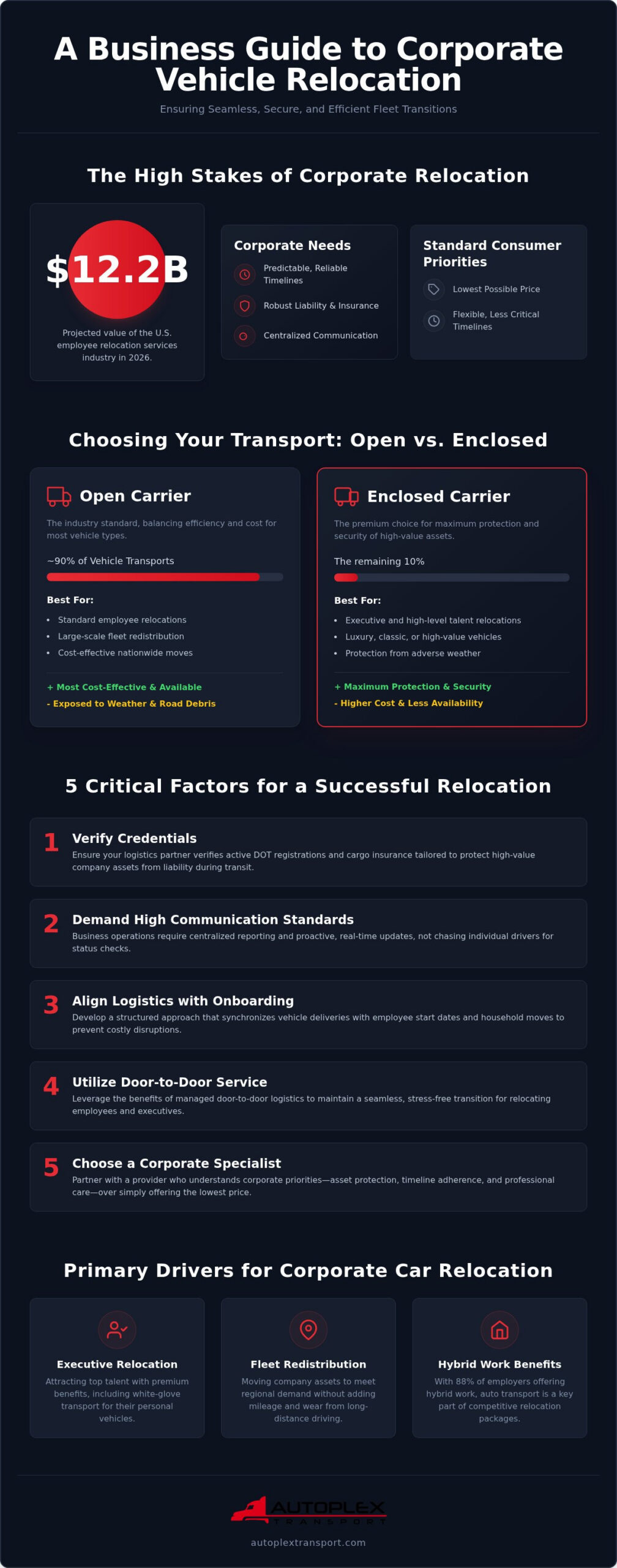
Corporate vehicle relocation is a specialized managed service designed to move employee-owned vehicles and company fleet assets across state lines. While a standard consumer might prioritize the lowest price, a business entity requires a reliable partner who understands the high stakes of employee onboarding and asset safety. In 2026, with the U.S. employee relocation industry valued at $12.2 billion, the shift toward professional, door-to-door solutions has become a necessity for maintaining operational efficiency. Businesses don’t just need a car moved; they need a predictable timeline that aligns with a broader corporate strategy.
Standard consumer shipping often fails to meet these requirements because it lacks the necessary communication infrastructure. When a company moves an executive or redistributes a fleet, the cost of a delay far exceeds the transport fee itself. Professional logistics providers focus on minimizing these risks through rigorous carrier vetting and proactive scheduling. This methodical approach ensures that vehicles arrive exactly when and where they are needed, allowing employees to remain productive during their transition.
The Difference Between Private and Corporate Logistics
Stricter adherence to pickup and delivery windows is the hallmark of professional logistics. If a private shipment is delayed by two days, it is an inconvenience; if a corporate shipment is delayed, it can stall an executive’s start date and disrupt entire departments. Communication protocols also differ significantly. Fleet managers and HR departments require centralized reporting and real-time updates rather than chasing individual drivers for status reports.
Liability frameworks are more robust in the business sector. While an auto transport broker might connect a private individual with a carrier, a corporate-focused logistics provider ensures that the insurance coverage and contract terms are specifically tailored to protect high-value company assets. This level of transparency eliminates the hidden risks often found in generic consumer quotes, providing peace of mind for the organization.
Primary Drivers for Corporate Car Relocation in 2026
Executive relocation remains a primary driver for these services. High-level talent expects their vehicles to arrive in showroom condition, often requiring enclosed transport to mitigate road wear and weather exposure. Additionally, companies use corporate vehicle relocation for fleet redistribution. Moving assets to meet regional demand ensures that vehicles are where they are needed most without the unnecessary wear and tear of long-distance driving.
As 88% of U.S. employers now offer hybrid work arrangements, relocation packages have become more flexible and comprehensive. Including auto transport as a standard benefit helps attract top talent in a competitive market. A seamless transition reflects well on the employer and allows the new hire to focus on their role from day one, rather than managing the stress of a cross-country drive. To ensure their arrival is just as smooth, you might explore CurbFlip Scannable Parking Signs to simplify parking management and reservations at your corporate facilities.
Open vs. Enclosed Carriers: Selecting the Right Protection Level for Your Fleet
Choosing the right transport method is a pivotal decision in any corporate vehicle relocation strategy. It requires balancing budgetary constraints with the specific needs of the asset being moved. While approximately 90% of vehicles are transported via open carriers, the choice shouldn’t be automatic. It should be based on the vehicle’s value, the season of transport, and the expectations of the relocating employee.
When to Utilize Open Carrier Auto Transport
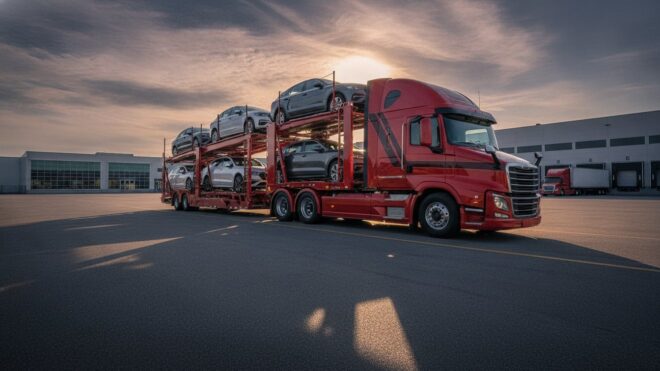
Open carrier car transportation remains the industry standard for standard employee relocations. These trailers are a common sight on American highways, capable of carrying up to ten vehicles at once. This capacity makes them the most cost-effective nationwide solution, especially for companies managing multi-car shipments or fleet transfers. Because the trailers are open to the air, they’re lighter and more fuel-efficient, which helps keep costs manageable for large-scale moves.
There is a common misconception that open trailers are inherently risky. However, open transport car shipping is highly secure for daily drivers. Vehicles are fastened using professional-grade tie-downs and undergo rigorous safety protocols. While exposed to the elements, this method provides a reliable and efficient way to move standard company assets. It’s the practical choice for most fleet redistributions where cost-efficiency is the primary driver.
The Case for Enclosed Transport in Executive Relocations
For high-profile moves or luxury assets, enclosed car transport is the preferred choice for corporate vehicle relocation. These trailers feature hard-sided walls that provide complete protection from dust, rain, road salt, and debris. This is critical for executive-tier moves where the vehicle must arrive in pristine condition to meet professional expectations. The internal environment is shielded from external weather patterns, ensuring the vehicle’s finish remains untouched during transit.
Specialized equipment like low-clearance ramps and soft-tie downs are standard in these trailers. These tools prevent undercarriage damage and protect delicate finishes on high-end models. The discretion offered by hard-sided trailers provides an extra layer of security for high-profile relocations. When a vehicle’s value exceeds a certain threshold, the added protection becomes a necessary safeguard rather than a luxury.
Understanding the Benefits of Fleet Management involves recognizing when the 30-60% price premium for enclosed service is a justified investment in asset protection. If you are unsure which level of service fits your current project, you can consult with a logistics specialist to evaluate your fleet’s specific requirements and ensure a seamless transition.
Evaluating Corporate Relocation Providers: 5 Critical Selection Criteria
Selecting a partner for corporate vehicle relocation involves more than a simple price comparison. It requires a thorough audit of a provider’s operational depth and compliance record. For businesses, a failure in the logistics chain represents a significant risk to both asset value and employee productivity. A reliable partner should function as a seamless extension of your HR or fleet department, providing peace of mind through every stage of the interstate journey.
Professional Licensing and Compliance Standards
The first step in vetting a provider is verifying their national carrier authority. You can check a company’s safety rating and active status through the Federal Motor Carrier Safety Administration (FMCSA) portal using their USDOT number. This verification ensures the provider meets federal safety standards and maintains the legal authority to operate across state lines. Understanding the nuances of What Is Fleet Management? helps organizations recognize that compliance is a non-negotiable baseline for professional service.
Insurance transparency is equally vital. There is a distinct difference between a broker bond and carrier cargo insurance. In 2026, professional-grade Cargo Insurance is defined as a specific policy that covers the full market value of the vehicle against damage or loss during transit, with corporate standards typically requiring a minimum of $100,000 to $250,000 in coverage per unit. Always request a Certificate of Insurance (COI) to verify that the carrier’s policy is active and sufficient for your specific fleet value.
Scalability and specific service capabilities also separate industry veterans from standard movers. A provider should demonstrate the capacity to handle a single executive move with the same precision as a 50-car fleet transfer. Utilizing Door 2 Door Transportation is a critical criterion here, as it eliminates the need for employees to travel to distant terminals, directly reducing downtime and improving the overall relocation experience.
Customer Support and Logistics Management
Effective corporate vehicle relocation relies on dedicated account management rather than generic call centers. A single point of contact understands your company’s specific relocation policy and can provide centralized reporting for multiple active shipments. This level of support is essential for coordinating complex schedules and ensuring that vehicle arrivals align perfectly with employee onboarding dates.
Real-time tracking and proactive communication have become standard expectations. You should receive regular updates throughout the interstate journey, especially if weather events or traffic delays impact the original timeline. A professional partner handles these logistical challenges with poise, providing solutions rather than excuses. This transparency builds trust and allows your internal teams to manage employee expectations with confidence.
Streamlining the Relocation Process: Logistics and Employee Preparation
A successful corporate vehicle relocation relies on a structured Standard Operating Procedure (SOP) that eliminates guesswork for the relocating employee. When a company manages dozens of moves annually, having a repeatable framework ensures that every vehicle is handled with the same level of professional care. This process begins long before the carrier arrives, requiring clear communication between the logistics provider, the HR department, and the individual handing over the keys.
Internal coordination is a vital component of this workflow. It is often beneficial to align car shipping schedules with household goods (HHG) movers to minimize the time an employee is without their primary transportation. While these are usually separate services, a seasoned logistics partner can help synchronize the pickup and delivery windows. Refer to the how to prepare a car for transport guide to provide your team with a clear roadmap for success.
Preparing Vehicles for Nationwide Transit
Establishing a baseline for the vehicle’s condition is the first physical step in the process. We recommend that employees clean their vehicles thoroughly before the carrier arrives. A clean car allows for a more accurate inspection, ensuring that any existing minor chips or scratches are documented on the Bill of Lading (BOL). This document is the most critical piece of paperwork in the industry, acting as both a receipt and a formal condition report.
Mechanical readiness is also essential. Carriers require that vehicles have functional brakes, steering, and a reliable battery for loading and unloading. Tires should be properly inflated, and the fuel tank should ideally be at approximately one quarter capacity to manage weight and safety requirements. It is also important to remember that Department of Transportation (DOT) regulations strictly forbid “packing the car” with personal belongings. Items left inside the vehicle aren’t covered by transport insurance and can lead to fines or delays at weigh stations.
Managing Delivery Expectations and Inspection
Once the vehicle reaches its destination, the receiving employee should perform a 360-degree inspection before signing the Bill of Lading. This is the moment to verify that the vehicle arrived in the same condition it left. Understanding the “clean delivery” signature is vital; once the BOL is signed without noted exceptions, the carrier’s liability typically ends. This methodical approach protects both the employee and the company’s investment.
In the rare event that transit damage is discovered, the corporate claim process should be initiated immediately. The damage must be noted clearly on the BOL at the time of delivery, and photos should be taken from multiple angles. A reliable partner will guide you through the necessary steps to ensure a swift resolution. You can start your interstate vehicle transportation plan today by consulting with our logistics team to build a custom SOP for your organization.
Why AutoPlex Transport is the Preferred Partner for Corporate Relocation
Choosing a logistics provider is an exercise in trust, especially when managing high-value assets and employee transitions. AutoPlex Transport Company distinguishes itself by moving away from the high-pressure sales tactics common in the brokerage industry. Instead, we position ourselves as a reliable partner, offering a steady and confident hand to guide your organization through the complexities of corporate vehicle relocation. Our focus remains on building long-term relationships through transparency, safety, and a deep understanding of the logistical challenges businesses face today.
We provide a comprehensive suite of services that cater to every tier of your organization. Whether your project requires the cost-efficiency of Open Carrier Car Transportation for standard fleet units or the white-glove protection of Enclosed Transport Services for executive vehicles, our team has the expertise to execute flawlessly. We don’t just facilitate transport; we manage the entire interstate journey, ensuring that every vehicle is handled by a vetted professional within our nationwide network.
Employee anxiety is a common byproduct of relocation, often stemming from a lack of clear information. We address this through a methodical, step-by-step communication rhythm that keeps both the fleet manager and the relocating employee informed. This proactive approach reduces stress and allows your team to focus on their new roles while we handle the Door 2 Door Transportation logistics. By providing reliable timelines and clear status updates, we ensure that the vehicle’s arrival is the most predictable part of the employee’s move.
Tailored Logistics for Every Business Need
Every organization has unique requirements, which why we offer customized quoting for bulk fleet movements and ongoing relocation contracts. Our access to a vetted network of professional carriers across the United States allows us to scale our services to match your specific volume, whether you’re moving a single car or an entire regional department. AutoPlex Transport Company combines decades of logistical experience with a nationwide network to provide secure, transparent vehicle relocation solutions for the modern business.
Get Started with a Professional Relocation Quote
Transparency is the cornerstone of our corporate accounts. We provide clear, all-inclusive pricing with no hidden fees, allowing your finance department to budget with total accuracy. Our onboarding process for new corporate clients is designed to be simple and methodical, ensuring we understand your internal SOPs and compliance requirements from day one. This commitment to detail ensures a seamless transition for your assets and your people alike.
If you’re ready to elevate your logistics strategy, our team is standing by to assist. Request a professional corporate vehicle relocation quote from AutoPlex Transport Company today.
Securing Your Fleet’s Future with Professional Logistics
Managing a successful corporate vehicle relocation requires a methodical approach that balances cost efficiency with uncompromising asset protection. By prioritizing carrier compliance and establishing clear preparation standards for your employees, you can transform a complex logistical challenge into a seamless part of your onboarding process. Choosing between open and enclosed carriers shouldn’t be a guess; it’s a strategic decision that impacts both your budget and your executive satisfaction levels.
AutoPlex Transport provides the stability and expertise needed to handle every interstate scenario with confidence. Our A+ rated industry expertise and network of fully insured nationwide carriers offer the peace of mind your organization deserves. With specialized door-to-door logistics, we take the burden off your internal teams so they can focus on their core business objectives. You don’t have to navigate these complexities alone when you have a seasoned industry veteran by your side.
We invite you to Request a Corporate Relocation Quote today and experience a more reliable way to move your business forward. We look forward to serving as your trusted partner in nationwide transportation.
Frequently Asked Questions
What is the typical timeline for corporate vehicle relocation?
The typical timeline for corporate vehicle relocation depends primarily on the total distance traveled and current logistical conditions. For distances under 500 miles, delivery usually occurs within one to three days. Cross-country shipments generally require seven to ten days. These timelines are influenced by U.S. Department of Transportation regulations, specifically Hours of Service rules that limit driving time to prevent fatigue, ensuring your company assets are transported safely and legally.
How much does it cost to ship a car for an employee relocation?
The cost to ship a car during an employee move is determined by several variables rather than a flat fee. Key factors include the total mileage, the size and weight of the vehicle, and the choice between open or enclosed carriers. Additionally, seasonal demand and current fuel prices impact the final quote. For a precise budget, companies should provide specific pickup and delivery locations to receive a transparent breakdown tailored to their fleet requirements. If your organization is also evaluating broader supply chain expenses, click here to review a guide on 3PL warehouse costs for 2025.
Is insurance included in a corporate vehicle transport quote?
Yes, comprehensive cargo insurance is a standard inclusion in any professional corporate vehicle relocation quote. This coverage protects the vehicle against damage or loss during the interstate journey. It’s essential to verify that the provider carries active cargo insurance rather than just a basic broker bond. At AutoPlex, we ensure all carriers in our network maintain rigorous insurance minimums, providing a layer of financial security for your high-value company assets.
Can employees leave personal belongings in the car during transport?
Employees shouldn’t leave personal belongings inside the vehicle during transport. Department of Transportation regulations strictly prohibit the transport of household goods inside vehicles on auto carriers. These items aren’t covered by transport insurance and can lead to significant fines or delays at weigh stations. Extra weight can also compromise the safety of the trailer’s loading balance. We recommend that vehicles be completely empty, except for standard factory equipment and spare tires.
What is the difference between a car transport carrier and a broker?
A car transport carrier is the entity that owns the trucks and physically moves the vehicles. An auto transport broker acts as a logistics manager, vetting carriers and coordinating the schedule between the client and the driver. Brokers provide a vital service by leveraging a nationwide network to find the most reliable and efficient routes. This coordination is especially beneficial for corporate clients who need a single point of contact to manage multiple relocation projects.
Does AutoPlex Transport provide door-to-door service for all corporate moves?
AutoPlex Transport specializes in providing Door 2 Door Transportation for all corporate moves across the United States. This service ensures that vehicles are picked up and delivered as close to the employee’s residence or office as legally and safely possible. By eliminating the need for employees to visit distant shipping terminals, we significantly reduce downtime and logistical stress. This national reach combined with localized convenience makes it an ideal solution for busy relocating professionals.
How are high-value executive vehicles protected during interstate transit?
High-value executive vehicles receive maximum protection through our Enclosed Transport Services. These hard-sided trailers shield vehicles from road debris, dust, and adverse weather conditions throughout the interstate journey. Additionally, these specialized carriers use soft-tie downs and low-clearance ramps to prevent any physical damage during loading. This method is the preferred standard for high-profile relocations where maintaining the vehicle’s showroom condition is a primary requirement for the organization.