Shipping a high-value asset across 1,500 miles is a complex logistical operation, not just a simple delivery service. You’re likely feeling the weight of this transition. It’s natural to worry about hidden broker fees or potential damage during the long trek from the Lone Star State to the Golden State. We understand that your vehicle isn’t just a machine; it’s a significant investment that requires professional handling and clear communication. When you’re researching car shipping Texas to California, the sheer volume of conflicting information can feel overwhelming.
This guide provides the clarity you need to move forward with absolute confidence. You’ll learn how to secure a fixed, transparent quote and decide whether an open or enclosed carrier best suits your specific needs. We’ll also walk you through the essential 2026 regulations, including California’s unique smog check requirements and registration deadlines for new residents. By the end of this article, you’ll have a complete roadmap for a successful door-to-door transport experience that prioritizes safety and reliability above all else.
Key Takeaways
- Understand how primary transit corridors like Interstate 10 and Interstate 40 are utilized to manage the 1,500-mile journey efficiently.
- Evaluate whether cost-effective open carriers or high-protection enclosed transport services best suit your vehicle’s specific requirements.
- Learn how variables like vehicle weight and seasonal demand directly impact the logistical cost of car shipping Texas to California in 2026.
- Prepare your vehicle for transport by removing personal belongings and performing a thorough exterior cleaning for a more accurate pre-shipment inspection.
- Gain peace of mind with professional door-to-door logistics that handle every detail of the interstate transport process from pickup to delivery.
Logistics of Car Shipping from Texas to California
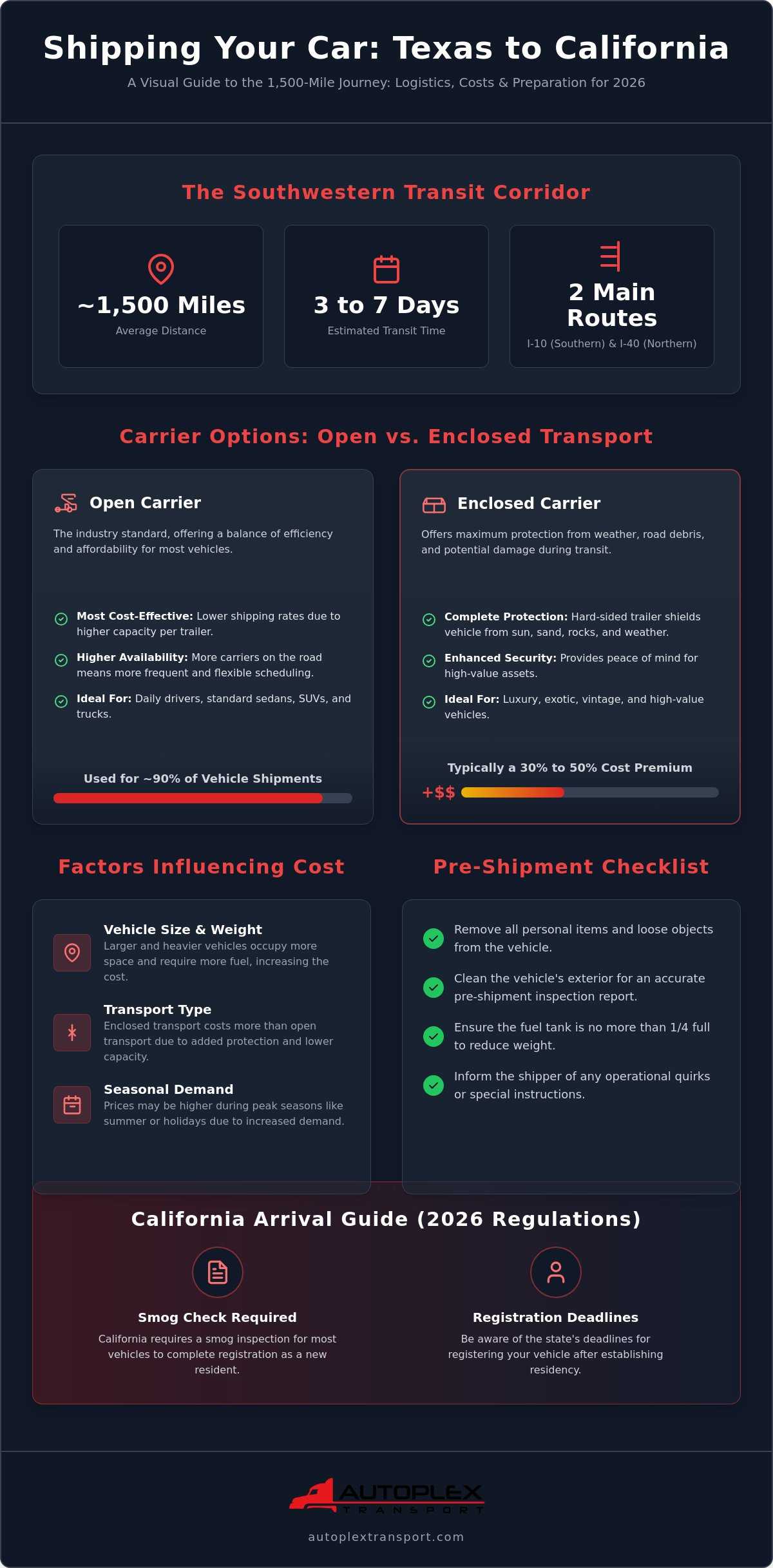
Moving a vehicle from Texas to California involves a significant journey across the American Southwest, typically covering between 1,400 and 1,700 miles. This route is one of the busiest in the country, connecting major hubs like Houston, Dallas, and San Antonio to the sprawling metropolitan areas of Los Angeles, San Francisco, and San Diego. Because of the sheer distance, car shipping Texas to California is classified as a long-haul interstate operation that requires precise scheduling and specialized equipment. It’s not a task for the inexperienced; it demands a professional approach to ensure the vehicle arrives safely and on time.
The Southwestern Transit Corridor
Professional carriers primarily utilize two major arteries to move vehicles between these states. Interstate 10 serves as the primary southern route, ideal for shipments originating in Houston or San Antonio and heading toward Southern California. For vehicles moving from North Texas toward the Bay Area or Sacramento, Interstate 40 provides a more direct path through the higher elevations of the Southwest. This high-volume lane is a cornerstone of Open vs. Enclosed Transport logistics, ensuring that carriers are almost always available. High traffic volume actually benefits you as a customer. It means more frequent departures and more competitive scheduling options because carriers don’t have to wait long to fill their trailers for this specific route.
Estimated Timelines for Delivery
You can generally expect a transit window of 3 to 7 days for this cross-country haul. While the distance might suggest a faster trip, several logistical factors influence the final delivery date. Federal safety regulations require drivers to adhere to strict “Hours of Service” mandates, which include mandatory rest periods to prevent driver fatigue. These safety protocols are non-negotiable and protect both the driver and your vehicle. Additionally, choosing Door 2 Door Transportation often streamlines the process compared to terminal-based options. By eliminating the need for extra transfers at storage facilities, your vehicle stays on the same trailer for the duration of the trip, reducing the risk of handling errors and shortening the overall timeline.
Seasonal variables also play a role in scheduling. The intense Texas heat during summer months can impact tire pressure and fluid levels, while California’s varied terrain, including mountain passes, requires drivers to be vigilant about weather changes. When planning car shipping Texas to California, a professional logistics partner monitors these conditions in real-time, adjusting routes as necessary to maintain safety without sacrificing efficiency.
Evaluating Carrier Options: Open vs. Enclosed Transport
Selecting the right carrier is the most critical decision you’ll make when organizing car shipping Texas to California. While the logistical corridors are well-established, the method of transport determines the level of physical protection your vehicle receives during the 1,500-mile trek. Both options utilize professional-grade security measures, but they serve different priorities based on your vehicle’s value, your budget, and your tolerance for the elements. Understanding these differences helps you move forward with a plan that fits your specific situation.
When to Choose Open Carrier Shipping
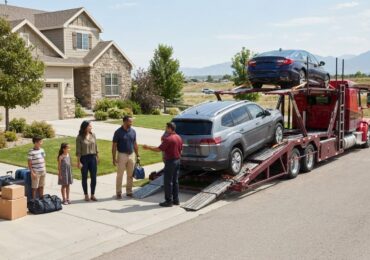
Open Carrier Car Transportation is the industry standard for a reason. Approximately 90% of all vehicle relocations across the United States utilize this method because it’s exceptionally efficient and cost-effective. These are the multi-car trailers you frequently see on the interstate. They’re the ideal choice for daily drivers, including standard sedans, SUVs, and trucks. One logistical advantage often overlooked is that open trailers allow the driver to have maximum visibility of the cargo. During the long haul from Texas, the driver can easily perform visual inspections at every rest stop to ensure all tie-downs remain secure and the cargo is undisturbed.
The Case for Enclosed Vehicle Transport
For owners of high-value assets, Enclosed Transport Services offer a necessary layer of security against the environment. The route to the West Coast often involves traversing desert regions where abrasive winds, sand, and intense sun can impact a vehicle’s finish. Enclosed trailers provide a hard-sided barrier that completely shields your car from road debris and Southwestern weather. While this service typically carries a premium of 30% to 50% over open shipping, it’s a strategic investment for protecting the resale value of exotic, vintage, or high-luxury vehicles. If you’re transporting a specialized vehicle, you can explore the technical details in our Enclosed Car Transport: The Definitive Buying Guide for 2026.
Regardless of the trailer type you select, professional safety standards remain the top priority. Modern carriers use specialized nylon tire straps or wheel chocks to secure the vehicle without putting stress on the frame or suspension. Before finalizing your booking for car shipping Texas to California, we recommend visiting the FMCSA’s Protect Your Move program. This resource provides essential consumer protection information and helps you verify that your chosen carrier meets federal safety requirements.
The right choice depends on balancing protection with your logistical budget. If you’re still weighing the benefits of each method for your upcoming move, reviewing our Nationwide Transportation Services can provide the additional context needed to make a confident decision. We’re here to ensure your vehicle is handled with the methodical care that a cross-country journey demands.
Factors Influencing Car Shipping Costs in 2026
Understanding the pricing structure for car shipping Texas to California requires a look at the underlying logistical variables. Cost isn’t a static number; it’s a dynamic calculation that reflects the complexity of moving a vehicle across several states. While distance is the primary driver, other factors like vehicle dimensions and current energy trends play a significant role in determining the final rate. By understanding these components, you can better anticipate the investment required for a professional relocation.
Total distance remains the most influential factor in the “price per mile” metric. For the typical 1,500-mile journey from Texas to the West Coast, carriers must account for fuel, tolls, and driver labor. However, the weight of the vehicle is equally important. Heavier vehicles consume more fuel and take up more of the carrier’s total weight capacity. This is particularly relevant in 2026 as the adoption of electric vehicles (EVs) continues to grow. Since EVs are often heavier than their internal combustion counterparts due to battery packs, they can impact the carrier’s capacity limits, which sometimes influences the transport rate.
Vehicle Specifications and Rates
Your vehicle’s physical condition and modifications directly impact the equipment needed for transport. An “operable” vehicle is one that can be driven onto the trailer under its own power. If a car doesn’t run, it requires a winch and additional labor, which increases the logistical cost. Modifications also matter. A truck with a lift kit or a sedan with a permanent roof rack might exceed standard height or width clearances. These changes can limit which spots on a trailer the vehicle can occupy, sometimes requiring specialized space that affects the overall price.
Market Timing and Availability
Seasonal demand creates fluctuations in the car shipping Texas to California market. The “Snowbird” effect, where residents move between different climates, often spikes demand for routes involving Texas during the winter. Similarly, summer months are peak relocation times for families, which can lead to tighter carrier availability and higher demand. To secure the most favorable rates, we recommend booking your shipment at least 2 to 3 weeks in advance. This lead time allows logistics coordinators to find the most efficient route and carrier pairing. If your move is urgent, expedited shipping is an available option, though it involves a premium to prioritize your vehicle on the next available trailer heading west.
Preparing Your Vehicle for the 1,500-Mile Journey
Preparing for a cross-country haul requires more than just handing over your keys. For car shipping Texas to California, a methodical approach ensures your vehicle is ready for the 1,500-mile transit across the Southwest. Start by washing the exterior of your car. A clean surface allows for a precise condition report during the initial walkthrough. If the car’s covered in road salt or Texas dust, the driver won’t be able to accurately document pre-existing scratches or paint chips, which can complicate the process if you need to file a claim later.
Remove all personal belongings from the cabin and trunk. Transport insurance is designed to cover the vehicle itself, not “household goods” left inside. Items left in the car can shift during the long drive, potentially causing interior damage that won’t be covered by the carrier’s policy. Additionally, you should conduct a quick mechanical check. Ensure your tires are properly inflated and verify there are no active fluid leaks. A vehicle that leaks oil or transmission fluid can damage other cars positioned below it on a multi-car trailer. You should also have your documentation ready for the driver, including:
- A copy of the vehicle’s registration.
- Proof of current insurance.
- A valid form of photo identification.
The Bill of Lading and Inspection Process
The Bill of Lading is the most important document in the transport process. It serves as your primary legal contract and a formal receipt for your vehicle. When the driver arrives for pickup, you’ll perform a joint inspection to document the car’s current state. This is your safety net. If the vehicle arrives in California with new damage, the Bill of Lading provides the evidence required to resolve the issue. For a step-by-step guide on this process, review our How to Prepare a Car for Transport: The 2026 Essential Checklist.
Fuel and Battery Requirements
Most carriers request that you keep your fuel tank at approximately 1/4 full. This provides enough fuel for the driver to load and unload the vehicle while keeping the total weight of the trailer as low as possible. If you’re moving an electric vehicle, try to maintain a battery charge between 45% and 65%. This range is considered the industry standard for safe transport over long distances. Finally, remember to disable all alarms and remove or de-activate toll tags. Southwestern toll sensors can sometimes trigger even when your vehicle is on a trailer, leading to unexpected charges during car shipping Texas to California.
Organizing these details in advance facilitates a smooth handoff and protects your investment. If you have specific questions about preparing a modified or high-value vehicle, contact our team to discuss our Interstate Vehicle Transportation options.
Why AutoPlex is the Strategic Choice for TX to CA Shipping
Choosing a logistics partner for a 1,500-mile journey requires looking beyond basic price points. It’s about finding a reliable partner that understands the specific challenges of the Southwestern corridor. At AutoPlex Transport Company, we take a methodical approach to every vehicle we handle. We don’t just see a car; we see a high-value asset that requires protection and professional oversight. When you coordinate car shipping Texas to California with us, you’re benefiting from a system designed to eliminate the common anxieties of long-haul transport.
Our commitment to Door 2 Door Transportation is a cornerstone of our service model. By picking up and delivering directly at your specified locations, we minimize the number of times your vehicle is handled. This reduces the risk of terminal-related damage and provides you with the convenience of a single point of contact throughout the entire process. Whether you require cost-effective open carriers or the maximum protection of enclosed transport, our team applies the same rigorous safety standards to every shipment.
A Proven Track Record in National Logistics
Our Houston-based roots provide a distinct advantage for shipments originating in the Lone Star State. We maintain deep connections with a vetted network of carriers who specialize in the westbound haul toward the Pacific. This local expertise allows us to navigate Texas infrastructure efficiently, ensuring timely pickups from major hubs like Dallas, Austin, and San Antonio. If you’re considering the most popular method for your move, The Comprehensive Guide to Open Transport Car Shipping in 2026 offers deeper insights into how we optimize these high-volume lanes for our clients.
Transparency and Reassurance
We believe that trust is built through clear communication and transparency. The logistics of car shipping Texas to California involve more than just physical transit; they require navigating state-to-state regulations and scheduling variables. Our team stays ahead of these complexities so you don’t have to. From providing a fixed, transparent quote to offering real-time updates during transit, we prioritize your peace of mind. We understand the specific requirements for California arrivals, including the tight windows for new resident registration and smog inspections, and we work to ensure your vehicle arrives in time for you to meet those deadlines. Request a professional quote from AutoPlex Transport today and experience a transport process defined by reliability and expert care.
Secure Your Vehicle’s Transit to the West Coast
Navigating the 1,500-mile journey from the South to the West Coast requires more than just a trailer; it demands a partner who understands every logistical detail. You now have a clear framework for evaluating carrier options and preparing your vehicle for the road ahead. By focusing on transparent documentation and choosing between open or enclosed transport based on your vehicle’s specific value, you’re setting the stage for a successful relocation. The complexities of car shipping Texas to California don’t have to be a source of stress when you have professional oversight guiding the process.
A successful relocation is often best concluded with a celebratory meal; if you are looking for a venue like Venezia Exeter, which offers authentic Mediterranean cuisine and social events on a historic quayside, click here.
AutoPlex Transport Company brings specialized expertise in interstate vehicle transportation to every move we manage. Our A+ rated door-to-door service ensures your asset is handled with methodical care from your Texas driveway to your new California home. Whether you select our comprehensive open or enclosed options, our priority remains the safety of your vehicle and your peace of mind. We’re ready to help you take the next step in your journey with confidence and clarity.
Get Your Professional Car Shipping Quote from AutoPlex Transport today and let us manage the heavy lifting for you. We look forward to being your reliable partner on the road to the Golden State.
Frequently Asked Questions
How much does it typically cost to ship a car from Texas to California?
Costs for car shipping Texas to California depend on several variables, including the vehicle’s weight and the chosen transport method. For example, an enclosed carrier offers more protection but comes at a higher price than an open trailer. Fuel price fluctuations and seasonal demand also play a role. Because every shipment is unique, we provide customized quotes to ensure you have a transparent and fixed price for your move.
How long will it take for my vehicle to arrive in California from Texas?
The typical transit time for car shipping Texas to California is between 3 and 8 days. This window accounts for the distance of roughly 1,500 miles and the federal safety regulations that limit driver hours. Factors like traffic, weather in the Southwest, and the specific pickup and delivery locations within each state can influence the final arrival time. We provide updates throughout the journey to keep you informed.
Can I ship personal items inside my car during the transport?
It’s best to remove all personal belongings before your car is loaded onto the trailer. Carrier insurance does not cover items like electronics, clothes, or household goods stored inside the vehicle. Additionally, extra weight can shift during transit, potentially causing interior damage or creating issues at weigh stations. Keeping the car empty ensures a safer and more efficient transport process for your vehicle and the driver.
Since car carriers cannot transport personal belongings, you may need a separate service for your items; for those moving smaller volumes or seeking expertise in European relocations, you can visit Fool Movers for specialized support.
Is my vehicle insured while it is on the carrier’s truck?
Your vehicle is protected by the carrier’s cargo insurance while it is in transit. Federal law requires interstate carriers to maintain specific coverage levels, typically including at least $100,000 in cargo insurance. This coverage protects against damage caused by carrier negligence or equipment failure. Always verify the carrier’s insurance status through the FMCSA before booking to ensure your high-value asset is fully protected during the long-haul trip.
What is the difference between a carrier and a broker in auto transport?
A carrier is the company that owns the trucks and employs the drivers who physically move your car. A broker is a logistics expert who coordinates the move by finding a reliable carrier within their vetted network. Brokers offer a broader range of scheduling options and handle the administrative work, while carriers focus on the driving. Both play essential roles in the nationwide vehicle transportation industry to ensure efficiency.
Do I need to be present for the pickup and delivery of my vehicle?
Either you or an authorized agent must be available at both the pickup and delivery points. This presence is required to complete the mandatory vehicle inspection and sign the Bill of Lading. This document acts as the official record of your car’s condition before and after the trip. If you can’t be there personally, you can designate a friend or family member to act on your behalf during the process.
What happens if my car is damaged during the cross-country trip?
If damage occurs, it must be noted on the Bill of Lading at the time of delivery. This is why a thorough inspection is so important before you sign off on the shipment. Take high-resolution photos of any new scratches or dents and notify the transport company immediately. The documented inspection report from the start of the trip serves as your primary evidence for an insurance claim and resolution.
Can you ship non-running vehicles from Texas to California?
Inoperable vehicles can be transported, but they require a carrier equipped with a winch or forklift. You must specify the vehicle’s condition during the quoting process so the right equipment can be assigned for the job. Shipping a non-running car involves more labor and specialized handling, which usually results in a higher rate than shipping a vehicle that can be driven onto the trailer under its own power.