Over 1.2 million people have relocated from California to Texas since 2020, making it the busiest interstate corridor in the country. If you’re planning a similar move, identifying trustworthy auto transport companies in Texas is likely at the top of your priority list. It’s understandable to feel uneasy about the process, especially with the fear of hidden fees or the potential for vehicle damage during a long-distance trip. You’ve probably heard stories about price bait-and-switch tactics or felt confused by the complex roles of brokers and carriers in the shipping chain.
We believe that shipping your vehicle should be a predictable, stress-free experience grounded in professional logistics. In this guide, you’ll discover how to select a provider that adheres to the latest 2026 FMCSA standards, including the new Motus registration requirements and electronic inspection protocols. We’ll walk you through the essential steps to ensure a damage-free delivery and transparent communication throughout the journey. You’ll learn how to evaluate carrier options and why door-to-door service remains the most reliable standard for interstate transport in the current market.
Key Takeaways
- Learn how to identify reputable auto transport companies in Texas by understanding the latest 2026 FMCSA regulatory updates and the state’s role as a national logistics hub.
- Evaluate the critical differences between open and enclosed carrier options to determine which method best protects your vehicle’s value based on your specific route and budget.
- Identify the primary variables that influence shipping quotes, including how route popularity and vehicle dimensions impact carrier capacity and final costs.
- Follow a professional pre-shipment checklist to ensure your vehicle is properly documented and prepared for a safe, damage-free interstate journey.
- Understand the logistical advantages of door-to-door transport and how professional national standards streamline the complex process of moving vehicles across state lines.
Navigating the Landscape of Auto Transport Companies in Texas
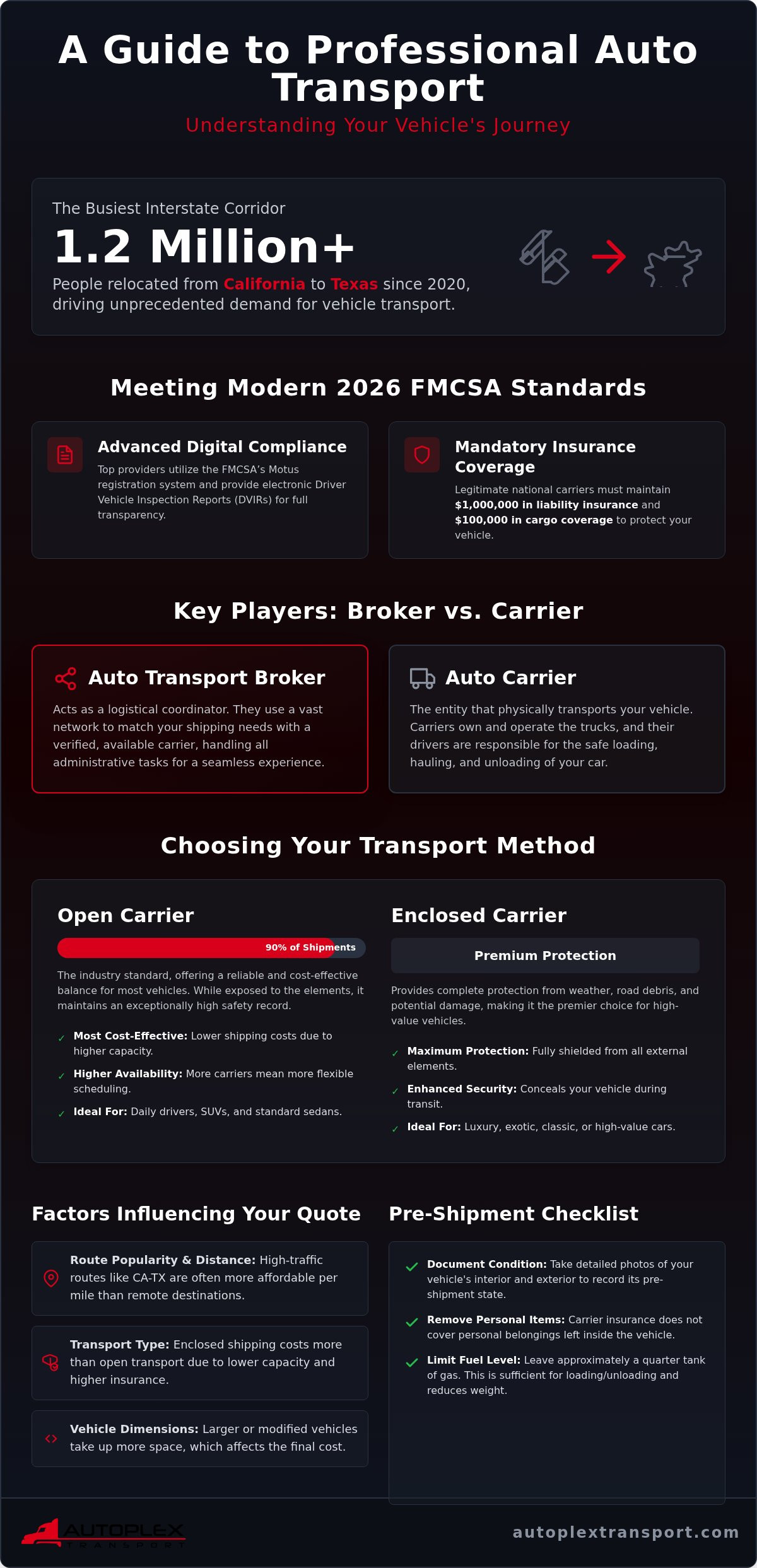
Texas serves as the primary engine for vehicle logistics in the United States. Due to its central geography and the fact that 1.2 million people have relocated from California to the Lone Star State since 2020, the demand for professional auto transport companies in Texas has reached unprecedented levels. In 2026, a professional transport provider is defined by more than just a fleet of trucks. True industry leaders now utilize the FMCSA’s Motus registration system and provide electronic Driver Vehicle Inspection Reports (DVIRs) to ensure every stage of the journey is documented with precision. While a local carrier might handle short hauls within the state, national logistics providers offer the robust infrastructure required for complex interstate routes.
Safety standards have evolved significantly to keep pace with modern technology. As of May 28, 2026, companies operating automated motor vehicles for commercial transport in Texas must secure specific authorization from the TxDMV. Additionally, professional carriers now adhere to updated emergency equipment standards that prioritize digital safety over legacy tools like flares. When you evaluate auto transport companies in Texas, you are looking for a partner that understands these shifting regulations and maintains the required $1,000,000 in liability insurance alongside $100,000 in cargo coverage. This level of protection is essential for managing valuable assets across state lines.
The Distinction Between Auto Brokers and Carriers
Understanding the industry requires a clear look at the two types of entities you will encounter. An auto transport broker acts as a logistical coordinator, utilizing a vast network to match your specific needs with an available truck. They handle the administrative side, while the carrier is the entity that physically loads and hauls your vehicle. For many customers, a broker provides the best value by comparing multiple carrier schedules to find the most efficient window. It’s often helpful to work with a provider that manages both aspects of the process to ensure seamless communication from pickup to delivery.
Verifying Authority: DOT and FMCSA Compliance
Before you commit to a service, you must verify the company’s operating authority through official channels. Every legitimate transporter is assigned a Department of Transportation (DOT) number, which serves as a public record of their safety history and insurance status. You can easily check this number on the Federal Motor Carrier Safety Administration (FMCSA) website to confirm they’re in good standing. Operating authority is the first thing a customer should verify to ensure they’re dealing with a legal and insured entity rather than an unregulated middleman.
Comparing Open and Enclosed Carriers for Texas Routes
Selecting the right equipment for your vehicle’s journey is one of the most critical decisions you’ll make when vetting auto transport companies in Texas. The vastness of the state means that even a move that stays within state lines can span hundreds of miles across diverse and challenging terrain. For instance, a trip from the humid Gulf Coast to the arid plains of West Texas exposes a vehicle to drastically different environmental factors. Most professional logistics providers offer two primary options: open and enclosed transport. Your choice typically hinges on the vehicle’s market value, your budget, and the specific route’s typical road conditions in 2026.
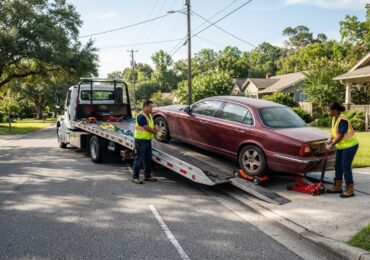
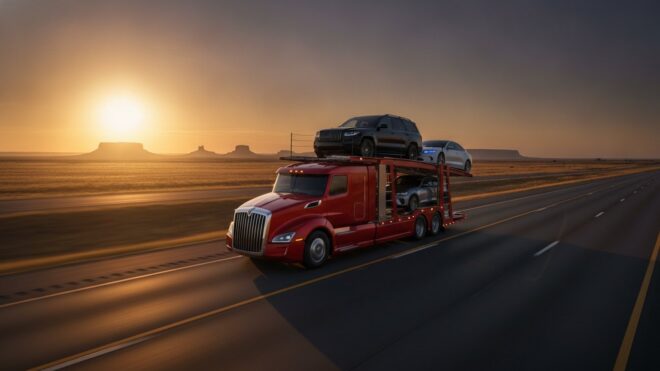
Open carriers represent the backbone of the industry, handling approximately 90% of all vehicle shipments nationwide. These are the familiar multi-car trailers frequently seen on major interstate highways like I-10 and I-35. They’re highly efficient for moving standard sedans and SUVs over long distances, such as the high-traffic corridor between Texas and California. While the vehicles are exposed to the elements, the safety record for open transport remains remarkably high for standard daily drivers. If you want to dive deeper into the mechanics of this method, you can read the comprehensive guide to open transport car shipping in 2026.
When to Choose Open Carrier Transportation
Open transport is the preferred choice for most car owners because it offers a perfect balance of reliability and cost-effectiveness. Because these trailers carry multiple vehicles at once, the shared fuel and labor costs make it the most affordable way to move a car across state lines. Another practical advantage is the visibility during the loading and unloading process. Drivers can easily perform a thorough 360-degree inspection at every stop. This ensures that the vehicle’s condition is documented accurately via modern electronic DVIRs, which are now formally permitted by the FMCSA as of 2026.
The Benefits of Enclosed Car Transport Services
For luxury vehicles, classic cars, or high-value electric vehicles, enclosed transport provides an essential layer of security. These trailers are fully walled, protecting the cargo from road debris, hail, and extreme temperature fluctuations that are common in the Southwest. This method is particularly recommended during the peak Texas storm season or for vehicles with low ground clearance that require specialized lift-gate loading. You can find more specific details in our enclosed car transport buying guide for 2026. Regardless of which method you choose, you should always verify the registration of your carrier to ensure they meet federal safety standards. If you’re still weighing your options, the experts at AutoPlex Transport are available to help you select the most secure method for your specific move.
Key Variables That Determine Your Vehicle Shipping Rates
Understanding how pricing is calculated helps you navigate the quotes provided by auto transport companies in Texas with greater confidence. Rates aren’t arbitrary figures. They’re a precise reflection of equipment availability, fuel costs, and the physical space a vehicle occupies on a trailer. While total mileage is a primary factor, route popularity often carries more weight in the final calculation. For example, shipping between major hubs like Houston and Los Angeles is often more cost-effective than moving a vehicle to a rural destination because carriers can easily find “backhaul” loads to keep their trailers full. To better understand your rights and avoid common pricing pitfalls, you can consult the FMCSA’s Protect Your Move program, which provides essential guidance on interstate relocation standards.
Seasonal demand significantly influences the market, particularly in a state with a massive military presence. Texas is home to major installations like Fort Cavazos (formerly Fort Hood) and Fort Bliss, which creates a surge in demand during the Permanent Change of Station (PCS) season from May through August. During these peak months, carrier capacity tightens, often leading to higher rates across the industry. Conversely, shipping during the winter months can offer better value, provided the routes remain clear of severe weather. Modern logistics technology now allows auto transport companies in Texas to adjust pricing in real-time based on these shifting variables, ensuring that quotes reflect the current reality of the road.
The Impact of Vehicle Type and Dimensions
Weight and size are critical logistical constraints. A standard sedan takes up less “real estate” and adds less weight to a trailer than a full-size SUV or a heavy-duty pickup truck. This is especially relevant for electric vehicles (EVs), which often weigh significantly more than internal combustion counterparts due to their lithium-ion battery packs. Modifications also play a role. If your vehicle has a lift kit, oversized tires, or a permanent roof rack, it may require a specific spot on the trailer or even a specialized carrier, which will be reflected in the final logistics plan.
Logistics and Timing: Expedited vs. Standard Shipping
Flexibility is your best tool for managing costs. In professional vehicle transport, a “window of pickup” is the standard practice, usually spanning two to five days. If you require an exact date or a faster transit time, expedited services are available, though they require more complex coordination. Standard shipping remains the most reliable and budget-friendly choice for most interstate moves. It’s helpful to remember that a cross-country journey involving Texas typically takes between seven and ten days, depending on the specific mileage and the driver’s federally mandated rest cycles.
Essential Preparation Checklist for Interstate Transit
Preparing your vehicle for a cross-country journey involves more than just handing over the keys. Reliable auto transport companies in Texas will always emphasize that a well-prepared car is the best defense against transit delays and documentation disputes. The process begins with a thorough cleaning of both the exterior and interior. While this might seem cosmetic, a clean car is actually a logistical necessity. It allows the driver to perform an accurate visual inspection, ensuring that every pre-existing detail is noted before the vehicle is loaded onto the trailer. For a deeper dive into these steps, you can review our how to prepare a car for transport essential checklist.
Weight management and safety protocols are equally vital. You should aim to have your fuel tank at approximately one-quarter full. This provides enough fuel for the carrier to load and unload the vehicle while significantly reducing the total weight of the shipment. Additionally, all personal items should be removed from the cabin and trunk. Most auto transport companies in Texas are not licensed to carry household goods, and items left inside can shift during transit, potentially causing interior damage or creating liability issues for the carrier. It’s also essential to remove toll transponders, such as a TxTag, to avoid accidental charges as the truck passes through various gantries along the interstate.
Documenting Condition: The Bill of Lading
The Bill of Lading (BOL) is the most important document in the shipping process, serving as both your legal contract and a formal condition report. When documenting the vehicle’s state, you must clearly circle and describe every pre-existing scratch, dent, or chip on the diagram provided to ensure the report is indisputable. In 2026, this process is almost entirely digital. Most professional drivers now take high-resolution photos at the point of pickup and upload them directly to a secure portal. These digital records provide a clear, time-stamped baseline that protects both you and the transport provider in the event of a claim.
Mechanical Readiness and Safety Protocols
Your vehicle must be in good mechanical standing to be safely moved within a nationwide logistics network. This means ensuring the battery is charged, tires are properly inflated, and there are no active fluid leaks that could drip onto other vehicles on a multi-car carrier. If your vehicle is non-operable, you must disclose this during the quoting process, as it requires a carrier equipped with a winch or forklift. Finally, remember to disable all aftermarket alarm systems and provide the driver with a complete set of keys, including those for the ignition, trunk, and any locking gas caps. If you’re ready to start the process with a partner who prioritizes these safety standards, you can request a secure transport quote from AutoPlex Transport today.
Experience Seamless Nationwide Logistics with AutoPlex Transport
Choosing between various auto transport companies in Texas requires a partner that balances technical expertise with a commitment to your vehicle’s safety. At AutoPlex Transport, we position ourselves as that reliable partner by leveraging deep industry knowledge to navigate the complex logistics of 2026. Whether you’re moving a daily driver across state lines or a high-value asset that requires specialized care, our approach is grounded in practicality and transparency. We understand that the transportation of a vehicle is a significant event. Because of this, we prioritize clear communication and methodical planning to ensure every delivery is handled with the precision it deserves.
Our role as a seasoned industry veteran means we’ve already solved the challenges others are just beginning to face. From staying ahead of the latest FMCSA registration updates to utilizing modern digital inspection tools, we integrate technology to enhance, not replace, the human element of service. We provide a comprehensive resource for our clients, guiding you through the preparation steps and regulatory requirements discussed earlier in this guide. By choosing a provider that understands Texas’s role as a central hub for national logistics, you gain the peace of mind that comes from working with a stable and experienced hand.
Reliable Door-to-Door Transportation Services
One of the primary advantages of our service model is the emphasis on door-to-door convenience. This approach eliminates the logistical burden of terminal drop-offs and pickups, which often involve additional travel and potential security risks at storage facilities. Instead, our drivers coordinate directly with you to facilitate a professional hand-off at your specific origin and destination. If a large multi-car carrier cannot safely navigate a narrow residential street, we arrange a convenient nearby meeting point to ensure a safe loading process. This level of personalized coordination ensures that your vehicle’s journey is as direct and secure as possible.
Securing Your Quote for 2026 Shipping
Requesting a customized shipping quote is a straightforward process designed to provide you with an accurate and transparent rate. To get started, you’ll simply need to provide the pickup and delivery zip codes, the year, make, and model of your vehicle, and your preferred transport method. We also take into account any specific vehicle modifications or operability status to ensure the equipment assigned to your route is perfectly suited for the job. Our team analyzes current market variables and route popularity to provide a quote that reflects professional national logistics standards without hidden surcharges. If you’re ready to experience a methodical and supportive transport process, Request a professional vehicle shipping quote today.
Securing Your Vehicle’s Future on the Road
The process of moving your vehicle across state lines doesn’t have to be a source of anxiety. By focusing on regulatory compliance and thorough preparation, you ensure a seamless transition to your new destination. Selecting the right partner among the various auto transport companies in Texas requires a firm that prioritizes transparency and safety over high-pressure sales tactics. We’ve explored how understanding carrier types and documentation like the Bill of Lading provides the protection your asset deserves in the modern logistics market.
AutoPlex Transport stands ready to manage your move with the precision of a seasoned industry veteran. We specialize in providing nationwide door-to-door service that is fully insured and FMCSA compliant. Our expertise in both open and enclosed carriers allows us to tailor a solution that fits your specific vehicle and budget. We handle the logistical complexities so you can focus on the next chapter of your life with total confidence.
Get Your Reliable Nationwide Shipping Quote from AutoPlex Transport
We look forward to providing the reliable support you need for a successful relocation.
Frequently Asked Questions
How much does it cost to ship a car to or from Texas in 2026?
The cost to ship a vehicle depends on several dynamic factors, including total mileage, the weight of the vehicle, and the type of carrier you select. Rates are also influenced by seasonal demand and current fuel prices across the interstate network. Because every move is unique, professional logistics providers generate customized quotes that reflect the specific requirements of your route and the current availability of carriers in the market.
How long does auto transport typically take for Texas interstate routes?
Most interstate shipments involving Texas take between 3 and 10 days to complete depending on the total distance. For example, a route from Dallas to Los Angeles typically takes about 3 to 5 days, while a cross-country trip to the East Coast may require 7 to 10 days. These timelines account for federally mandated driver rest periods and the logistical coordination required for multi-car trailers moving through various hubs.
Are auto transport companies in Texas required to be insured?
Yes, all legitimate auto transport companies in Texas must maintain specific insurance levels to operate legally. Federal regulations require carriers to carry a minimum of $1,000,000 in liability insurance and $100,000 in cargo insurance. This coverage is designed to protect your vehicle against unforeseen incidents during loading, transit, and unloading. You should always verify a company’s insurance status through their DOT and FMCSA registration before booking.
What is the difference between a broker and a carrier in the shipping industry?
A broker acts as a logistical coordinator that matches your shipping needs with an available truck, while a carrier is the entity that physically owns the equipment and hauls the vehicle. Brokers provide value by accessing a vast network of carriers to find the most efficient route and competitive pricing. Many customers prefer working with a provider that manages the entire relationship, ensuring clear communication from the initial quote to the final delivery.
Can I ship personal belongings inside my vehicle during transport?
It’s generally recommended that you remove all personal belongings from your vehicle before it’s loaded onto the trailer. Most carriers are not licensed by the Department of Transportation to transport household goods, and their insurance policies do not cover items left inside the cabin or trunk. Additionally, extra weight from personal items can affect the carrier’s total weight limits, potentially leading to delays or additional fees at weigh stations.
Does door-to-door transport work for all residential areas?
Door-to-door service is the industry standard, but its feasibility depends on the physical accessibility of your specific location. Large multi-car trailers require significant space to maneuver and cannot always enter narrow residential streets with low-hanging trees or tight corners. If a driver cannot safely reach your front door, they’ll coordinate a meeting at a nearby large parking lot or wide street to ensure a safe hand-off of your vehicle.
What should I do if my vehicle arrives with damage?
If you notice any damage upon delivery, you must document it immediately on the Bill of Lading before the driver leaves. Compare the vehicle’s current condition with the digital photos taken during the initial pickup inspection. Take clear, high-resolution photos of the new damage and contact the customer service department of your transport provider right away. Thorough documentation is the most important step in resolving a claim quickly and fairly.
How far in advance should I book my vehicle shipping?
You should aim to book your service 2 to 4 weeks in advance to ensure the best availability for your preferred pickup window. If you’re planning a move during the peak summer months, auto transport companies in Texas often recommend booking 4 to 6 weeks ahead due to increased demand from military relocations. Early booking allows logistics teams to optimize their routes, which helps maintain a predictable schedule for your vehicle’s journey.