The signature you place on a Bill of Lading is more than just a receipt; it’s the most powerful legal shield you have in the transport process. Many vehicle owners assume any damage is automatically covered, but the reality of car shipping insurance coverage is often governed by fine print and specific federal filings. In 2026, simply trusting a verbal promise isn’t enough to protect a high-value asset. You need to understand the difference between a carrier’s million-dollar liability policy and the cargo limits that actually pay for a scratched fender.
It’s natural to feel anxious about handing over your keys to a stranger, especially when you’re worried about potential out-of-pocket costs. We understand that the distinction between broker bonds and carrier liability can feel overwhelming. This guide will teach you exactly how car shipping insurance coverage works, how to verify carrier credentials, and the steps to ensure your vehicle is protected. We’ll provide a clear roadmap for filing a claim and explain how to secure verified proof of insurance before your car ever leaves the driveway.
Key Takeaways
- Understand why specialized car shipping insurance coverage is essential for nationwide transport and why your personal auto policy likely won’t cover damage during transit.
- Identify the carrier’s insurance as your primary line of defense and determine when supplemental coverage is necessary for high-value or classic vehicles.
- Learn how to verify a carrier’s FMCSA credentials and properly read a Certificate of Insurance to ensure active, valid protection before pickup.
- Master the vehicle inspection process using the Electronic Bill of Lading (eBOL) to create an airtight legal record that protects your right to file a claim.
- Gain peace of mind by understanding the rigorous carrier vetting standards used to guarantee insurance compliance and asset safety throughout the journey.
Understanding Car Shipping Insurance Coverage: Why It Matters in 2026
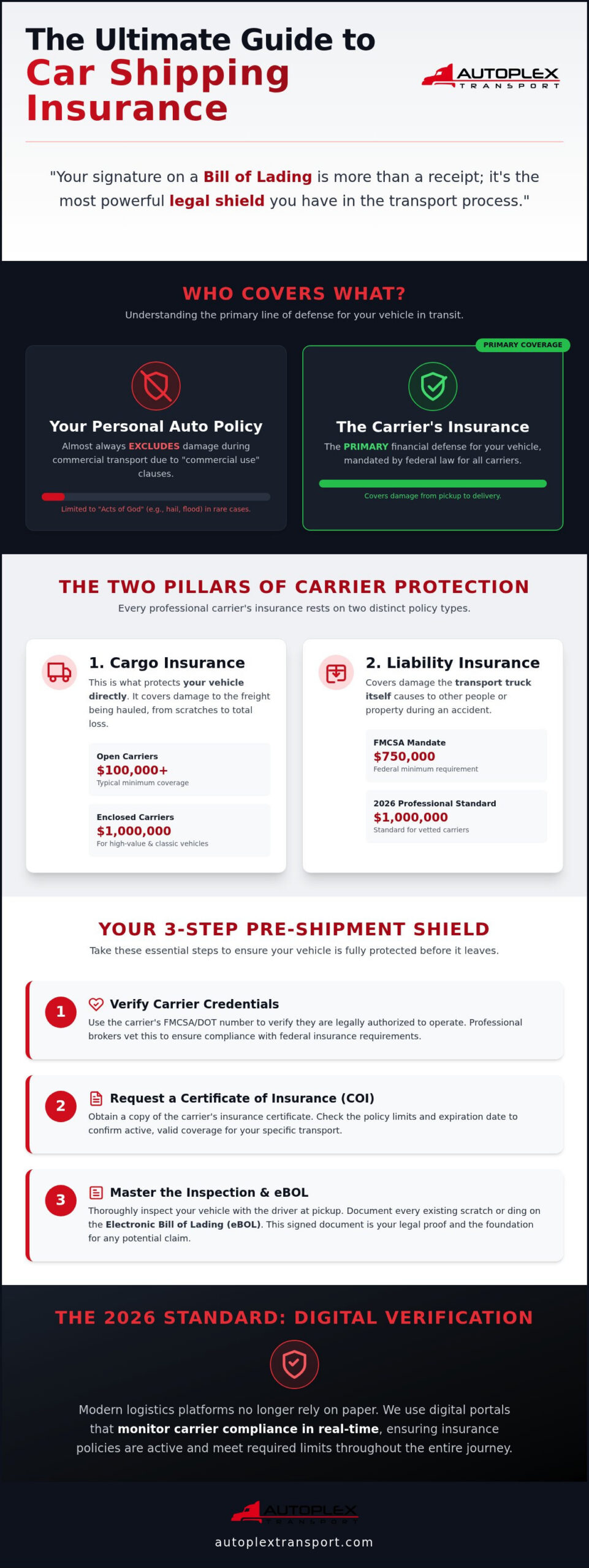
Car shipping insurance coverage is a specialized form of protection designed to shield your vehicle from the unique risks of nationwide transport. While your car sits on a trailer, it’s no longer a personal vehicle in the eyes of most insurers; it’s commercial freight. This distinction is critical because standard personal auto policies almost always exclude incidents that occur during commercial transit. If a pebble cracks your windshield or a hydraulic leak from a top-deck car drips onto your hood, your local agent will likely point to a “commercial use” exclusion in your policy. Professional car shipping insurance coverage fills this gap, providing the primary financial defense for your asset from the moment of pickup until the final delivery.
In 2026, the industry has shifted toward a model of radical transparency. You no longer have to wonder if a carrier is actually protected. Modern logistics standards now require three core components for any legitimate transport operation: cargo insurance, public liability, and often an umbrella policy for catastrophic events. A professional carrier must maintain high limits on these policies to remain compliant with federal standards and broker vetting processes. This ensures that even if a major accident occurs on the interstate, the funds are available to compensate you for the full value of your vehicle without a legal battle.
The Difference Between Cargo and Liability Insurance
Understanding the two main pillars of transport protection helps you identify where your coverage actually comes from. These policies serve different purposes:
- Cargo Insurance: This is the most important policy for you as a vehicle owner. It specifically covers damage to the vehicles being hauled. If a chain breaks or a vehicle is damaged by road debris, cargo insurance is what pays for the repairs. In 2026, professional open carriers typically carry at least $100,000 in cargo coverage, while enclosed carriers often scale this to $1,000,000 for high-value assets.
- Liability Insurance: This covers damage that the transport truck itself causes to other people or property. If a carrier hits another vehicle or a structure, liability insurance handles those third-party claims. While the FMCSA mandates a $750,000 minimum, the professional standard in 2026 is $1,000,000.
The 2026 Standard for Asset Protection
The days of relying on a blurry, photocopied insurance certificate are over. Modern logistics companies now use digital insurance portals to monitor carrier compliance in real time. These systems connect directly to the FMCSA’s BMC-91X filings, ensuring that a policy hasn’t lapsed or been canceled mid-route. This technological shift means that “adequate” coverage is no longer a guessing game. Every carrier in a professional network is vetted through a digital handshake that confirms their limits meet the specific needs of your haul, whether it’s a standard sedan or a million-dollar classic.
Carrier Liability vs. Personal Auto Insurance: Who Covers What?
When your vehicle is in transit, the carrier’s policy serves as the primary line of defense. This isn’t just a courtesy; it’s a legal requirement. If an incident occurs on the road, the carrier’s cargo insurance is designed to pay for repairs or replacement before your own insurer is ever contacted. However, it’s vital to distinguish between minor damage and a total loss. Minor damage, such as a small paint chip or a door ding, is usually settled quickly through the carrier’s cargo limit. A total loss scenario requires the carrier’s policy to cover the full market value of the vehicle. If your car is worth more than the carrier’s maximum coverage limit, you might need to look into temporary gap insurance or choose a carrier with higher limits to ensure complete car shipping insurance coverage.
When Does Your Personal Policy Kick In?
Most owners are surprised to learn that their personal auto insurance often takes a backseat during transport. Standard policies typically contain exclusions for vehicles being moved by a commercial carrier. However, your personal comprehensive coverage might become necessary during “Acts of God.” If a sudden hailstorm or flood damages the vehicle while it’s on the trailer, many carriers will deny the claim based on force majeure clauses. In these rare cases, your personal policy is often the only way to recover costs. We recommend notifying your insurance agent before an interstate move to confirm how your specific policy handles these gaps. For more details on your rights, you can consult the FMCSA Consumer Advisory regarding auto transporters.
Comparing Coverage: Open vs. Enclosed Transport
The method of transport you choose significantly impacts the risk profile and the car shipping insurance coverage required. Open carriers are the industry standard, but they expose vehicles to road debris and weather. For those seeking maximum security, enclosed transport offers higher insurance limits and physical protection from the elements. You can explore these differences further in The Comprehensive Guide to Open Transport Car Shipping in 2026 or our Enclosed Car Transport: The Definitive Buying Guide for 2026. Choosing the right service depends on your vehicle’s value and your tolerance for risk. If you’re unsure which path is best for your specific vehicle, our team can help you evaluate the nationwide transportation services that fit your needs and provide the necessary peace of mind.
Compliance Standards: Verifying FMCSA and DOT Insurance Requirements
Compliance standards are the legal framework that ensures car shipping insurance coverage remains enforceable during an interstate haul. The Federal Motor Carrier Safety Administration (FMCSA) serves as the primary regulator, mandating that every carrier operating across state lines maintains active insurance filings. When you request a Certificate of Insurance (COI), you’re looking for more than just a piece of paper; you’re looking for proof of a BMC-91 or BMC-91X filing. These digital records, maintained by the insurer, are the only way to confirm that a policy is currently in good standing. A carrier that hesitates to provide a current COI or whose name doesn’t match their DOT registration is a significant red flag that suggests a lack of professional oversight.
Step-by-Step: Verifying a DOT Number
You can verify a carrier’s legitimacy in minutes using the SAFER (Safety and Fitness Electronic Records) system. Start by entering the carrier’s DOT number into the FMCSA portal to pull up their safety profile. Once the record appears, navigate to the “Insurance/Equity” section to view their active coverage status and policy limits. You must ensure the legal business name on the FMCSA portal matches the policy holder listed on the carrier’s insurance certificate exactly. This verification process is a standard practice supported by organizations like the American Trucking Associations, which advocate for high safety and compliance standards across the vehicle transport industry.
Understanding Minimum Federal Liability Limits
The FMCSA requires interstate auto transport carriers to maintain a minimum of $750,000 in public liability insurance as of 2026. While this is the legal floor, the professional standard for reputable carriers is $1,000,000 in liability coverage. At AutoPlex, we prioritize your asset’s safety by vetting carriers to ensure they meet or exceed these higher industry benchmarks. It’s also important to understand the role of the broker’s $75,000 surety bond. This bond is a federal requirement designed to protect carriers from non-payment by the broker; it doesn’t provide car shipping insurance coverage for your vehicle. For that, we look for carriers with robust cargo policies and, in many cases, contingent cargo insurance. This secondary layer of protection acts as a safety net for the shipper if a carrier’s primary insurance fails to pay a valid claim.
The Inspection Process and eBOL: Protecting Your Right to a Claim
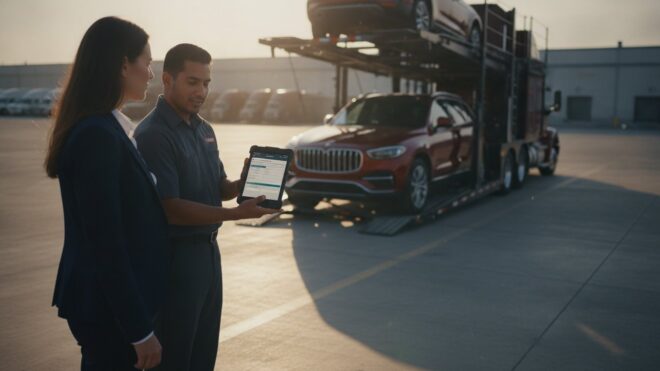
The Bill of Lading (BOL) is the most significant document in your transport journey. It functions as both a receipt and a binding legal contract that defines the scope of your car shipping insurance coverage. In 2026, the industry has largely transitioned to the Electronic Bill of Lading (eBOL). This digital format is crucial because it creates an unalterable, timestamped record of your vehicle’s condition. Unlike paper forms that can be lost or altered, an eBOL ensures that the data captured at pickup remains consistent throughout the trip. If you ever need to file a claim, this document is the primary evidence an adjuster will examine to determine liability.
Timing is everything when it comes to asset protection. You generally have a 48-hour window to report any transit-related damage to the carrier’s insurance provider to maintain your eligibility for a claim. To make this process seamless, you must establish a “baseline” by taking high-resolution photos of your vehicle from every angle during the pickup inspection. These photos, when uploaded to the eBOL portal, serve as undeniable proof of the car’s state before it was loaded onto the trailer. Without this digital trail, proving that damage occurred during transit becomes significantly more difficult.
Preparing Your Vehicle for a Clean Inspection
An accurate inspection is only possible if the vehicle is clean. Dust and road grime can easily hide small scratches or dents, making it difficult to prove they didn’t exist prior to transport. We recommend following our How to Prepare a Car for Transport: The 2026 Essential Checklist to ensure your vehicle is ready for the driver’s arrival. It’s also vital to remember the “personal items” exclusion. Standard car shipping insurance coverage specifically excludes household goods or electronics left inside the car. Any items stored in the cabin or trunk are transported at your own risk, and damage caused by these items shifting during transit is not covered by the carrier’s policy.
The Delivery Sign-Off: What to Look For
When your car arrives, perform a thorough 360-degree walkaround before signing the final delivery document. This should always be done in daylight or a well-lit area to ensure no detail is missed. If the car is delivered at night or is covered in heavy road grime that obscures the paint, you should write “Subject to Further Inspection” on the eBOL. This provides a brief buffer for you to clean the car and check for damage once visibility improves. If you find new damage, ensure the driver notes it specifically on the eBOL before they leave your property. If you’re ready to start your journey with a partner who prioritizes documentation accuracy, you can book your nationwide transportation services with confidence today.
Selecting Your Partner: Why AutoPlex Transport Sets the Standard
Choosing a transport provider is a decision that impacts the long-term value and safety of your vehicle. While understanding the technicalities of car shipping insurance coverage is empowering, managing the verification of every carrier yourself is a monumental task. AutoPlex Transport Company acts as your dedicated advocate, bridging the gap between complex federal regulations and your need for peace of mind. We don’t just find a truck; we secure a vetted logistical solution. Our role as a seasoned industry veteran is to ensure that every mile of your vehicle’s journey is backed by verified, active protection that stands up to the highest professional standards of 2026.
Our Rigorous Carrier Vetting Process
Trust is the currency of the transport industry. To maintain this trust, we employ a methodical vetting process that goes far beyond a simple license check. We monitor FMCSA safety ratings and insurance status in real-time to ensure no policy has lapsed or been downgraded. By integrating directly with digital insurance portals, we verify that every carrier in our network maintains the high cargo and liability limits necessary for nationwide interstate transportation. We select only those drivers who demonstrate a proven history of professional logistics and asset protection. This national network of specialists ensures that whether you’re moving a daily driver or a high-value classic, the person behind the wheel meets our uncompromising safety benchmarks.
The AutoPlex Transport Company Reassurance
The “AutoPlex Transport Company Reassurance” is our commitment to radical transparency and proactive communication. We believe that you shouldn’t have to hunt for information regarding your vehicle’s safety. Every quote we provide is all-inclusive, meaning you won’t encounter hidden insurance fees or surprise surcharges at delivery. Our team maintains a steady line of communication from the initial pickup to the final sign-off, ensuring you’re updated on your vehicle’s status throughout its journey. This level of professional oversight doesn’t just protect your car today; it protects its long-term resale value by ensuring any incident is handled with documented, legal precision. When you work with us, you’re partnering with a stable and experienced hand that treats your asset with the same care you do.
Request your professional car shipping quote from AutoPlex Transport Company today.
Securing Your Vehicle’s Future with Professional Oversight
Protecting your vehicle during transit requires more than just a standard contract; it demands a thorough understanding of car shipping insurance coverage and a commitment to meticulous documentation. By verifying carrier credentials through the FMCSA and mastering the electronic Bill of Lading process, you’ve already taken the most important steps toward a successful move. You don’t have to manage these logistical complexities alone. A reliable partner ensures that every legal and safety requirement is met before the first mile is driven.
AutoPlex Transport provides the reassurance of nationwide interstate coverage backed by a network of specialized open and enclosed carriers. As an FMCSA licensed and insured provider, we prioritize the safety of your high-value assets through rigorous vetting and transparent communication. We’re here to guide you through every step of the journey. Get an Instant Professional Car Shipping Quote and experience the peace of mind that comes with industry-leading protection. Your vehicle is a significant investment, and we’re ready to help you move it with confidence.
Frequently Asked Questions
How do I know if a car shipping company is professional and legitimate?
A legitimate company will always have an active DOT number and FMCSA registration. You can verify their status on the SAFER system to see their safety ratings and insurance filings. Professionalism is also found in transparency; they’ll provide a Certificate of Insurance without hesitation. Avoid any company that uses high-pressure tactics or refuses to show their credentials. A stable partner like AutoPlex prioritizes these safety standards to build lasting trust with every client.
What is the difference between open and enclosed car transport insurance?
The main distinction involves the cargo limits provided. Open carriers are the industry standard and typically offer $100,000 in coverage, which is adequate for most daily drivers. Enclosed carriers provide a higher level of car shipping insurance coverage, often reaching $1,000,000. This reflects the increased value of the classic or luxury vehicles they transport. Choosing enclosed transport doesn’t just add physical protection; it ensures the financial coverage matches the asset’s worth.
Does professional car shipping include insurance coverage in the quote?
Yes, a professional quote should always be all-inclusive, covering the carrier’s primary cargo and liability policies. You don’t have to pay extra for standard protection when working with a reputable provider. If a broker or carrier adds hidden insurance fees after you’ve agreed on a price, they aren’t following industry best practices. It’s best to confirm that the quoted price fully covers your vehicle’s market value before you hand over the keys for transport.
What happens if my vehicle is damaged during the shipping process?
If you notice new damage, you must record it on the Bill of Lading before the driver leaves. This documentation is the legal basis for your claim. Take high-resolution photos of the damage and compare them to your pickup photos. Notify the transport company immediately to start the claims process. Most professional policies require this report within a 48-hour window. Following these steps ensures the carrier’s insurance has the evidence needed to process your repair.
Can I put personal items inside my car during professional shipping?
It’s best to remove all personal belongings before shipping. Standard car shipping insurance coverage specifically excludes any items left inside the cabin or trunk. These items aren’t just uninsured; they can also shift during transit and damage your vehicle’s interior. Since carriers aren’t licensed to move household goods, they can face fines for carrying extra weight. Keeping your car empty ensures a smoother inspection and protects you from uncovered financial losses for personal property.
Is my personal auto insurance valid while my car is on a trailer?
Your personal policy is usually secondary and often has “commercial use” exclusions that apply while the car is on a trailer. While some comprehensive plans might cover “Acts of God” like hail, they won’t cover damage caused by the carrier’s equipment. The carrier’s insurance is the primary coverage for any negligence during transit. Speak with your insurance agent to understand how your specific policy interacts with the commercial coverage provided by the transport company.
How do I verify a carrier’s cargo insurance limits?
You should ask the carrier for a current Certificate of Insurance, which clearly states their cargo and liability limits. For extra security, use the FMCSA Licensing and Insurance website to check their public filings. This portal confirms if the insurance is active and identifies the insurance company holding the policy. Verifying these details ensures the carrier has enough coverage for your specific vehicle, especially when moving high-value assets across state lines in 2026.
What is an eBOL and why is it important for insurance claims?
An eBOL is an Electronic Bill of Lading that captures your vehicle’s condition digitally at pickup and delivery. It’s vital for claims because it provides a timestamped, unalterable record that includes photos and digital signatures. This technology prevents the loss or tampering often associated with paper forms. If damage occurs, the eBOL provides the objective evidence an insurance adjuster needs to approve a claim quickly. It’s a modern standard that ensures transparency for both parties.