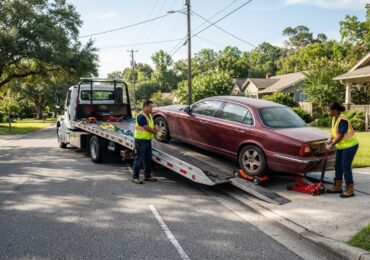
Your signature on a vehicle transport document is far more than a simple formality; it’s your primary legal shield against liability and damage disputes during transit. When clients ask, “what documents do I need to ship a car?” they’re often worried that a missing form might lead to a refused pickup or a voided insurance claim. It’s common to feel confused about whether you need a physical title or just a registration, especially with the shifting regulations of 2026. You deserve to feel confident that your vehicle is fully protected and compliant throughout its journey.
We’ve designed this guide to help you master the paperwork required for a seamless vehicle transport experience. Through our expert-vetted documentation checklist, you’ll gain a clear understanding of the legal role of the Bill of Lading and the latest REAL ID requirements for secure deliveries. We’ll preview every essential form you need to keep your car moving safely across state lines, ensuring you’re prepared for a professional handover. By following this methodical approach, you can eliminate the stress of logistics and focus on your move with total peace of mind.
Key Takeaways
- Understand how proper documentation ensures compliance with FMCSA regulations and serves as the legal foundation for any necessary insurance claims.
- Discover exactly what documents do I need to ship a car, from valid government-issued identification to current proof of insurance.
- Learn how to handle special scenarios involving financed vehicles or third-party proxies using Lienholder Authorizations and Power of Attorney forms.
- Master the Bill of Lading to ensure every existing scratch or dent is accurately recorded before your vehicle is loaded onto the carrier.
- Follow a methodical preparation guide to organize your physical originals and digital scans for a seamless, professional handover.
Why Proper Documentation is Critical for Safe Vehicle Transport
When you prepare to move a vehicle across state lines, the paperwork involved serves as the backbone of the entire operation. It isn’t merely a set of forms to fill out; it’s a comprehensive safety net that protects your property and ensures the carrier operates within federal guidelines. Understanding what documents do I need to ship a car is the first step in establishing a clear chain of custody between you, the broker, and the transport professional. This documentation acts as a legal receipt, confirming that the carrier has taken possession of your vehicle and is responsible for its safe arrival.
Legal Compliance and DOT Standards
The Federal Motor Carrier Safety Administration (FMCSA) and the Department of Transportation (DOT) maintain strict oversight of the auto transport industry. Carriers have a legal obligation to verify specific vehicle details before they can move a load. Accurate documentation prevents “unauthorized transport” red flags, which can occur if a vehicle’s description doesn’t match its registration during a roadside inspection. The Vehicle Identification Number (VIN) plays a central role here. It allows authorities to track the vehicle through national safety databases and ensure it isn’t listed as stolen or involved in active legal disputes. Without the correct paperwork, a carrier might face heavy fines or be forced to stop the shipment at a state line, causing significant logistical delays for your delivery. To help navigate these complex federal requirements and avoid costly errors, you can discover Customs and Trade Logistics for professional guidance on transport documentation and compliance.
Protecting Your Liability and Insurance Coverage
Many owners assume their personal auto insurance provides full coverage during a cross-country move. However, most standard policies exclude or limit coverage when a vehicle is under the care of a commercial carrier. This is why having the right paperwork is vital; it triggers the carrier’s cargo insurance policy. Central to this process are the legal functions of a Bill of Lading, which serves as both a contract of carriage and an official condition report. If you don’t provide the necessary information, or if the name on the shipping documents doesn’t match the person present at pickup, the insurance company may deny a claim in the event of transit damage.
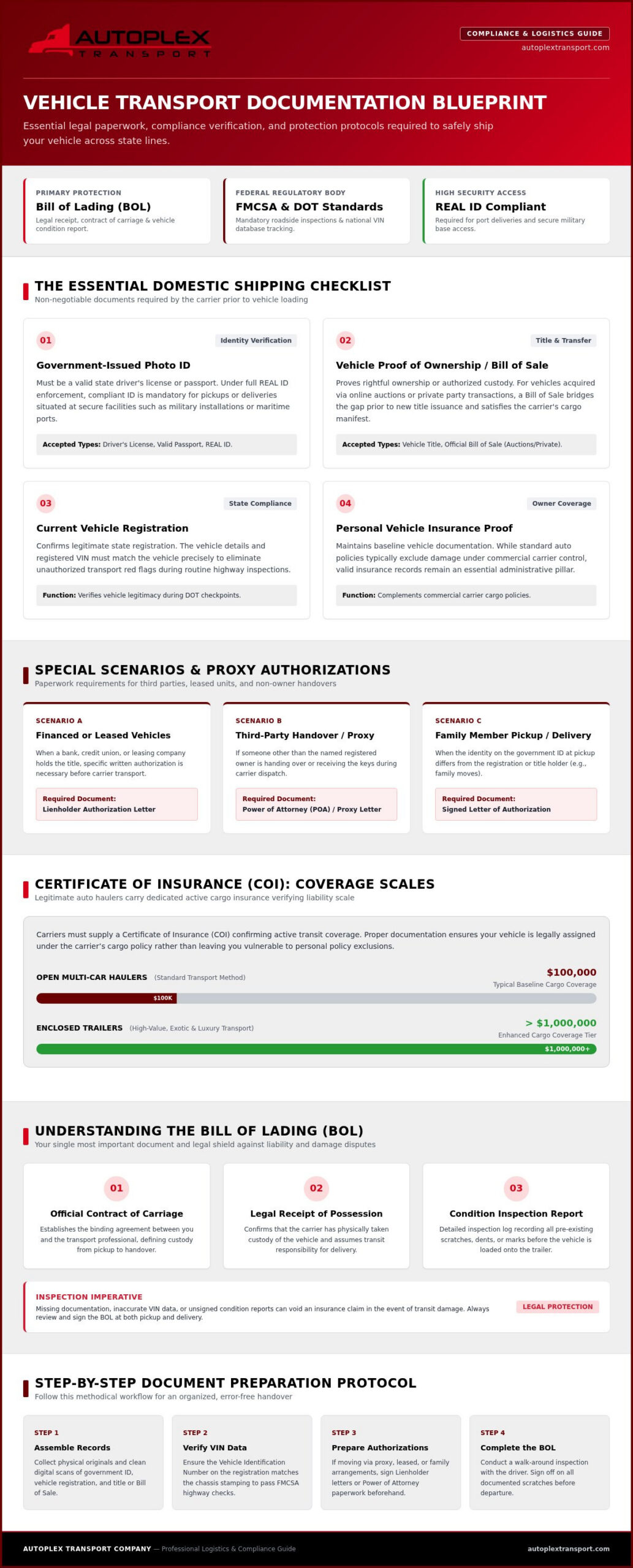
Ensuring you know exactly what documents do I need to ship a car allows the carrier to apply their cargo insurance correctly. Legitimate carriers provide a Certificate of Insurance (COI) verifying active cargo insurance, which typically ranges from $100,000 for open multi-car haulers to over $1,000,000 for enclosed trailers. Proper documentation establishes that you are the rightful owner or authorized proxy, providing the peace of mind that your asset is protected by professional-grade coverage throughout its journey.
The Essential Document Checklist for Domestic Car Shipping
Building on the legal framework discussed previously, you must gather specific paperwork to ensure your vehicle is accepted for transport. The most frequent question our logistics experts receive is: what documents do I need to ship a car? While the list is concise, each item is non-negotiable for maintaining federal compliance and insurance validity. Having these ready before the driver arrives streamlines the door-to-door process and prevents unnecessary delays during the handover.
Identification and Proof of Ownership
The carrier must verify your identity to ensure the vehicle is being moved by an authorized party. You’ll need a valid government-issued photo ID, such as a state driver’s license or a passport. With the 2025 REAL ID Act enforcement now in full effect, a compliant license is mandatory if your vehicle is being picked up or delivered at secure locations like military bases or maritime ports. If the name on your ID doesn’t match the registration, perhaps because the car belongs to a family member, you should have a signed letter of authorization ready for the driver.
A common oversight involves vehicles purchased through online auctions or private sellers. In these cases, you must provide a Bill of Sale to bridge the gap before a new title is issued in your name. Whether you are utilizing open transport car shipping for a daily driver or moving a project car, this proof of purchase is a fundamental requirement for the carrier’s manifest. This ensures the chain of custody remains legally sound from the moment the car is loaded.
Vehicle Insurance and Registration Requirements
Current registration and personal insurance are the final pillars of your checklist. While the carrier’s cargo policy covers the vehicle while it’s physically on the trailer, your personal insurance provides secondary protection for incidents outside the driver’s control. We suggest keeping a copy of the registration in the glovebox for easy access during roadside checks. This practice aligns with federal bill of lading requirements, which mandate that all freight is accompanied by verifiable ownership and destination data.
For high-value assets requiring enclosed car transport, we also recommend having a copy of your most recent appraisal on hand. This documentation supports the specialized cargo limits associated with premium trailers. If you have questions about specific state rules for 2026, the team at AutoPlex Transport Company is available to provide a detailed review of your paperwork to ensure a seamless interstate move.
Special Scenarios: Documents for Liens, Military, and Third-Parties
Standard domestic transport is usually straightforward, yet specific legal and professional situations demand additional layers of verification. When you ask, “what documents do I need to ship a car,” the answer depends heavily on who owns the vehicle and who’s handing over the keys. Whether you’re a service member on a PCS move or shipping a car for a family member, these specialized forms ensure the carrier can legally accept the vehicle and navigate interstate regulations without delay. Preparing these in advance keeps your timeline intact and prevents last-minute complications at the curb.
Shipping a Financed Vehicle with a Lienholder
Lenders have a vested interest in the location of their collateral. While standard domestic transport within the contiguous 48 states rarely requires a bank’s permission, some financial institutions mandate notification if the vehicle will reside in a new state for an extended period. You should contact your lender to request a “Letter of Permission” or a formal Lienholder Authorization. A Lienholder Authorization is a document that proves the bank permits the vehicle’s relocation. Having this on hand prevents potential issues with registration updates or insurance adjustments in your new home, especially if your loan agreement has specific jurisdictional clauses.
Power of Attorney for Third-Party Hand-offs
It’s common for an owner to be unavailable during the pickup or delivery window. If you’re shipping a car for a student at college or a relative, you must provide the carrier with a signed Written Authorization or a Limited Power of Attorney (POA). When determining what documents do I need to ship a car through a third party, the Limited POA is the most critical addition to your checklist. A Limited POA is specifically designed for a single transaction; it grants your proxy the right to sign the Bill of Lading and conduct the vehicle inspection on your behalf without giving them control over your other affairs. This is far safer than a General POA, which grants broad legal authority. Ensure the document includes the vehicle’s VIN, the proxy’s full name, and your notarized signature to avoid any disputes at the handover point.
For members of the armed forces, a Permanent Change of Station (PCS) move involves unique documentation. You’ll need to provide a complete set of your PCS orders to qualify for specific military transport protocols or entitlements. Additionally, if you’re moving a vehicle through the Defense Transportation System, you must complete DD Form 788, which serves as the official Private Vehicle Shipping Document. Because many military moves involve secure facilities, remember that anyone dropping off the vehicle must present a REAL ID-compliant credential to gain access to the installation. These absentee owner forms and military-specific requirements ensure that even when you aren’t physically present, your vehicle’s chain of custody remains legally sound.
Understanding the Bill of Lading (BOL): Your Most Important Form
While identification and registration establish ownership, the Bill of Lading (BOL) serves as the definitive legal document for the actual transit. When you ask, “what documents do I need to ship a car,” the BOL stands out as the most critical because it records the vehicle’s exact state at both the start and end of the journey. It’s the only document that can prove a damage claim, making it your most powerful tool for accountability throughout the nationwide move. Without a signed BOL at both pickup and delivery, your ability to seek compensation for any transit-related incident is significantly compromised, as the document acts as the final word on the carrier’s performance.
The BOL as a Condition Report
The process begins with a joint inspection alongside the carrier driver. You’ll walk around the vehicle together, noting every pre-existing scratch, chip, or dent on the report’s diagram. To ensure a clear and fair assessment, refer to our guide on how to prepare a car for transport before the driver arrives. Many drivers now use digital eBOLs to capture high-resolution photos and timestamps, providing an immutable record that protects you from disputes during delivery. This digital approach ensures that pre-existing conditions are documented with clarity, which is far more reliable than the old carbon-copy paper forms used in the past.
The BOL as a Legal Contract of Carriage
The BOL is also a binding contract governed by the Carmack Amendment, which establishes the carrier’s liability for loss or damage during interstate movement. It’s essential that you read the terms and conditions printed on the document before signing. You must never sign a blank or incomplete Bill of Lading; ensure the odometer reading and destination are filled in first. If the car is delivered and you sign the BOL without noting new damage, insurance providers will likely deny any subsequent claims. Since this document is the final word in any insurance dispute, keep your copy for at least six months. For a transport experience handled with this level of detail, contact AutoPlex Transport Company to speak with a dedicated logistics professional.
Organizing Your Paperwork: A Step-by-Step Preparation Guide
Once you’ve identified what documents do I need to ship a car, the final phase involves a methodical approach to organization. Having a clear system for your paperwork eliminates the stress of last-minute searching when the carrier pulls up to your door. Organization isn’t just about neatness; it’s about maintaining a verifiable audit trail that protects your interests. By following a structured preparation guide, you ensure that every legal and logistical requirement is met before the driver begins the loading process.
- Step 1: Gather all physical originals, including your current registration, proof of insurance, and a valid photo ID.
- Step 2: Create high-resolution digital scans or photos of every document to ensure you have backups if paper copies are lost.
- Step 3: Print two copies of the carrier-provided quote and the signed contract to verify terms at both ends of the trip.
- Step 4: Place a “Transit Packet” in the vehicle’s glove compartment containing copies of the registration and insurance, but never leave the original title in the car.
- Step 5: Finalize a dedicated digital folder on your mobile device for instant access during pickup and delivery.
Creating a Digital and Physical Documentation Folder
We recommend utilizing secure cloud storage solutions like Google Drive, iCloud, or Dropbox to host your vehicle’s documentation. This allows you to access critical files from your phone even if you’re traveling away from your physical files. However, physical copies remain necessary for drivers who may need to present them during roadside inspections in areas with poor cellular service. Your digital folder should also include high-resolution photos of the vehicle taken immediately before loading. These images, combined with your digital scans, create a complete audit trail that makes the inspection process much smoother for both you and the driver.
Final Verification Before the Carrier Arrives
Perform a “Five-Minute Audit” shortly before your scheduled pickup window. Start by double-checking that the VIN listed on your paperwork matches the dashboard plate exactly; a single digit error can lead to significant delays at state lines. You should also confirm that the delivery address and the contact person’s information on the contract match your latest plans. These small details are often overlooked in the rush of a move, but verifying them ensures the driver has everything needed for a successful door-to-door delivery. When you’re clear on what documents do I need to ship a car and have them organized, you can step into the transport process with the confidence that your vehicle is fully protected.
Preparing for a Successful Vehicle Move in 2026
You’ve now mastered the complexities of transport paperwork. By understanding the legal role of the Bill of Lading and gathering your identification and ownership records early, you’ve removed the biggest obstacles to a smooth delivery. Knowing exactly what documents do I need to ship a car allows you to approach the handover with confidence, ensuring your vehicle’s condition is accurately recorded and protected under federal guidelines. This methodical preparation serves as the foundation for a stress-free move across state lines.
AutoPlex Transport Company is here to act as your reliable partner throughout this entire process. We specialize in Nationwide Door-to-Door Service with a proven history of A+ Rated Reliability. When you choose us, you don’t have to worry about the fine print; we include comprehensive cargo insurance with every shipment to ensure your asset is fully covered from pickup to delivery. Our experts guide you through every form and inspection, providing the stability and experience you deserve.
Ready to start your journey? Get a Professional Auto Transport Quote from AutoPlex Today. Your vehicle’s safe arrival is our highest priority, and we’re ready to support you every mile of the way.
Frequently Asked Questions
Do I need the original title to ship my car domestically?
No, you don’t need the original title for standard interstate transport within the continental U.S. A copy of your vehicle registration is typically sufficient to verify ownership for the carrier. You should never leave the original title inside the vehicle; keeping it in your personal possession prevents it from being lost or used fraudulently if the car is compromised during its journey.
Can I ship a car if I am not the registered owner?
Yes, you can facilitate the transport even if you aren’t the registered owner, provided you have the proper authorization. You’ll need to present a signed letter from the owner or a Limited Power of Attorney along with a copy of their photo ID. This ensures the carrier has legal permission to take possession of the vehicle from you when you’re asking what documents do I need to ship a car for a family member.
What happens if I do not have a Bill of Lading at delivery?
If you don’t have a Bill of Lading (BOL) at delivery, you lose your primary legal record of the vehicle’s condition. The BOL is the definitive document for insurance claims; without it, proving that damage occurred during transit becomes nearly impossible. You must ensure the driver provides a copy, either physical or digital, at the destination. Always inspect the vehicle and sign the BOL to finalize the chain of custody.
Is a Power of Attorney required if my spouse picks up the car?
While some carriers are flexible, a Limited Power of Attorney or a signed Letter of Authorization is the safest way to ensure a smooth pickup. If your spouse’s name isn’t on the registration or the shipping contract, the driver may legally refuse to release the vehicle to them. Providing this simple document prevents logistical delays and confirms that you’ve authorized your spouse to act as your proxy for the final inspection.
Do I need to provide my insurance information to the car shipping company?
Yes, providing your personal insurance information is a standard part of the documentation process. While our nationwide transportation services include comprehensive cargo insurance for transit-related damage, your personal policy remains the primary coverage for incidents like road hazards or severe weather. Having both sets of information on file ensures that your vehicle is fully protected under all possible scenarios during its journey across the country.
What documents are required for shipping a car I just bought online?
If you’ve purchased a vehicle from an online seller or dealership, you’ll need the Bill of Sale in addition to your standard ID and insurance proof. This document serves as your temporary proof of ownership until the new title and registration are processed. When determining what documents do I need to ship a car from a remote seller, the Bill of Sale is the most critical piece for verifying the transaction’s legitimacy. If you are currently in the market for a pre-owned vehicle, you can learn more about Keys Motors – Orlando and their inventory of quality used cars.
You should leave a copy of the registration in the glovebox, but you must never leave the original title inside the vehicle. The registration is necessary for the driver to present at weigh stations or during roadside inspections. However, the title is your ultimate proof of ownership; keeping it with you prevents it from being lost. Keeping these documents separate is a vital safety practice that every professional carrier recommends.
Can I ship a vehicle with an expired registration?
Yes, you can ship a vehicle with an expired registration as long as you have proof of ownership. Since the vehicle is being transported on a trailer rather than driven on public roads, the carrier can legally move it across state lines. You’ll still need to provide a photo ID and the expired registration or a title copy to verify that you have the authority to ship the car without any legal issues.