
A cross-country drive can add hundreds or thousands of miles to your odometer, expose your vehicle to road debris, and leave you planning around weather you cannot control. So, is enclosed transport worth it? For many owners, the answer comes down to one question: how much would damage, wear, or added mileage cost you?
Enclosed auto transport places your vehicle inside a covered trailer rather than on an open carrier. It costs more than standard open shipping, but the added protection can make practical sense for certain vehicles, routes, and situations. The right choice is not always the most expensive one. It is the service that fits your vehicle’s value, condition, schedule, and your comfort level with risk.
What Enclosed Auto Transport Protects Against
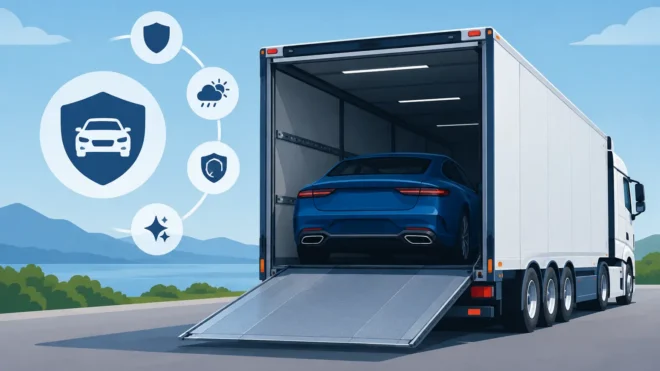
An enclosed carrier surrounds the vehicle with trailer walls and a roof during transit. That separation helps shield it from the conditions that vehicles on an open trailer routinely face: rain, snow, wind-blown dust, road salt, gravel, insects, and debris kicked up by traffic.
This matters most when a vehicle has a finish, exterior detail, or value that you want to preserve. A collector car with original paint, a freshly restored classic, or a luxury vehicle with a custom finish may be more vulnerable to even minor cosmetic damage. The protection is also valuable on long routes, where more miles generally mean more exposure to changing weather and road conditions.
Covered transport is not a promise that nothing can ever happen. Professional auto shipping still depends on careful loading, securement, carrier condition, and clear communication at pickup and delivery. But enclosed service reduces the environmental exposure that is simply part of open-carrier travel.
Is Enclosed Transport Worth It for Your Vehicle?
Enclosed transport is often worth the additional cost when the vehicle is expensive to repair, difficult to replace, or especially important to you. It is a common choice for exotic cars, classic cars, luxury vehicles, high-performance models, antiques, show vehicles, and motorcycles. It can also be a smart fit for a new vehicle you have purchased from another state and want delivered in its current condition.
The calculation can be more personal than financial. Maybe your vehicle is not a six-figure collector car, but it has recently received a premium paint correction, ceramic coating, or restoration. Maybe it is a family vehicle you need delivered clean and ready for an important move. In those cases, paying more for covered transport may bring valuable peace of mind.
Open shipping remains a dependable option for many everyday cars, trucks, and SUVs. It is the most common auto shipping method in the United States because it is efficient, widely available, and typically more budget-friendly. If your vehicle is a standard daily driver and you are comfortable with normal road exposure, open transport may be the better value.
When open transport is usually enough
A well-maintained commuter vehicle, used SUV, pickup truck, or standard sedan does not automatically require enclosed shipping. For a straightforward relocation, dealership transfer, or online purchase, open transport can move the vehicle safely while keeping your shipping budget lower.
Open carriers also tend to offer more scheduling flexibility because there are more of them operating on major routes. If timing is tight, that availability can be a meaningful advantage. The best service is not necessarily enclosed or open. It is the one that protects your vehicle appropriately without adding costs you do not need.
The Cost Difference and What You Receive
Enclosed transport generally costs more than open carrier shipping because enclosed trailers have fewer vehicle positions, specialized equipment, and lower availability. Depending on the route, vehicle size, seasonal demand, pickup and delivery locations, and urgency, the price can be noticeably higher.
That higher rate pays for more than a roof over the vehicle. Enclosed transport often involves more specialized handling, and many enclosed carriers are equipped to accommodate lower-clearance or high-value vehicles. Some offer features such as lift-gate loading or soft tie-downs, which can be helpful for vehicles that need extra care during loading and unloading.
Ask what is included before you book. A clear quote should account for the vehicle type, transport method, route, estimated pickup window, and delivery expectations. If your car has very low ground clearance, is inoperable, oversized, modified, or requires special loading considerations, share that information early. Accurate details help avoid last-minute changes and allow the carrier to send the right equipment.
Route, Weather, and Timing Can Change the Answer
A short move in mild weather is different from a coast-to-coast shipment through winter conditions. Long-distance routes increase exposure to rain, snow, ice, dust, construction zones, and road salt. If your shipment will travel through harsh conditions or during a season known for unpredictable weather, enclosed transport may be easier to justify.
Timing matters, too. Enclosed carriers can have fewer available spots than open carriers, particularly on less common routes. Booking in advance gives you more options and reduces pressure to accept a schedule that does not work for you. If you need expedited transport, let your shipping advisor know from the beginning. Expedited service may be available, but the route and carrier capacity will affect both timing and price.
Door-to-door service can further simplify the process. In many cases, the carrier can pick up and deliver as close to your preferred addresses as local access allows. Large trucks may need a nearby meeting point when residential streets, parking restrictions, low branches, or tight turns make direct access impractical. A good transport coordinator will explain that before pickup day.
How to Decide Without Overpaying
Start with the vehicle itself. Consider its market value, cosmetic condition, clearance, modifications, and how difficult it would be to repair or replace. Then consider the trip: distance, season, route, and how quickly you need delivery.
It also helps to think beyond the shipping quote. Driving long distance brings fuel costs, hotels, meals, time away from work, tire wear, mileage, and the possibility of roadside issues. Auto shipping can remove those burdens. Enclosed shipping adds another layer of protection when preserving the vehicle’s condition is a priority.
Before booking, provide the transporter with clear, honest information. Mention aftermarket spoilers, oversized tires, roof racks, non-running conditions, loose parts, and low clearance. Take dated photos of the vehicle before pickup, remove personal belongings unless your carrier has approved them, and keep a copy of the inspection paperwork. These simple steps support a smooth handoff and give you a clear record of the vehicle’s pre-shipment condition.
Questions to Ask Before Choosing Enclosed Shipping
You do not need to become an auto shipping expert to make a confident choice. Ask whether the quoted service is enclosed or open, what pickup and delivery windows are expected, how the vehicle will be loaded and secured, and whether special equipment is recommended for your vehicle.
Also ask how communication works while the vehicle is in transit. You should know who to contact if plans change and what to expect at delivery. Reliable coordination is especially important when you are relocating, arranging delivery to a dealership, or buying a vehicle from out of state.
At AutoPlex Transport, a dedicated advisor can help weigh the route, vehicle type, timeline, and protection level so you are not paying for a service that does not fit your needs. A quick conversation and an accurate quote are often the easiest way to settle the enclosed-versus-open question.
Choose Protection That Matches What Matters to You
If a vehicle’s appearance, rarity, low clearance, or overall value makes road exposure uncomfortable, enclosed transport is usually a worthwhile investment. If you are moving a dependable daily driver and want the most cost-conscious option, open transport may deliver exactly what you need.
The goal is to have your vehicle arrive where it needs to be without adding a long drive, unnecessary wear, or avoidable stress to your plans. Share the details of your move, ask for a clear shipping recommendation, and choose the level of protection that lets you hand over the keys with confidence.
