
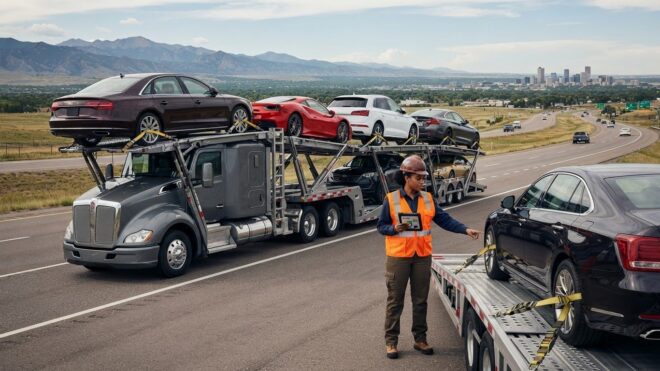
Most people don’t realize that the lowest quote they receive for vehicle shipping is often a calculated trap designed to change the moment their car is loaded onto a trailer. It’s understandable why you might feel anxious when researching car hauler companies to move your most valuable asset across the country. You’re likely worried about hidden fees, potential damage during transit, or the confusing distinction between a direct carrier and a broker. It’s frustrating to feel like you’re handing over your keys to a stranger without knowing if they’re actually insured or if their safety records are up to date.
This guide will teach you how to evaluate, vet, and choose reputable car hauler companies for secure nationwide vehicle transportation. We’ll show you how professional logistics operate so you can confidently verify credentials, such as the latest FMCSA financial trust requirements and electronic medical records for drivers. You’ll learn to distinguish between different carrier types and select the optimal setup for your specific vehicle. By the time you finish reading, you’ll have the tools to ensure your car arrives safely and without the stress of bait and switch tactics.
Key Takeaways
- Differentiate between direct motor carriers and auto brokers to establish clear lines of accountability for your vehicle’s safety and transit schedule.
- Evaluate the specific benefits of open versus enclosed transport equipment to determine the most secure configuration for your vehicle’s value.
- Learn how to verify essential regulatory credentials and safety data to ensure you are partnering with legitimate car hauler companies rather than predatory operators.
- Follow a structured logistical checklist to prepare your vehicle for transit and manage the complexities of nationwide door-to-door delivery.
Understanding Car Hauler Companies: Direct Carriers vs. Auto Brokers
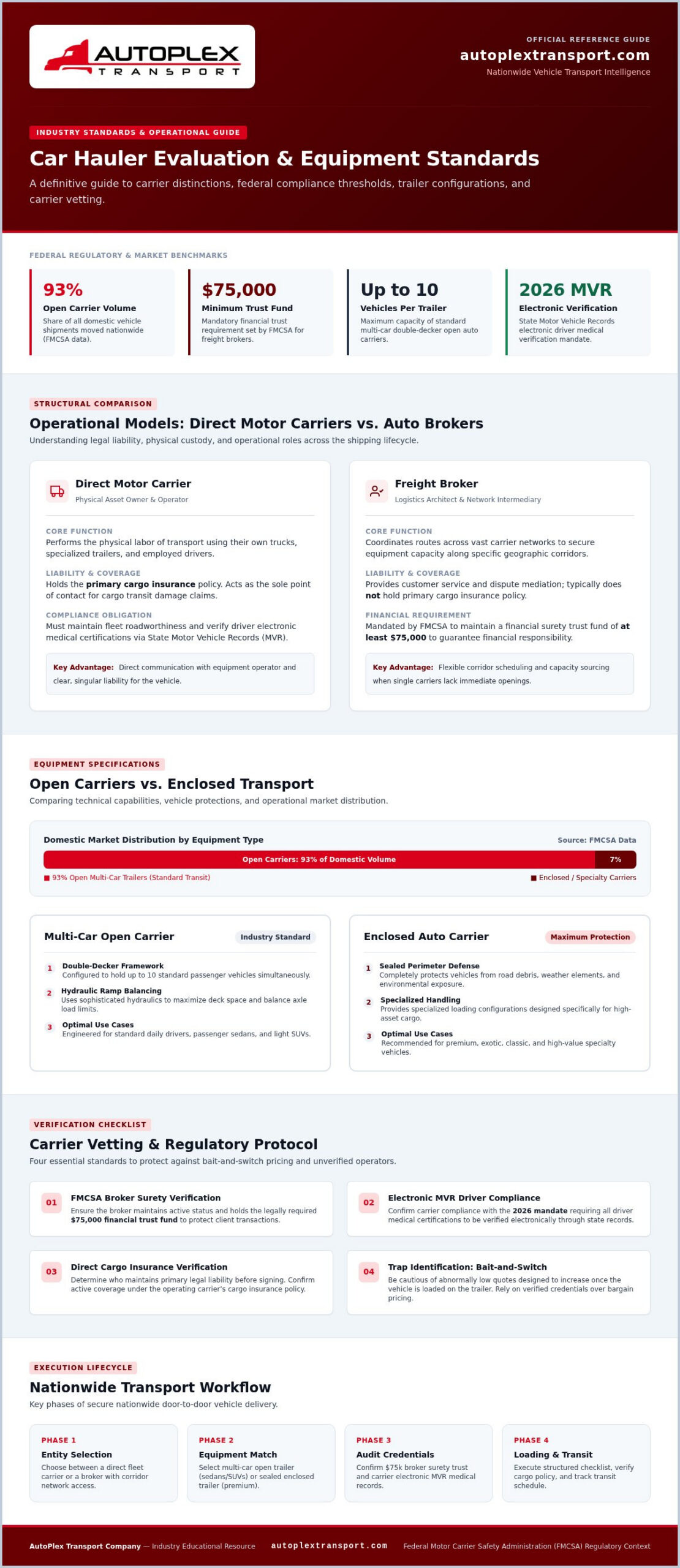
Choosing between different types of car hauler companies is the first major decision you’ll face when planning a vehicle move. The industry is divided into two primary operational models: direct motor carriers and freight brokers. While both entities facilitate nationwide transportation, their roles in the logistics chain differ significantly. A direct carrier physically moves your vehicle using their own fleet, while a broker acts as a professional intermediary to source the best available route and equipment for your specific needs. Understanding these distinctions ensures you know exactly who is responsible for your car at every mile of the journey.
The Role of Independent Motor Carriers in Vehicle Shipping
Motor carriers are the entities that perform the physical labor of vehicle transport. These companies own the trucks, employ the drivers, and maintain the specialized equipment required for safe loading and securement. Because they handle the assets directly, their operational standards are governed by strict federal safety mandates. For example, as of 2026, motor carriers must verify all driver medical certifications through state Motor Vehicle Records rather than relying on paper copies. The reliability of a carrier often depends on their commitment to fleet maintenance and their knowledge of various Types of car carrier trailers, which determines how well a vehicle is protected from road debris or weather elements during interstate transit.
How Freight Brokers Coordinate Auto Transport Logistics
Freight brokers function as the logistical architects of the industry. Instead of owning trucks, they manage vast networks of vetted car hauler companies to find capacity on specific transit corridors. This model is particularly beneficial when you need to ship a vehicle on a route where a single carrier might not have an immediate opening. Brokers streamline the scheduling process and handle the administrative vetting of each carrier in their network. To protect consumers, the FMCSA requires brokers to maintain a trust fund of at least $75,000 to ensure financial responsibility. A reputable broker adds value by filtering out low-quality carriers and ensuring that the driver assigned to your route meets all current compliance standards.
Direct Carrier Accountability Versus Broker Intermediaries
Accountability is the most critical factor when weighing these two business models. When you work with a direct carrier, you have a single point of contact for tracking and liability. If an issue arises during loading or transit, the carrier’s cargo insurance is the primary source of protection. Brokers, conversely, provide a layer of customer service and dispute resolution but don’t typically hold the primary cargo insurance policy themselves. You should always verify who holds legal liability before signing a contract. Choosing the right model depends on whether you prefer the direct communication of a fleet owner or the flexible scheduling and broad network access provided by a professional logistics coordinator.
Types of Equipment Used by Professional Car Hauler Companies
Professional car hauler companies utilize a diverse range of physical equipment to handle different vehicle dimensions, values, and transit requirements. The type of trailer selected affects everything from the level of environmental protection to the physical accessibility of your delivery location. By understanding the mechanical capabilities of these transport configurations, you can choose the optimal setup that balances your budget with your vehicle’s safety requirements.
Multi-Car Open Carriers for Efficient Nationwide Transport
Multi-car open carriers are the workhorses of the auto transport industry. Data from the Federal Motor Carrier Safety Administration (FMCSA) indicates that open transport accounts for 93% of all domestic vehicle moves. These multi-car trailers use a double-decker framework capable of holding up to ten standard passenger vehicles at once. They utilize sophisticated hydraulic ramps to maximize space and distribute weight evenly across the truck axles. This method provides an efficient, reliable option for standard daily drivers, sedans, and light SUVs. If you want to explore how these systems operate over long distances, you can read our open transport car shipping guide.
Enclosed Auto Carriers for Premium and Specialty Vehicles
Enclosed trailers provide an extra layer of security by completely sealing cargo away from external elements. These hard-sided structures protect vehicles from road debris, inclement weather, and potential transit hazards. They are equipped with specialized hydraulic liftgates that keep the vehicle completely level during loading, which prevents undercarriage scraping on models with low ground clearance. This equipment is the industry standard for classic cars, luxury vehicles, and high-value sports cars. For a deeper look at the operational differences and investment details, you can consult our enclosed car transport buying guide.
Single-Car and Hotshot Haulers for Expedited Deliveries
Smaller transport setups offer distinct advantages when navigating tight spaces or tight schedules. Single-car flatbeds and wedge trailers pulled by heavy-duty trucks, often referred to as hotshot haulers, provide flexible maneuvering in narrow residential neighborhoods where a massive ten-car trailer cannot legally or physically enter. These smaller car hauler companies frequently operate on dedicated short-haul routes, allowing them to bypass large terminal delays and complete expedited runs much faster than standard freight configurations. If you are managing a time-sensitive relocation, arranging Door 2 Door Transportation with a smaller specialized hauler can significantly reduce your overall transit timeline.
How to Vet Car Hauler Companies: Essential Credentials and Standards
Vetting car hauler companies is the only reliable way to shield yourself from the predatory tactics that occasionally plague the logistics industry. While a polished website might look professional, it doesn’t guarantee that a provider is legally authorized to move your vehicle across state lines. Thorough credentialing isn’t just a bureaucratic hurdle; it’s your primary defense against fly-by-night operators who lack the necessary financial backing or safety protocols to manage high-value assets. By utilizing public federal databases, you can verify a company’s legitimacy in just a few minutes.
Verifying USDOT and MC Numbers via Federal Databases
Every legitimate interstate vehicle carrier must possess an active Department of Transportation (USDOT) number, which serves as a unique identifier for safety audits and inspections. Additionally, companies must have a Motor Carrier (MC) number to establish their authorized federal operating authority. You should always query these numbers through the FMCSA’s Protect Your Move program or the SAFER (Safety and Fitness Electronic Records) system. These portals will tell you immediately if a company’s authority is active, dismissed, or revoked. If a provider refuses to share these numbers or if the data shows a “Not Authorized” status, you should terminate the conversation immediately.
Validating Commercial Cargo Insurance Coverage Limits
General liability isn’t enough to protect your vehicle during a long-distance haul. You must request a valid Certificate of Insurance (COI) that specifically outlines cargo coverage. While the FMCSA requires a minimum of $750,000 in public liability insurance for for-hire interstate auto haulers, most reputable brokers and shippers require their carriers to maintain at least $1,000,000 in liability coverage. For the cargo itself, typical limits range between $100,000 and $250,000. It’s vital to confirm that the policy includes physical damage and comprehensive transit protection. Don’t hesitate to contact the insurance agent listed on the certificate to verify that the policy is currently active and paid in full.
Evaluating Safety Ratings, Inspections, and Real Customer Reviews
Safety data provides a transparent look at how car hauler companies treat their equipment and their drivers. You can inspect “out-of-service” percentages on the SAFER database, which compares a carrier’s failure rate during roadside inspections against national averages. As of early 2026, motor carriers are also required to verify all CDL driver medical certifications exclusively through state Motor Vehicle Records, so you can ask a company how they maintain these compliance standards. When looking at reviews, prioritize neutral third-party platforms over promotional testimonials on a company’s own site. Watch for recurring patterns, such as complaints about unverified transit delays or sudden price hikes, rather than isolated negative comments.
Booking Auto Transport: The Step-by-Step Logistics Checklist
Moving from the research phase to the booking phase requires a shift in focus toward tactical preparation. Professional car hauler companies operate on tight, interconnected schedules where a single delay can ripple across a dozen different deliveries. By following a structured logistical checklist, you ensure that your vehicle is ready for the rigors of interstate transit while protecting your legal interests. Proper coordination reduces friction during the transition from your driveway to the transport trailer.
Requesting Transparent Quotes and Avoiding Hidden Fees
Accurate quotes start with accurate information. You must provide specific details regarding vehicle dimensions, aftermarket modifications, and whether the car is operable. A lifted SUV or a vehicle with a low-clearance spoiler requires different equipment than a standard sedan. Transparency is equally important regarding the final cost. In 2026, rising diesel prices have made fuel surcharges a standard part of the industry; for instance, a one-dollar increase in diesel can add nearly $200 to a long-haul route. Ensure your quote is all-inclusive, covering insurance and door-to-door access, before you commit to a schedule. If you’re ready to start, you can request a transparent nationwide quote to see how professional logistics management works.
Preparing the Vehicle Mechanically for Transport
Preparation is about safety and weight management. You should reduce your fuel tank to approximately one-quarter capacity. A full tank adds unnecessary weight, which can push a carrier over federal weight limits and lead to delays at weigh stations. You also need to remove all personal belongings, toll passes, and loose exterior accessories like bike racks or custom antennas. These items aren’t covered by standard cargo insurance and can cause damage during transit. To ensure you haven’t missed a step, follow our detailed guide on how to prepare a car for transport. Documentation is your final step; take high-resolution photos of the vehicle from every angle in clear lighting before the driver arrives.
Mastering the Bill of Lading During Pickup and Delivery
The Bill of Lading (BOL) is the most important document in the shipping process. It’s your official receipt and a legally binding record of the vehicle’s condition. When the driver arrives, you must conduct a joint inspection, marking every existing scratch or dent on the BOL. Don’t rush this process. When the car hauler companies deliver your vehicle, perform a second rigorous inspection before signing the final release. If you spot new damage, it must be noted on the BOL immediately to facilitate an insurance claim. Your signature on a clean BOL at delivery typically waives your right to future damage claims, so detail is vital.
Why Partnering with a Proven Nationwide Auto Shipper Delivers Value
Entrusting your vehicle to a logistics provider requires absolute confidence in their operational capacity. Partnering with proven car hauler companies eliminates the anxiety of long-distance transit by replacing guesswork with dedicated logistics management and verified safety protocols. Established providers maintain structured networks that safeguard your asset while shielding you from the costly pitfalls of unvetted, cut-rate alternatives. This systematic approach ensures that every phase of the journey is managed by experienced professionals who prioritize vehicle integrity from origin to destination.
Nationwide Network Coordination and Route Efficiency
Large-scale vehicle logistics rely on predictable scheduling patterns across major interstate transit corridors. Established carriers coordinate their routes to minimize idle time and avoid bottlenecked logistics hubs. Experienced dispatchers understand how to match specialized vehicles with the precise trailer equipment required, ensuring proper asset allocation for every load. By focusing on comprehensive Door 2 Door Transportation, these managed networks eliminate the need for intermediate terminal transfers. This direct routing significantly reduces the risk of handling damage and keeps your vehicle on a dependable delivery timeline.
Comprehensive Protection and Professional Driver Expertise
The safety of a vehicle during highway transit depends heavily on the physical expertise of the driver. Professional operators use industry-standard wheel-strap securement methods rather than outdated frame chains, ensuring that your vehicle’s suspension components aren’t subjected to damaging stress over long distances. Their strict adherence to federal safety compliance means their trucks pass roadside inspections without the unexpected out-of-service delays that plague cut-rate operators. Proactive customer support keeps you informed throughout transit, giving you complete visibility over your vehicle’s status. If you are preparing for an upcoming relocation, you can connect with the specialists at AutoPlex Transport Company to schedule your shipment and secure reliable Nationwide Transportation Services.
Securing a Seamless Nationwide Vehicle Move
Choosing between various car hauler companies doesn’t have to be a source of stress when you prioritize transparency and verified safety data. By understanding the distinction between direct carriers and brokers, and rigorously verifying USDOT and FMCSA credentials, you’ve already taken the most important steps toward a successful transport. Whether you select the efficiency of an open carrier or the specialized protection of an enclosed trailer, your focus should remain on professional logistics management that values your vehicle’s integrity.
AutoPlex Transport Company provides the peace of mind you need through a fully vetted carrier network that adheres to strict federal compliance standards. We manage reliable door-to-door logistics across the entire United States, offering flexible transport options customized to your specific vehicle type. You don’t have to manage these logistical complexities alone; our team is here to act as your seasoned industry partner.
Ready to move your vehicle with confidence? Request your nationwide vehicle transport quote from AutoPlex Transport Company today and experience a higher standard of service. We look forward to helping you get your car safely to its new destination.
Frequently Asked Questions
How do I confirm if a car hauler company is legitimately licensed?
You can verify a carrier’s license by searching their USDOT and MC numbers on the FMCSA’s Safety and Fitness Electronic Records (SAFER) System. This database provides the company’s operating status, safety rating, and insurance history. Legitimate car hauler companies must maintain active authority to operate across state lines. If a company’s status is listed as “inactive” or “revoked,” you should avoid booking with them to ensure your vehicle remains legally protected throughout the journey.
What is the primary difference between a direct car hauler and an auto broker?
A direct car hauler physically possesses the transport equipment and employs the drivers who move your vehicle. An auto broker acts as a professional logistics coordinator that matches your shipment with a carrier from their vetted network. While brokers offer greater scheduling flexibility and access to nationwide routes, direct carriers provide a single point of contact for the entire trip. Both models are regulated by the FMCSA and serve essential roles in the nationwide transportation ecosystem.
Does my personal auto insurance cover vehicles during commercial transport?
Personal auto insurance policies typically offer limited or no coverage while a vehicle is being transported by a commercial carrier. The carrier’s cargo insurance serves as the primary protection against damage occurring during loading, transit, or unloading. You should request a Certificate of Insurance from the provider to verify their liability limits. It’s also wise to contact your own insurance agent to see if a temporary floater policy is necessary for high-value assets during interstate transit.
Can car hauler companies transport non-running or inoperable vehicles?
Yes, many car hauler companies can transport inoperable vehicles, provided they have the necessary equipment, such as a winch or a forklift. You must disclose the vehicle’s condition during the quoting process so the logistics team can assign a driver with the correct tools. Transporting a non-running car often incurs additional handling fees because it requires more physical labor to load and unload safely compared to a vehicle that can be driven onto the trailer.
What happens if my vehicle suffers cosmetic damage during transit?
If you discover new cosmetic damage upon delivery, you must document it immediately on the Bill of Lading before the driver leaves. Take high-resolution photographs of the affected areas and compare them to your pre-pickup photos. Once the damage is noted on the official delivery receipt, you can initiate a claim through the carrier’s cargo insurance provider. Signing a clean Bill of Lading without noting discrepancies usually prevents you from seeking compensation for damages discovered at a later time.
How far in advance should I book with a car hauler company?
You should ideally book your shipment two to four weeks before your desired pickup date. This lead time allows dispatchers to secure a spot on a carrier’s route that aligns with your specific timeline and equipment needs. While some providers can accommodate last-minute requests, booking early results in more predictable scheduling and reliable service. During peak seasons, such as the summer months or the winter “snowbird” period, securing your slot even earlier is highly recommended.
Can I leave personal belongings inside my vehicle during shipping?
You shouldn’t leave personal belongings inside your vehicle during transport. Federal regulations generally prohibit auto carriers from transporting household goods, and items left in the car aren’t covered by the carrier’s cargo insurance. Additionally, extra weight from personal items can cause the truck to exceed strict federal weight limits at highway scales. It’s best to remove all electronics, loose accessories, and toll passes to ensure a smooth, compliant delivery process across nationwide transit corridors.