
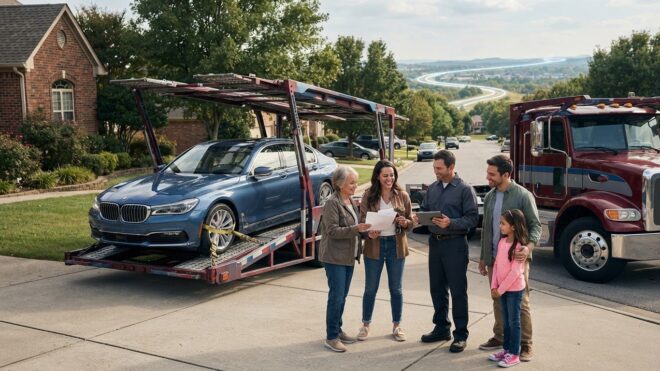
Successfully shipping a car to a family member across state lines depends far less on carrier equipment than on clear, proactive communication between both households. If you are preparing to hand down a vehicle to a relative across the country, you likely feel overwhelmed by interstate title rules, gift tax questions, and carrier insurance coverage. Coordinating logistics from opposite coasts while making sure the car arrives safely can easily create unnecessary stress.
You shouldn’t have to guess your way through legal paperwork or worry about transit delays. In this guide, you will learn how to smoothly coordinate nationwide vehicle transport, paperwork, and delivery when sending a car to a relative. We examine practical door-to-door transit options, provide a clear legal checklist, and detail the exact steps needed to keep both parties informed from initial inspection to final drop-off.
Key Takeaways
- Discover how a structured five-step timeline simplifies shipping a car to a family member across state lines.
- Learn when to complete title transfers and how to prepare gift affidavits to avoid registration delays at the recipient’s local DMV.
- Compare open carrier efficiency with enclosed trailer protection to choose the right transit method for your vehicle’s condition.
- Identify practical drop-off strategies to navigate residential truck restrictions and coordinate smooth three-way handoffs.
- Protect your relatives from travel fatigue, mechanical breakdowns, and added mileage by utilizing professional door-to-door transport services.
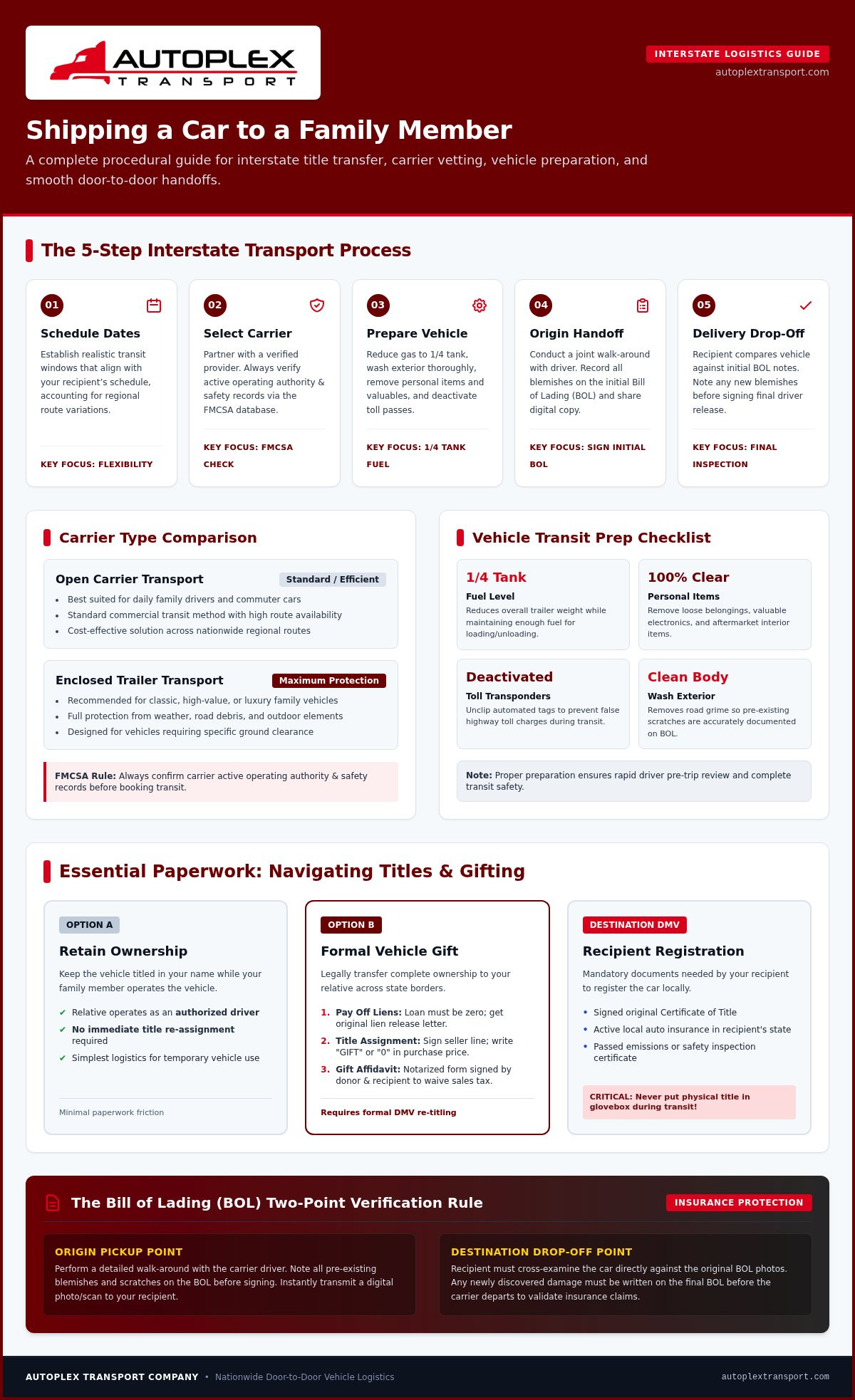
How Shipping a Car to a Family Member Works in 5 Steps
Coordinating vehicle relocation between households requires clear logistics rather than guesswork. When shipping a car to a family member, managing dates across two different locations requires an organized schedule and dependable carrier vetting. Following a structured multi-step process keeps both parties aligned from initial dispatch to final handoff.
Step 1 & 2: Scheduling Dates and Selecting Your Transport Carrier
Start by identifying realistic transit windows that accommodate your relative’s personal schedule at the destination. Commercial carriers operate on regional routes influenced by traffic and weather, so establishing flexible pickup and drop-off ranges prevents unnecessary frustration.
Next, partner with a verified nationwide logistics provider. Always confirm the carrier’s active operating authority and safety record directly through the Federal Motor Carrier Safety Administration (FMCSA) database. At this stage, decide whether open vs. enclosed transport fits the vehicle’s age, ground clearance, and sentimental value. Standard open carriers suit daily drivers, while enclosed trailers protect classic or luxury models from roadway elements.
Step 3: Preparing the Vehicle for Commercial Transit
Proper physical preparation protects your asset and speeds up the driver’s pre-trip review. Wash the exterior thoroughly so road grime does not hide pre-existing cosmetic flaws. In addition, follow these practical preparation guidelines:
- Reduce the fuel level: Keep the gas tank around one-quarter full to lower overall trailer weight while maintaining enough fuel for loading and unloading.
- Clear personal belongings: Remove loose items, valuable electronics, and aftermarket modifications from the interior.
- Deactivate toll passes: Unclip toll transponders and parking tags so automated highway readers don’t register phantom charges during transit.
Review our detailed checklist on how to prepare a car for transport to complete every mechanical and interior check before dispatch day.
Step 4 & 5: Conducting Origin and Destination Handoffs
When the truck arrives, perform a comprehensive joint walk-around with the driver. Document every pre-existing blemish, dent, or scratch on the initial Bill of Lading (BOL). Once you verify the recorded condition, sign the document and retain a digital copy to share immediately with your recipient.
Upon final delivery, your family member must walk around the vehicle alongside the transport operator before signing the final release. They should compare the vehicle directly against the initial BOL notes. If any new blemish is spotted, noting it on the final Bill of Lading before the driver departs protects insurance claims and guarantees complete transparency.
Essential Paperwork: Navigating Titles, Gifting, and Registration
Managing the legal trail behind vehicle ownership is often the most confusing part of sending an automobile across state lines. While commercial haulers only require proof of possession and inspection paperwork, state authorities demand proper title assignments and tax documentation. Successfully shipping a car to a family member means resolving title status, local department regulations, and driver handoff permissions well before pickup day.
Gifting a Car vs. Retaining Ownership Within the Family
Decide whether you intend to legally transfer ownership or retain the title in your name. If you keep ownership, your relative operates the car as an authorized driver, requiring no immediate title changes. Gifting the car, however, requires formal transfer steps:
- Pay off outstanding liens: Lenders will not release a title until the loan balance hits zero. You cannot re-title an auto without the original lien release letter.
- Complete the assignment fields: Sign the seller line on the original Certificate of Title. In the “purchase price” field, clearly write “GIFT” or “0.”
- Execute a gift affidavit: Most states require a notarized statement of gift signed by both donor and recipient to waive standard state sales taxes.
Interstate DMV Requirements and Documentation
Once the carrier drops off the vehicle, your relative must register it locally. Requirements vary across jurisdictions, but your recipient will generally need the signed original title, active proof of auto insurance within their home state, and a passed emissions or vehicle safety inspection certificate.
Never place the physical title inside the glove compartment during interstate transit. If paperwork goes missing on the road, replacing an assigned title across two jurisdictions creates severe delays. Send critical legal documents, lien releases, and notarized affidavits ahead through a secure, tracked courier service. Your relative can then obtain a temporary transit permit from their local agency to drive legally between drop-off and final registration.
Authorizing a Third Party for Pickup or Delivery
If work or family schedules prevent you or your recipient from attending the handoff, carriers accommodate appointed representatives. Draft a formal auto transport authorization letter naming the specific individual handling the exchange. This note should detail the vehicle’s year, make, model, and Vehicle Identification Number (VIN).
The authorized representative must present a valid government-issued photo ID that matches the authorization document. When you coordinate through AutoPlex Transport Company, dedicated logistics coordinators note these third-party authorizations directly on the dispatch file, ensuring smooth communication and verified driver handoffs at both ends.
Open vs. Enclosed Transport: Choosing the Right Protection for Family Vehicles
Balancing transit protection against your overall budget requires evaluating what you are shipping and where it is going. When shipping a car to a family member, carriers transport the vehicle on either a multi-car open trailer or within a fully enclosed structure. Selecting between these two methods depends primarily on the vehicle’s sentimental value, monetary replacement cost, and the geographic route it must travel.
When Open Carrier Transport Serves Family Needs Best
Open transport remains the workhorse of the automotive shipping sector. Approximately 90% of domestic vehicle freight travels on open-air carriers, making it the most practical choice for reliable sedans, college commuter vehicles, and everyday family crossovers.
Opting for open transport offers clear operational advantages:
- Broad network capacity: Open trailers operate across every major interstate corridor daily, creating rapid carrier assignments and flexible pickup dates.
- Economical transit: Hauling between seven and ten cars simultaneously spreads overhead across multiple units, keeping family expenses manageable.
- Versatile vehicle handling: Standard sedans, light pickups, and compact SUVs load easily onto hydraulic decks without requiring custom ramp setups.
Read our in-depth resource on open transport car shipping to evaluate equipment availability and regional route efficiency across all 50 states.
When to Upgrade to Enclosed Carrier Protection
Certain family vehicles demand specialized handling that goes beyond standard roadway exposure. Enclosed trailers feature solid hard-sided walls or heavy-duty reinforced curtains that completely block highway gravel, grit, engine exhaust, and adverse weather systems.
Upgrading to covered transport makes sense in specific family scenarios:
- Sentimental heirlooms: Restored vintage classics, antique trucks, and pristine muscle cars inherited through family generations warrant zero risk of rock chips.
- High-value luxury sedans: Late-model performance cars or luxury electric vehicles benefit from specialized interior soft-tie straps that protect sensitive suspensions.
- Low ground clearance: Many enclosed trailers carry hydraulic lift gates, ensuring vehicles with low front splitters load horizontally without scraping the undercarriage.
Explore specialized hauling setups in our enclosed car transport guide to decide whether complete trailer shielding aligns with your family’s expectations.
Coordinating Long-Distance Handoffs: Communication and Delivery Tips
Managing an interstate shipment between two separate households succeeds when communication flows freely among everyone involved. Unlike typical moves where one person oversees pickup and drop-off, shipping a car to a family member introduces a third party who may have never received a vehicle from a commercial hauler before. Creating a clear protocol prevents misunderstandings when the carrier approaches the final destination.
Navigating Residential Street Access Restrictions
Most long-haul auto carriers run commercial tractor-trailers measuring up to 80 feet in length. These large rigs cannot easily maneuver through narrow suburban lanes, hilly cul-de-sacs, or residential neighborhoods packed with low-hanging power lines and overhanging branches. Local municipal codes and homeowner association rules also frequently prohibit multi-car commercial haulers from parking on quiet streets.
Prepare your relative ahead of time by scouting alternative staging points nearby. Excellent secondary pickup and drop-off spots include:
- Spacious grocery store or home improvement center parking lots
- Wide, industrial park access roads with minimal curbside parking
- Highway rest stops or designated commuter travel plazas
When you establish these backup locations in advance, the driver can pull in safely, unload the vehicle without blocking traffic, and complete the exchange without stress.
Mastering the Remote Vehicle Delivery Inspection
Coach your family member on conducting a meticulous destination inspection before they take possession. The carrier driver will present the final Bill of Lading, which lists the baseline physical condition documented at origin. Delivery day is not the time to rush.
Your recipient should methodically photograph each body panel, the front bumper, roof line, and wheels in daylight. They should then verify the vehicle’s odometer reading and compare every visible mark against the initial digital BOL sent after pickup. If fresh damage, scrapes, or dents appear, the recipient must record them clearly on the driver’s manifest before signing.
Settle payment details well ahead of arrival, clarifying whether you covered freight fees online beforehand or if the recipient must provide a certified cashier’s check upon delivery. When you are ready to book a reliable hauler, schedule nationwide delivery with AutoPlex Transport Company to keep both households updated throughout the entire transit process.
Why Door-to-Door Professional Transport Protects Your Family
Driving a handed-down vehicle across state borders yourself often feels like a traditional rite of passage. However, embarking on a multi-day highway trek introduces intense physical fatigue, unpredictable weather hazards, and mechanical stress. Choosing professional auto transit over self-driving simplifies shipping a car to a family member while safeguarding both vehicle reliability and personal safety.
Personal Road Trips vs. Professional Vehicle Carriers
A long-distance drive subjects motorists to congested interstate corridors, sudden tire blowouts, and erratic traffic. Long highway hauls also add substantial mileage, accelerating wear on older transmissions, brake pads, and tires. If an older family vehicle breaks down in an unfamiliar rural area, unexpected towing and repair complications can quickly transform a thoughtful gesture into an exhausting ordeal.
Professional door-to-door transit eliminates these risks by keeping the vehicle securely loaded on a commercial trailer from origin to destination:
- Zero added mileage: The car arrives at your relative’s neighborhood with the exact odometer reading recorded during the initial pickup inspection.
- Preserved vehicle integrity: Critical components, suspension parts, and exterior finishes remain protected from thousands of miles of road friction and debris.
- Comprehensive cargo protection: Licensed carriers carry verified commercial cargo insurance, shielding the asset against unforeseen roadway perils without risking your personal auto policy.
Securing Peace of Mind with AutoPlex Transport
Entrusting a valued vehicle to an interstate carrier should never leave you guessing about transit progress or delivery dates. Successful long-distance coordination requires proactive updates that keep both households on the same page from dispatch through final sign-off.
When you partner with AutoPlex Transport Company, dedicated vehicle coordinators oversee every detail of your interstate transport. Every driver in the network undergoes strict FMCSA credential vetting and safety performance reviews before touching your keys. Offering flexible nationwide coverage spanning budget-conscious open haulers and protective enclosed trailers, AutoPlex delivers reliable door-to-door solutions across all 50 states. You avoid exhausting travel days and logistical headaches, giving your family complete confidence that their vehicle will arrive safely.
Simplify Your Next Cross-Country Family Vehicle Transfer
Successfully shipping a car to a family member comes down to early preparation and dependable coordination. By organizing title affidavits before dispatch day, selecting the carrier style that matches your car’s condition, and setting clear drop-off expectations, you eliminate the headaches of long-distance vehicle handoffs.
Professional auto transport removes the physical exhaustion of cross-country highway driving while protecting your vehicle from unnecessary mileage. When you work with AutoPlex Transport Company, our dedicated logistics specialists keep both households informed at every transit milestone. With comprehensive door-to-door nationwide vehicle transport coverage and a network of vetted, fully licensed, and insured commercial auto haulers, we ensure your vehicle arrives safely and on schedule.
Request your personalized nationwide vehicle shipping quote today and give your family complete peace of mind from pickup to final delivery.
Frequently Asked Questions
Can I ship personal belongings inside the car when sending it to family?
Commercial carriers generally require vehicles to remain empty of personal belongings during transport. Federal motor carrier regulations restrict auto haulers from operating as household moving companies. Furthermore, the carrier’s commercial cargo insurance policy does not cover private items left inside the cabin or trunk. Removing luggage, electronics, and spare gear prevents transit theft, interior scuffs, and unnecessary weight surcharges.
Who needs to be present when the car is picked up and delivered?
An adult at least 18 years of age must be physically present at both origin and destination. You or your relative don’t necessarily have to attend personally if you appoint a trusted alternate representative. Whoever attends the handoff must have government-issued identification, walk the vehicle with the driver, and sign the physical or digital Bill of Lading inspection sheet.
How does vehicle insurance work while the car is in commercial transit?
The carrier’s commercial cargo insurance policy acts as primary coverage for any damage occurring during transit. Federal rules mandate that active interstate carriers maintain verified cargo insurance through the FMCSA. You should also maintain your personal auto policy until delivery concludes. This ensures total protection when shipping a car to a family member and driving it from the unloading area.
What paperwork is required to legally transfer a gifted car in another state?
Transferring an interstate gifted car requires the original title, an official gift affidavit, and valid insurance matching the recipient’s home state. The donor signs the title transfer section, noting “GIFT” in the sale price line. Most state motor vehicle departments require a notarized gift statement signed by both parties to waive standard retail sales taxes before issuing updated plates.
How far in advance should I schedule auto transport for a family member?
You should arrange auto transport two to three weeks before your target pickup date. Booking ahead gives transport coordinators time to assign a vetted carrier matching your preferred route and timeframe. Early scheduling also helps coordinate availability between both households, leaving adequate time to organize title documents, conduct pre-trip maintenance, and prepare the vehicle for cross-country dispatch.
Can I ship an inoperable vehicle to a family member for restoration?
Yes, non-running vehicles can travel on commercial haulers as long as they can steer, brake, and roll. Hauling inoperable vehicles requires specialized winch equipment to guide the car onto the trailer safely. When shipping a car to a family member for a restoration project, disclose the mechanical condition upfront so the logistics team assigns a carrier equipped with proper loading gear.