
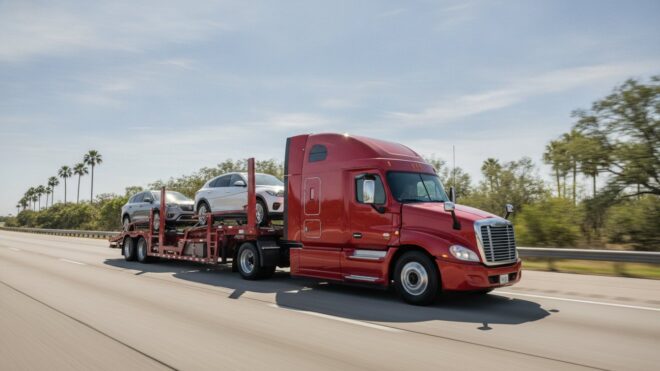
A low-ball estimate for car shipping Texas to Florida often acts as a trap rather than a deal, leading to unexpected surcharges once your vehicle is already on the trailer. You’ve likely spent hours researching only to find a sea of conflicting prices and confusing industry jargon that leaves you wondering who will actually be behind the wheel. It’s frustrating to face the uncertainty of a 1,000-plus mile journey, especially when you’re balancing the stress of a major interstate move with the need to protect one of your most valuable assets.
We understand that you’re looking for more than just a price tag; you’re looking for a reliable partner who prioritizes safety and clear communication. This guide is designed to help you master the complexities of interstate transport and learn how to secure the most reliable car shipping quotes for your move from Texas to Florida. We’ll provide a methodical breakdown of 2026 logistics, explaining the transparent pricing structures and the operational differences between brokers and carriers. By the end of this article, you’ll have the knowledge required to ensure a damage-free delivery experience and a smooth transition to the Sunshine State.
Key Takeaways
- Learn how to plan your schedule by understanding the primary interstate corridors and typical transit times for the 1,000 to 1,400-mile journey between Texas and Florida.
- Discover how seasonal trends like the “Snowbird” effect and your vehicle’s specific dimensions will directly influence your car shipping Texas to Florida quote.
- Evaluate the practical benefits of open carrier transportation versus specialized enclosed services to determine which method best suits your vehicle’s value and your budget.
- Protect your investment by learning how to spot red flags in low-ball interstate quotes and verify a carrier’s mandatory FMCSA credentials before booking.
- Master the logistics of interstate transport to ensure a transparent, damage-free delivery experience through a reliable nationwide transportation network.
Understanding the Texas to Florida Car Shipping Route
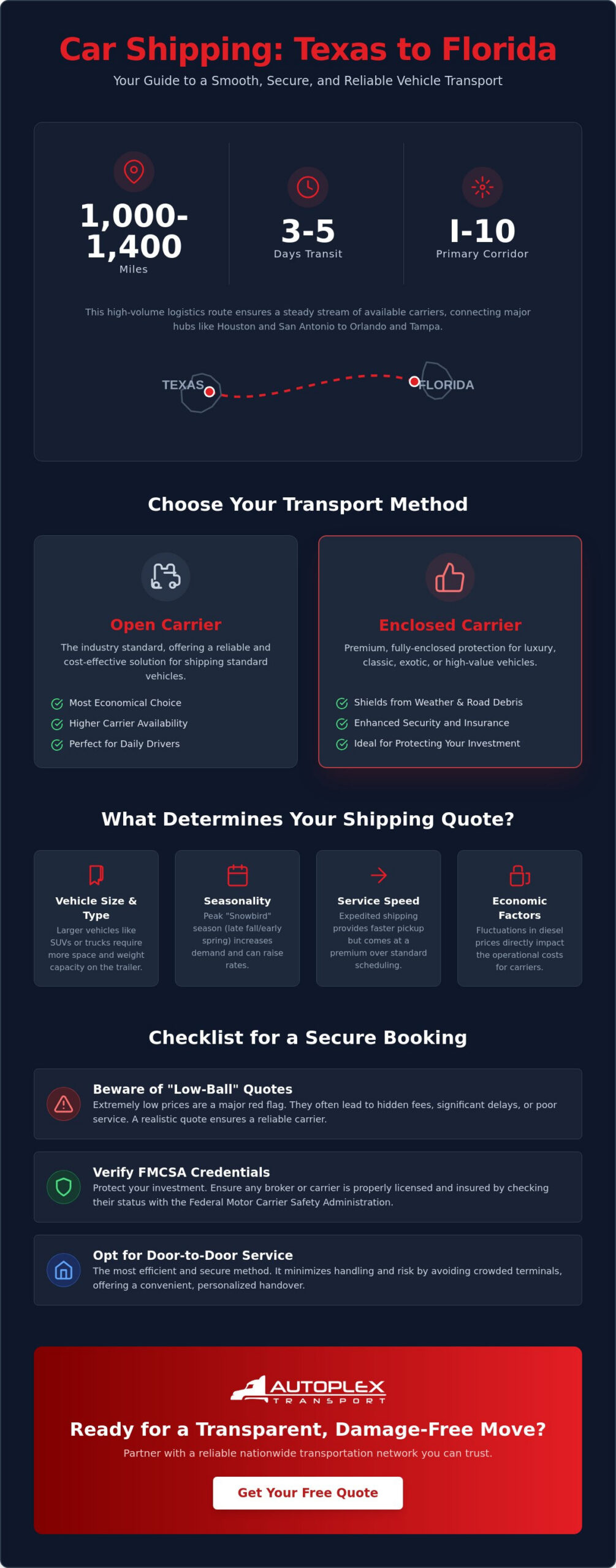
Moving a vehicle across the southern United States involves a significant logistical undertaking that spans multiple climate zones and major metropolitan hubs. The 1,000 to 1,400-mile journey for car shipping Texas to Florida primarily utilizes the Interstate 10 corridor, which serves as a direct link between the Gulf Coast regions of both states. Because these two states represent some of the highest population growth areas in the country, this route has become a high-volume logistics lane. This density is beneficial for customers because it ensures a steady stream of available carriers, making Interstate Vehicle Transportation between these regions both frequent and reliable.
Choosing Door 2 Door Transportation is the most efficient way to manage this move. Instead of requiring you to drop off your vehicle at a crowded terminal in Houston or Dallas, a carrier arrives as close to your specific location as possible. This service minimizes the risk of terminal-related damage and streamlines the entire process, allowing for a more personalized hand-off and inspection. It’s a methodical approach that prioritizes the safety of the asset while providing convenience for the owner.
Route Logistics and Estimated Timelines
For a trip of this distance, the typical delivery window in 2026 falls between 3 and 5 days. While modern logistics planning has become highly precise, several variables can influence the exact arrival time. Heavy traffic in major transit points like Mobile, Alabama, or the New Orleans metro area can occasionally cause minor delays. Additionally, weather patterns in the Gulf region, particularly during the Atlantic hurricane season or periods of heavy tropical rainfall, require carriers to prioritize safety over speed. A professional Auto transport broker works closely with carriers to monitor these conditions, ensuring that schedules remain as accurate as possible while keeping your vehicle secure throughout the transit.
Why Route Volume Matters for Your Quote
The popularity of this route often works in the customer’s favor. Because so many people relocate between Texas and Florida, carriers rarely travel with empty spots on their trailers. This high demand creates a competitive environment that helps stabilize pricing even when fuel costs fluctuate. Major logistics hubs, such as San Antonio, Austin, Orlando, and Tampa, act as collection points that improve pick-up and delivery efficiency. The Texas-Florida corridor serves as a primary artery for national vehicle logistics. By choosing a provider with a robust Nationwide Transportation Services network, you gain access to a system built for consistency and safety across these high-traffic southern highways.
Factors Influencing Your Texas to Florida Shipping Quote
Securing an accurate quote for car shipping Texas to Florida requires an understanding of how logistics companies calculate costs. Unlike a standard parcel delivery, vehicle transport involves moving a heavy, high-value asset across state lines on a specialized trailer. The price you receive isn’t just a random number; it’s a reflection of the current economic environment, including the 2026 volatility in fuel prices. When diesel costs fluctuate, carriers must adjust their rates to maintain operational safety and reliability. For those who need their vehicles moved quickly, expedited shipping is available, though it carries a premium compared to standard scheduling, which allows carriers to optimize their routes more effectively.
To ensure you’re working with a legitimate provider, consult the FMCSA consumer advisory to understand the regulatory standards required for interstate moves. This step helps you avoid fraudulent low-ball offers that often lead to hidden fees or poor service. If you’re ready to see how these factors apply to your specific move, you can request a detailed quote that accounts for your unique requirements and provides the transparency you deserve.
The Impact of Seasonality and Timing
Demand for transport services follows predictable patterns, particularly on the southern route. The “Snowbird” effect is a major driver of rates; as residents move between Texas and Florida in late autumn and early spring, carrier availability tightens. During these peak periods, prices naturally rise because there are more vehicles than available trailer spots. To stabilize your quote, we recommend booking your transport at least 2 to 3 weeks in advance. Last-minute requests often force carriers to rearrange established schedules, which inevitably leads to higher costs for the customer.
Vehicle Specifications and Equipment Needs
The physical characteristics of your vehicle play a significant role in the final price. Larger vehicles like oversized SUVs and heavy trucks take up more space and increase the total weight of the trailer, leading to higher fuel consumption. Additionally, specialized needs can influence the logistics of the move:
- Inoperable Vehicles: If a car doesn’t run, it requires a winch or specialized equipment for loading and unloading.
- Low-Clearance Cars: Sports cars with low ground clearance often need trailers with specialized ramps to avoid undercarriage damage.
- Modifications: Roof racks, lift kits, or wide tires can change the vehicle’s footprint on the trailer, requiring more space.
By providing precise details about your vehicle’s condition and size, you help ensure that the quote you receive is both accurate and final, preventing surprises during the pick-up process.
Comparing Open vs. Enclosed Transport for Interstate Moves
Deciding between equipment types is one of the most critical steps in planning car shipping Texas to Florida. Over a journey that spans more than 1,000 miles, your vehicle will encounter various road conditions and weather patterns. The choice you make involves balancing your budget with the specific protection requirements of your car. Most daily drivers are perfectly suited for standard trailers, while high-value assets often require a more specialized environment to ensure they arrive in pristine condition.
Before you commit to a specific transport method, it’s helpful to review the FMCSA consumer protection tips. This official guidance helps you understand the regulatory standards that all legitimate carriers must follow, regardless of the equipment they use. Verifying these credentials ensures that the insurance coverage provided by the carrier is active and sufficient for your vehicle’s specific valuation.
When to Choose Open Carrier Transport
Open transport car shipping is the industry standard for standard sedans, family SUVs, and pickup trucks. These are the multi-car trailers you see frequently on major highways like I-10. This method is highly cost-effective because carriers can transport up to ten vehicles simultaneously, spreading the operational costs across multiple units. In 2026, open carrier transport remains approximately 30% to 40% cheaper than enclosed options. If you want a deeper understanding of how pricing is structured for this method, our detailed breakdown of open carrier transport cost explains the specific variables that influence national rates in 2026. Another practical benefit is the ease of inspection; because the vehicle is fully visible, both you and the driver can easily perform a thorough condition report during the loading and unloading process.
The Case for Enclosed Shipping
For owners of classic, luxury, or high-performance vehicles, enclosed car transport provides an essential layer of security. These trailers feature solid walls that completely shield the cargo from road debris, rain, and sun exposure. This service is the preferred choice for 2026 exotic car owners who need to maintain a flawless exterior during a long-distance move. Enclosed carriers also typically offer higher cargo insurance limits, reflecting the increased value of the vehicles they specialize in moving. If you own a vintage or collector vehicle and are based in the Houston area, our dedicated guide to classic car transport Houston explains the specialized logistics, safety protocols, and equipment required to move high-value vehicles safely across the country. While the cost is higher, the protection against environmental elements and road hazards makes it a sound investment for any vehicle that requires extra care.
Ultimately, the cost-to-protection ratio depends on your vehicle’s value and your personal comfort level. While open transport is reliable and safe for the vast majority of moves, enclosed shipping offers a “white-glove” experience that eliminates the variables of the open road. We recommend evaluating your vehicle’s needs against these two options to find the logistical fit that provides the most peace of mind for your move.
How to Evaluate and Secure the Best Car Shipping Quotes
A quote for car shipping Texas to Florida is more than just a price; it’s a legal agreement that should protect your interests throughout a 1,000-mile journey. You might be tempted to choose the lowest number you see, but “low-ball” estimates are often a red flag for future surcharges or unreliable service. Legitimate providers operate with transparency, which is why you must always verify a company’s Motor Carrier (MC) and Department of Transportation (DOT) numbers. These credentials prove the company is registered with the federal government and carries the mandatory insurance required for interstate transport. If a provider is hesitant to share these numbers, it’s a sign they may not be a licensed professional.
Understanding the “Bill of Lading” is equally vital for your peace of mind. This document serves as your official receipt and a condition report of your vehicle. Before the carrier departs from Texas, you and the driver will document any existing imperfections. When the car arrives in Florida, you’ll use this same form to verify that the vehicle is in the exact same condition. If you’re ready to move forward with a transparent partner, you can start your quote process today to receive a clear, all-inclusive estimate without hidden fees.
Step-by-Step Quote Comparison Framework
When you begin comparing options, don’t settle for a single total. Request a detailed vehicle shipping quote breakdown that specifies what is included. You should look for inclusive insurance coverage and confirm that door-to-door fees are part of the initial price. In 2026, customer reviews are a powerful tool for verifying long-distance reliability. Look for feedback specifically mentioning the Texas to Florida route to see how the company handles the unique logistics of the southern corridor. A reliable partner will have a track record of clear communication and on-time delivery.
Preparing Your Vehicle for Interstate Pickup
Proper preparation is the best way to ensure a smooth inspection and a damage-free trip. Start by thoroughly cleaning both the interior and exterior of your car. A clean car allows the driver to perform an accurate inspection, ensuring that every pre-existing mark is noted on the Bill of Lading. You must also remove all personal items from the vehicle. DOT regulations strictly prohibit carriers from transporting household goods inside a vehicle, as this can lead to weight violations and safety hazards. Finally, take high-resolution photos of your vehicle from every angle immediately before the carrier arrives. This documentation provides a clear record of your car’s condition, giving you an extra layer of protection for its 1,000-plus mile transit. For a complete step-by-step approach to avoiding bait-and-switch pricing, our 2026 checklist for getting an accurate auto transport quote walks you through every verification step before you commit to a carrier.
Why AutoPlex Transport Company is the Reliable Choice for Your Move
Choosing a provider for car shipping Texas to Florida shouldn’t feel like a gamble. At AutoPlex Transport Company, we’ve built our reputation on being a steady, knowledgeable authority in the logistics field. We recognize that moving a vehicle over 1,000 miles is a significant event, and we approach every transport with the seriousness it deserves. Our commitment to transparent, all-inclusive quotes means you won’t face the hidden fees or bait-and-switch tactics that often plague the industry. By leveraging our Nationwide Transportation Services, we provide a stable and experienced hand to manage your assets from the moment they leave your driveway in Texas until they arrive safely in Florida.
Our logistical framework is designed to simplify every aspect of your move. We specialize in both Open Carrier Car Transportation and Enclosed Transport Services, allowing us to match the specific needs of your vehicle with the right equipment. Because we prioritize Door 2 Door Transportation, we eliminate the need for terminal drop-offs, reducing the risk of handling errors and providing a more direct, secure service. This methodical approach ensures that the complexities of southern interstate travel are managed by professionals who understand the nuances of the route and prioritize the safety of your vehicle.
Proven Track Record in Interstate Logistics
With years of experience managing high-volume southern routes, we’ve refined our processes to account for the unique challenges of the I-10 corridor. Our dedicated support teams provide clear communication and real-time shipment tracking, so you’re never left wondering about your vehicle’s status. Safety is our primary focus, and we maintain strict FMCSA compliance for every load we manage. This commitment to regulatory standards and Interstate Vehicle Transportation best practices provides a sense of security, knowing that your vehicle is in the hands of a legitimate corporate entity that values your peace of mind as much as you do.
Get Started with Your 2026 Quote
Securing a professional estimate is the first step toward a successful move. To provide an accurate quote, our online tool requires basic information about your vehicle’s make, model, and condition, as well as your preferred transport dates. Having these details ready ensures a fast and efficient process. We don’t use high-pressure sales tactics; instead, we offer the information you need to make an informed decision for your upcoming relocation. Our team is ready to act as your reliable partner throughout the entire transport process.
Request your Texas to Florida car shipping quote from AutoPlex Transport Company today!
Secure Your Vehicle’s Future in the Sunshine State
Crossing the state line into Florida should be a moment of excitement rather than a source of lingering anxiety about your car’s arrival. By following the methodical steps outlined in this guide, from verifying carrier credentials to preparing your vehicle for the 1,000-mile transit, you’ve ensured a professional logistical outcome. A successful move is the result of informed decision-making and a commitment to quality over the lure of the lowest possible price.
Choosing the right partner for car shipping Texas to Florida is the final piece of the puzzle. At AutoPlex Transport Company, we integrate safety and transparency into every load, providing the security of an A+ Rated Interstate Carrier with comprehensive cargo insurance and real-time GPS tracking included for every mile of the journey. We are proud to serve as your reliable guide through the complexities of interstate transport, ensuring your asset is protected at every turn.
Get Your Instant Texas to Florida Car Shipping Quote from AutoPlex Transport Company Now
We look forward to helping you start your new chapter in the Sunshine State with total confidence and a vehicle that arrives ready for the road.
Frequently Asked Questions
How much does it cost to ship a car from Texas to Florida in 2026?
The total cost for car shipping Texas to Florida is determined by your vehicle’s specific weight, dimensions, and the transport method you select. In 2026, fuel price fluctuations and seasonal demand shifts also influence the market rate. Providing accurate details about modifications like lift kits or roof racks ensures your estimate remains consistent. For a specific figure tailored to your move, requesting a comprehensive quote is the most reliable approach.
How long does it take to ship a car from Texas to Florida?
Most shipments between these two states are completed within a window of 3 to 5 days once the vehicle is loaded. This timeline accounts for the 1,000 to 1,400-mile journey along the primary southern interstate corridors. Factors such as weather conditions in the Gulf region or heavy traffic in metropolitan hubs can occasionally influence the delivery date. We prioritize safety over speed to ensure your vehicle arrives in the same condition it was picked up.
Is open carrier transport safe for a 1,000-mile journey?
Open carrier car transportation is the industry standard used by dealerships and manufacturers because it is both safe and highly efficient. While your vehicle is exposed to the elements, the risk of damage is statistically very low on well-maintained interstate highways. This method allows for frequent visual inspections throughout the trip. For standard daily drivers, the cost-to-protection ratio makes it the most practical choice for a long-distance move.
Does insurance cover my car during interstate transport?
Yes, every vehicle we move is covered by cargo insurance that meets or exceeds federal requirements. At AutoPlex Transport Company, we include comprehensive coverage in our all-inclusive estimates to protect your asset against transit-related issues. We recommend reviewing the carrier’s limits and documenting your vehicle’s condition on the Bill of Lading during pick-up. This documentation acts as your primary protection and ensures a transparent claims process if an issue arises.
Can I ship personal items inside my car?
Department of Transportation regulations strictly prohibit the transport of personal household goods inside a vehicle on an auto carrier. These items aren’t covered by the carrier’s cargo insurance and can lead to weight violations that result in heavy fines for the driver. To ensure a smooth pick-up and comply with safety standards, you should remove all personal belongings, including aftermarket electronics or loose items in the trunk, before the carrier arrives.
What is the difference between a car shipping quote and a final price?
A car shipping quote is an initial estimate based on the information provided, while the final price is the total amount confirmed at the time of booking. Discrepancies often occur if the vehicle’s condition changes or if specific details like oversized tires weren’t disclosed. We focus on providing transparent, all-inclusive estimates to prevent surprises. Choosing a reliable partner who explains every fee upfront is the best way to ensure your initial quote matches your final invoice.
How far in advance should I book my Texas to Florida car shipment?
We recommend booking your transport at least 2 to 3 weeks before your desired pick-up date to secure the best rates and carrier availability. This lead time is especially important during peak seasons, such as late autumn or early spring, when demand for the southern route increases significantly. Booking in advance allows us to methodically plan the logistics of your move and ensures a more predictable schedule for your vehicle’s arrival.
Do I need to be present for the pick-up and delivery?
You or a designated representative over the age of 18 must be present at both the pick-up and delivery locations. This presence is necessary to perform the vehicle inspection and sign the Bill of Lading, which serves as the official record of your car’s condition. If you can’t be there personally, you can appoint a trusted friend or family member to handle the hand-off. This step is crucial for maintaining transparency and protecting your interests.