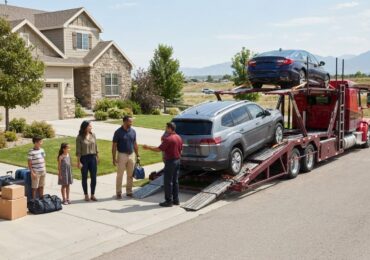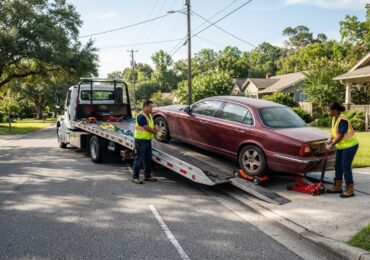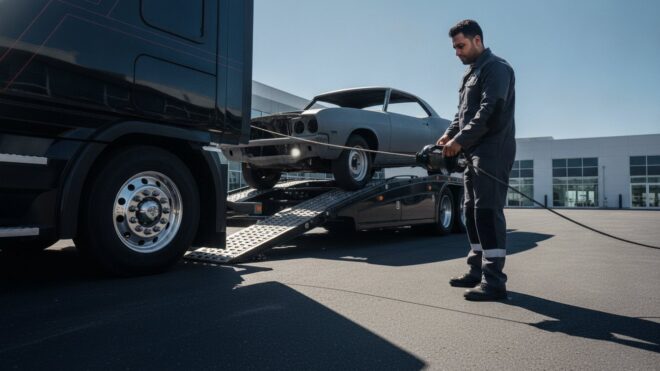
Buying a vintage shell or a non-running classic is often the easiest step in a restoration journey. The real difficulty begins when you realize many standard carriers will decline a vehicle that cannot move under its own power. If you are wondering how to ship a project car without facing unexpected surcharges or outright rejections, you are not alone. Most enthusiasts worry about loose parts being lost in transit or their rolling shells being mishandled by drivers who lack the proper specialized equipment.
It’s understandable to feel protective of an asset that represents hundreds of hours of potential work. You need a logistics partner that views your project as a valuable investment rather than a difficult cargo. This 2026 guide provides the expert guidance you need to navigate the complexities of transporting inoperable vehicles. We will examine the critical differences between open and enclosed transport for projects, explain when winches or liftgates are mandatory, and provide a detailed preparation checklist to ensure your car arrives safely. By the end of this article, you will have the confidence to select a nationwide carrier that specializes in the unique demands of project car logistics.
Key Takeaways
- Learn the essential logistical requirements for how to ship a project car, including how to manage non-running shells and vehicles with loose parts.
- Understand why specialized equipment such as winches and liftgates are necessary for loading inoperable vehicles safely onto a carrier.
- Discover how to choose between open and enclosed transport based on your project car’s current condition and its ultimate restoration value.
- Master a step-by-step preparation checklist to ensure your vehicle is documented and mechanically ready for a smooth interstate transition.
- Gain the confidence to coordinate nationwide door-to-door logistics by effectively communicating your project’s unique specifications to your transport partner.
The Unique Challenges of Shipping a Project Car
Understanding how to ship a project car begins with a clear definition of the vehicle’s current state. Unlike a standard operational vehicle, a project car might be a rolling shell with no interior, a “basket case” consisting of a frame and boxes of components, or a non-runner that looks complete but lacks a functioning powertrain. Standard shipping quotes usually assume a driver can simply turn a key and move the car. Because project cars often lack this basic functionality, they require a different logistical approach. Full disclosure of the vehicle’s mechanical state is essential to avoid on-site rejections or unexpected fees. This process isn’t just about moving metal; it’s about protecting the emotional and financial investment you’ve poured into a future restoration. As you plan the mechanical and electronic upgrades for your engine, you can learn more about Ecuremap for professional ECU remap files that ensure your project performs at its peak.
The Inoperable Vehicle Hurdle
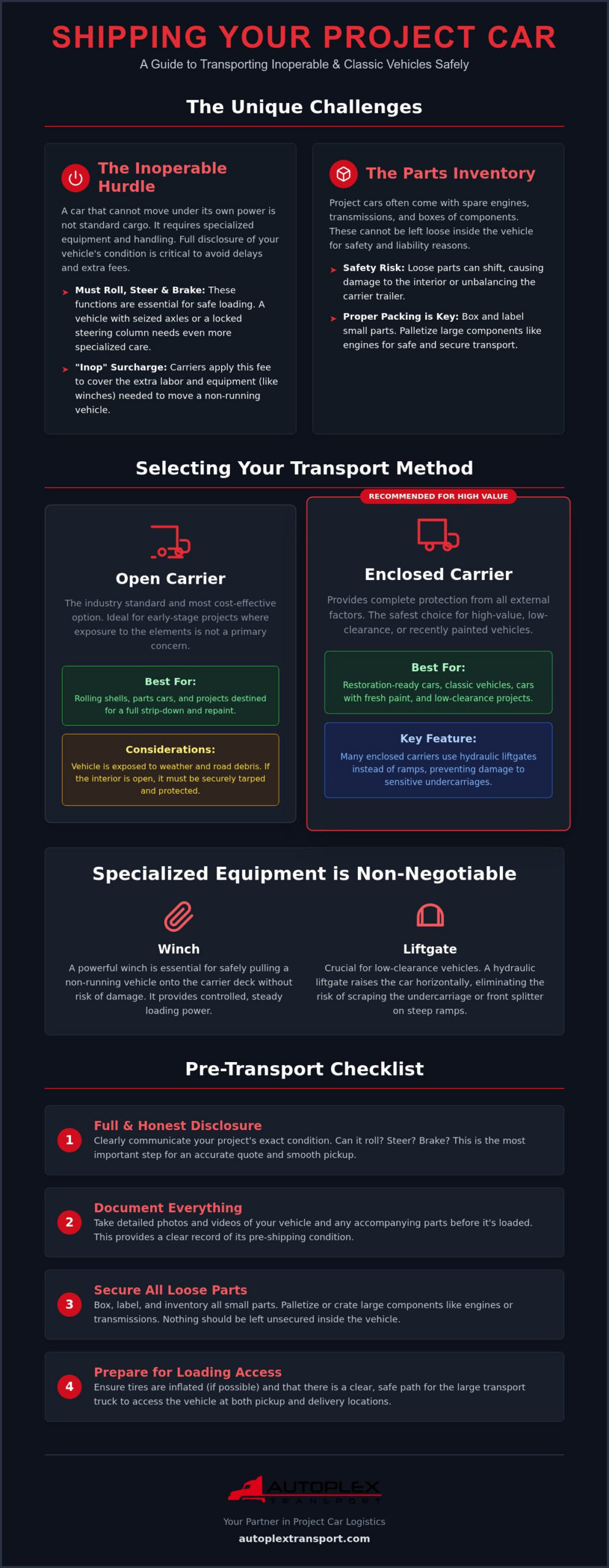
A major distinction in project logistics is whether the car can steer, roll, and brake. A vehicle that cranks but won’t start is significantly easier to handle than one with seized axles or a locked steering column. Drivers prioritize these functions because they determine how the car interacts with a car carrier trailer during the loading process. Most carriers apply an “Inop” fee for non-running vehicles. This surcharge covers the specialized labor and equipment, such as winches, required to safely move a dead weight onto the deck. If your project cannot steer or brake, you must communicate this early to ensure the driver arrives with the correct winch capacity and loading tools.
The Parts Inventory Challenge
Many project acquisitions come with a “bonus” inventory of spare engines, transmissions, or body panels. While it’s tempting to stack these inside the cabin, this creates significant liability and safety risks. Loose parts can shift during transit, damaging the interior or even unbalancing the trailer. Most interstate carriers have strict policies against loose items for safety and weight regulation reasons. To manage this effectively, you should palletize large components like engines and transmissions. Smaller parts should be boxed, labeled, and secured. Clear communication about these extras is vital when learning how to ship a project car, as they may require additional space or specific loading considerations that a standard quote won’t cover.
By treating the vehicle and its parts as a specialized cargo package, you ensure a smoother pickup. This methodical approach reduces the risk of damage and helps the carrier provide a more accurate interstate transport quote. It also establishes a relationship of trust with the driver, who will be responsible for your valuable asset across hundreds of miles.
Selecting the Right Transport Method: Open vs. Enclosed
Choosing the right trailer is a pivotal decision when planning how to ship a project car. You have to weigh the current condition of the vehicle against its future value. While a rusted shell might not seem to need protection from weather, a car with a fresh engine or a rare interior requires a higher level of security. The decision often comes down to the specific phase of your restoration and your total budget. Professional carriers offer various levels of protection, and selecting the wrong one can lead to unnecessary costs or preventable damage during long-distance hauls.
Open Carrier Shipping for Projects
Open transport is the standard for the auto shipping industry. It’s often the most logical choice for rough projects, such as parts cars or body shells that are destined for a full strip-down anyway. For more details on this method, you can explore The Complete Guide to Open Carrier Car Transportation. The main challenge here is exposure. If your project lacks windows or a roof, you must secure the interior against rain and road debris. However, for many enthusiasts researching how to ship a project car, the cost savings of an open carrier are significant. It’s a practical solution for long-distance interstate moves where the vehicle’s current finish isn’t a priority.
Enclosed Transport for Restoration-Ready Vehicles
If your project has progressed to the paint or assembly stage, enclosed transport is usually the safer bet. These trailers provide a shield against weather and road grime. They are also better suited for low-clearance vehicles. Many enclosed trailers use hydraulic liftgates rather than steep ramps, which prevents damage to sensitive undercarriages. You can find a deeper breakdown in Enclosed Car Transport: The Definitive Buying Guide for 2026. This method acts as a steady hand for high-value assets where the cost of a single scratch could derail a restoration budget.
Regardless of the trailer type, ensure your chosen provider is registered with FMCSA to guarantee they meet federal safety standards. Balancing the cost-to-protection ratio is easier when you work with a partner that understands the nuances of interstate moves. This is especially true for projects that require extra care during loading and unloading. If you are ready to move your asset, requesting a quote for interstate vehicle transportation is the next logical step to ensure your project reaches its destination safely and on schedule.
Specialized Equipment: How Project Cars are Loaded
Loading a project car is a deliberate, mechanical process that requires more than just a standard set of ramps. Most drivers require a vehicle to “roll and steer” to accept the job. This means the tires hold air and the steering rack functions properly. Ensuring the car can be steered is not just a preference; it’s a fundamental requirement for safe navigation on and off the trailer deck. Without these capabilities, the vehicle is effectively a dead weight that can’t be easily guided. While some might consider using a forklift for non-rolling shells, we strongly advise against it. Forklifts often cause structural damage to the floor pans or frame rails of a restoration project, which can be costly to repair.
Winch Operations for Non-Runners
When you’re learning how to ship a project car that doesn’t start, the winch becomes the driver’s most important tool. The driver attaches a high-tension cable to a secure frame point or tow hook to slowly pull the vehicle onto the deck. You must ensure your project has an accessible, sturdy attachment point before the carrier arrives. If a car is missing its front end, identifying a safe winching point is a priority for the driver’s safety and the vehicle’s integrity. In 2026, a standard car carrier winch must be a heavy-duty mechanical unit with a load rating that exceeds the gross vehicle weight of the specific project car being moved.
Handling Low Clearance and Wide Bodies
Many modern project builds feature aggressive suspension drops or wide-body kits. These modifications make standard ramps a liability. Steep angles can crush front splitters or scrape expensive exhaust systems. For these scenarios, liftgates are the superior choice. A hydraulic liftgate keeps the vehicle perfectly level as it’s raised to the trailer’s deck height. This eliminates the risk of bottoming out during the transition. If your carrier uses ramps, they should be articulating ramps with low-profile extensions to reduce the approach angle. Providing exact ground clearance and track width data to your transporter ensures they send a trailer equipped for your interstate move.
Communication is the key to a successful load. If you don’t disclose that a car has seized brakes or a snapped steering linkage, the driver may arrive with a winch that isn’t up to the task. This leads to delays and potential dry-run fees. When you know how to ship a project car correctly, you provide the carrier with every mechanical detail upfront. This transparency allows the professional to prepare the right equipment, ensuring your project is loaded without a single scratch. This level of detail is exactly what makes a nationwide network reliable for complex door-to-door moves.
Actionable Checklist: Preparing Your Project for Transport
Preparing a vehicle that has been stationary for months or years requires more than just clearing out the cabin. When you are determining how to ship a project car, your primary goal is to make the vehicle as stable and predictable as possible for the driver. This process starts with a thorough mechanical assessment to ensure the car can withstand the vibrations of interstate travel without shedding parts or leaking fluids. Following a structured plan reduces the risk of on-site complications and ensures your asset is ready for its journey.
Fluid Management and Safety
One of the most common reasons for carrier rejection is a significant fluid leak. If your project car drips oil, brake fluid, or fuel, it poses a safety risk and can damage other vehicles on a multi-car carrier. When researching how to ship a project car, enthusiasts often overlook the impact of simple leaks on the loading process. Many transporters prefer “dry shipping” for long-term projects, which involves draining the fuel tank entirely to reduce weight and fire hazards. According to 2026 DOT safety guidelines, all vehicles transported on multi-car trailers must be verified leak-free or equipped with fluid-catching materials to prevent the contamination of other cargo. This rule is strictly enforced to protect the finish of every vehicle on the deck.
Documentation and Keys
Even if your project doesn’t run, you must provide a set of keys to the driver. Keys are essential for disengaging the steering lock and allowing the driver to guide the vehicle during the winching process. Along with the keys, organize your title, bill of sale, and any necessary transport permits in a single folder. You should also take high-resolution photographs of the vehicle from every angle, including the undercarriage and interior. This documentation establishes a baseline of the vehicle’s condition before it leaves your driveway. For a more comprehensive look at these steps, consult How to Prepare a Car for Transport: The 2026 Essential Checklist.
Finally, secure any loose body panels, trim pieces, or interior components. High-speed winds on an open carrier can easily catch a loose hood or a hanging door card. Use automotive-grade tape or zip ties to ensure everything stays in place during transit. If you’ve followed these steps and your vehicle is ready for the road, you can request a quote for nationwide transportation services to begin the next phase of your restoration project.
Booking Your Move with AutoPlex Transport Company
Moving a restoration asset is a high-stakes logistical puzzle that requires more than just a standard trailer. When you’re ready to finalize the details of how to ship a project car, the focus shifts from physical preparation to clear communication. Choosing a carrier with a proven nationwide network ensures that your vehicle’s specific needs are met by drivers who understand the nuances of non-running cargo. This expertise is vital for maintaining the safety of your investment during long-distance interstate moves. A steady hand at the wheel makes the difference between a smooth delivery and a stressful experience. Once the logistics are settled and you turn your attention to the car’s performance, you can discover StageX Performance OÜ for professional ECU software modifications.
To receive a precise estimate, you must provide the carrier with detailed mechanical specifications. This includes the vehicle’s estimated weight, total dimensions, and its current “roll, steer, and brake” status. If a car is missing its engine or transmission, its weight will differ significantly from the original factory specifications. This data directly affects the carrier’s load plan and equipment selection. Truly understanding how to ship a project car involves more than just finding the lowest price; it requires finding a partner that accounts for these variables. Be cautious of quotes that seem much lower than the industry average. These estimates often come from providers who haven’t accounted for the specialized winches or the extra labor required for inoperable vehicles. AutoPlex Transport Company prioritizes transparency, ensuring you don’t face unexpected surcharges on the day of pickup.
Coordinating the Pickup and Delivery
Most project cars are located in residential neighborhoods where space can be a significant challenge. It’s important to verify that there is enough clearance for a large car carrier to navigate your street safely. If your road is too narrow or has low-hanging branches, you may need to arrange a meeting at a nearby parking lot with ample room for loading. During the pickup, you will sign the Bill of Lading. This document acts as your official receipt and condition report. It’s your final opportunity to confirm the driver’s assessment of the vehicle before it begins its journey. Coordinating these final steps with a reliable partner provides the peace of mind that your project is in safe hands throughout the door-to-door process.
If you’re ready to take the next step in your restoration journey, professional help is just a click away. Request your project car shipping quote from AutoPlex Transport Company today.
Moving Your Restoration Vision Forward
Mastering the process of how to ship a project car requires a combination of mechanical preparation and clear communication. Throughout this guide, we’ve examined how specialized winches handle the weight of inoperable vehicles and why fluid containment is vital for meeting 2026 safety standards. Whether you’re moving a rolling shell on an open carrier or protecting a fresh paint job in an enclosed trailer, the success of your interstate move depends on selecting a partner that understands these unique logistical hurdles. Taking the time to document your vehicle’s condition and secure loose components ensures your asset arrives ready for the next phase of its transformation.
AutoPlex Transport Company serves as a steady hand for your most valuable restoration assets. We utilize specialized winch-equipped carriers and a robust nationwide interstate network to manage even the most complex door-to-door moves. Our A+ rated customer support team is here to provide the peace of mind you need when transporting a non-running vehicle across state lines. Your restoration journey is a significant commitment; we’re here to handle the heavy lifting so you can focus on the build. Get a Reliable Quote for Your Project Car Move and take the first step toward getting your project home safely.
Frequently Asked Questions
Can I ship a project car that does not run or drive?
You can certainly ship a vehicle that is currently inoperable. This is a common request for restoration projects and classic acquisitions. Carriers use specialized winches to pull the car onto the trailer safely without the need for engine power. You must disclose the vehicle’s condition upfront so the driver arrives with the correct equipment. This ensures a smooth pickup and prevents on-site delays when learning how to ship a project car.
How much extra does it cost to ship an inoperable vehicle in 2026?
Shipping an inoperable vehicle involves an additional surcharge known as an “Inop” fee. This cost covers the extra labor and specialized winching equipment required to load and unload a non-running car. While the exact fee varies based on the distance and vehicle size, it is a standard industry practice. It reflects the increased time and technical skill needed to manage a vehicle that cannot move under its own power during transit.
Can I include spare parts or an extra engine inside the car during transport?
Most carriers discourage or prohibit placing loose parts like engines or transmissions inside the vehicle. These items can shift during transit, causing damage to the car’s interior or creating weight imbalances on the trailer. For a safer experience, you should palletize and secure large components separately. Always discuss any extra parts with your transport coordinator to ensure they can be accommodated within the logistics plan and weight limits of the carrier.
Does my project car need to have working brakes to be shipped?
Working brakes are highly recommended because they allow the driver to control the vehicle while it is being winched. If a car cannot brake, it poses a significant safety risk during the loading and unloading process on the trailer deck. Some specialized carriers can handle vehicles with seized or missing brakes, but this requires specific equipment and planning. Full disclosure of your braking system’s status is essential to ensure the driver can manage the move safely.
What is the difference between a rolling shell and a non-runner for shipping purposes?
A rolling shell is a vehicle that can roll on its own wheels and be steered, even if it lacks an engine or transmission. A non-runner is a more general term for any vehicle that doesn’t start. For shipping, the ability to roll and steer is the most critical factor. If a vehicle has seized wheels or broken steering, it requires significantly more effort and specialized tools than a standard rolling shell does.
Is my project car insured during nationwide interstate transport?
Yes, professional carriers are required to maintain cargo insurance to protect your vehicle during transit. This coverage typically applies to damage occurring during the loading, transport, and unloading phases. It’s a good practice to verify the specific coverage limits and terms with your provider before the move begins. Documenting the car’s condition with high-resolution photos before pickup provides a necessary baseline for any potential insurance claims during nationwide interstate transport.
What happens if my project car is too low to get onto the trailer?
If your project car has extremely low ground clearance, standard ramps may cause damage to the undercarriage or bumpers. In these cases, we recommend using an enclosed trailer equipped with a hydraulic liftgate. This equipment keeps the vehicle level as it is raised to the deck, eliminating the risk of scraping. Providing accurate clearance measurements ensures the carrier sends a trailer capable of handling your specific modifications without any physical contact during the process.
Do I need to be present for the pickup and delivery of my project vehicle?
You or a designated representative should be present at both the pickup and delivery locations. This allows you to sign the Bill of Lading, which is the official document recording the vehicle’s condition. Being there in person ensures that you can discuss any specific loading concerns with the driver directly. If you can’t be present, ensure your representative understands how to ship a project car and knows what to look for during the initial inspection.