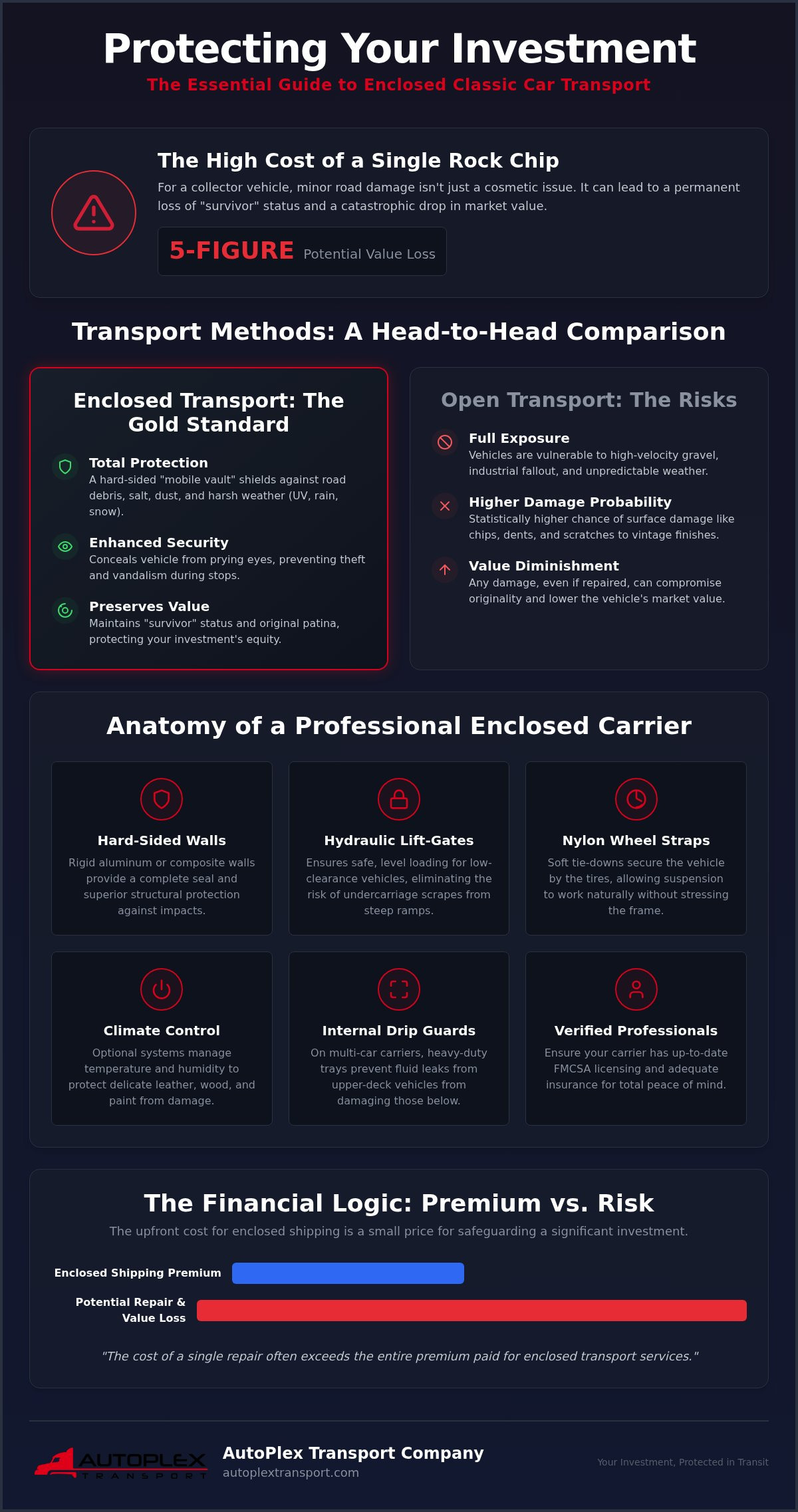
For a collector, the real cost of a single rock chip on original lacquer paint isn’t just the repair bill; it’s the permanent loss of the vehicle’s “survivor” status and a potential five-figure dip in its market value. You’ve spent years, perhaps decades, sourcing and maintaining your vehicle, so the thought of road debris or unpredictable 2026 weather patterns ruining that finish during transit is a valid source of anxiety. This is why classic car transport enclosed services have become the non-negotiable standard for serious investors who refuse to leave their masterpiece’s safety to chance.
In this guide, we’ll explain why enclosed transport is the gold standard for preservation and how to identify a national carrier that treats your car with the reverence it deserves. We will also break down the importance of specialized equipment like hydraulic lift-gates for low-clearance vehicles and clarify the latest insurance requirements to give you total peace of mind before the trailer even arrives. From understanding current FMCSA compliance to ensuring door-to-door security, you’ll learn exactly what it takes to move your investment safely across the country.
Key Takeaways
- Identify why hard-sided trailers are the only way to preserve “survivor” status and market value in 2026.
- Learn the essential safety features of classic car transport enclosed setups, such as internal drip guards and specialized loading equipment.
- Analyze the financial reality of shipping premiums versus the high cost of restoring original paint and trim.
- Discover the critical preparation steps for documenting vehicle condition and mechanical quirks before national transit.
- Understand how to verify interstate licensing and choose between carriers and brokers for direct communication.
Why Enclosed Transport is the Only Standard for Classic Car Preservation
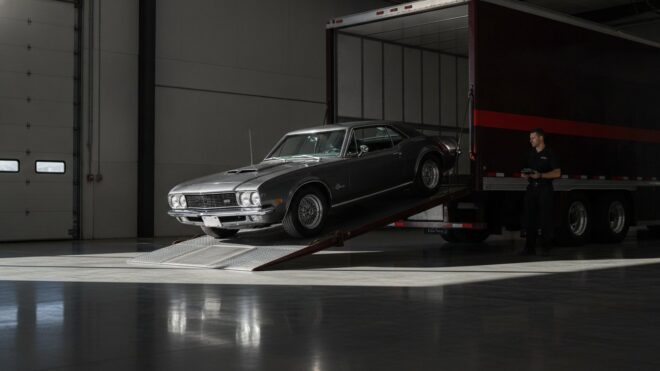
Choosing a method for moving a vintage vehicle involves more than just logistics; it’s a decision about long-term asset preservation. An enclosed car carrier provides a fully shielded environment that acts as a mobile vault, sealing the vehicle away from road salt, corrosive chemicals, and unpredictable weather. For many collectors, classic car transport enclosed is the only acceptable option because it eliminates the variables of the open road. When a vehicle is tucked inside a hard-sided trailer, it’s protected from the prying eyes of opportunistic thieves during overnight stops, adding a layer of security that open racks simply can’t provide.
The “survivor” factor is a significant driver for this choice. Vehicles with original, unrestored paint and trim are increasingly rare and valuable. Exposure to high-intensity UV rays can cause vintage pigments to fade, while moisture trapped in crevices during a cross-country trip can trigger oxidation. For any vehicle valued over $50,000, the peace of mind provided by a hard-sided environment isn’t a luxury. It’s a calculated move to ensure the car arrives in the same state it left your garage.
The Risks of Open Carrier Transport for Classics
Open carriers expose vehicles to industrial fallout, such as metallic particles from train tracks or construction sites, which can etch themselves into vintage clear coats. At highway speeds, even a small piece of loose gravel becomes a high-velocity projectile capable of shattering glass or denting thin-gauge steel panels. The risk ratio of open versus enclosed transport suggests that while an open carrier is functional for modern daily drivers, it presents a statistically higher probability of surface damage that classic finishes are ill-equipped to handle.
Financial Justification for Premium Shipping
The financial logic behind premium shipping is straightforward. A single rock chip on a rare, numbers-matching model can result in thousands of dollars in diminished value, especially if it requires a partial respray that ruins the car’s original patina. In the 2026 market, where the Hagerty Collector Car Market Rating has dipped to 58.28, maintaining “Concours” or “Show” quality is essential for protecting your equity. National shipping trends show that today’s collectors prioritize this protection over lower price points because the cost of a single repair often exceeds the premium paid for classic car transport enclosed services.
The Anatomy of a Professional Enclosed Classic Car Carrier
A professional trailer is more than just a box on wheels. It’s a precision-engineered environment designed to mitigate every possible risk during transit. When you select classic car transport enclosed services, you’re usually choosing between hard-sided and soft-sided trailers. Hard-sided trailers use rigid aluminum or composite walls that provide a complete seal against the elements and superior structural protection. In contrast, soft-sided trailers use vinyl curtains. While these curtains are heavy-duty, they don’t offer the same level of impact resistance or dust-tight sealing as a solid wall. For high-value investments, the structural integrity of a hard-sided carrier is the industry benchmark.
Internal configuration matters just as much as the exterior. Multi-car trailers often stack vehicles, which introduces the risk of fluid leaks from upper decks. High-end carriers use specialized drip guards, which are heavy-duty trays placed beneath upper-level cars, to ensure that oil, coolant, or brake fluid doesn’t damage the paint of the vehicle below. Securing the car is another critical step. Instead of traditional metal chains that can mar frames or stress vintage suspension components, professional carriers use nylon wheel straps. These soft tie-downs distribute tension across the tires, allowing the car’s suspension to work naturally without risking metal-on-metal contact.
For vehicles with delicate leather interiors or wood-veneer dashboards, climate control is a vital option. These systems manage both temperature and humidity, preventing the cracking or warping that can occur during a cross-country trip through varying climates. If you’re unsure which equipment fits your specific needs, you can consult with a logistics expert to review trailer specifications and safety features.
Lift-Gate Technology for Low-Clearance Classics
Traditional ramps create a steep angle of approach that often results in front splitters or undercarriages scraping the ground. Hydraulic lift-gates solve this problem by keeping the vehicle perfectly level as it’s raised from the pavement to the trailer deck. This technology is non-negotiable for low-profile sports cars or custom builds where ground clearance is measured in millimeters. It ensures the loading process is as safe as the journey itself by eliminating the risk of incline-related damage.
Air-Ride Suspension and Interior Security
The road isn’t always kind to vintage hardware. Air-ride suspension systems in the trailer use pressurized bags to absorb road shock, significantly reducing the vibrations that can rattle original bolts loose. This mechanical care is paired with digital oversight. In 2026, advanced GPS tracking allows you to monitor your vehicle’s national journey in real-time. This transparency is backed by drivers who receive specialized training in classic car mechanics, ensuring they understand the unique starting procedures and handling requirements of your investment.
Enclosed vs. Open Carrier: Protecting Your Investment’s Resale Value
The return on investment for classic car transport enclosed services isn’t found on the shipping invoice, but in the long-term preservation of the vehicle’s equity. When you compare the premium of a shielded carrier to the potential cost of restoring vintage trim or matching rare paint, the decision becomes a matter of financial risk management. This focus on value preservation is shared by luxury vehicle experts like artesanoscarclub.com, who understand that condition is everything in the high-end market. Enclosed trailers provide a tighter “Chain of Custody” because they typically carry fewer vehicles per load; this smaller capacity allows the driver to provide more individual attention to your car’s specific needs, from monitoring tie-down tension to ensuring the interior remains pristine during transit.
Deciding between carrier types often comes down to the “Investment Threshold.” If you’re moving a modern daily driver or a project car that already requires a full restoration, the exposure of an open carrier might be an acceptable trade-off for a lower price point. For more on standard shipping, see our Guide to Open Transport Car Shipping. There are also rare instances where the speed of booking is the primary concern; open carriers are more plentiful on the road and can sometimes be secured on shorter notice than specialized enclosed units.
The Diminished Value Argument
In the competitive 2026 collector market, the difference between a “survivor” and a car that’s had its front clip resprayed can be tens of thousands of dollars at a national auction. Buyers pay a premium for cars that haven’t been subjected to the sandblasting effect of highway travel. Receiving your car in the exact condition it was loaded provides a psychological benefit, but more importantly, it protects the vehicle’s provenance. Choosing classic car transport enclosed directly correlates with maintaining a higher resale price by ensuring the vehicle’s original condition remains untarnished by the journey; to learn more about professional standards in vehicle moving, check out Done Wright Towing & Transport.
How to Prepare Your Classic Car for National Enclosed Shipping
Preparing a vintage vehicle for transit requires a more methodical approach than shipping a modern daily driver. While classic car transport enclosed offers the highest level of protection, your role in the preparation process ensures that the carrier can handle your investment with precision. Start with a thorough cleaning of the exterior and interior. This isn’t just for aesthetics; a clean surface allows for an accurate documentation of the vehicle’s condition, making it easier to spot even the smallest pre-existing marks during the initial inspection.
- Document Mechanical Quirks: Many classics have unique starting procedures, hidden kill switches, or specific battery disconnect sequences. Provide written instructions for the driver to prevent mechanical strain or confusion during loading.
- Check for Fluid Leaks: Vintage seals can be temperamental. If your car has a known weep, inform the carrier so they can optimize placement and ensure drip guards are properly positioned to protect other vehicles.
- Secure Exterior Elements: Remove or tape down loose chrome trim, aftermarket spoilers, and delicate hood ornaments that might be sensitive to the vibrations of a long-haul journey.
- Battery and Fuel Levels: Ensure the battery is securely mounted and has a full charge. Keep the fuel level at approximately 1/4 tank to reduce weight while still allowing for the necessary movement during the loading process.
The Inspection and Bill of Lading Process
The Bill of Lading is your primary legal protection during the shipping process. Before the driver loads the car, perform a joint inspection and note every detail on this document. Take high-resolution photos of the exterior, interior, and undercarriage from multiple angles. For a deeper dive into these steps, consult our Essential Preparation Checklist. These records serve as a definitive baseline of the car’s condition before it enters the trailer, providing clarity for all parties involved.
Communication with Your National Carrier
Large enclosed rigs often require significant space to maneuver. Confirm that your pickup and delivery locations allow for door-to-door access, or arrange a nearby staging area if you live in a restricted residential zone. Provide the driver with an emergency contact and clear instructions regarding any non-standard handling requirements. Before the truck arrives, verify the carrier’s insurance certificate to ensure the coverage limits align with your vehicle’s 2026 market value. If you have questions about specific logistical requirements, you can request a detailed service overview from our team to ensure your car is ready for the road.
Choosing a National Partner for Enclosed Classic Car Transport
Selecting the right partner for classic car transport enclosed services is the final and most critical step in your preservation strategy. In the complex landscape of 2026 logistics, you must decide between working with a direct carrier or a broker. While brokers can provide options, direct communication with the transporter ensures that specific instructions regarding your vehicle’s unique needs are never lost in a game of telephone. A reliable partner manages the entire chain of custody, offering a single point of contact from the initial inquiry to the moment the lift-gate touches your driveway.
Verification of credentials is a non-negotiable part of the vetting process. Every legitimate interstate transporter must maintain active USDOT and MC numbers, which serve as proof of their authority to operate and their adherence to federal safety standards. When evaluating potential partners, look beyond the aggregate star ratings in customer reviews. Instead, search for specific mentions of “classic,” “exotic,” or “antique” vehicles. Feedback from fellow collectors provides the most accurate insight into how a company manages the high-stakes environment of high-value vehicle logistics. AutoPlex Transport Company focuses on a “Reliable Partner” approach, positioning ourselves as a seasoned industry veteran that understands the personal and financial weight of your investment.
The AutoPlex Advantage in Enclosed Shipping
Our commitment to safe, door-to-door delivery across the United States removes the unnecessary risks and “middle-man” handoffs associated with terminal shipping. We possess deep expertise in handling the unique requirements of vintage assets, from managing temperamental mechanical systems to ensuring structural security within the trailer. This specialized knowledge ensures that your vehicle receives the white-glove treatment it deserves throughout its national journey. For a deeper look at our services, read our Enclosed Car Transport Buying Guide.
Getting an Accurate National Quote
An accurate quote for classic car transport enclosed depends on several concrete factors, including vehicle dimensions, total curb weight, and the total distance of the route. Transparency in the quoting process is essential for building trust; it prevents the frustration of “hidden fee” surprises at the time of delivery. By providing precise details about your vehicle’s modifications or mechanical status, you enable us to provide an honest, methodical assessment of the logistical requirements. Request your professional enclosed transport quote from AutoPlex today to begin the process of securing your vehicle’s next journey with a partner who values safety as much as you do.
Preserving Your Automotive Legacy for the Road Ahead
Protecting a classic vehicle in 2026 requires more than a simple carrier; it demands a logistical partner that understands the intersection of safety and investment value. By prioritizing classic car transport enclosed services, you effectively seal your vehicle against the unpredictable elements of the open road and the risk of surface damage. We’ve explored how hard-sided trailers, hydraulic lift-gates, and air-ride suspensions work together to maintain that elusive “concours” condition and protect your long-term equity.
Your vehicle is a piece of history that deserves expert handling and nationwide door-to-door service. AutoPlex Transport Company provides the specialized enclosed carriers and technical expertise needed to manage high-value assets with total transparency. When you’re ready to move your masterpiece, choosing a partner with a proven track record is the most important decision you’ll make. Secure Your Classic Car’s Future with a Professional Transport Quote. We look forward to helping you move your investment with the care and precision it deserves.
Frequently Asked Questions
How much more does enclosed car transport cost compared to open shipping?
Enclosed transport typically commands a premium of 30% to 60% over open carrier rates. This increased investment covers specialized equipment, higher insurance coverage, and the smaller number of vehicles handled per load. While the upfront cost is higher, it serves as a financial safeguard against the expensive repairs required for vintage paint and trim. Collectors view this as a necessary expense to preserve the vehicle’s market value during classic car transport enclosed.
Is my classic car insured for its full value during enclosed transport?
Professional enclosed carriers provide cargo insurance limits that are significantly higher than standard open carriers to accommodate high-value assets. You should always verify the specific coverage amount on the carrier’s insurance certificate before booking. It’s essential to ensure the policy matches your car’s 2026 market valuation. If your vehicle’s value exceeds the standard carrier limit, you may need to discuss supplemental coverage options with your national logistics provider.
Can I ship personal items inside my car during national transport?
Most national transporters advise against shipping personal items inside the vehicle due to FMCSA weight regulations and insurance limitations. Items left in the car are not covered by the carrier’s cargo insurance and can shift during transit, potentially causing interior damage. While some carriers may allow a small amount of soft goods in the trunk, it’s best to keep the vehicle empty to ensure a safe and compliant journey across the country.
How long does it take to ship a car across the country in an enclosed carrier?
A cross-country journey typically takes between 7 and 10 days, depending on the specific route and current weather conditions. Enclosed carriers may move at a slightly different pace than open racks because they often handle fewer vehicles and prioritize a more deliberate loading process. Your carrier should provide a realistic delivery window and offer real-time tracking so you can stay updated on your vehicle’s progress throughout its national interstate transportation.
What is a hydraulic lift-gate, and does my classic car need one?
A hydraulic lift-gate is a specialized platform that raises and lowers your vehicle while keeping it perfectly level with the ground. This technology is essential for low-clearance classics, such as sports cars or custom builds, as it prevents the undercarriage from scraping on traditional loading ramps. If your vehicle has minimal ground clearance, a lift-gate is a non-negotiable feature for classic car transport enclosed to ensure a damage-free loading phase.
Do I need to be present for the pickup and delivery of my vehicle?
You or an authorized representative must be present at both pickup and delivery to complete the mandatory inspection process. This involves reviewing the Bill of Lading and documenting the vehicle’s condition alongside the driver. Having a knowledgeable person on-site ensures that any mechanical quirks are explained and that the final delivery is accepted only after a thorough walkthrough. This step is critical for maintaining a clear record for insurance purposes.
What happens if my classic car is non-running; can it still be shipped enclosed?
Non-running vehicles can still be shipped in an enclosed trailer, provided they can roll, steer, and brake. The carrier must be equipped with a specialized winch to safely pull the car into the trailer without using its own power. You should always disclose the vehicle’s mechanical status during the quoting process. This allows the company to assign a driver with the appropriate equipment and experience to manage a non-operational high-value asset.
How do I verify a national transport company’s safety record?
You can verify a carrier’s safety record by searching their USDOT or MC number on the Federal Motor Carrier Safety Administration (FMCSA) website. The Safety Measurement System (SMS) provides data on a company’s performance across various safety categories based on the last 24 months of data. Reviewing these public records ensures the company remains compliant with the stricter 2026 digital record-keeping mandates and maintains a history of reliable, safe operation.