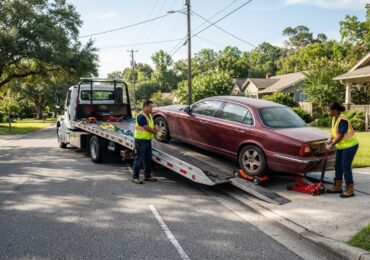
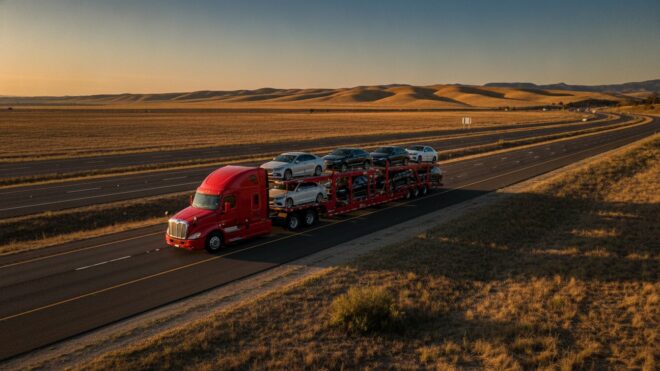
Why would you subject your vehicle to 1,500 miles of highway wear and road debris when professional car shipping from Texas to California can preserve its value and your peace of mind? You’re likely feeling the weight of this move, worrying about hidden broker fees or whether an open carrier provides enough protection for the long haul across the Southwest. It’s natural to feel anxious about handing over your keys for a journey that spans multiple states and several days.
This guide is designed to eliminate that uncertainty by providing expert insights into the logistics of interstate transport. We’ll help you master the complexities of this high-volume corridor so you can secure a transparent quote and ensure a damage-free delivery. We will break down the differences between open and enclosed transport, explain the 2026 California DMV requirements for new residents, and provide a clear timeline for what to expect from pickup to delivery. By understanding the process, you can transition to the West Coast with the confidence that your vehicle is in professional hands.
Key Takeaways
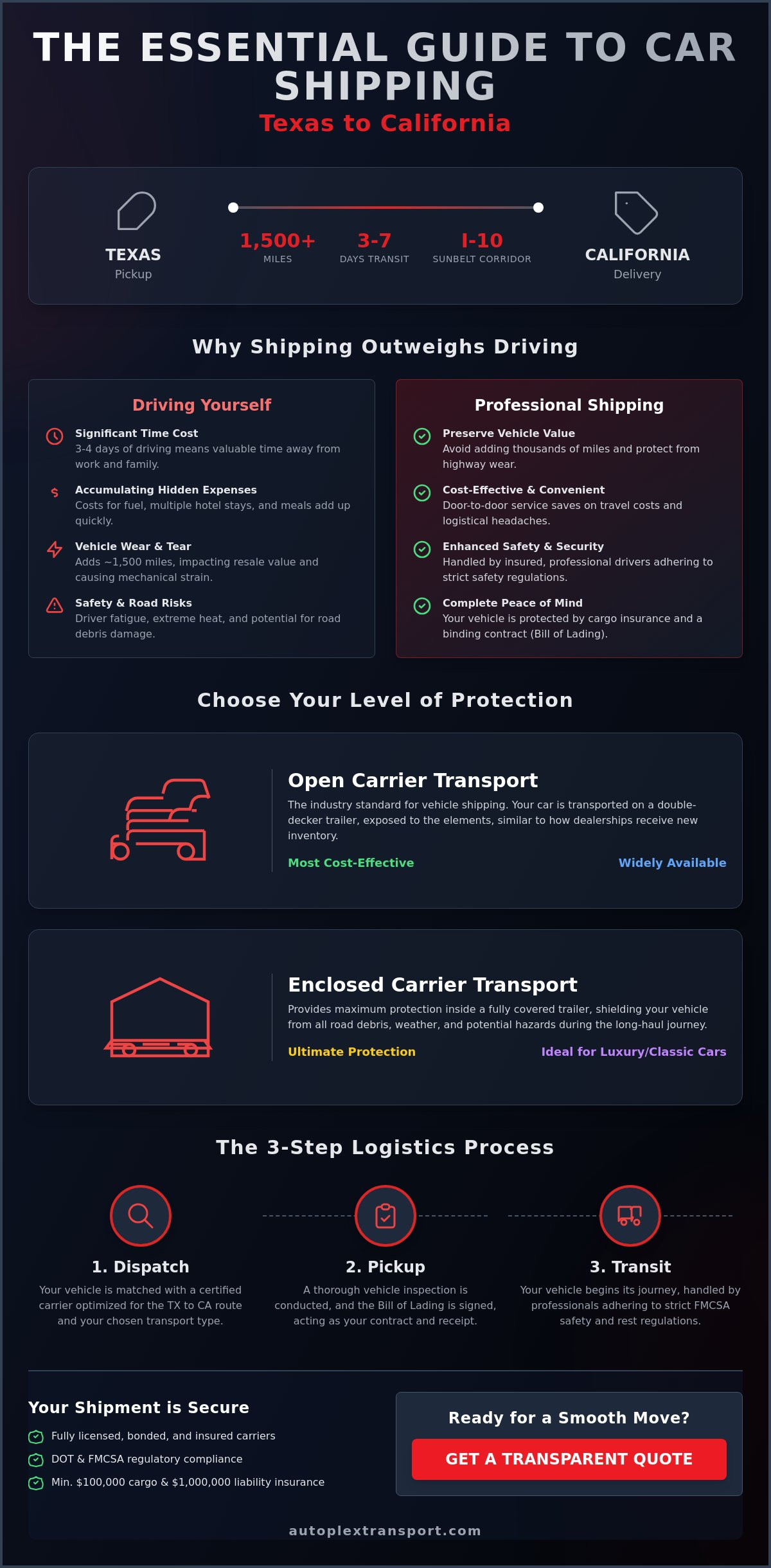
- Learn why the 1,500-mile Sunbelt corridor requires a methodical approach to logistics and how the I-10 route impacts your delivery schedule.
- Compare the benefits of Open Carrier Car Transportation and Enclosed Transport Services to find the right level of protection for car shipping from Texas to California.
- Understand how Door 2 Door Transportation simplifies the process by eliminating the need for terminal-to-terminal coordination.
- Identify the specific factors that influence final costs, including vehicle dimensions and seasonal fuel surcharges, to ensure a transparent quote.
- Master the three-step logistical process of dispatch, pickup, and transit to maintain clear communication throughout your vehicle’s journey.
Navigating the Texas to California Car Shipping Corridor
The transit route between Texas and California serves as a primary artery in the “Sunbelt” logistics network, connecting two of the nation’s most active economies. Spanning approximately 1,400 to 1,700 miles depending on your specific pickup and delivery cities, this journey crosses the threshold where a move transitions from a local haul to a complex interstate operation. Whether you are moving for a corporate relocation, a seasonal shift, or completing a vehicle sale, professional car shipping from Texas to California offers a strategic advantage. It protects your asset from the harsh environments of the Southwest while saving you from a grueling 24-hour-plus commitment behind the wheel. Professional carriers provide a level of stability that individual driving simply cannot match, especially when crossing the vast stretches of the I-10 corridor.
Why Drive-Away is Often More Costly Than Shipping
At first glance, driving your vehicle might seem like the budget-friendly choice, but the hidden expenses quickly accumulate. You’ll need to account for high-volume fuel consumption, at least two nights in hotels, and daily meals. There’s also the matter of vehicle depreciation. Adding nearly 2,000 miles to your odometer in a single weekend directly impacts resale value. Beyond the finances, the opportunity cost is significant. Spending three or four days on the road means time away from work or family that you can’t get back. Long stretches of desert highway also present safety risks, such as driver fatigue and mechanical strain in extreme heat, which a professional carrier avoids through specialized equipment and methodical scheduling.
To make the most of your time during a relocation, consider delegating your financial paperwork to experts. For those moving from the Dallas area, Apex Income Tax & Multiservice LLC provides comprehensive tax and business services to help you navigate the fiscal requirements of a state-to-state move.
The Legal Landscape of Interstate Vehicle Transport
Moving a vehicle across state lines involves strict oversight from the Department of Transportation (DOT) and the Federal Motor Carrier Safety Administration (FMCSA). These agencies ensure that every carrier maintains the necessary safety standards and valid insurance coverage. A critical piece of this puzzle is the Bill of Lading, which serves as both your contract and a detailed condition report at pickup and delivery. Understanding the relationship between an auto transport broker and the physical carrier is essential for consumer protection. Transparency in this process ensures that you know exactly who is handling your vehicle and that they possess the $1,000,000 liability and $100,000 cargo insurance required for safe car shipping from Texas to California. This regulatory framework exists to provide you with peace of mind during what could otherwise be a stressful logistical transition.
Understanding the Logistics: Route Dynamics and Delivery Timelines
The logistical journey of car shipping from Texas to California follows a methodical three-stage process: dispatch, pickup, and transit. During the dispatch phase, your vehicle is matched with a carrier that aligns with your specific route and protection requirements. Pickup involves a detailed physical inspection and the signing of the Bill of Lading, which serves as a vital receipt. Finally, transit begins. For this approximately 1,500-mile corridor, the I-10 highway serves as the primary logistical artery. This high-volume route allows for efficient movement across the southern United States, though it is not without its unique challenges. Seasonal factors play a significant role in scheduling. Intense summer heat in Texas can impact equipment performance, while California’s wildfire seasons may necessitate route diversions to ensure the safety of the cargo and the driver. Transit begins.
Typical delivery windows for this distance generally fall between 3 and 7 days. This range accounts for the vast geography and the operational realities of long-haul trucking. Professional carriers must adhere to strict safety regulations mandated by the Federal Motor Carrier Safety Administration (FMCSA), including mandatory rest periods and electronic logging device tracking. These safety measures are non-negotiable and ensure that your vehicle is transported by a well-rested, alert professional.
The Impact of Route Geography on Your Shipment
Traversing the desert Southwest involves more than just long stretches of open road. The arid environment and high temperatures can be taxing on vehicle exteriors, particularly for those on open carriers where they are exposed to wind-blown sand and intense UV rays. Major transport hubs like Houston, San Antonio, and El Paso in Texas, or Los Angeles and Riverside in California, act as essential consolidation points. These hubs streamline the process, but the journey between them includes multiple weigh stations and mandatory inspection points. These stops are necessary for legal compliance but add predictable intervals to the overall transit timeline. If you’re planning a move, exploring our Interstate Vehicle Transportation options can help you find a schedule that fits your specific needs.
Real-Time Tracking and Communication Standards
Modern auto logistics rely heavily on digital transparency to build trust. You should expect regular updates regarding your vehicle’s location throughout its 1,500-mile journey. While “guaranteed” delivery dates are rare due to the unpredictability of interstate traffic and weather, “window” estimates provide a reliable framework for your planning. Clear communication with the driver is a standard expectation, ensuring you are notified of any minor adjustments caused by road conditions. Understanding the difference between a pickup window and a firm delivery date helps set realistic expectations and reduces the anxiety often associated with long-distance transport. This level of communication ensures you remain a partner in the process from start to finish.
Open vs. Enclosed Transport: Protecting Your Vehicle’s Resale Value
When arranging car shipping from Texas to California, the most significant decision you’ll face isn’t just about the pickup date; it’s about the method of transport. This choice directly impacts your vehicle’s long-term resale value. Over a 1,500-mile journey across the Southwest, exposure to the elements can lead to what industry professionals call “road rash.” These are the small, cumulative chips in the paint, trim, and glass caused by kicked-up pebbles and road debris. While these imperfections might seem minor individually, they can collectively reduce a vehicle’s trade-in value when you eventually decide to sell. Choosing the right trailer type is a strategic move to preserve your asset’s condition.
The primary difference lies in the physical mechanics of the equipment. Open-air racks are the familiar multi-level trailers seen on most highways, while enclosed trailers feature hard-sided walls and roofs. Analyzing the cost-benefit ratio is essential. Open transport is typically 30% to 40% more affordable than enclosed options, making it a practical choice for many. However, that savings comes at the cost of total exposure to wind, rain, and UV rays. All carriers, regardless of trailer type, must strictly follow FMCSA regulations regarding equipment maintenance and safety standards to ensure your vehicle arrives securely.
When to Choose Open Carrier Car Transportation
This method serves as the industry standard for daily drivers, SUVs, and standard trucks. Because open transport car shipping utilizes multi-car trailers, it maximizes logistical efficiency. This efficiency allows for lower price points without compromising on safety. Statistically, open transport remains a highly secure method. The vast majority of vehicles shipped across the country move this way without incident. For a standard sedan or a family SUV, the risk of minor cosmetic wear is often outweighed by the significant cost savings, provided you aren’t transporting a collector’s item.
The Case for Enclosed Transport Services
For high-value assets, hard-sided protection is the gold standard. Exotic cars, vintage collectibles, and vehicles with low ground clearance strictly require this level of care. Choosing enclosed car transport shields your vehicle from road debris, extreme UV rays, and unpredictable Southwestern weather. These trailers often feature specialized hydraulic ramps. Unlike the steep ramps on open carriers, hydraulic lifts allow low-profile vehicles to be loaded horizontally, preventing damage to the undercarriage or front splitters. It’s an investment in total peace of mind for car shipping from Texas to California, ensuring your vehicle arrives in the exact condition it left the driveway.
Calculating Costs and Preparing for Door-to-Door Pickup
Understanding the financial commitment of car shipping from Texas to California requires looking beyond a single base rate. Total costs are shaped by a combination of fixed logistical factors and fluid market conditions. While the 1,500-mile distance provides the foundation for your quote, the service model you choose determines both the final price and your overall experience. One of the most significant advancements in modern logistics is the Door 2 Door Transportation model. This service eliminates the logistical headache of terminal-to-terminal shipping, where you would otherwise be responsible for dropping off and picking up your vehicle at a distant industrial lot. Instead, the carrier meets you as close to your specified address as local zoning and street width allow for a large transport trailer.
Preparation is the key to a smooth transition. Before the driver arrives, you should follow a methodical checklist to ensure your vehicle is ready for the journey:
- Clean the exterior: A clean car is essential for an accurate condition inspection.
- Check for leaks: Carriers often refuse vehicles with active fluid leaks to protect other cargo.
- Maintain 1/4 tank of fuel: This provides enough for loading while minimizing unnecessary weight.
- Deactivate alarms: This prevents battery drain and driver distraction during transit.
- Remove personal items: Federal regulations generally prohibit the transport of household goods inside a vehicle on a car carrier.
Factors That Influence Your 2026 Shipping Quote
In 2026, vehicle weight has become a critical pricing variable, driven largely by the increased prevalence of Electric Vehicles (EVs). Because EVs are significantly heavier than traditional internal combustion cars, they impact the total weight capacity of the trailer, often reducing the number of vehicles a carrier can legally transport at once. Dimensions also play a role; a lifted truck or an SUV with a roof rack occupies more “vertical real estate,” which can displace another vehicle on the rack. Furthermore, the “operability” factor remains vital. If a vehicle cannot move under its own power, it requires specialized winching equipment and additional labor, which increases the service fee. Seasonal demand shifts, particularly during the summer relocation peak, also cause fluctuations in fuel surcharges and carrier availability.
The Inspection Process: Safeguarding Your Interest
The Bill of Lading serves as your primary legal protection and the definitive record of your vehicle’s condition during transport. You should take high-resolution photographs of your vehicle from every angle, including the interior and the odometer, immediately before the carrier arrives. When the driver performs their walk-around, stay present and ensure any existing blemishes are documented on the Condition Report. This creates a transparent baseline for the entire journey. Finally, always verify the carrier’s insurance coverage limits to ensure they align with your vehicle’s current market value before signing the transport contract.
Choosing AutoPlex Transport for Reliable Interstate Shipping
AutoPlex Transport Company positions itself as a seasoned authority for those seeking car shipping from Texas to California. We have spent years refining our operations along the primary Southwestern corridors, developing a deep familiarity with the specific logistical demands of this 1,500-mile route. This experience allows us to anticipate the unique challenges of the desert climate and the high-traffic hubs of Los Angeles, San Diego, and Houston. By prioritizing safety and transparency, we ensure that your vehicle is treated with the same level of care we’d apply to our own property. Our goal is to serve as a steady hand, guiding you through a complex process with a focus on reliability and asset protection.
We understand that every vehicle has different requirements and every owner has different priorities. This is why we offer a comprehensive range of solutions, including standard Open Carrier Car Transportation for daily drivers and specialized Enclosed Transport Services for high-value assets. Our methodical logistics process is designed to eliminate the anxiety often associated with long-distance moves. We don’t just move cars; we manage valuable mobile assets through a structured system that emphasizes clear communication and professional handling. This commitment to variety and quality provides the peace of mind you need when transitioning between the Lone Star State and the West Coast.
Our Commitment to Professional Vehicle Handling
Our deep industry knowledge translates directly into smoother transit times and fewer delays for our clients. We maintain rigorous professional driver standards, ensuring that every individual behind the wheel of our carriers is experienced in the nuances of Nationwide Transportation Services. The AutoPlex Transport Company difference is found in our reassuring communication style. You won’t be left wondering where your vehicle is located or when it’ll arrive at its destination. Instead, we provide steady updates that build a foundation of trust. By focusing specifically on the intricacies of Interstate Vehicle Transportation, we’ve established ourselves as a reliable partner for families and businesses across the country.
Request Your Custom Shipping Quote Today
Transitioning from the inquiry stage to the action stage is a simple, transparent process. We provide personalized quotes based on your specific vehicle dimensions, weight, and desired transport method. Whether you need the convenience of Door 2 Door Transportation or the added security of a hard-sided trailer, we’re ready to assist. You can take the first step toward a successful delivery by reaching out for a professional assessment of your needs. We avoid high-pressure tactics in favor of a direct approach that respects your time and your budget. Let us handle the heavy lifting of car shipping from Texas to California while you focus on the other details of your move.
Get a reliable car shipping quote from AutoPlex Transport Company.
Securing Your Vehicle’s Future on the West Coast
Moving your vehicle across the 1,500-mile Sunbelt corridor is a significant logistical step that requires careful planning and professional oversight. By understanding the differences between open and enclosed trailers and preparing your vehicle for door-to-door pickup, you’ve taken the necessary steps to protect your investment. Successful car shipping from Texas to California isn’t just about moving an object from point A to point B; it’s about preserving the resale value and mechanical integrity of a major asset.
AutoPlex Transport Company serves as your Nationwide Interstate Transportation Specialist, offering both professional open and enclosed carrier options to meet your specific needs. With comprehensive insurance and the convenience of door-to-door service, you can focus on your relocation while we manage the complexities of the road. We’re committed to being your reliable partner throughout this transition, ensuring every detail is handled with methodical care. We look forward to helping you start your next chapter in California with your vehicle safely by your side.
Request Your Interstate Vehicle Transport Quote
Frequently Asked Questions
How much does it typically cost to ship a car from Texas to California in 2026?
The final cost for car shipping from Texas to California depends on several variables including the total distance between specific zip codes, the vehicle’s size, and the current market rate for fuel. While we don’t provide fixed dollar amounts here, seasonal demand typically causes prices to fluctuate during the summer peak compared to the winter months. Heavy vehicles like SUVs or modified trucks also command higher rates due to the additional space and weight they occupy on the trailer.
How long does it take for a carrier to move a vehicle between these two states?
Transit between these two states typically takes between 3 and 7 days once the vehicle has been loaded onto the trailer. This window accounts for the 1,500-mile journey and the mandatory rest periods required for professional drivers under federal safety regulations. While major metro areas like Dallas or Los Angeles may see faster turnarounds, shipments involving more remote locations might require the full seven-day window to ensure a safe and methodical delivery.
Is my vehicle insured while it is on the transport trailer?
Your vehicle is protected by the carrier’s cargo insurance policy from the moment it is loaded until it is signed off at the final destination. Federal law requires interstate carriers to maintain specific liability and cargo coverage limits to protect against unforeseen incidents during transit. We recommend reviewing the carrier’s insurance certificate and verifying that the coverage amount is sufficient for your vehicle’s current market value before the journey begins.
Can I leave personal belongings inside my car during transport?
We strongly advise against leaving personal belongings inside your vehicle during the transport process. Most car carriers are not licensed or insured to transport household goods, and the added weight can cause the trailer to exceed legal limits at highway weigh stations. Additionally, the carrier’s insurance policy does not cover any personal items left inside the cabin or trunk, so removing these valuables ensures they remain safe and secure.
Do I need to be present for the pickup and delivery of my vehicle?
You or a designated representative over the age of 18 must be present at both the pickup and delivery locations to sign the Bill of Lading. This document is essential because it records the vehicle’s condition at both ends of the trip. If you cannot be there personally, you can appoint a friend or family member to act on your behalf, provided they are authorized to perform the inspection and sign the necessary paperwork with the driver.
What is the difference between a car transport broker and a carrier?
A transport broker acts as the logistical coordinator who matches your shipment with a vetted carrier, while the carrier is the company that owns the truck and performs the physical move. Brokers use their extensive networks to find the most efficient routes and reliable drivers for your specific timeline. Working with a knowledgeable partner ensures that the carrier handling your vehicle has been thoroughly screened for safety compliance and proper insurance credentials.
Can you ship electric vehicles (EVs) from Texas to California?
We can certainly accommodate electric vehicles for car shipping from Texas to California, though their unique weight profiles must be considered during the planning phase. Because the heavy battery packs in EVs increase the total weight of the transport trailer, it’s important to disclose the exact make and model during the quoting process. This allows the dispatcher to manage the trailer’s weight distribution properly and ensures the carrier remains compliant with federal highway weight regulations.
What happens if my car is damaged during the shipping process?
If you notice any new damage upon delivery, you must document the issues clearly on the Bill of Lading before the driver leaves the scene. Take high-resolution photographs of the affected areas immediately and compare them to the photos taken during the initial pickup inspection. Once the damage is noted on the official condition report, you should contact the transport company to initiate the claims process through the carrier’s insurance provider.