
What if the lowest quote you receive to transport a car is actually the most expensive mistake you’ll make this year? In a market where 95% of vehicles move via open carriers, it’s easy to assume every service is identical, yet the reality of logistics in 2026 involves complex regulatory shifts and varying levels of carrier reliability. You might feel a sense of anxiety over potential hidden fees or the fear that your vehicle won’t arrive in the same condition it left. Understanding the distinction between a broker who organizes the logistics and the carrier who physically moves the asset is the first step toward reclaiming control over your shipping experience.
We understand that handing over your keys to a stranger feels like a significant risk, especially with tightened FMCSA enforcement and new digital compliance standards like eDVIRs to consider. You deserve a process that is transparent, predictable, and entirely focused on the safety of your vehicle. This expert led guide will help you master the entire vehicle shipping journey, from securing accurate quotes to verifying final delivery. We’ll walk through the essential steps of vetting carriers, preparing your car for transit, and navigating the paperwork so you can enjoy a completely stress-free logistics experience.
In This Guide
- Evaluate the specific requirements of your vehicle to decide between the cost-effectiveness of an open carrier and the specialized protection of enclosed transport services.
- Learn the exact steps to gather vehicle data and request professional quotes to transport a car with predictable, transparent pricing.
- Implement a detail-oriented preparation strategy that uses high-resolution photography and thorough cleaning to document your vehicle’s condition accurately before pickup.
- Master the final inspection process by conducting a methodical side-by-side comparison at delivery to ensure your vehicle arrived in its original state.
- Discover how to vet nationwide logistics providers based on their safety records, tracking technology, and commitment to clear, professional communication.
Step 1: How to Select the Ideal Method to Transport a Car
Choosing the right way to transport a car requires a practical balance between your budget and the level of protection your vehicle necessitates. This decision serves as the foundation for your entire logistical experience. When you begin your search, you’ll likely interact with an auto transport broker who coordinates between customers and a vast network of carriers. It’s helpful to view this selection process as a risk management exercise where you evaluate the inherent value of your asset against the environmental factors it will face during the journey.
Seasonal weather patterns in 2026 remain a critical variable in this equation. If you’re moving a vehicle through northern corridors during the winter months, road salt and slush are significant concerns for cars on open trailers. Similarly, summer storm seasons in the Midwest can bring hail risks that might make a more protected service worth the additional investment. You must decide if the cost savings of a standard carrier outweigh the potential for minor cosmetic wear from road debris or inclement weather. For most daily drivers, the standard open carrier remains the most logical choice, but high-value assets often require a more controlled environment.
Open Carrier vs. Enclosed Transport
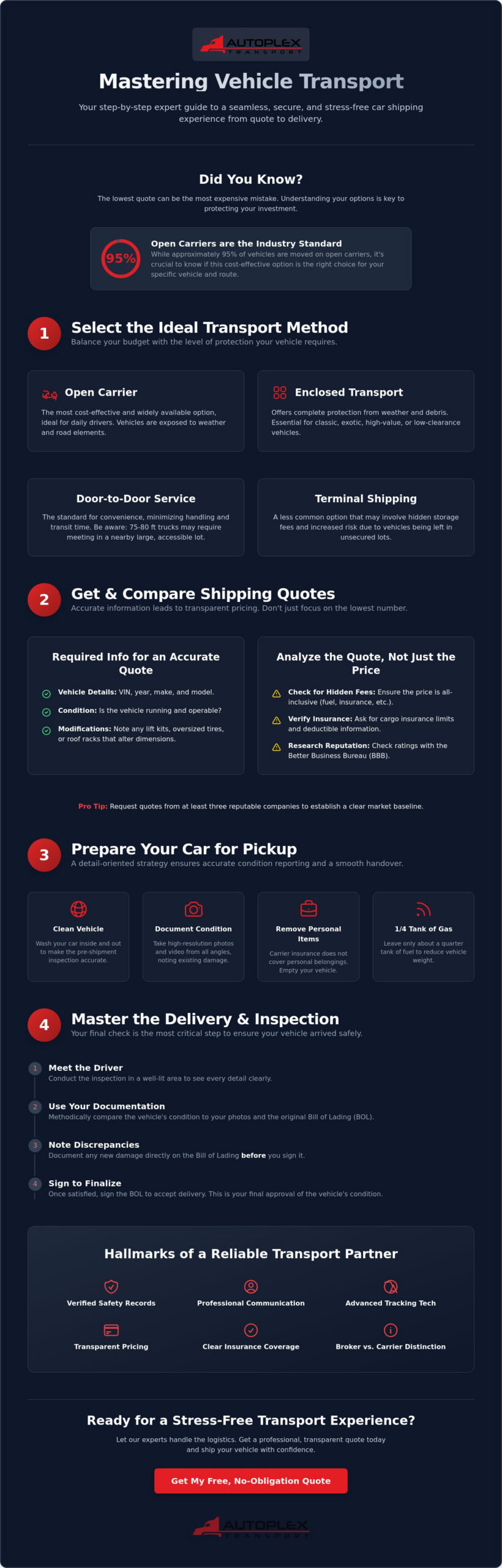
Open carriers are the industry standard for daily drivers because they are efficient, cost-effective, and widely available. These multi-car trailers are the backbone of the industry, moving approximately 95% of all vehicles nationwide. While your car is exposed to the elements, the safety records for these carriers are remarkably high. If you own a vehicle with low ground clearance, however, you’ll need the specialized equipment found in enclosed shipping. These trailers often utilize hydraulic lift gates or extra-long ramps to ensure the vehicle stays level during the loading process. Enclosed transport is the premium choice for classic or exotic cars.
Door-to-Door vs. Terminal Shipping
The convenience of residential pickup and delivery has made door-to-door service the preferred model for most customers. This method minimizes the time your vehicle spends in transit and reduces the number of people handling your keys. Terminal shipping is becoming less common in 2026 because it often involves hidden storage fees and leaves vehicles in unsecured lots, which increases the risk of minor damage. It’s important to remember that large transport trucks are roughly 75 to 80 feet long. They often face restrictions on narrow residential streets or in neighborhoods with low-hanging trees. In these situations, your driver will coordinate a meeting at a nearby large parking lot or shopping center to ensure a safe and legal exchange.
Step 2: How to Get and Compare Car Shipping Quotes
Once you’ve decided on the shipping method, the next phase of your journey involves gathering competitive bids. To receive an accurate quote to transport a car, you must have your vehicle’s specific details ready, including the VIN and any modifications like roof racks or lifted suspensions that alter the car’s dimensions. Many consumers find it helpful to follow a step-by-step guide to ensure they aren’t missing critical documentation before reaching out to providers. We recommend requesting quotes from at least three reputable transport companies to establish a baseline for current market rates.
Don’t just look at the bottom line. You should carefully examine the breakdown of fees to ensure there are no hidden surcharges for fuel, insurance, or residential delivery. Verification of insurance coverage is equally vital; ask for the specific limits of the carrier’s cargo insurance and check if there’s a deductible you’d be responsible for in the event of a claim. A reliable partner will also have a transparent history, which you can verify by checking their rating with the Better Business Bureau (BBB). This due diligence ensures you aren’t just buying a service, but investing in a professional logistical partnership.
Factors That Influence Your Total Cost
Several variables dictate the final price on your quote. Distance is the most obvious factor, but route popularity also plays a significant role; shipping between major hubs like Los Angeles and Dallas is often more efficient than moving a car to a remote rural location. Vehicle size and weight are also critical. Larger SUVs and trucks occupy more space on a trailer and increase fuel consumption, which reflects in the per-mile rate. You should also account for seasonal demand spikes, such as the “Snowbird” season in early winter and spring, when prices typically rise due to high volume.
Identifying Red Flags in Cheap Quotes
When you prepare to transport a car, it’s tempting to choose the lowest price available, but “low-ball” quotes are often a red flag for poor service. These unrealistic prices frequently lead to significant carrier delays because professional drivers won’t accept a load that doesn’t cover their operating costs. To protect your schedule, prioritize companies that offer a “locked-in” price guarantee. You can also verify a company’s legitimacy with this quick checklist:
- Confirm they have a valid Motor Carrier (MC) number.
- Verify their Department of Transportation (DOT) registration.
- Check for active insurance status on the FMCSA website.
If you’re looking for a provider that prioritizes these standards, exploring nationwide transportation services can provide the security you need for a long-distance move.
Step 3: How to Prepare Your Car for Pickup
Preparing your vehicle is the most critical step you can take to ensure a smooth transition. While the carrier handles the heavy lifting, your attention to detail during this phase protects your investment and streamlines the hand-off. When you prepare to transport a car, think of yourself as the project manager of your vehicle’s safety. A few hours of effort now can prevent days of administrative headaches later.
Start with a thorough exterior wash. Dust and road grime can easily hide small scratches or dings during the initial inspection. Once the car is clean, document its condition with high-resolution photos and a slow walk-around video. Focus on the roof, lower bumpers, and wheels, as these are the areas most frequently overlooked. These digital records are your primary defense if a dispute arises regarding the vehicle’s condition upon delivery. In 2026, many carriers utilize electronic Driver Vehicle Inspection Reports (eDVIRs), so having your own clear documentation allows for a quick and accurate side-by-side comparison with the driver’s digital log.
Weight management is another vital factor. You should keep your fuel tank at roughly one-quarter full. A full tank adds unnecessary weight, which can push a transport truck over legal limits or affect the carrier’s balance. Additionally, clear out all personal belongings from the cabin and trunk. Standard cargo insurance doesn’t cover items left inside, and loose objects can shift during transit, potentially damaging the interior. You should also remove or secure aftermarket accessories like bike racks, luggage pods, or custom spoilers that might exceed the standard dimensions of the trailer.
The Pre-Transport Maintenance Checklist
Mechanical readiness is just as important as physical appearance. Check for fluid leaks before the truck arrives. A small oil or transmission leak might seem minor, but it can drip onto other vehicles below yours on the rack, leading to liability issues. Ensure your battery is fully charged and tires are at the recommended pressure to facilitate easy loading. Finally, deactivate all car alarms and remove toll tags. Automated tolling systems are ubiquitous in 2026, and you don’t want to be billed for thousands of miles as your car moves across state lines on the back of a trailer.
Special Considerations for Electric Vehicles (EVs)
Transporting electric vehicles requires specific technical steps due to their unique battery and software systems. Aim for a battery state of charge between 40% and 60%. This range is stable for transport while providing enough energy for the driver to load and unload the vehicle safely. Most modern EVs have a “Transport Mode” or “Tow Mode” within the software settings; you must ensure this is active to prevent the parking brake or regenerative braking from engaging while the car is on the move. Always provide the driver with clear instructions on how to start and move the vehicle, as EV interfaces vary significantly between manufacturers.
Step 4: How to Manage the Delivery and Inspection Process
The final phase of the journey begins long before the transport truck pulls into your neighborhood. Throughout the transit period, professional carriers in 2026 provide real-time GPS updates, allowing you to monitor your vehicle’s progress across state lines. When the driver contacts you for delivery, coordinate a meeting spot that is safe, well-lit, and spacious enough for a large trailer to maneuver. If your residential street is too narrow, a local shopping center or wide parking lot is often the best alternative. This ensures both you and the driver have the necessary space to perform a comprehensive final inspection without the pressure of blocking traffic.
When you prepare to transport a car, the goal is always a damage-free arrival, but the inspection is your safety net. You should conduct a side-by-side comparison using the high-resolution photos and video you captured during the pickup phase. Check the same high-risk areas: the roof, the lower bumpers, and the wheels. It’s helpful to have a second person assist you during this process to ensure no detail is overlooked. If the vehicle is dirty from road travel, which is common with open carriers, take extra care to distinguish between surface grime and actual paint discrepancies. Your focus should be on identifying any changes that occurred between the initial loading and the final drop-off.
Mastering the Bill of Lading
The Bill of Lading (BOL) serves as your primary legal receipt and the binding contract between you and the carrier. It documents the vehicle’s condition at both ends of the trip and confirms that the delivery has been completed. You must never sign the BOL before you have finished your full inspection, regardless of how much of a hurry the driver seems to be in. Once you sign this document without noting issues, you’re legally stating that the car was delivered in satisfactory condition. The Bill of Lading is the first document required for any insurance claim you might need to file.
What to Do if You Spot New Damage
If you identify new damage, you must act immediately while the driver is still present. Clearly mark the specific discrepancies on the Bill of Lading and ensure the driver signs the document to acknowledge your findings. Take clear, well-lit photos of the new damage alongside the driver’s signature on the paperwork. Most carriers require a formal claim to be filed within 24 to 48 hours of delivery to remain valid under their cargo insurance policy. For a more detailed breakdown of these final steps, you can review our guide on how to transport an auto for a complete checklist. If you value this level of detail and want to ensure a secure delivery, consider booking your next move with our door-to-door transportation services.
How to Choose a Reliable Transport Partner
Selecting the right entity to transport a car is the final and most significant decision in your logistics journey. You aren’t just looking for a truck; you’re seeking a partner with a proven history in nationwide logistics. A reliable provider should offer more than just a competitive price. They must provide transparency through real-time tracking technology. This allows you to stay informed of your vehicle’s location without making constant follow-up calls. You should also evaluate customer service responsiveness during the initial quote phase. If a company is slow to respond or vague about their safety protocols now, it’s a strong indicator of how they’ll manage your vehicle during transit. Choosing a partner that specializes in your specific vehicle type, whether it’s a daily driver or a luxury model, ensures that the carrier has the appropriate equipment for a safe load. For a deeper understanding of what separates a quality provider from the rest, our guide to selecting a professional car shipping service covers the 2026 regulatory landscape and carrier vetting criteria in full detail.
The AutoPlex Advantage in National Shipping
AutoPlex Transport Company has built a reputation on a steadfast commitment to safe, interstate transportation. We understand that every vehicle has unique requirements. This is why we provide both open and enclosed carrier options to suit different levels of value and environmental exposure. Our approach is grounded in the belief that education and transparency build the strongest partnerships. For a deeper look into how these networks operate, you can explore our car carrier service pillar article. This resource explains the complexities of nationwide vehicle movement in detail, helping you make an informed choice for your next move.
Broker vs. Carrier: Why It Matters to You
Understanding the distinction between a broker and a carrier is essential for any consumer. A carrier is the company that owns the trucks and employs the drivers. A logistics provider acts as your representative to vet thousands of individual carriers across the country. This model provides you with peace of mind. The provider handles the rigorous checks on insurance validity, safety ratings, and FMCSA compliance. Instead of managing multiple contacts, you have a single point of contact who’s responsible for the success of your shipment. This layer of oversight ensures that only the highest-rated drivers are selected to transport a car for you. If you’re ready to begin your journey with a partner you can trust, we invite you to request a professional quote today.
Secure Your Vehicle’s Journey Today
Navigating the logistics of vehicle shipping in 2026 doesn’t have to be a source of anxiety. By following this methodical approach, you’ve learned how to distinguish between transport methods, verify carrier credentials, and document your asset’s condition with professional precision. These steps transform a complex move into a manageable, transparent process where you remain in control. When you are ready to transport a car, the most important step is aligning yourself with a provider that shares your commitment to safety and reliability.
AutoPlex Transport Company offers nationwide door-to-door service, utilizing a network of fully licensed and insured carriers to protect your investment. Our A+ rating from the Better Business Bureau reflects our history of providing steady, dependable support for every client. Don’t leave your vehicle’s safety to chance; choose a partner that values thoroughness and clear communication. Get Your Instant Vehicle Shipping Quote from AutoPlex Transport and experience a logistics process that is as smooth as it is secure. We look forward to helping you move forward with total peace of mind.
Common Questions About Vehicle Logistics
Is it cheaper to ship a car or drive it yourself?
Shipping is often more cost-effective when you calculate the total investment of a long-distance trip. While driving might seem less expensive at first, you must account for fuel, hotel stays, meals, and the significant depreciation caused by adding thousands of miles to your odometer. When you choose to transport a car with a professional, you also save the valuable time you’d otherwise spend behind the wheel for several days.
How long does it typically take to transport a car across the country?
Cross-country shipments generally take between 7 and 10 days from the point of pickup. Shorter regional trips under 500 miles are usually completed within 1 to 3 days. These timeframes allow drivers to navigate traffic safely and comply with federal rest regulations, ensuring your vehicle arrives within a predictable and secure window.
Can I put personal belongings in my car when I ship it?
Carriers generally prohibit personal items in the vehicle to comply with Department of Transportation weight regulations and safety standards. Objects left in the cabin aren’t covered by the carrier’s cargo insurance and can shift during transit, potentially damaging your interior. It’s best to remove all non-permanent accessories, including toll tags and external mounts, before the truck arrives for pickup.
Does insurance cover my car while it is being transported?
Yes, every legitimate motor carrier must maintain cargo insurance to protect your vehicle against damage while it’s in their care. You should always ask for a copy of the carrier’s insurance certificate and verify the coverage limits before signing a contract. This protection specifically covers the vehicle’s exterior and structural integrity during the loading, transit, and unloading phases.
What happens if my car is damaged during the shipping process?
If you identify new damage at delivery, you must document the specific issues on the Bill of Lading before the driver departs. Take clear, high-resolution photos of the discrepancies immediately and contact your transport partner to start the claims process. Because the Bill of Lading is your primary legal receipt, noting the damage on this document is the most important step for a successful insurance claim.
Do I need to be present for the pickup and delivery of my vehicle?
You or a designated representative over the age of 18 must be present at both ends of the trip to oversee the inspection process. This individual needs to sign the Bill of Lading and verify the vehicle’s condition alongside the driver. If you can’t be there personally, you can authorize a friend or neighbor to act as your agent during these critical hand-off points.
Can you ship a car that doesn’t run (inoperable)?
Inoperable vehicles can be transported, but they require specialized trailers equipped with winches or lift gates. You must disclose the vehicle’s condition when you request a quote to transport a car so the logistics team can assign a carrier with the right equipment. Shipping a non-running car typically involves an extra fee to cover the additional labor and specialized loading tools required.
How far in advance should I book my car transport service?
We recommend scheduling your transport at least two to three weeks before your preferred move date. This lead time provides the necessary window to secure a spot on a carrier that services your specific route. While we can sometimes accommodate shorter notices, booking early ensures more predictable scheduling and allows for a smoother, more organized car shipping service experience.