If you assume that shipping a car to Texas is as simple as clicking a button, you might be in for a shock when the carrier arrives and discovers your vehicle doesn’t actually roll, steer, or brake. Many vehicle owners feel a legitimate sense of anxiety when they realize their car requires specialized equipment like a winch, fearing that hidden fees or frame damage are inevitable during the loading process. It’s a common concern, especially since an inoperable vehicle significantly narrows the pool of available carriers who possess the necessary tools and experience for a safe transit.
You shouldn’t have to guess whether your car will arrive safely or if your quote will suddenly change at the delivery point. This professional guide will help you master the logistics, costs, and preparation required to safely transport an inoperable vehicle to its destination with expert guidance. We’ll explore the specific 2026 Texas registration requirements, clarify the technical differences between different inoperable statuses, and provide a clear roadmap for a damage-free delivery that avoids surprise surcharges and keeps your budget intact.
Summary of Key Insights
- Understand the industry definition of an inoperable vehicle, including why a car that starts but cannot move under its own power requires specialized winching equipment.
- Learn how to manage the logistical requirements and specific equipment fees associated with shipping a car to Texas to ensure a transparent, surprise-free experience.
- Compare the benefits of Open Carrier Car Transportation against Enclosed Transport Services to determine the most appropriate level of protection for your vehicle’s condition.
- Follow essential preparation steps, such as inflating tires to maximum safe PSI and removing personal items, to facilitate a safe and efficient loading process.
- Discover the advantages of partnering with a professional service that specializes in nationwide interstate vehicle transportation through a reliable and vetted carrier network.
What Qualifies as a Non-Running Car for Texas Transport?
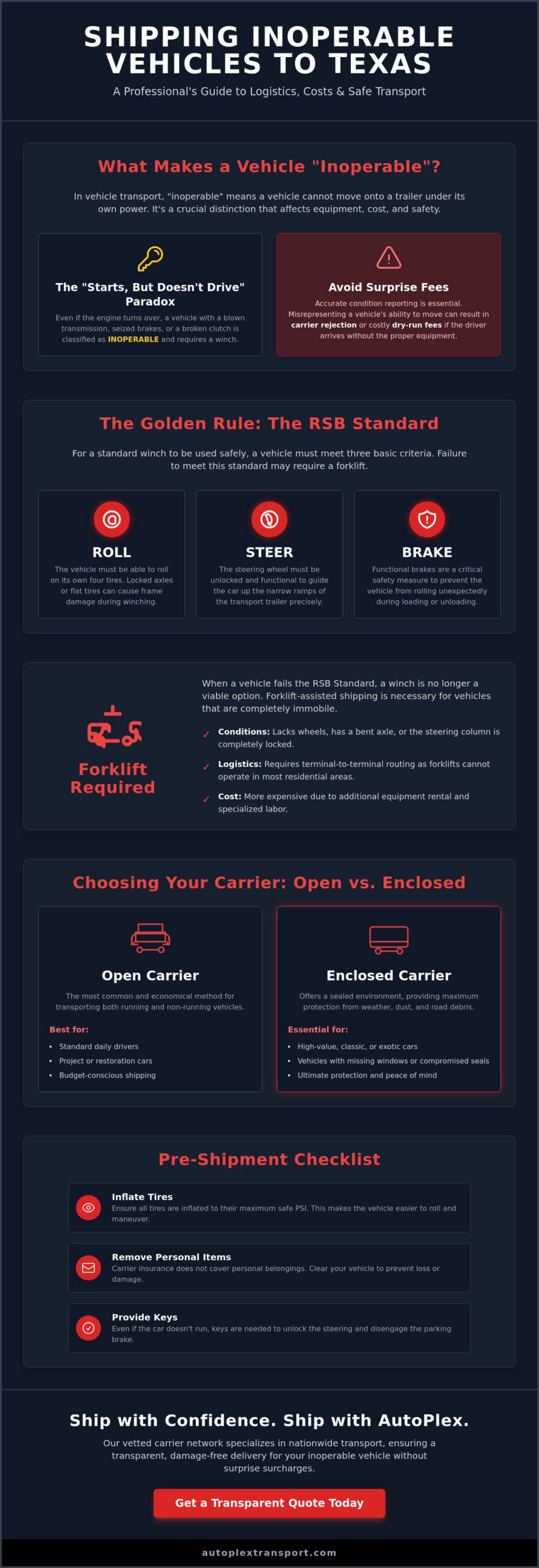
In the 2026 transport market, an inoperable vehicle is any unit that cannot be safely driven onto and off a carrier trailer under its own power, regardless of its mechanical ability to start. This distinction is vital when you are planning on shipping a car to Texas. Many owners assume that if an engine turns over, the car is considered “running.” However, if a vehicle has a blown transmission, a snapped clutch cable, or seized brakes, it’s classified as inoperable. Logistics providers categorize vehicles based on how they move, not just how they sound. Understanding this prevents the common “Starts but Doesn’t Drive” paradox where a customer expects a standard rate but receives an invoice for specialized winching services.
Accurate condition reporting is the most effective way to avoid dry run fees or carrier rejection. If a driver arrives with a standard trailer and no winch, they cannot physically load a non-runner. This often results in the carrier leaving the site and charging a significant fee for the wasted trip. It’s also important to distinguish between a non-runner and a junk vehicle for insurance purposes. A non-runner is typically a project car or a vehicle with a specific mechanical fault, whereas a junk vehicle may have structural compromises that make it unsafe for standard Interstate Vehicle Transportation. Providing a clear description ensures your vehicle is matched with a carrier that has the right equipment and the correct insurance coverage for your asset’s specific state.
The Roll, Steer, and Brake (RSB) Standard
The “Golden Rule” of inoperable transport is the RSB standard. For a carrier to use a standard winch, your vehicle must be able to roll on its own tires. If the tires are flat or the axles are locked, the winch cable could cause frame damage. Steering functionality is equally critical because the driver must guide the car precisely up the narrow ramps of the trailer. Finally, functioning brakes are a safety requirement. Without them, the vehicle could roll forward into the truck cab or backward off the ramp during the loading process, creating a high-risk environment for both the driver and your car.
When a Forklift Becomes Necessary
When a vehicle fails the RSB standard, a winch is no longer a viable solution. If your car lacks wheels, has a bent axle, or the steering column is completely locked, a forklift is required for loading. This introduces logistical challenges because most residential streets are not suitable for forklift operations. Consequently, forklift-assisted shipping often requires terminal-to-terminal routing. You’ll likely need to drop the vehicle at a specialized facility equipped with heavy machinery. This method is more expensive due to the additional equipment rental and the specialized labor involved in moving an immobile unit safely.
By being transparent about your vehicle’s physical capabilities, you ensure that shipping a car to Texas remains a smooth and predictable process. Whether your car needs a simple winch or a heavy-duty forklift, early communication is the key to a successful delivery.
Choosing the Best Carrier Type for Inoperable Texas Shipping
Selecting the right trailer is a pivotal step in the logistics of shipping a car to Texas. It isn’t just about the cost; it’s about the physical tools the driver has on hand to manage a vehicle that cannot assist in its own loading. Most owners start by evaluating the level of protection their vehicle requires. While a project car destined for a restoration shop might be fine on an open rack, a classic vehicle with mechanical issues often demands more specialized care. Your choice between open and enclosed methods will directly dictate the winching technology used during the process.
Open Carrier vs. Enclosed for Non-Runners
Open Carrier Car Transportation is the most common and economical method for moving non-running vehicles. It’s a reliable choice for daily drivers or project cars where minor exposure to the elements isn’t a concern. However, if your vehicle has compromised seals, missing windows, or a delicate paint job, Enclosed Transport Services are essentially a requirement. An enclosed trailer provides a sealed environment that protects the interior from rain, dust, and road debris during the long interstate haul. This is particularly important for non-runners because you can’t easily roll down windows or adjust covers if they become loose in transit. For those managing a high-value asset that currently lacks a working engine, reaching out to a provider of Nationwide Transportation Services ensures you get a carrier equipped for these specific protection needs.
Safety protocols for inoperable units are more rigorous than for running cars. Since the vehicle cannot be put into gear or have its parking brake reliably engaged in some cases, drivers use heavy-duty wheel straps and frame-safe tie-downs to prevent any shifting. On a multi-car hauler, the placement of a non-runner is strategic; it’s often placed on the bottom deck to make the winching process more straightforward and safer for the operator.
Winch Requirements by Carrier Type
The type of winch a carrier uses often depends on the trailer design. Open-air trailers typically utilize electric winches mounted to the front of the trailer frame. These are powerful enough to pull most passenger vehicles up the loading ramps. In contrast, high-end enclosed trailers often feature hydraulic winches or even specialized lift-gates. A lift-gate is the gold standard for non-runners with low ground clearance. It keeps the vehicle completely level while lifting it to the height of the trailer deck, which prevents any scraping or bumper damage that might occur on a traditional ramp.
When you are vetting a car transportation company, you should ask specific questions about their inoperable equipment:
- Does the assigned carrier have a permanently mounted winch, or do they use portable gear?
- What is the weight rating of the winch relative to your vehicle’s curb weight?
- If the vehicle has low clearance, does the trailer have extended ramps or a lift-gate?
While open carriers typically utilize electric winches for standard ramp pulls, enclosed trailers often employ hydraulic systems or horizontal lift-gates to manage vehicles with restricted ground clearance or delicate frames.
Factors Influencing the Cost of Shipping to Texas
Calculating the investment required for shipping a car to Texas involves more than just measuring the distance between two points. While total mileage remains a primary factor in determining the base rate, the inoperable status of a vehicle introduces specific labor and equipment requirements. In the 2026 market, nationwide interstate vehicle transportation is subject to various external pressures, including fuel surcharges and the specialized nature of handling assets that cannot move under their own power. When a vehicle is non-running, it requires a carrier with specific winching tools, which naturally narrows the field of available drivers and impacts the final quote.
The “Inoperable Fee” is a standard industry surcharge designed to cover the additional time and physical labor involved in the loading process. Winching isn’t a simple task; it requires technical precision to ensure the vehicle is centered on the ramps without causing frame or bumper damage. Seasonal demand also dictates pricing trends. Industry data indicates that the peak shipping season between May and August can see rates increase by 10% to 15% due to the high volume of relocations to the Lone Star State. Planning your shipment during off-peak windows, such as January or October, can often result in more competitive pricing and faster carrier matching.
Weight and Dimensions of the Non-Runner
Vehicle weight plays a significant role in winching labor and equipment wear. A standard compact car puts minimal strain on a winch, but heavy SUVs and full-sized trucks require high-capacity cables and more robust motors. This increased mechanical strain often leads to higher surcharges for larger vehicles. Additionally, modifications such as lift kits or oversized tires can complicate the loading process. These features increase rolling resistance and may require wider trailer berths, which can limit the number of carriers on Texas routes capable of safely accommodating the vehicle’s dimensions.
Texas-Specific Delivery Logistics
Texas offers a unique landscape for vehicle delivery. Many suburban Texas neighborhoods feature wide streets and generous turn radiuses, which often makes Door 2 Door Transportation easier for large haulers compared to areas with more restrictive urban layouts. However, some newer master-planned communities have strict homeowner association rules regarding large commercial vehicles. In these cases, your carrier might suggest a nearby commercial parking lot for the final hand-off to ensure safety and compliance with local regulations.
Environmental factors in the South also influence the logistics of moving non-runners. The intense Texas heat can cause older tires to degrade or lose pressure quickly while a vehicle sits in storage. Low tire pressure significantly increases the effort needed to winch a car onto a trailer. Checking and inflating tires to their maximum safe PSI before the carrier arrives is a simple way to ensure the loading process remains efficient and avoids any supplemental labor fees at the point of origin or delivery in major metropolitan areas.
How to Prepare Your Non-Running Car for Texas Delivery
Properly preparing an inoperable vehicle is a critical step that ensures both safety and compliance with federal regulations. When you are shipping a car to Texas, the preparation phase isn’t just about making the car easier to move; it’s about protecting your asset and the carrier’s equipment. One of the most overlooked aspects is the removal of personal items. The Federal Motor Carrier Safety Administration (FMCSA) has strict weight regulations for transport trailers. Carriers are frequently stopped at weigh stations, and any excess weight from personal belongings can lead to significant fines or delays. Cleaning the interior also allows the driver to conduct a more accurate inspection of the cabin’s condition before loading.
Mechanical resistance is the primary enemy of a successful winch operation. To minimize this, you should inflate all tires to their maximum safe PSI, which is typically listed on the tire sidewall. Fully inflated tires provide a smaller contact patch with the ground, reducing the amount of force the winch must exert. If your vehicle has loose body panels, side mirrors, or trim pieces resulting from an accident, these must be secured with automotive tape or removed entirely. Wind resistance during interstate transit can catch loose parts, potentially causing further damage to your car or other vehicles on the trailer. For a seamless experience, you can rely on the Nationwide Transportation Services provided by AutoPlex Transport Company to guide you through these specific requirements.
Mechanical Preparation for the Winch
Before the driver arrives, you must verify several mechanical points to facilitate the winching process. The vehicle’s transmission must be able to shift into neutral, and the parking brake should be fully functional to secure the car once it reaches its position on the deck. If the battery is dead, ensure you have the keys present so the driver can unlock the steering column. Without the ability to steer, the carrier cannot align the vehicle with the ramps, which may lead to a rejected pickup. You should also check for active fluid leaks. Carriers often stack vehicles on multi-car trailers, and a leaking radiator or oil pan can drip onto and damage the paint of the cars positioned below yours.
Documentation and Inspection
The Bill of Lading (BOL) serves as your primary legal protection during the transport process. Since the engine cannot be started to move the car for a 360-degree view, you must take high-resolution photos of the vehicle from every angle while it is stationary. Be sure to annotate any existing damage that was specifically caused by the vehicle’s inoperable state, such as a damaged undercarriage or a broken axle. When the car arrives at its Texas destination, conduct a thorough inspection before signing the BOL. Since you won’t be able to test the mechanical systems, focus on the exterior bodywork and frame to ensure no new structural or cosmetic issues occurred during the winching or transit phases.
Follow this checklist to ensure your car is ready for the driver:
- Remove all personal electronics, loose change, and heavy items from the trunk and cabin.
- Inflate all tires to the maximum recommended pressure to reduce rolling resistance.
- Confirm the steering wheel is unlocked and the transmission can be placed in neutral.
- Secure or remove any hanging trim or loose bumpers with reinforced tape.
- Document the current condition with clear photos and a signed pre-trip inspection report.
Why AutoPlex is the Expert Choice for Texas Vehicle Logistics
Choosing a logistics partner for an inoperable vehicle requires more than just finding the lowest price. It demands a provider that understands the nuances of winching, weight distribution, and carrier availability. AutoPlex Transport Company brings decades of specialized experience to the field of Interstate Vehicle Transportation. Our team recognizes that a non-running car isn’t just another load; it’s a specific logistical challenge that requires a vetted network of carriers equipped with heavy-duty winching technology. When you’re shipping a car to Texas, you need the assurance that the person arriving at your door has the right tools and the professional training to use them without risking your vehicle’s frame or suspension.
Transparency is the cornerstone of our service model. We provide all-inclusive car shipping quotes that account for the inoperable status from the very beginning. You won’t face surprise surcharges or “hidden inop fees” when the driver arrives. Our commitment to clear communication ensures that every detail, from the vehicle’s rolling ability to the specific delivery location, is accounted for before the wheels ever hit the pavement. This methodical approach allows us to build trust with our clients, positioning ourselves as a reliable partner capable of managing valuable assets with care.
Nationwide Reach with a Texas Focus
Texas is a massive market with unique logistical requirements, particularly given the 1.2 million relocations from California to Texas recorded since 2020. Our logistics network is designed to optimize these high-volume routes, ensuring that we can match your non-runner with a carrier already scheduled for transit through major hubs like Austin, San Antonio, or Fort Worth. This route optimization reduces wait times and improves the efficiency of Nationwide Transportation Services. Whether you’re moving a standard project car and need open transport car shipping or a more complex asset, our knowledge of Texas infrastructure ensures a smooth transition across state lines.
Reliable Door 2 Door Transportation
Moving a car that doesn’t drive shouldn’t mean you have to arrange for towing to a distant terminal. We specialize in Door 2 Door Transportation, streamlining the pickup process directly from your residential or business location. Our drivers manage the physical loading process with professional care, ensuring that the last mile delivery at your Texas destination is handled with the same precision as the initial pickup. For owners of high-value non-runners, such as classic restorations or exotic models with mechanical faults, you can explore our enclosed car transport options. This service provides the ultimate level of protection, keeping your vehicle shielded from the elements throughout its journey to the Lone Star State.
Securing Your Texas Delivery with Professional Logistics
Navigating the complexities of transporting an inoperable vehicle doesn’t have to be a source of stress. By mastering the Roll, Steer, and Brake standard and selecting a carrier equipped with the proper winching technology, you’ve already mitigated the most common risks. Remember that accurate condition reporting and strict adherence to FMCSA weight regulations are the most effective ways to avoid surprise fees and ensure a smooth transit across state lines. Whether you’re shipping a car to Texas for a restoration project or a cross-country move, success depends on a methodical approach to preparation and choosing a partner that prioritizes safety.
AutoPlex Transport Company functions as your reliable partner in the logistics field. As A+ Rated Logistics Experts working with fully insured nationwide carriers, we provide the peace of mind you need when moving a non-runner. We guarantee specialized winch equipment for every inoperable shipment to ensure your vehicle is handled with professional care. Take the first step toward a seamless transport experience today.
Get Your Free Instant Quote for Non-Running Car Shipping
Your vehicle’s journey to the Lone Star State is in safe hands, and we look forward to helping you achieve a damage-free delivery.
Frequently Asked Questions
Can I ship a car to Texas if it has no engine or transmission?
Yes, you can ship a vehicle without a powertrain, provided it meets the Roll, Steer, and Brake (RSB) standard. Since the car cannot move under its own power, it’s categorized as inoperable for the purposes of shipping a car to Texas. You must inform your logistics provider during the quoting process so they can assign a carrier equipped with a winch to manage the loading and unloading safely. This ensures the driver arrives with the proper equipment to handle a rolling chassis.
How much more does it cost to ship a non-running car compared to a running one?
Transporting an inoperable vehicle typically incurs an additional fee to cover the specialized equipment and labor required for winching. This surcharge generally ranges between $150 and $400 depending on the vehicle’s size and the difficulty of the loading environment. This fee is separate from the base mileage rate and ensures the carrier can safely pull the vehicle onto the trailer without risking damage to the frame or bumpers during the process.
Does my non-running car need to be insured during transport?
Your vehicle is protected by the carrier’s cargo insurance while it is on the trailer, but maintaining your own personal policy is highly recommended. The carrier’s insurance covers damage caused by transit accidents or equipment failure during the winching process. It’s vital to review the Bill of Lading and document the car’s pre-trip condition with high-resolution photos to ensure any claims are processed smoothly. Most professional logistics companies only work with fully insured nationwide carriers for your protection.
What happens if the driver arrives and the car won’t roll or steer?
If a vehicle cannot roll on its own tires or be steered, a standard winch is no longer a viable solution for loading. In these instances, the carrier will likely reject the pickup, and you may be charged a dry-run fee for the driver’s time and fuel. You’ll need to arrange for a forklift to load the vehicle, which often requires moving the car to a specialized shipping terminal rather than a residential address due to the heavy machinery involved.
Can I put spare parts inside my non-running car during shipping?
Carriers generally prohibit the inclusion of spare parts or personal items inside the vehicle to comply with FMCSA weight regulations. While some drivers might allow up to 100 pounds of parts if they are secured in the trunk and kept below the window line, excess weight can lead to fines at state weigh stations. It’s always best to ship heavy mechanical components separately to avoid delays or additional surcharges that could impact your final transport costs.
How do carriers load a car that doesn’t start onto a multi-car trailer?
Drivers use a winch system, which consists of a heavy-duty cable attached to a motor on the trailer, to pull the car up the ramps. The operator carefully guides the vehicle using the steering wheel to ensure it stays centered and doesn’t scrape the sides of the trailer. This process requires significant technical skill and patience to prevent the car from rolling backward or colliding with other vehicles already secured on the multi-car hauler.
How long does it take to ship an inoperable vehicle to Texas?
Shipping a non-runner often takes slightly longer than a running car because there’s a smaller pool of carriers equipped with winches. You should expect the dispatch process to take an additional one to three days while we locate a driver with the specific tools needed for your vehicle. Once the car is loaded, the transit time for shipping a car to Texas is standard, typically ranging from three to nine days depending on the total distance and route.
Are there specific Texas laws regarding leaking fluids from non-running cars?
While Texas doesn’t have a unique statute for leaking transport vehicles, carriers must follow strict safety protocols to prevent environmental hazards and damage to other cargo. A car with an active oil or coolant leak can drip onto vehicles positioned below it on the trailer, leading to insurance claims. Drivers may refuse to load a vehicle with significant leaks unless the owner takes steps to contain the fluids or secures the car on the bottom deck.