
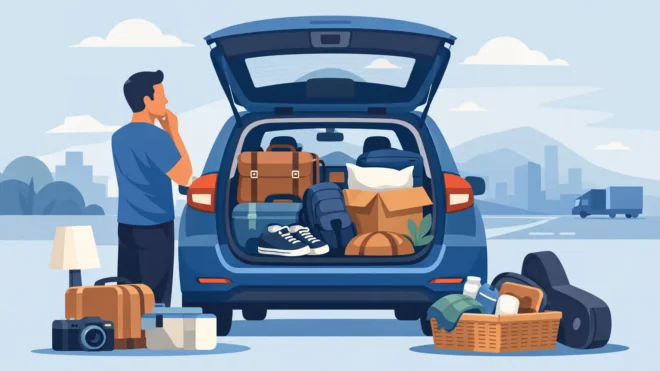
A cross-country move can leave you looking at every empty inch of your vehicle and asking, can you ship personal items along with your car? In many cases, carriers may allow a limited amount of personal belongings. But it is not automatic, and it is not the same as using a moving truck.
Auto transport is designed to move vehicles, not household goods. That distinction affects what can go in the car, how much can be loaded, and whether those belongings are protected if something goes wrong. The safest approach is to ask about personal-item policies before booking, then pack only what your assigned carrier has approved.
Can You Ship Personal Items in a Car Being Transported?
Sometimes, yes. Many auto carriers will permit a small number of properly packed personal items in the trunk or cargo area. A common allowance is up to 100 pounds, although the actual limit can vary by carrier, route, trailer capacity, and the type of vehicle you are shipping.
Carrier approval matters because a loaded vehicle weighs more. Extra weight affects trailer capacity and can create compliance issues for the driver. It can also make the vehicle more difficult to inspect at pickup and delivery. If personal items were not disclosed in advance, a carrier may ask that they be removed, charge an additional fee, or delay pickup until the load is corrected.
Think of personal-item loading as a limited convenience, not extra moving service. A few sealed boxes of clothing, shoes, small household items, or nonessential personal effects may be acceptable if the carrier agrees. Furniture, large electronics, heavy tools, or a vehicle packed from floor to ceiling generally are not.
Why Carriers Place Limits on Personal Belongings
The main issue is federal transportation regulation. Auto carriers operate under rules intended for vehicle transport, while household-goods movers are licensed and insured differently. A car carrier may not be authorized to haul a vehicle full of household goods as part of its regular service.
Insurance is another important consideration. Vehicle transport coverage is intended to protect the vehicle during transit. Personal belongings inside the vehicle are often excluded from that coverage. If a box is damaged, stolen, or lost, the auto carrier may not be responsible for it, even if the vehicle itself is covered.
There are practical concerns as well. Drivers need a clear view through the vehicle during inspections. Items can shift while the trailer is moving, potentially damaging the interior. Loose belongings may also create a safety issue during loading, unloading, or a roadside inspection.
For these reasons, a trustworthy transport provider should be clear about what the carrier allows rather than promising that every available space can be filled.
What You Should Never Pack in a Shipped Vehicle
Even when a carrier permits limited personal items, certain belongings should stay out of the vehicle. Do not pack anything hazardous, irreplaceable, illegal, or needed immediately after pickup.
That includes flammable liquids, aerosol cans, propane tanks, ammunition, fireworks, paint, chemicals, and batteries that are not safely installed in the vehicle. These items can create a fire risk and may violate carrier rules. Avoid placing food, alcohol, drugs, or any item that could cause legal or inspection problems in the car.
You should also keep valuables with you. Cash, jewelry, passports, legal documents, prescription medication, laptops, cameras, family heirlooms, and sentimental items do not belong in a vehicle on an auto carrier. Even if they fit neatly in a box, the risk is not worth it.
If an item would be difficult or expensive to replace, carry it yourself or ship it through a service designed for personal belongings. This is especially important for customers relocating on a tight schedule, since auto carrier delivery windows can change because of traffic, weather, route conditions, and loading logistics.
How to Pack Personal Items Safely
If your carrier approves belongings in the vehicle, pack with restraint. Place items in sturdy, sealed boxes or durable bags, and keep them low in the trunk or cargo area. Do not stack boxes above the window line, block mirrors, or fill the passenger compartment in a way that prevents a proper inspection.
Use soft items such as blankets or clothing to prevent movement, but do not rely on loose packing alone. Boxes should be closed securely and arranged so they cannot slide during transport. Avoid putting heavy objects on leather seats, fragile trim, or areas where they could shift into glass.
It is also wise to photograph the interior before pickup. Take clear photos of the trunk, cargo area, seats, dashboard, and any personal items that the carrier has approved. These photos support accurate condition documentation and help you confirm that the vehicle was loaded as expected.
Keep the vehicle’s total contents within the weight limit you were given. A few extra boxes may not seem significant, but carriers must account for the weight of every vehicle on the trailer. Being upfront before pickup is far easier than resolving an issue when the driver arrives.
Open vs. Enclosed Transport for Cars With Items Inside
Whether you choose open or enclosed transport does not usually change the rules on personal belongings. The carrier’s policy, weight limit, and insurance terms still apply. However, the type of transport can affect how you plan for the vehicle itself.
Open carrier shipping is a reliable and cost-effective option for many standard cars, trucks, and SUVs. Your vehicle is secured on an open trailer with other vehicles, and it may be exposed to normal road weather and dust. If limited personal items are approved, make sure they are fully contained inside the vehicle and cannot be seen from outside.
Enclosed transport provides added protection from road debris and weather. It is often preferred for classic, luxury, exotic, or high-value vehicles. Still, enclosed shipping is not a reason to load the vehicle with extra belongings. The same item restrictions and limited-coverage concerns remain in place.
If you are moving a premium vehicle, keeping the interior as empty as possible is often the best choice. It protects delicate surfaces, simplifies the inspection process, and helps ensure the carrier can focus on safe vehicle handling from pickup through delivery.
Questions to Ask Before You Book Auto Transport
Before scheduling service, tell your transport advisor that you would like to place personal items in the vehicle. Do not wait until the driver is at your door. Ask whether the assigned carrier allows items, what the weight limit is, where belongings must be stored, and whether an added charge applies.
You should also ask whether the carrier has specific restrictions for your route or vehicle type. A compact sedan, for example, has limited cargo space and a lower practical weight capacity than a large SUV. A vehicle traveling on a long interstate route may also be loaded onto a trailer with stricter weight requirements.
Finally, confirm what insurance does and does not cover. Clear answers help you decide whether the convenience of placing a few boxes in the car outweighs the risk of transporting them separately.
Prepare Your Vehicle for a Worry-Free Pickup
Personal items are only one part of shipment preparation. Remove toll tags, parking passes, and other items that could be lost or charged while the vehicle is in transit. Check the fuel level and keep it low, typically around one-quarter of a tank, unless your carrier gives different instructions.
Make sure the vehicle can be started, steered, and braked safely. Report any mechanical issues in advance, including leaks, low ground clearance, inoperable doors, or a non-running condition. These details help the carrier plan for the right equipment and avoid surprises at pickup.
At pickup, complete the vehicle inspection carefully with the driver. Note existing dents, scratches, chips, or interior damage on the condition report. Review the vehicle again at delivery before signing the final paperwork.
AutoPlex Transport can help you coordinate the right service for your route, vehicle, and timeline, including guidance on carrier-specific policies for approved personal items. A quick conversation before booking can prevent last-minute packing changes and keep your shipment on schedule.
When you need to move more than a few approved boxes, treat your vehicle shipment and household move as two separate services. Your car deserves a safe, professional ride, and your personal belongings deserve the protection of a transport option built specifically for them.
