

Did you know that approximately 95% of the companies you find online are actually brokers rather than the carriers who operate the trucks? This single distinction is often the root cause of the unexpected surcharges and logistical delays that many vehicle owners fear when moving across state lines. We understand that when you research the cost of interstate car shipping, you aren’t just looking for a bottom-line number. You’re looking for the security of knowing your vehicle will arrive at its destination on time and without a scratch. It’s natural to feel some anxiety about the potential for hidden fees or the safety of your car during a long-distance journey.
This guide provides a transparent breakdown of the logistical factors that determine transport rates in 2026. We will explain how current fuel trends and the latest FMCSA regulations, such as the Motus registration platform and updated financial responsibility rules, impact your total investment. You’ll learn the specific differences between open and enclosed carriers, the benefits of door-to-door service, and exactly how to secure a reliable quote that remains accurate from the moment you book until your car is safely in your driveway. Our goal is to replace your uncertainty with a clear, methodical path toward a successful transport experience.
Key Takeaways
- Understand the 2026 national pricing benchmarks to establish a realistic budget for cross-country vehicle transport.
- Identify the primary variables, such as vehicle weight and carrier type, that dictate the total cost of interstate car shipping.
- Learn how to secure the best rates by booking within the optimal two-to-four-week window and choosing door-to-door delivery.
- Gain the knowledge to distinguish between broker and carrier pricing models to avoid unexpected surcharges after your vehicle is picked up.
- Discover how new 2026 FMCSA regulations provide additional financial protection for consumers during long-distance vehicle transit.
What Defines the Cost of Interstate Car Shipping in 2026?
Interstate car shipping is the professional transport of a vehicle across state lines using specialized carriers, such as open or enclosed trailers. Unlike local towing, this service involves complex logistics and long-haul coordination. In 2026, the national average for a cross-country move typically ranges from $1,100 to $1,800, though this figure fluctuates based on the specific route and the time of year. While distance serves as the primary baseline for any quote, carrier density and route popularity play equally significant roles in determining the final price.
Most national carriers utilize a “Price per Mile” sliding scale rather than a rigid flat rate. This logic exists because the operational costs of loading and unloading a vehicle remain constant regardless of the distance traveled. Consequently, shorter trips often carry a higher per-mile rate to cover these fixed expenses. When you work with an auto transport broker, they analyze these variables across a network of carriers to find the most efficient route for your vehicle, ensuring that the cost of interstate car shipping remains competitive without compromising on safety.
The Difference Between Local and Interstate Logistics
Interstate moves require carriers to have specific DOT authorization and FMCSA registration to legally haul vehicles across state lines. These long-haul routes are subject to federal regulations that don’t apply to local transport, including strict driver hours-of-service limits. Additionally, state-specific regulations can impact transit times and fees, as certain states have unique weight limits or toll structures that carriers must factor into their pricing. The presence of major interstate hubs also influences availability. If your vehicle is picked up or dropped off near a major transit corridor, you’ll likely see more carrier options and more stable pricing compared to remote, rural locations.
2026 National Pricing Benchmarks
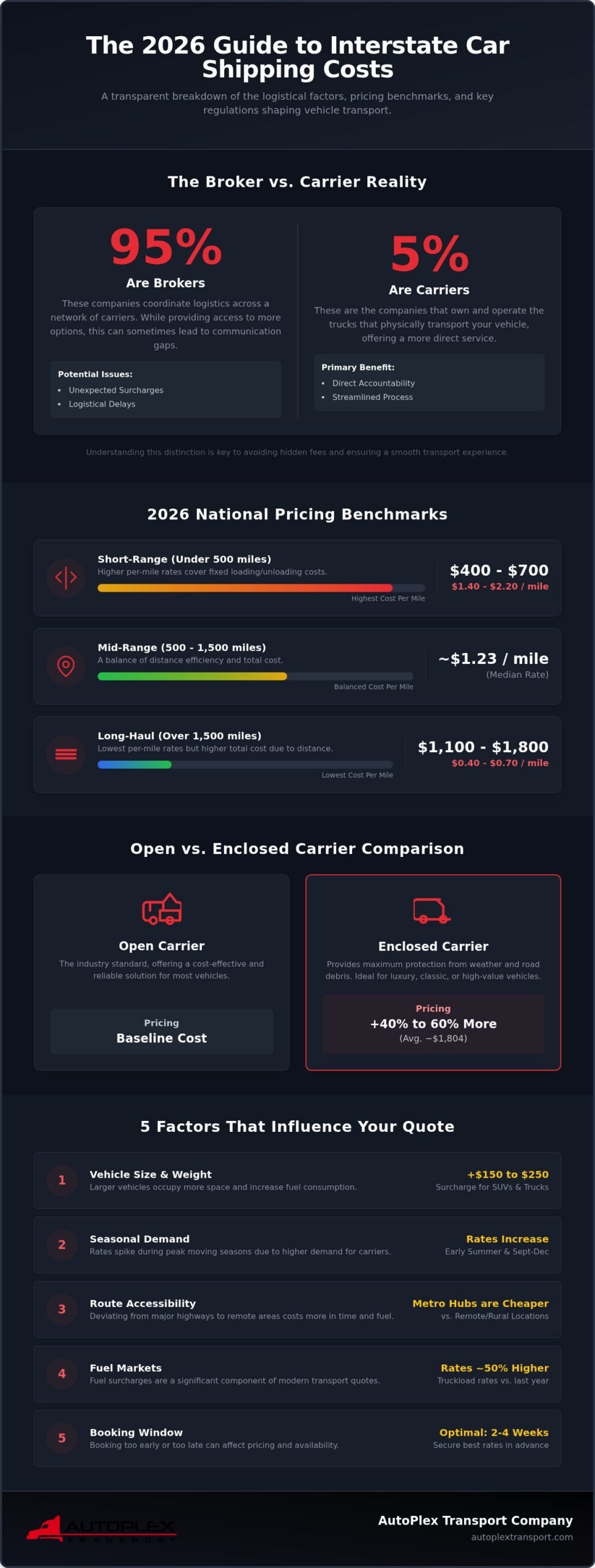
Understanding current benchmarks helps you identify a fair quote. For short-range interstate moves under 500 miles, you can generally expect to pay between $400 and $700. These routes often see per-mile rates ranging from $1.40 to $2.20 due to the high overhead of short-duration trips. Mid-range regional transport, covering 500 to 1,500 miles, currently sees a median rate of approximately $1.23 per mile, providing a balance between total cost and distance efficiency.
Long-haul and coast-to-coast shipments exceeding 1,500 miles offer the lowest per-mile rates, often falling between $0.40 and $0.70. However, the total cost of interstate car shipping for these distances is higher overall because of the significant mileage. In 2026, a standard sedan moving from one coast to the other will typically fall within the $1,100 to $1,800 range, while larger vehicles like SUVs or trucks may incur additional surcharges for their increased weight and dimensions.
5 Critical Factors That Influence Your Interstate Transport Quote
Securing an accurate estimate for the cost of interstate car shipping requires looking beyond the total mileage. In 2026, the logistics market is more volatile than in previous years, meaning that a quote from last season may no longer be relevant. Carriers must balance equipment availability with fluctuating operational expenses. While distance provides the foundation, five specific variables dictate whether your price remains stable or increases during the booking process.
- Vehicle Size and Weight: Larger vehicles like SUVs and pickup trucks typically incur a surcharge of $150 to $250 because they occupy more trailer space and increase fuel consumption.
- Carrier Type: Choosing enclosed transport offers maximum protection but costs 40% to 60% more than a standard open carrier, with average prices reaching around $1,804.
- Seasonal Demand: Shipping rates often spike during the early summer and the autumn “snowbird” season from September to December.
- Route Accessibility: Delivering to a major metropolitan hub is almost always more affordable than a remote rural location where carriers must deviate from primary interstates.
- Fuel Markets: As of August 2026, truckload all-in rates remain approximately 50% higher than last year, making current fuel surcharges a vital component of any quote.
Vehicle Specifications and Their Cost Impact
Modifications can significantly alter your shipping footprint. Lift kits, roof racks, or wide-body tires often require specialized loading procedures or more vertical clearance on the trailer. Weight is also a primary concern for modern logistics. Electric vehicles (EVs) and heavy-duty trucks require meticulous load planning to ensure the carrier doesn’t exceed federal gross vehicle weight ratings. Curb weight directly correlates to fuel consumption for the carrier, as heavier loads require more energy to transport across long distances. If you’re unsure how your vehicle’s specific build affects your rate, you can consult with a reliable transport partner to get a tailored assessment.
The Role of Timing and Expedited Services
Scheduling plays a massive role in price stability. Standard shipping typically requires a 1-2 week lead time for the best rates. If you need your vehicle picked up within a narrow window, expedited services are available for a premium. This extra cost compensates the carrier for rearranging their existing route to prioritize your vehicle. In 2026, labor shortages and stricter driver qualification standards, including more rigorous English proficiency checks, have increased the importance of booking early. Maintaining flexible pickup and delivery dates creates a “window of opportunity” that allows carriers to fit your vehicle into an existing route, often resulting in a more favorable interstate quote.
Comparing Open vs. Enclosed Carrier Costs for Cross-Country Moves
Deciding between open and enclosed carriers is the most significant choice impacting the cost of interstate car shipping. Open carriers represent the industry standard, accounting for approximately 93% of all vehicle shipments due to their balance of availability and affordability. Conversely, enclosed transport provides a shielded environment for vehicles, typically commanding a premium of 40% to 60% over open-air rates. This price gap reflects the specialized equipment and lower capacity of enclosed trailers, which usually haul fewer vehicles at once to ensure maximum safety for each asset.
When Open Carrier Shipping is the Logical Choice
For most daily drivers, open transport car shipping is the most practical and cost-effective solution. These carriers are widely available across all major national routes, making it much faster to secure a spot on a trailer. While vehicles are exposed to the elements, professional carriers use strategic loading patterns to minimize exposure to road debris. This method is highly reliable for standard sedans, SUVs, and trucks that don’t require climate-controlled environments. Since open carriers move the highest volume of cars, they offer the most competitive rates for those looking to manage their interstate moving budget efficiently.
The Investment Value of Enclosed Shipping
When moving a luxury, classic, or high-value asset, enclosed car transport serves as an essential safeguard. In 2026, the demand for enclosed shipping has risen among classic car owners who require total protection from rain, snow, and road salt. These trailers often feature hydraulic lift gates, which allow for a level loading process that is critical for low-clearance sports cars. Beyond physical protection, this service provides significant peace of mind for interstate moves involving assets with high resale value. The extra investment ensures your vehicle arrives in the exact condition it was in when it left your driveway.
Insurance Considerations for Long-Haul Transit
Insurance coverage is a critical component of your transport quote. While all interstate carriers must meet FMCSA minimums of $5,000 per vehicle and $10,000 per occurrence in cargo insurance, enclosed carriers frequently carry much higher limits. It’s common for premium carriers to offer coverage reaching into the hundreds of thousands or even millions of dollars. This enhanced protection is factored into the premium price of the service. Before finalizing your booking, we recommend verifying that the carrier’s insurance policy aligns with the current market value of your vehicle to ensure you are fully protected during transit.
How to Reduce Your Vehicle Shipping Expenses Without Sacrificing Safety
Smart planning often yields better results than simply searching for the lowest price tag. Reducing the cost of interstate car shipping doesn’t require you to compromise on the security of your vehicle. You can often find significant savings by understanding the market’s natural cycles and avoiding logistical pitfalls. For instance, booking your transport two to four weeks in advance is the optimal window for securing the most competitive rates. This lead time allows carriers to integrate your vehicle into a pre-planned route without the premium charges associated with last-minute scheduling.
Choosing door-to-door service is another effective way to manage your budget. While terminal-to-terminal shipping might look cheaper on paper, it often involves hidden storage fees and the logistical headache of getting your car to and from a facility. Shipping during the off-season, specifically late autumn or early spring, can also yield lower quotes as demand typically dips compared to the summer peak. These pricing lulls are excellent opportunities for savvy owners to move their vehicles at a fraction of the mid-summer rate.
The Fallacy of the “Cheapest” Quote
Quotes that fall significantly below the national average are often a red flag. In the interstate broker market, “low-ball” offers are frequently used to capture a booking, only for the price to spike later when no carrier is willing to accept the low rate. This tactic leads to service delays and frustration. To ensure your price remains locked in, you should also prepare a car for transport properly. This includes removing personal items and documenting the vehicle’s condition, which prevents incidental fees or weight disputes during pickup. A transparent quote from a reliable partner is always more valuable than a cheap estimate that isn’t backed by a committed carrier.
Evaluating the Real Cost of Driving vs. Shipping
Many owners consider driving the vehicle themselves to save money, but the math rarely favors a solo road trip. A 1,000-mile journey requires multiple tanks of fuel, several nights in hotels, and daily meal expenses. There’s also the “depreciation factor” to consider. Adding 2,000 extra miles to your odometer for a cross-country move directly impacts your car’s trade-in value and accelerates the need for maintenance. Professional auto transport services eliminate these hidden costs while saving you days of travel time. When you factor in the wear and tear on your vehicle and the risk of road accidents, the value of professional transport becomes clear. If you’re ready to see how affordable safe shipping can be, you can request a transparent quote from our team today.
Why AutoPlex Transport Company Provides the Most Reliable Interstate Quotes
Choosing a transport provider involves more than just comparing numbers; it requires finding a partner who values the safety of your vehicle as much as you do. Our transparent pricing model eliminates the anxiety of hidden fees or surprise fuel surcharges that often appear after a booking is finalized. We believe that the cost of interstate car shipping should be clear and predictable from the very beginning. By maintaining a nationwide network of vetted, DOT-compliant carriers, AutoPlex Transport Company ensures that every state-to-state route is handled by experienced professionals who prioritize safety and punctuality.
Our team possesses deep expertise in both open and enclosed logistics, allowing us to tailor our services to your vehicle’s specific requirements. Whether you’re moving a standard daily driver or a high-value classic, we provide the right equipment for the job. We’re committed to door-to-door convenience, which means we handle the logistical heavy lifting while keeping you informed through real-time communication. This methodical approach ensures that you never have to wonder about the status of your vehicle during its journey across the country.
A Methodical Approach to National Auto Logistics
AutoPlex Transport Company maintains high standards in a volatile market by leveraging comprehensive industry data to provide accurate 2026 market rates. This data-driven strategy prevents the “low-ball” quoting issues that frequently lead to service delays, ensuring that your quote is realistic enough to secure a high-quality carrier immediately. We perform rigorous insurance verification for every interstate shipment, going beyond the basic federal minimums to provide you with true peace of mind. Our “Reliable Partner” philosophy means we focus on education and transparency rather than high-pressure sales tactics.
Getting Your Personalized Interstate Shipping Quote
Requesting an estimate shouldn’t be a complicated or stressful task. Our secure online system is designed to be straightforward and efficient. To get the most accurate cost of interstate car shipping, you’ll want to have a few key details ready. Providing the vehicle’s VIN, your preferred pickup and delivery dates, and the specific zip codes for both locations allows us to calculate a precise rate based on current carrier density and route availability. This precision helps us lock in a price that stays firm, protecting you from the market fluctuations that often affect less prepared shippers. Request your professional interstate car shipping quote from AutoPlex Transport Company today.
Streamline Your Interstate Move with Confidence
Understanding the myriad variables that influence the cost of interstate car shipping allows you to navigate the 2026 logistics market with total clarity. We’ve detailed how route density, vehicle specifications, and your choice of carrier type form the basis of a professional quote. By applying the strategies we’ve discussed, such as timing your booking within the optimal two-to-four-week window and prioritizing door-to-door convenience, you can secure a reliable transport solution that fits your budget without compromising on safety.
AutoPlex Transport Company serves as your dedicated partner in this complex process. We utilize our national network of DOT-authorized carriers to provide secure, transparent transit for every vehicle we handle. Our commitment to real-time communication and thorough insurance verification ensures that your asset is protected from pickup through final delivery. You don’t have to manage the stress of cross-country logistics alone. Our expertise is designed to lead you toward a successful and predictable delivery experience.
Get an Instant Interstate Car Shipping Quote from AutoPlex Transport Company today. We look forward to providing the peace of mind you need for your next interstate move.
Frequently Asked Questions
How much does it cost to ship a car to another state in 2026?
The national average for vehicle transport in 2026 is approximately $1,215, with most standard moves ranging between $500 and $1,700. Specific variables such as the total mileage, current fuel surcharges, and the chosen carrier type will determine the final cost of interstate car shipping. For example, a cross-country move exceeding 2,000 miles typically averages around $1,700 for a standard sedan, while shorter regional trips are significantly lower.
Is it cheaper to ship a car or drive it cross-country?
Shipping is often the more economical choice once you calculate the hidden expenses of a road trip. When you drive, you must pay for several tanks of fuel, multiple hotel nights, and daily meals, which can quickly exceed the price of a professional carrier. Additionally, shipping prevents unnecessary wear and tear on your vehicle and protects its resale value by keeping the odometer reading low during the move.
What is the most affordable month for interstate car shipping?
March and April are typically the most cost-effective months for interstate routes, particularly for those moving vehicles toward northern states. During this period, rates can drop 10% to 15% below the annual average as carriers transition away from southern winter routes. Late autumn is another favorable window, as it offers a pricing lull before the high demand of the December holiday season begins.
Does the size of my vehicle affect the interstate shipping quote?
Vehicle dimensions significantly influence the interstate shipping quote because larger cars occupy more trailer space and increase the carrier’s weight load. Shipping a heavy SUV or a full-size pickup truck typically adds a surcharge of $150 to $250 to the base rate. Furthermore, modern electric vehicles often require specialized load planning due to their heavier battery packs, which carriers must factor into their equipment capacity.
For businesses looking to optimize their own heavy equipment fleets, you can explore Forklifts from United Lift LLC to learn more about performance standards and inventory financing.
How long does interstate car shipping typically take?
Transit times range from one to eight days based on the total distance and the carrier’s route efficiency. Short interstate moves under 500 miles are usually completed within one to two days, while coast-to-coast shipments typically require six to eight days. These timelines account for safe driving practices and the mandatory rest periods required by federal law to ensure your vehicle arrives without incident.
What is included in a professional vehicle shipping quote?
A professional quote is an all-in price that covers fuel, insurance, tolls, and the logistical coordination of the move. It should also include door-to-door service, where the carrier picks up and delivers the vehicle as close to your specified locations as legally possible. Providing a transparent quote ensures that you can budget effectively without worrying about the operational complexities of long-haul logistics.
Are there hidden fees in interstate auto transport?
Transparent providers avoid hidden fees by offering comprehensive estimates that remain firm after booking. However, some brokers use low-ball estimates that don’t include current fuel surcharges or insurance costs. At AutoPlex Transport Company, we prioritize transparent logistics to ensure our quotes are final and inclusive of all operational costs. This approach allows you to understand the accurate cost of interstate car shipping before the transport begins.
How do I know if an interstate car shipping company is legitimate?
Verify legitimacy by checking the company’s active authority through the FMCSA Motus registration platform. A legitimate provider must maintain a $75,000 surety bond and meet federal cargo insurance minimums to protect your asset. You should also confirm that the company has a verified DOT number and a history of successful deliveries. Working with an established partner ensures your vehicle is handled according to the latest safety regulations.