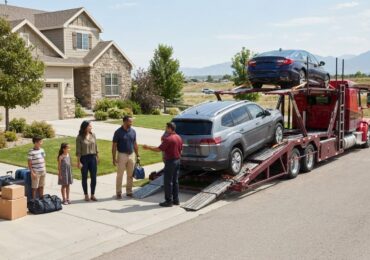
What happens when your vehicle can’t even make it to the end of the driveway, yet it needs to reach the other side of the country? For many owners, the prospect of moving an inoperable car feels like a logistical nightmare fraught with potential risks. You might worry about a winch damaging the frame, hidden fees appearing on your final bill, or the difficulty of finding a carrier that actually possesses the specialized equipment needed for non-running vehicle transport. These concerns are valid, as shipping a car that doesn’t start or steer requires a much higher level of precision than a standard move.
We understand that your vehicle is a valuable asset, even if it isn’t currently operational. This 2026 guide is designed to provide you with total clarity on the specialized equipment, logistics, and preparation steps required to move your car safely. You’ll discover how to secure transparent pricing for inoperable status and what to expect during the loading process. By the end of this article, you will have a clear roadmap for a successful door-to-door delivery, ensuring your vehicle arrives at its destination without further mechanical harm or unexpected stress.
Key Takeaways
- Understand the specific logistical distinctions between mechanical failures, accident damage, and project cars to ensure your carrier provides the correct level of care.
- Learn why specialized equipment like electric winches is essential for safe non-running vehicle transport and when more intensive tools like forklifts become necessary.
- Discover the critical preparation steps, such as ensuring tires are inflated and the steering column is unlocked, that facilitate a smooth and safe loading process.
- Gain clarity on why inoperable vehicles command higher rates due to specialized labor and equipment requirements, allowing you to budget with transparency.
- Realize the benefits of door-to-door service for vehicles that cannot be moved through traditional terminals, prioritizing the safety of your asset throughout its journey.
What is Non-Running Vehicle Transport?
In the automotive logistics industry, non-running vehicle transport refers to the movement of any car that cannot move under its own power. This isn’t a one-size-fits-all category. A vehicle might be considered inoperable due to a simple mechanical failure like a blown head gasket, or it could be a classic project car with no engine at all. In more complex cases, accident damage might have compromised the vehicle’s structural integrity. Because these cars can’t be driven onto a trailer, carriers must use specialized equipment like flatbed tow trucks or heavy-duty winches to secure them safely.
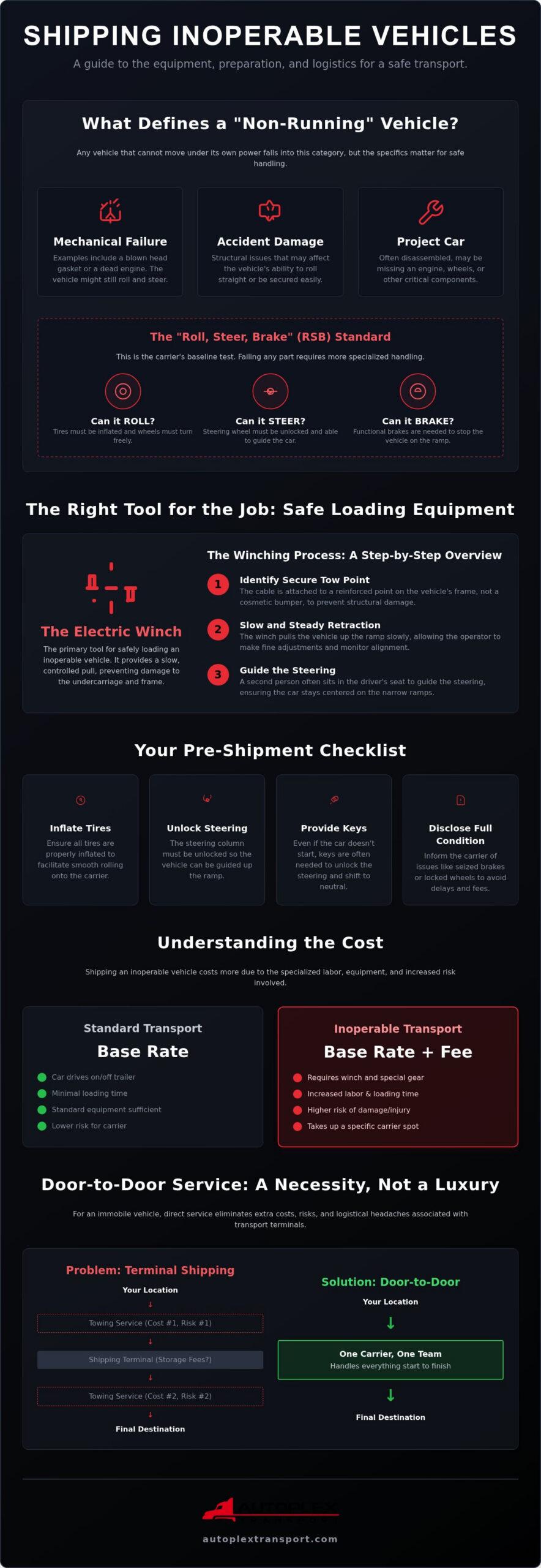
Standard carriers typically look for what we call the “Roll, Steer, Brake” (RSB) standard. This means the car must be able to roll on its own tires, the steering wheel must turn the front wheels, and the brakes must function well enough to stop the vehicle once it’s on the ramp. If your car doesn’t meet these three criteria, it requires even more specialized handling. This complexity is why terminal-to-terminal shipping is rarely an option for inoperable vehicles. Most terminals don’t have the equipment or staff to move a dead car once the carrier drops it off. This often leads to extra storage fees or the car being stuck in a lot without a way to reach its final destination.
Inoperable vs. Seized: Knowing the Difference
There’s a significant difference between a car that simply won’t start and one that is “seized.” An inoperable vehicle that still rolls and steers is much easier to winch onto a trailer. However, if the wheels are locked, the brakes are seized, or the keys are missing, the logistics become much more difficult. You must identify the exact status of your vehicle when requesting a quote. Providing this detail ensures that the carrier arrives with the correct winch capacity or specialized dollies to prevent further damage during the loading process. Accurate reporting is the best way to avoid unexpected fees on the day of pickup.
The Role of Door-to-Door Service for Non-Runners
For a vehicle that doesn’t run, door-to-door service isn’t just a convenience; it’s a necessity. Attempting to move an immobile car to a shipping terminal often requires hiring a secondary towing service. This adds cost and another layer of risk to the move. By choosing residential pickup and delivery, you ensure the car is handled by the same professional team from start to finish. AutoPlex manages these logistics by coordinating precise placement. We ensure the carrier can safely access the vehicle and use its specialized equipment without blocking local traffic or endangering the asset. This approach minimizes the number of times the vehicle is handled, which is critical for maintaining its current condition.
Specialized Equipment: How Inoperable Vehicles are Safely Loaded
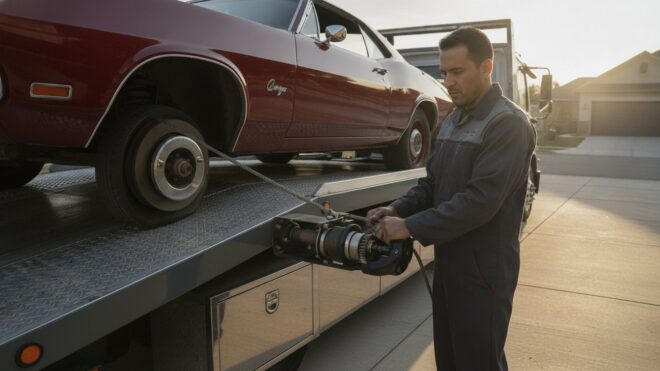
Loading a car that doesn’t start requires more than just a trailer; it requires a specific mechanical advantage. The most critical tool in non-running vehicle transport is the winch. Whether it is a manual hand-crank model or a powerful electric version mounted to the front of the carrier, the winch provides the steady, controlled pull necessary to move a dead weight up a steep incline. Unlike driving a car onto a ramp, winching allows for a slow and deliberate ascent. This control is vital for protecting the vehicle’s undercarriage and ensuring the operator can make minute adjustments to the car’s alignment as it moves.
The Winching Process: A Step-by-Step Overview
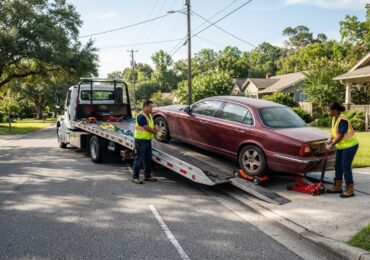
The process begins by identifying a reinforced tow point on the vehicle’s frame or suspension. Attaching a cable to a cosmetic bumper or a weak tie-rod can lead to expensive structural damage. Once secured, the operator slowly retracts the cable while a second person often sits in the driver’s seat to guide the steering. This coordination ensures the car stays centered on the narrow ramps. A ‘winch-out’ service is a standard industry requirement for non-runners, covering the additional labor and specialized gear needed to load a vehicle that cannot move on its own.
Safety Protocols and Cargo Securement
Safety doesn’t end once the car is on the deck. Because an inoperable vehicle cannot be placed in gear or have its parking brake reliably engaged, specialized tie-down techniques are mandatory. Carriers must adhere to FMCSA cargo securement rules to prevent the load from shifting during interstate transit. This usually involves using heavy-duty nylon straps or chains rated for the vehicle’s specific weight. Forklifts are sometimes mentioned as an alternative, but they remain a last resort. They carry a high risk of puncturing fuel lines or damaging the floor pan, so they are typically only used when a vehicle has seized wheels and cannot roll at all.
Open vs. Enclosed Carriers for Non-Runners
Choosing between carrier types often depends on the vehicle’s value and its mechanical state. Open carriers are the industry standard for project cars and daily drivers that have suffered mechanical failure. They are cost-effective and readily available. However, for a non-running classic or luxury vehicle, enclosed transport offers a higher level of protection from road debris and weather. Many enclosed trailers also feature hydraulic lift-gates. These platforms stay level with the ground while lifting the car, which is much safer for vehicles with low ground clearance than traditional ramps. If you need assistance determining the best fit for your situation, we offer expert advice on nationwide transportation services tailored to your car’s unique needs.
Preparing Your Non-Running Car for Nationwide Shipping
Preparing a vehicle for non-running vehicle transport requires a more hands-on approach than shipping an operational car. Since the driver cannot simply drive the vehicle onto the trailer, the physical state of the car directly impacts how safely and quickly it can be loaded. You must start by ensuring all four tires are fully inflated. Even if the car hasn’t moved in years, flat or dry-rotted tires create excessive friction. This friction strains the winch cable and increases the risk of the vehicle sliding off-center during the pull. If the tires cannot hold air, inform your transport provider immediately. They may need to bring specialized equipment like tire skates to facilitate the move.
Your steering column must remain unlocked throughout the process. A locked steering wheel prevents the operator from guiding the car straight up the ramps. This is a primary cause of bumper or wheel damage during loading. Always ensure the keys are present and functional in the ignition. Beyond steering, remove any loose parts, spare engines, or debris from the interior. Project cars often come with extra components, but these items shift during transit. They can break glass or damage the interior. Finalize your preparation by taking high-resolution photographs of the vehicle from every angle. These photos serve as your baseline documentation before the winching process begins.
Mechanical Readiness for Loading
Safety on the ramp depends heavily on the vehicle’s ability to stop. While the winch pulls the car up, functional brakes are necessary to hold the vehicle’s position if the cable needs adjustment. They are also vital once the car reaches its spot on the deck. Additionally, check for leaking fluids. Carriers must maintain a clean and safe environment for all vehicles on the trailer. A car leaking oil or brake fluid creates a slip hazard and can damage the paint of other vehicles. For a more comprehensive look at general logistics, review our How to Prepare a Car for Transport: The 2026 Essential Checklist. Adhering to standards supported by the Towing and Recovery Association of America (TRAA) ensures your vehicle is handled with the professionalism expected in the recovery industry.
Documentation and Key Handover
When the carrier arrives, hand over the keys. Even if the engine doesn’t start, the driver needs them to manage the steering and braking during the loading and unloading phases. This is also the time to review the Bill of Lading. Ensure this document clearly reflects the inoperable status of the car. This prevents disputes regarding the service level provided or the fees charged. Be vocal about any mechanical quirks, such as a door that doesn’t latch or a brake pedal that requires extra pressure. Clear communication with the transport professional ensures they can adjust their technique. This attention to detail provides peace of mind for the journey ahead.
Cost Factors and Logistics for Shipping Inoperable Vehicles
The price difference for this specialized service primarily covers the extra labor involved. While an operational car can be driven onto a trailer in minutes, winching a dead vehicle is a slow, methodical process that can take over an hour. This time-intensive nature means the driver is completing fewer pickups per day. You’re also paying for the wear and tear on specialized winching equipment and the driver’s expertise in maneuvering an immobile asset. For those considering the most economical route, our The Comprehensive Guide to Open Transport Car Shipping in 2026 provides more context on how these trailers operate and why they’re the preferred choice for most inoperable moves.
Logistics of Residential Loading
Successful loading depends on the environment around the vehicle. A large transport carrier needs a significant amount of space to deploy its ramps and line up the winch cable for a straight pull. If your car is tucked away in a narrow driveway or a crowded residential street, the carrier might not be able to reach it. In these scenarios, we often recommend “gate-to-gate” assistance. This involves hiring a local tow service to move the car from its resting spot to a nearby parking lot where the larger carrier has room to work. If you are preparing for a move in the Fraser Valley, you can check out Dependable Towing & Recovery Services for expert local support. Coordination is key here. Ensuring the car is in an accessible location before the driver arrives saves time and prevents additional labor charges.
If you’re ready to move your project car or mechanical non-runner, contact us today for a transparent quote on our interstate vehicle transportation services.
Reliable Non-Running Vehicle Transport with AutoPlex
Choosing a partner for non-running vehicle transport requires more than just finding a carrier with a trailer. It demands a provider that understands the nuances of specialized logistics and prioritizes the safety of your asset. At AutoPlex, we’ve built our reputation on being a stable and experienced hand in a complex industry. Whether you are moving a cherished classic project car, a vehicle with significant accident damage, or a high-value non-runner requiring enclosed transport, our approach remains the same. We combine technical authority with a commitment to transparency, ensuring you feel secure from the initial quote to the final delivery.
Our nationwide reach allows us to facilitate seamless interstate vehicle transportation regardless of your location. We specialize in managing the logistical hurdles that often stop other carriers, such as coordinating narrow residential pickups or handling vehicles that require extra care during the winching process. By positioning ourselves as a knowledgeable authority, we remove the guesswork for our clients. You can expect a professional experience that values education over high-pressure tactics, providing you with the information you need to make the best decision for your vehicle.
The AutoPlex Advantage for Difficult Moves
What sets our service apart is the caliber of our professional network. Our drivers are specifically trained in the mechanics of immobile load security and winching. They understand that a non-running car is often more fragile than an operational one. This expertise ensures that your vehicle’s frame and suspension are protected during every stage of the move. Additionally, we provide comprehensive insurance coverage and maintain direct lines of communication throughout the shipping process. You won’t have to wonder where your vehicle is or how it’s being handled; our team provides the steady, confident updates you deserve.
Getting Your Custom Quote Today
To provide an accurate and transparent quote, we need a detailed understanding of your vehicle’s current state. When you contact us, please specify if the car can roll, steer, and brake, as these factors influence the equipment we deploy. Identifying these mechanical details early allows us to schedule the right carrier and avoid any surprises on pickup day. Because non-running transport requires specialized gear like electric winches, we recommend scheduling your move as early as possible to ensure availability. If you’re ready to partner with a seasoned industry veteran, you can Request a Quote for Your Non-Running Vehicle today and experience a higher standard of automotive logistics.
Securing Your Vehicle’s Future on the Road
Moving an inoperable car doesn’t have to be a source of stress. By understanding the importance of specialized winching equipment and the necessity of proper preparation, you’ve already taken the first steps toward a successful move. Remember that transparency regarding your vehicle’s “roll, steer, brake” status is the key to accurate pricing and a damage-free loading process. Choosing door-to-door service ensures your asset is handled with care from your driveway to its final destination, avoiding the risks of terminal storage.
AutoPlex is here to serve as your stable partner for non-running vehicle transport. We combine A+ rated national logistics with the technical expertise required for complex recoveries. Whether it’s a classic project or an accident-damaged vehicle, we provide the steady hand you need for peace of mind. Our team is ready to manage every detail of your interstate move with professionalism and care.
Get a Reliable Quote for Your Non-Running Vehicle Transport and discover the difference that door-to-door reassurance and specialized winching equipment make for your valuable asset. We look forward to helping you get your car where it needs to be safely.
Frequently Asked Questions
Can I ship a car that doesn’t have keys?
You can ship a vehicle without keys, but you must inform the carrier during the quoting process. Missing keys often mean the steering column is locked and the transmission cannot be shifted into neutral. This requires the driver to use specialized equipment like tire skates or dollies to move the car. Disclosing this status ensures the carrier arrives with the correct tools to handle the added complexity of the loading process.
How much extra does it cost to ship a non-running vehicle?
Shipping an inoperable vehicle involves a higher fee than shipping a running one because of the additional labor and specialized equipment required. Carriers apply an “inoperable surcharge” to account for the time spent winching the car onto the trailer. This methodical process takes significantly longer than driving a car up the ramps. The final cost depends on the transport distance, vehicle weight, and the specific gear needed; for some owners, it may be more practical to sell the vehicle to a service providing cash for cars Melbourne rather than paying for long-distance transport.
Do I need to be present when the non-running car is picked up?
We strongly recommend that you or a designated representative be present during the pickup process. You’ll need to perform a joint inspection with the driver and sign the Bill of Lading to document the vehicle’s current condition. This is also the best time to hand over keys and discuss any mechanical quirks that might affect the winching process. If you can’t be there, ensure your representative understands the importance of the documentation.
What if my non-running car has flat tires?
While it is possible to ship a car with flat tires, we recommend inflating them before the carrier arrives if possible. Rolling a vehicle with flat tires creates excessive friction, which can strain the winch and potentially damage the rims or the trailer deck. If the tires cannot hold air, please notify us in advance. We may need to utilize specialized tools like tire skates to facilitate a safe loading process without causing further harm.
Will the carrier provide the winch, or do I need to rent one?
The carrier provides the winch as part of the specialized service. Professional carriers specializing in non-running vehicle transport arrive with either a manual or electric winch mounted directly to their trailer. The driver is trained to operate this machinery safely, ensuring the car is pulled onto the deck with precision. Your primary responsibility is ensuring the vehicle is positioned in an accessible location where the winch cable can reach it for a straight pull.
Can you ship a non-running car in an enclosed trailer?
Yes, non-running vehicles can be shipped in enclosed trailers, which is often the preferred choice for classic project cars. Many enclosed trailers are equipped with hydraulic lift-gates that are safer for loading inoperable cars than traditional ramps. The lift-gate keeps the vehicle level while raising it to the trailer deck, minimizing the risk of undercarriage damage. This method provides the highest level of protection for vehicles that cannot move under their own power.
What happens if my car becomes non-running during the shipping process?
If a vehicle fails to start during the journey, the carrier will still complete the delivery to your destination. However, you should expect an additional inoperable fee to be applied at the time of unloading. The driver must use specialized winching techniques to remove the car from the trailer, which requires extra time and labor not included in a standard quote. We prioritize safe delivery regardless of mechanical changes that occur during the transit period.
Is insurance different for inoperable vehicles?
Insurance coverage for inoperable vehicles generally follows the same standards as running cars, covering physical damage that occurs during transit. It’s important to understand that transport insurance does not cover pre-existing mechanical failures or internal engine issues. We recommend taking clear photos before the winching process begins to document the exterior condition. This documentation ensures that any new damage occurring during the specialized loading or unloading process is clearly identifiable and covered by the carrier’s policy.